Every product family we quote — spirits, wine, beer, oil, cosmetics and jars — is listed under glass bottles wholesale.
A bulk glass bottle order is decided on landed cost, not on the unit price in the quote. Freight, duty, insurance, storage and breakage all sit on top of the bottle itself, and how well the order fills a container often moves the total more than a small difference between two suppliers. As a planning figure, a standard 40-foot container carries approximately 25,000 to 35,000 standard-sized bottles, depending on the bottle design and the packing method.
What goes into landed cost
The unit price is only the first line. Before comparing suppliers, add the items that arrive after the bottle leaves the plant:
- ocean or inland transport
- customs duties
- cargo insurance
- warehousing at destination
- bottles broken or damaged in transit
A bottle that looks cheaper at the gate of a distant plant can end up dearer once shipping and breakage are counted. Our overview of what drives wholesale glass bottle pricing breaks the bottle-side factors down further.
The mould charge belongs in the same calculation. On a large run, plants will often spread it over the production quantity, and some drop it above a volume threshold. Settle this at the start of the negotiation and have it written into the order, not left to a verbal understanding.
Asking for quotes you can compare
Ask every supplier for the same three figures so that offers from different regions line up:
| Term | Stands for | What the figure tells you |
|---|---|---|
| FOB | Free On Board | The goods loaded at the export port; you arrange and carry the freight |
| CIF | Cost Insurance and Freight | The goods plus sea freight and insurance to your port |
| DDP | Delivered Duty Paid | The goods delivered with duty settled |
Most plants quote in tiers, with the unit cost stepping down as volume rises. Where those steps fall depends on the mould, the decoration, the quantity and the freight terms, so they are quoted per project. Ask for the tier table itself instead of a single figure: knowing where the next step sits lets you decide whether a slightly larger order is worth it.
Buyers who can commit to an annual volume have a second lever. A contract clause that fixes a minimum yearly quantity gives the plant a predictable production plan, and plants are generally willing to trade a lower price for that certainty.
Container loading and export packing
Glass is fragile, heavy and costly to move, so packing and loading deserve the same attention as the bottle drawing. The usual bulk format is wooden pallets with cardboard dividers between layers, held with shrink wrap. Standard export packing of this kind typically keeps damage below 2 percent.
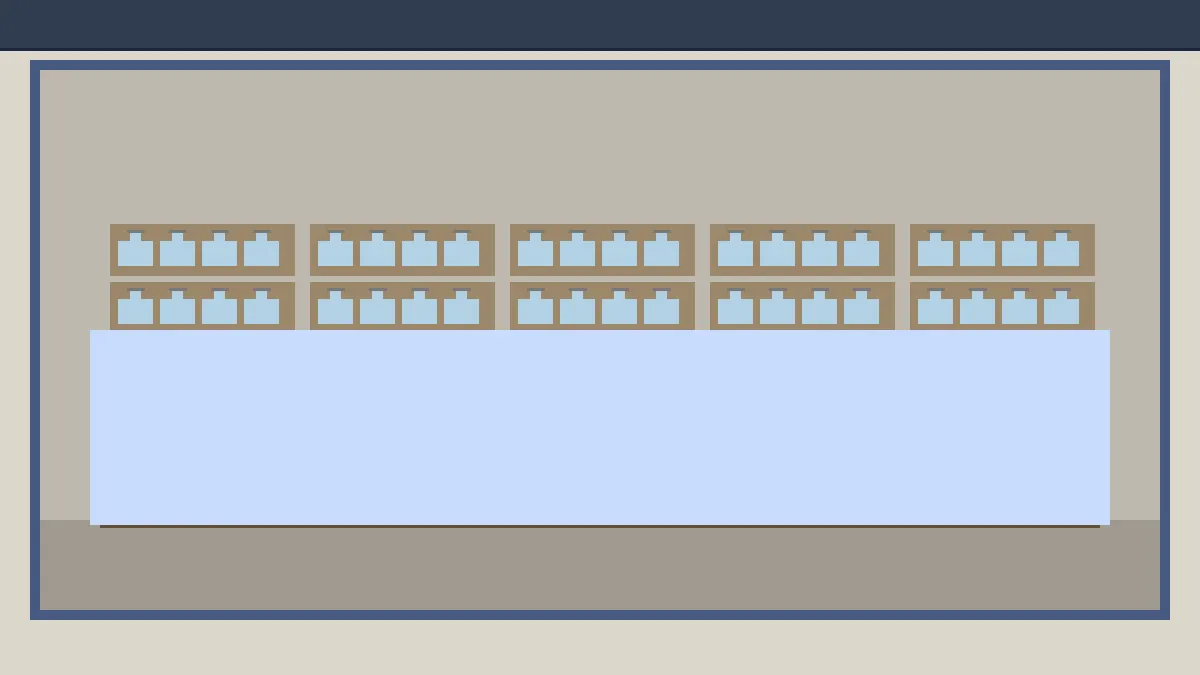
Raise packing with the supplier early, before the order is confirmed. Delicate bottle shapes and long routes may justify extra cushioning or reinforced pallets. Better packing costs a little more, and that cost is nearly always recovered through fewer broken bottles and fewer stoppages on your filling line.
Size the order to the container. Because the 25,000 to 35,000 range for a 40-foot box shifts with bottle design and packing method, ask the supplier for a loading plan for your specific bottle and then round the order to full containers. A full container spreads freight over more bottles than a less-than-container-load (LCL) shipment does. Experienced buyers either time purchases to fill a box or consolidate goods from more than one manufacturer into it. Our notes on logistics and shipping practice for glass bottle supply go deeper into the freight side.
Order size against stock holding
Fewer, larger shipments lower freight per bottle and mean less supplier administration, but they need more warehouse space and tie up more cash in stock. Smaller, more frequent orders keep stock lean, at the price of higher freight and a weaker negotiating position. Which side wins depends on three things: how much you can store, your cash flow, and how predictable your demand is.
Quality checks for large runs
When an order runs to hundreds of thousands or millions of bottles, one defective batch can stop a filling line, push back a launch and harm the brand. Agree a written specification before ordering. It should cover:
- dimensional tolerances
- wall thickness
- thermal shock resistance
- criteria for visual defects
A sound supplier supplies quality documentation and accepts a pre-shipment inspection on a large order. An independent inspection company such as SGS or Bureau Veritas can verify the goods before the containers leave the plant. It helps to understand how glass bottles are made when deciding which checks matter for your design.
For repeat orders, treat the first production run as the benchmark. Keep retained samples from each batch and compare them with the approved reference. If colour, weight or dimensions drift, raise it with the plant straight away; waiting until the problem reaches your filling schedule costs far more.
Choosing suppliers and keeping them
Shortlist two or three suppliers that can hold both your quality level and your volume. Where possible, visit the plant, review its quality certifications and judge its production capacity. Ask how much experience it has with buyers of your size and sector, and request references from customers who order in bulk regularly. A plant that delivers the volume without slipping on quality or schedule is worth more than the lowest quote on paper; our guide to finding the right glass bottle supplier sets out the selection steps.
The relationship carries value of its own. Buyers who place regular bulk orders tend to get better pricing, priority in the production schedule and more flexibility when demand peaks.
Payment structures
Traditional terms ask for 30 to 50 percent in advance, with the balance due before shipment. With an established relationship, repeat bulk orders may move to net 30 or net 60 terms.
For a large order, a milestone structure shares the risk and shows you how production is progressing. One example:
- 20 percent on order confirmation
- 40 percent when production is 50 percent complete
- the remaining 40 percent after quality inspection and before shipment
Many manufacturers accept this arrangement when the buyer is committing to a long-term partnership.
On international orders, a letter of credit (LC) protects both sides. The bank pays once the specified shipping documents are presented, so the supplier knows payment is secured and the buyer is covered against non-delivery. LCs carry bank fees, which are usually justified on large transactions.
Scheduling around seasonal demand
Drinks and spirits brands see predictable swings in demand across the year. Ordering well ahead of the peak lets the plant fit your volume into its schedule without rushing production or charging extra for an expedited run.
Plan backward from the launch or peak-season date. Allow for production, quality inspection, shipping and customs clearance, then add margin for the unexpected. Many experienced buyers add a 20 percent time buffer to the schedule so that packaging never runs out during a critical selling period.
A first order takes longer than a repeat, because the plant has to set up production, make the moulds and run trial batches. Timing is quoted per project and shortens once the bottle is in regular production.