




Why the format keeps winning
The flat flask carries a century of category memory in American whiskey, and that borrowed meaning is free to a brand that uses it. A shopper does not need to be told what is inside a flat flask. For a private-label or value-tier programme that cannot fund consumer education, the silhouette is doing marketing work that would otherwise be a line item.
It also solves problems round bottles cannot. A shallow bottle fits a coat pocket, a suitcase side compartment and a golf bag, which is why the format over-indexes in travel retail and in gifting. And the broad, flat faces take large front and back labels without the curvature compensation that a round body demands from the label printer.
The economics buyers miss
The cost argument is the one that decides most flat-format briefs, and it lives in the box rather than in the glass. A shallower bottle needs a shallower rigid box: less board per unit, more units per master carton, more cartons per pallet position, more pallets in the container. Anyone who has costed a round 750ml gift set against a flat one at container scale has seen the gap.
It is worth asking for the loading plan at quotation stage rather than after. Carton and pallet configuration depends on the final closure height and on any decoration that adds to the envelope, so the number is specific to your finished bottle, not to the mould in isolation.
The shapes in this range
Flat is a family rather than a single shape, and the proportional differences change what a label can do.
Square and rectangular flats
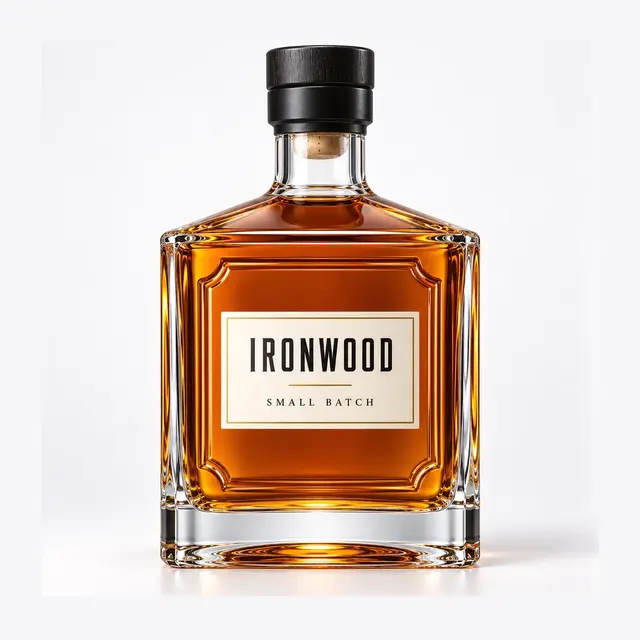
Maximum flat label area and the cleanest box fit. The default for private-label bourbon and for any programme where the back label carries a lot of regulatory copy.
Oval and teardrop flasks
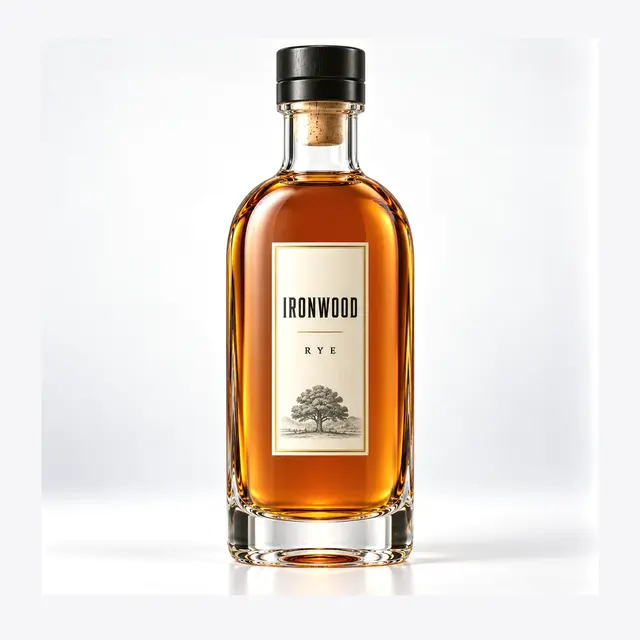
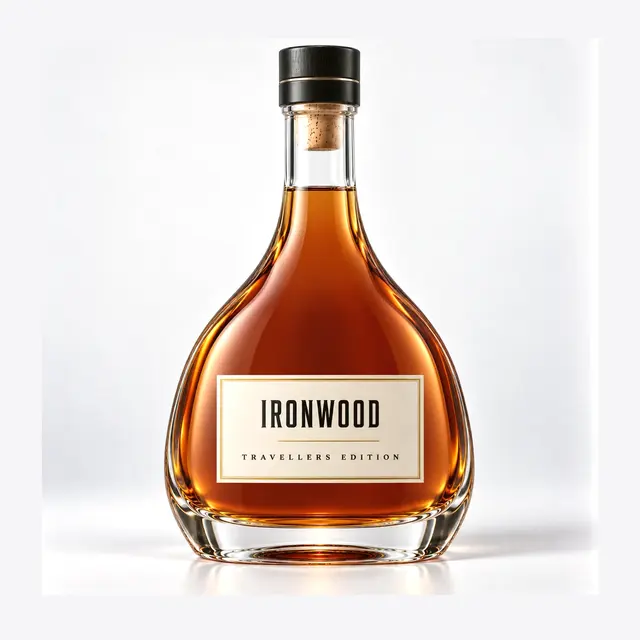
Softer silhouette, better hand-feel, slightly less usable label area. Common in gift sets and travel-retail exclusives where the bottle is handled before it is bought.
Faceted and low-profile flasks
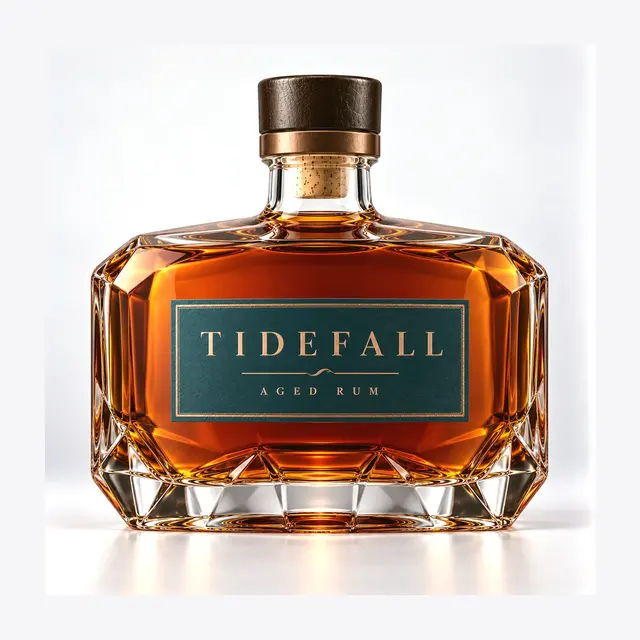
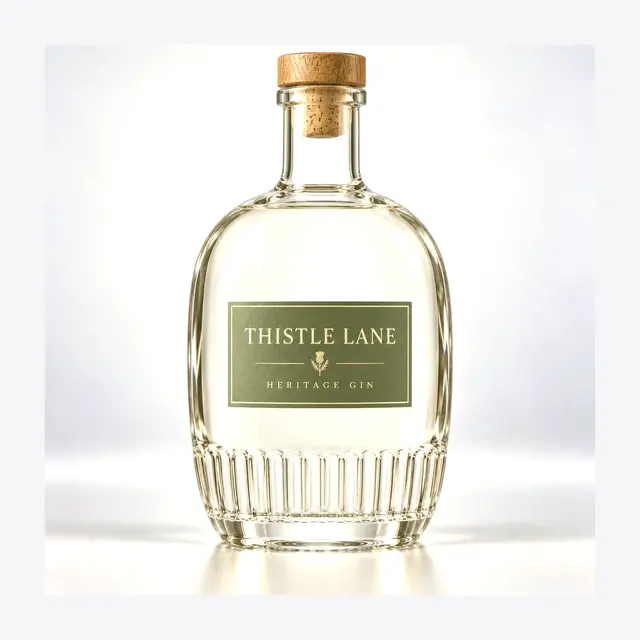
Wide, shallow bodies with cut panels that catch light. A heritage read for rum and liqueur without going to full decanter weight.
Heavy-base flats
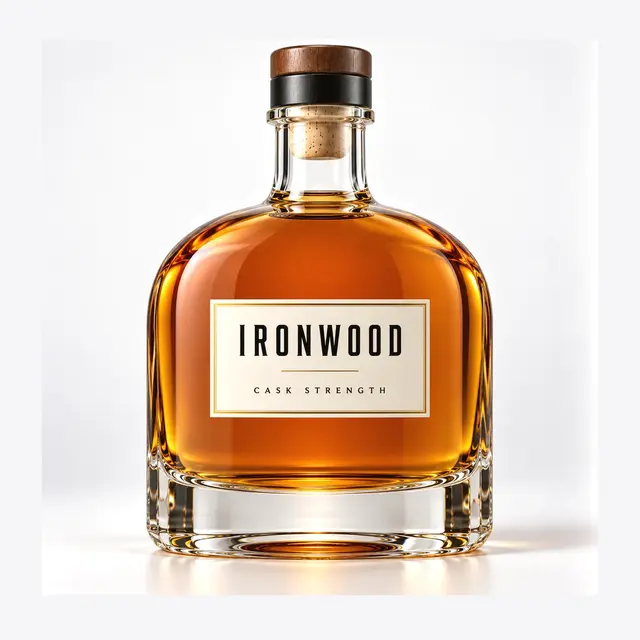
Flat geometry with presentation-tier mass in the heel. Where an XO or reserve expression needs weight but the coffret still has to box efficiently.
Talk to your co-packer before you commit
Flat bottles behave differently on a filling line than round bottles do. Stability on the conveyor, behaviour through a labelling head, and orientation control all depend on the line’s change parts. A round bottle can be rotated to any angle and still be labelled; a flat bottle has to be presented to the applicator in one orientation.
None of this is a reason to avoid the format — most co-packers run it routinely — but it is a reason to run a line trial with sample bottles rather than approving from a drawing. We supply samples for exactly this step, and it is the cheapest insurance in the whole process.
From brief to container
Send the fill, the destination market, the annual volume estimate, whether a gift box is in scope, and the co-packer you plan to use. You get back a technical drawing confirming capacity, neck finish and critical dimensions, plus samples for the line trial.
Several moulds in this range run at both 700ml and 750ml, and the low square flask is documented at 200ml and 375ml as well — the pocket and half-bottle sizes a hip-flask gift set is usually built around. Minimum quantities and lead times depend on the decoration route and current scheduling, so they are quoted per project. Inspection documentation ships with the lot.
Common questions
Do flat bottles break more easily in transit?
Not inherently. Breakage in transit is driven by wall thickness distribution, annealing quality and carton design rather than by silhouette. What does change is the failure mode — a flat bottle loaded on its face distributes load differently than a round one — so the carton and divider spec should be designed for the actual bottle, not carried over from a round format.
Can I use my existing round-bottle label artwork?
The copy transfers; the die-line usually does not. A flat panel removes the curvature compensation a round label needs, and the usable width is set by the panel rather than by wrap. Ask for the technical drawing and mock the label up on it before committing to plates.
Which flat mould should I choose if I already tried one and the proportions were wrong?
That is exactly what a second mould in the same capacity is for. Two flat bottles at the same fill can differ enough in proportion that one fits your die-line and the other fights it. Request drawings for both and mock your label on each before deciding — it costs nothing and it is the cheapest step in the process.
Is the format only for whiskey?
No. Most volume goes to bourbon and American whiskey, but the same moulds run dark rum, blended whisky, liqueurs and premium ready-to-drink cocktails, where portability is part of the selling proposition. Discuss your fill’s ABV and any closure liner requirements during sampling.