











What amber glass actually does
Amber glass absorbs strongly in the ultraviolet and short-wavelength visible range — roughly the part of the spectrum that drives photo-oxidation — and transmits progressively more towards the red end. That is why it is the standard for light-struck-sensitive products and why the pharmaceutical trade standardised on it long before the beverage trade did.
Two caveats matter and are routinely glossed over by suppliers. First, amber is not opaque: it reduces transmission, it does not eliminate it, and a bottle stored under retail lighting for months is still receiving a dose. Second, the protection depends on glass thickness and on the depth of the amber — a pale amber thin-wall bottle is not equivalent to a deep amber heavy one, even though both will be sold to you as "amber".
If light protection is a functional requirement rather than a visual cue, say so in the brief. It changes which mould is appropriate and it is something the factory can speak to specifically, rather than a property you should infer from the colour name.
Where amber earns its place
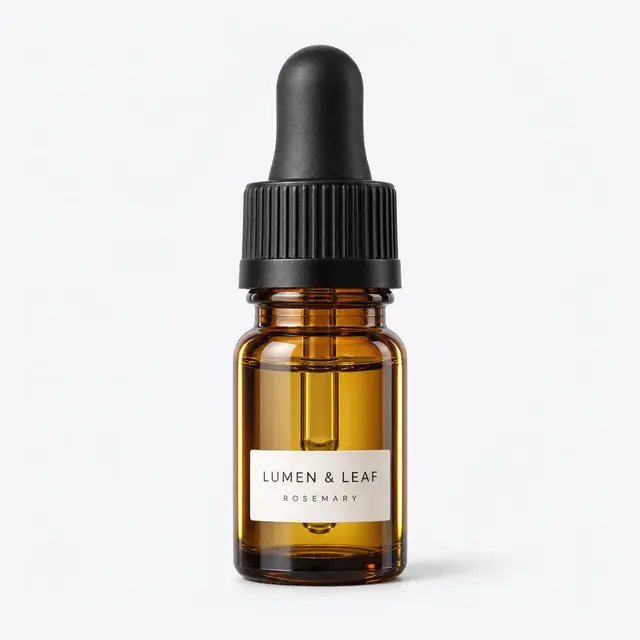
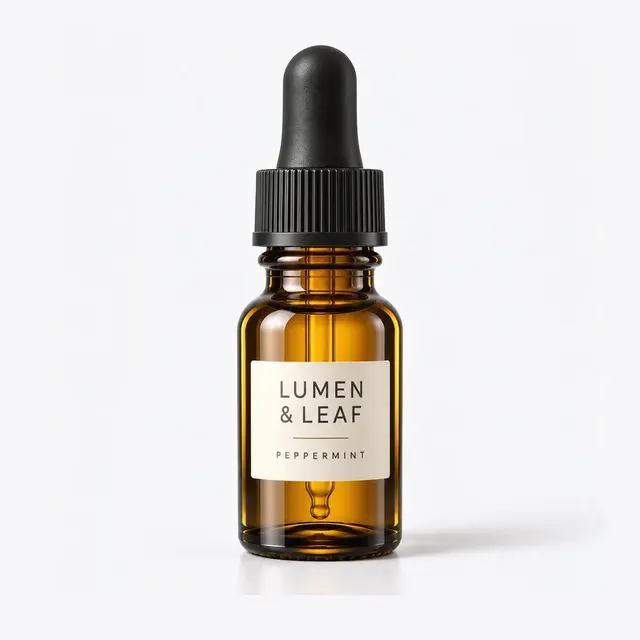
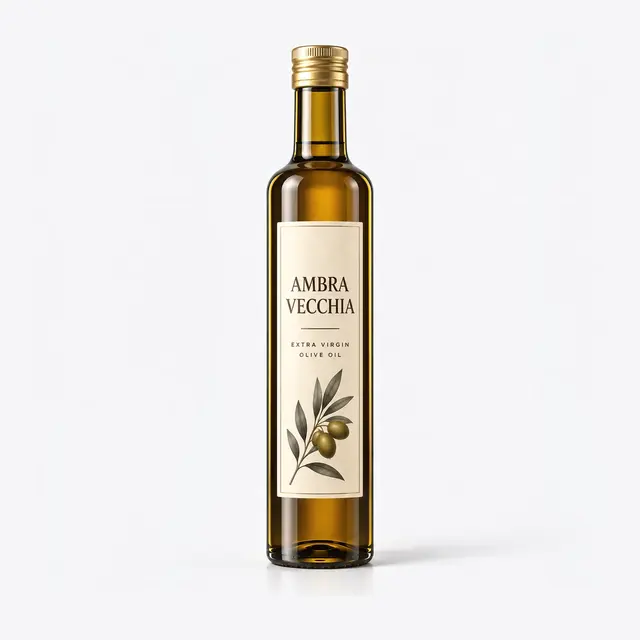
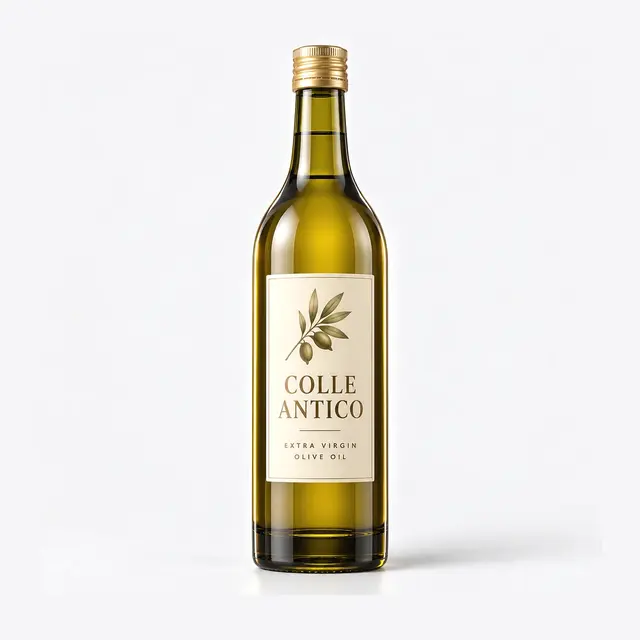
The four categories in this range each use amber for a slightly different reason.
Essential oils and aromatherapy
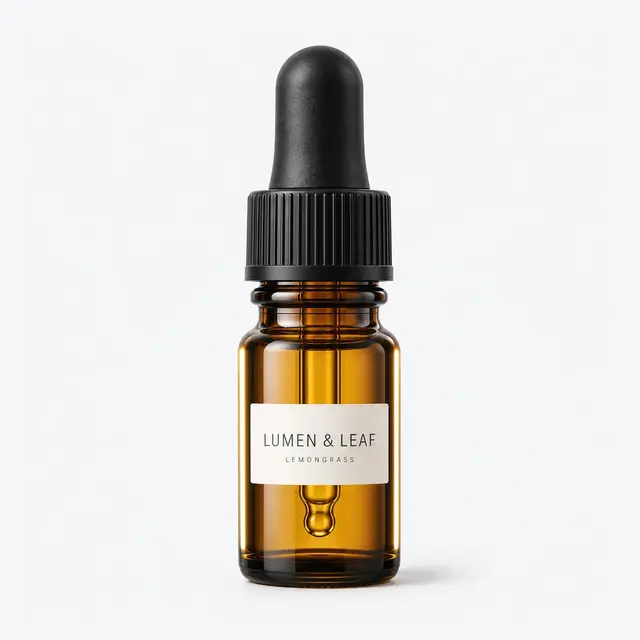
Terpenes oxidise under light and the resulting change in aroma is the whole product. Amber dropper bottles and vials are effectively the category standard, from 5ml singles up to 100ml retail sizes.
Beer
Light-struck flavour — the "skunked" character — comes from a photochemical reaction involving hop-derived compounds. Amber longnecks and steinies are the traditional answer; green and flint bottles offer materially less protection.
Olive oil
Light accelerates rancidity and degrades the polyphenols that premium oil is sold on. Amber and dark antique green are both used; amber is the more protective of the two.
Tinctures, samples and small spirits formats
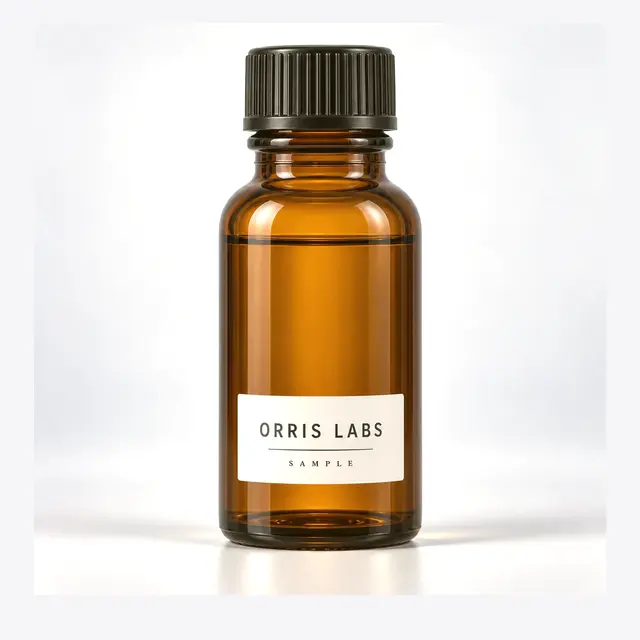
Screw-thread amber vials for sampling, tinctures and light-sensitive liquids, where the bottle is a working container rather than a shelf presence.
When amber is the wrong choice
Amber hides the liquid. For any product where the colour of the contents is part of the proposition — aged spirits, rosé, a coloured serum — that is a real cost, and it is worth weighing against the actual light exposure the product will see. A bottle that sells through in six weeks under warehouse-to-home conditions is a different problem from one that sits in a south-facing shop window.
The alternatives are worth knowing. Secondary packaging — a carton, a sleeve, a tube — provides complete light exclusion and lets you use clear glass. UV-blocking coatings over flint give some protection with a different look. And for some products the honest answer is that the fill is not light-sensitive enough to justify giving up visibility.
Specifying amber well
Amber glass is produced by adding iron, sulphur and carbon to the batch, and the resulting shade varies between furnaces and between campaigns. If colour consistency across reorders matters to your brand — and on a shelf where several units stand side by side, it usually does — ask for a retained colour standard to be agreed at first production and compared against on every subsequent lot. Colour matching against a retained master is a routine inspection step, but only if someone asks for it.
The other specification worth being explicit about is whether the amber must be in the glass at all. A sprayed amber coating over flint glass looks similar on a shelf and offers much less protection. Both have legitimate uses; they are not substitutes, and they should not be quoted against each other without the difference being stated.
From brief to container
Tell us the fill, whether light protection is functional or visual, the destination market and an annual volume estimate. We come back with a technical drawing and samples, and — where light protection is functional — with what the factory can document about the glass rather than a generic claim.
Inspection documentation ships with the lot: annealing per ASTM C148, plus dimensional and colour checks against the approved standard.
Common questions
Does amber glass block all UV?
No. It absorbs strongly in the UV and short-visible range and transmits more towards the red end, and the degree depends on glass thickness and amber depth. Treat it as substantial reduction, not exclusion. Where exclusion is the requirement, secondary packaging is the reliable answer.
Is amber better than cobalt blue for light protection?
Generally yes. Cobalt blue is a strong visual cue and is genuinely popular in cosmetics and some beer programmes, but it transmits more in the wavelengths that matter for photo-oxidation than amber does. Choose blue for the look; choose amber when the shelf life is the argument.
Will amber shade match between orders?
Only if you ask for it to be controlled. Shade varies between furnace campaigns. Agree a retained colour standard at first production and have subsequent lots compared against it — it is a routine inspection step and the only thing that prevents a visible mismatch on shelf.
Can I get amber in a shape that is only listed in flint?
Sometimes — it depends on whether the factory runs amber on the line that holds that mould, and amber campaigns are scheduled rather than continuous. Send the mould reference and we will confirm feasibility and timing before you build a plan around it.