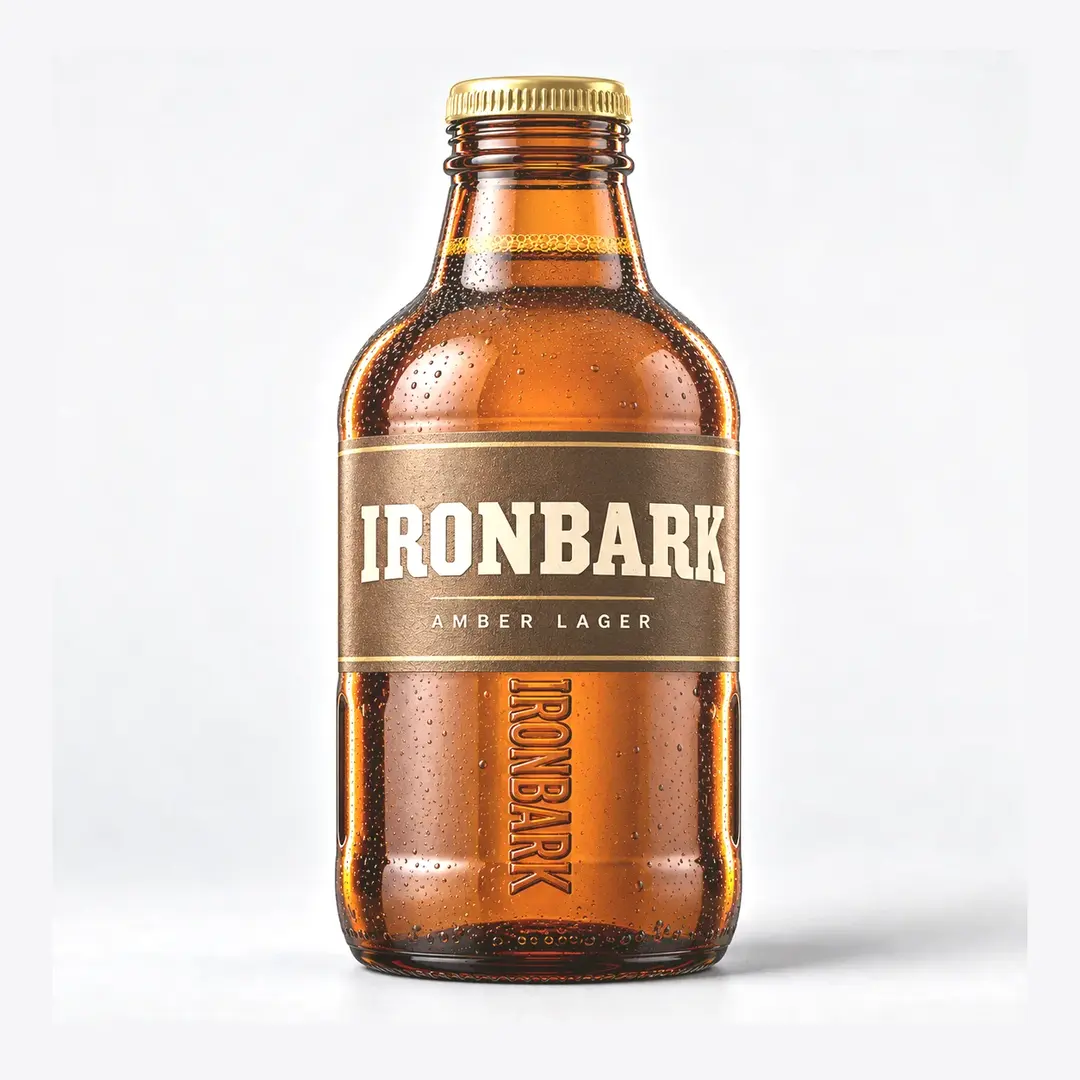
The Series 8156 is an amber glass beer bottle in the compact steinie format with a threaded twist-off finish, aimed at breweries, malt beverage producers and private-label importers who want tool-free opening convenience together with serious light protection. The photo shows the short, sturdy body, the screw thread at the neck and a bold embossed wordmark running down the face of the bottle, a combination that works hard on retail shelves where consumers grab, twist and drink without reaching for an opener.
Steinie Format and Twist-Off Convenience
The steinie, sometimes called the stubby, is the short-shouldered bottle shape that generations of drinkers associate with easy, casual beer occasions. Pairing that silhouette with a threaded twist-off finish removes the last bit of friction: no opener, no crown litter, and a cap that can go back on a partially finished bottle. For hospitality venues, stadium concessions, beach resorts and outdoor events, that convenience translates directly into faster service and fewer broken-crown hazards on the floor. The thread profile and finish dimensions are confirmed on the technical drawing at quotation, and closure liners can be specified to match your carbonation level and pasteurization regime. Buyers should confirm with the factory which twist-off cap standard their filling line is tooled for, since thread finishes vary between regional specifications.
Amber Glass and Light-Strike Protection
Amber is the default choice for light-sensitive beer for a straightforward reason: it blocks the wavelengths that trigger the reaction between hop compounds and light, the reaction drinkers know as skunking or light-strike. If your beer is dry-hopped, highly bittered, or sold in open coolers and glass-front displays, amber glass is cheap insurance for flavor stability across the whole distribution chain. The amber in this series is furnace-colored, so the protection runs through the full wall thickness and survives crate washing and pasteurization unchanged. Green and flint glass can work for fast-turning products in closed cartons, but for any brand that cannot fully control its light exposure after the bottle leaves the brewery, amber removes a variable that no amount of marketing can fix after the fact.
Embossed Branding Built Into the Mould
The deep embossed lettering visible on this bottle demonstrates what permanent branding looks like: the wordmark is part of the container itself, immune to label scuffing, condensation and ice-bucket abrasion. For volume buyers, a proprietary emboss turns every bottle into a brand asset that survives the entire trip from filler to consumer and even into the recycling stream. The mould investment is amortized across the production run, and our article on glass bottle MOQ explained shows how that math typically works out. Buyers below proprietary-mould volumes can order the series with the stock emboss or a smooth label panel and build identity through pressure-sensitive labels, screen printing or applied ceramic decoration instead.
Where the Format Fits Commercially
Steinie bottles with twist-off finishes perform well in high-velocity channels: convenience retail, festivals, airlines and anywhere speed of service matters. The compact height also packs efficiently, improving case density and pallet utilization versus tall longnecks, which reduces freight cost per unit on export orders. Craft producers use the format to signal a throwback, unpretentious brand voice, while large regional breweries use it for value-tier lagers where cap convenience supports the price point. Tell us your channel mix when you inquire and we will advise whether this format or a longneck from the same catalog better matches your logistics.
Pasteurization and Line Performance
Most twist-off steinie programs run through tunnel pasteurization, and this series is built for that duty. Thermal shock endurance is verified per ISO 7459, which is the test that matters when bottles move between the hot zones and cold spray sections of a pasteurizer in rapid succession. The compact steinie geometry also behaves predictably on conveyors: a low center of gravity reduces tip-overs at transfer plates, and the short neck keeps gripper handling simple on monoblock fillers. If your line currently runs a taller bottle, the change parts conversation is usually limited to guide rail height and starwheel timing rather than a full format overhaul. Share your filler brand, line speed and pasteurizer temperature profile at inquiry and we will confirm compatibility points with the factory before the first shipment, including the cap torque window your capping heads should be set to for a reliable seal.
Quality Control Standards Behind Every Pallet
Each production run is inspected under a documented QC plan referencing ASTM C148 for annealing quality of glass containers, ISO 7459 for thermal shock endurance and ISO 7458 for internal pressure resistance. Cold-end inspectors screen for seeds, stones, blisters and thread-finish defects, and shift samples pass pressure and thermal shock testing before pallets are released. Thread finishes receive gauge checks so your caps apply and remove with consistent torque on the line. Any additional AQL level or market-specific protocol can be folded into the inspection routine when stated in your purchase specification.
Ordering, MOQ and Export Packing
Wholesale pricing scales with volume and with whether you take the stock design or commission a proprietary emboss. Bottles ship on export pallets, shrink-wrapped and corner-protected as shown below, with container loading plans prepared per order so landed cost is visible before you commit. Fumigation-free packaging is available where phytosanitary rules require it, and mixed-series loading can be discussed for buyers building a varied portfolio. Importers new to sourcing containers from China will find the practical steps in our guide to importing glass bottles from China.
For a quotation with the technical drawing, closure specification and current lead time on the Series 8156, send your annual volume and destination port through our contact page and a packaging specialist will prepare a complete offer.
Frequently Asked Questions
What closure fits the Series 8156 twist-off beer bottle?
The Series 8156 is produced with a threaded twist-off finish for screw caps, giving tool-free opening and resealing. Because thread finishes vary between regional standards, the exact thread profile and dimensions are stated on the technical drawing at quotation, and you should confirm the matching cap specification with the factory before ordering closures.
Why choose amber glass over green or clear for beer?
Amber glass blocks the light wavelengths that react with hop compounds and cause skunking, also called light-strike. For dry-hopped or highly bittered beers, or any product sold in open coolers and glass-front displays, amber provides flavor protection through the full wall thickness since the color is melted into the glass rather than coated on the surface.
Can I get my own brand name embossed like the lettering in the photo?
Yes. Proprietary embossing is available for buyers at sufficient volume; the design is cut into the mould so every bottle carries your wordmark permanently at no per-unit cost. The mould investment is amortized over the production run, and buyers below that threshold can use the stock design with labels or screen printing instead.
What is the MOQ for this amber steinie bottle?
Minimum order quantity depends on stock versus custom design. Stock-design orders start at standard production-run quantities, while a proprietary emboss requires a larger commitment to amortize the mould. Send your annual volume and we will quote exact MOQ and price tiers.
Is the twist-off finish suitable for carbonated beer?
Yes, when paired with the correct closure liner specified for your carbonation level and pasteurization process. The bottle itself is tested for internal pressure resistance per ISO 7458, and thread finishes are gauge-checked so caps apply and remove with consistent torque on your line.
How are the bottles packed for export shipment?
Bottles ship stacked on export pallets, shrink-wrapped with corner protection, and loaded per a container plan prepared for your order. Fumigation-free packaging is available for markets with phytosanitary requirements, and the pallet count per container is confirmed in your quotation so landed cost per bottle is clear before you commit.