


What a whiskey programme asks of the glass
Three requirements come up in almost every whiskey brief, and they pull against each other. The bottle has to feel substantial in the hand, which means glass weight in the base and heel. It has to present a clean, generous front panel, because whiskey labels carry a lot of copy — age statement, mash bill, cask type, proof. And it has to run on the filling line the brand already has, or on the co-packer they have already booked.
Weight is the one buyers underestimate. A heavy base changes the centre of gravity, which changes how the bottle behaves on a conveyor and through a labelling head, and it changes the freight maths — heavier glass means fewer bottles per container before you hit the weight limit rather than the volume limit. It is worth deciding early whether the weight is doing brand work or just adding cost.
Flint glass is the default for whiskey because the colour of the liquid is the product. Amber and green hide it. Where a brand wants an opaque or tinted look, that is normally achieved by spray coating or frosting over flint rather than by coloured glass, which keeps the mould shared and the decoration exclusive.
The shapes in this range
Whiskey bottles cluster into a few families. Knowing which family you are in narrows the brief faster than any spec sheet.
Heavy-base rectangles and squares
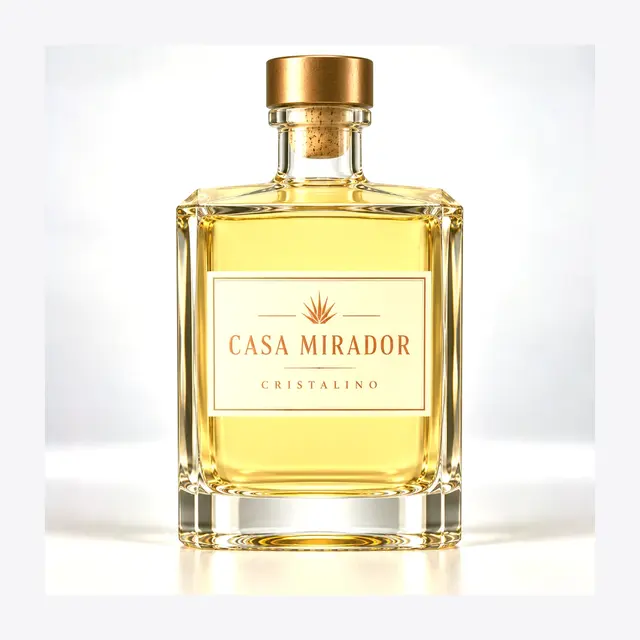
The premium default. A thick heel, sharp shoulders and flat faces that take a large label or direct screen printing. This is where most single-malt and small-batch bourbon programmes land.
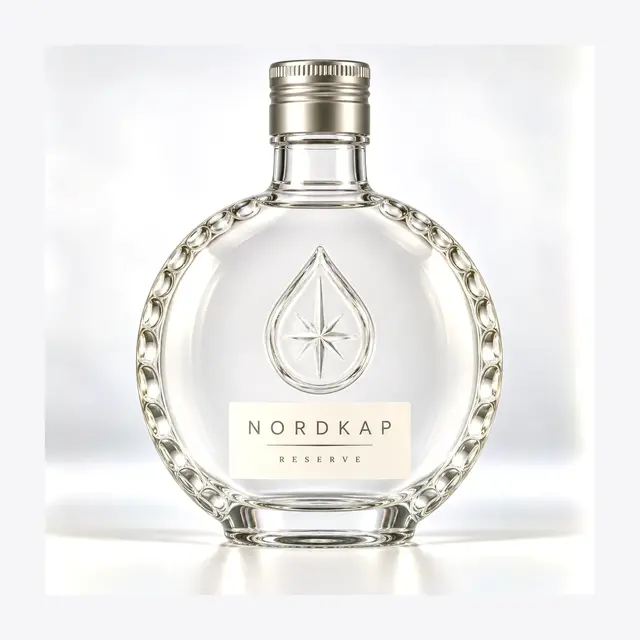
Flat flasks
The shorthand of American whiskey — a broad, shallow silhouette that references pre-Prohibition pocket flasks. Shallower bottles also mean shallower gift boxes and better pallet economics, which matters once you are costing a full container.
Frosted squares
Flint glass with an acid-etch or sprayed matte finish. Frosting gives a soft, opaque hand-feel and photographs well for e-commerce, at the cost of hiding the liquid — usually a deliberate choice for gifting and travel retail rather than for the back bar.
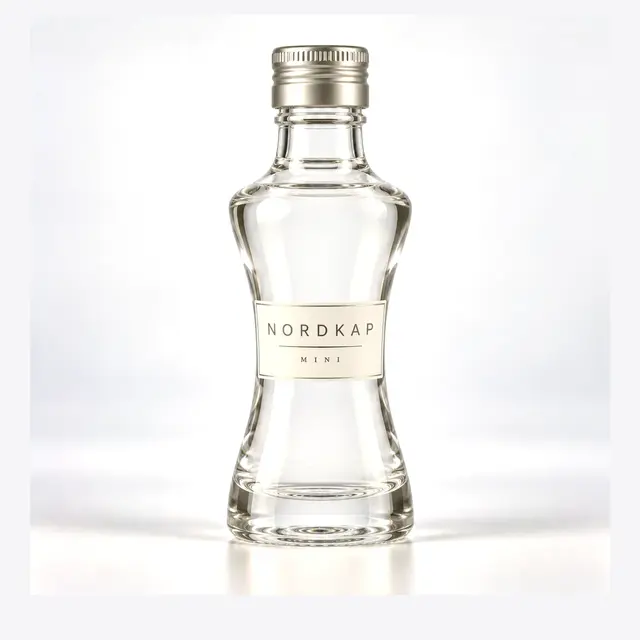
Screw-finish rounds
Where the programme runs at volume on a ROPP capping line. Less shelf drama, far fewer line stoppages, and a closure that survives distribution better than cork in hot climates.
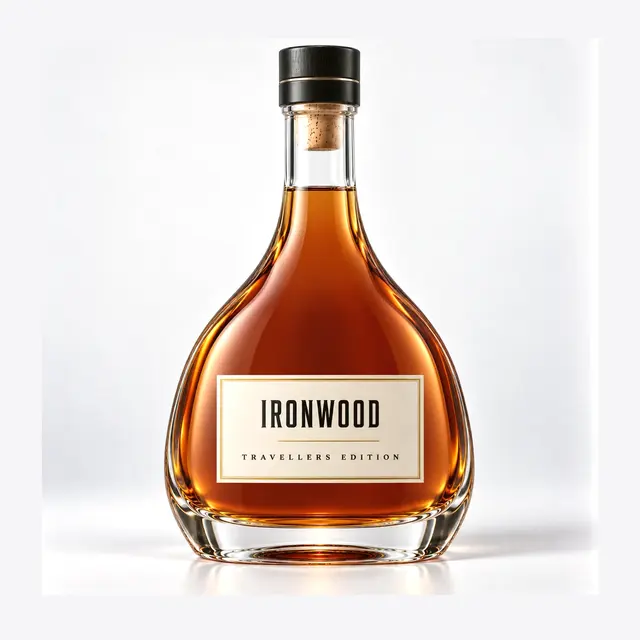
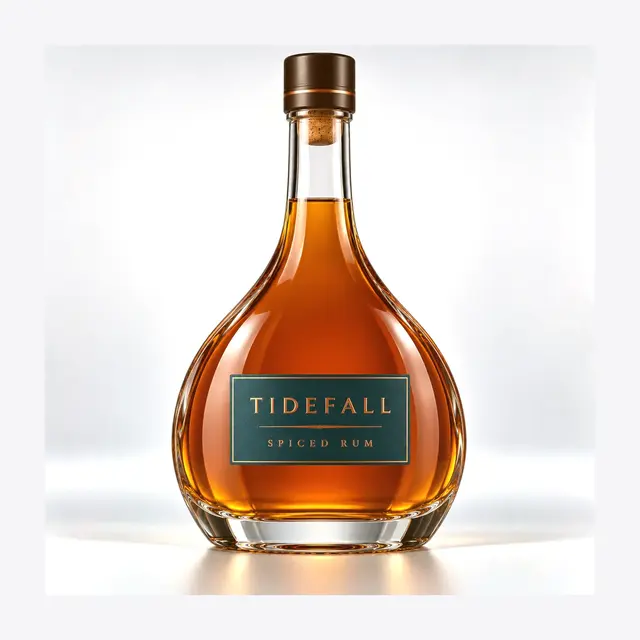
Decanters
Heavier, sculptural decanter profiles sit with the brandy and XO moulds. They suit whiskey too when the brief is a presentation or gift bottle rather than a back-bar one — and they bring the same weight and freight questions, only more so.
Closures: bar-top cork versus screw finish
This is the decision that most often gets revisited late, and reversing it after tooling is expensive. Bar-top cork reads premium and gives the ritual of the pour, but it needs a matching neck finish, it is sensitive to humidity and temperature in transit, and it slows a filling line. Screw finishes — ROPP or continuous thread — are faster, more tamper-evident, and increasingly accepted even at premium tiers, particularly in markets where bottles sit in hot warehouses.
Whichever way you go, the closure supplier and the glass factory need to agree on the finish before the mould is cut. We ask for the closure specification at the drawing stage for exactly this reason: a neck finish that is close enough for a sample is not close enough for a production run.
Decoration routes
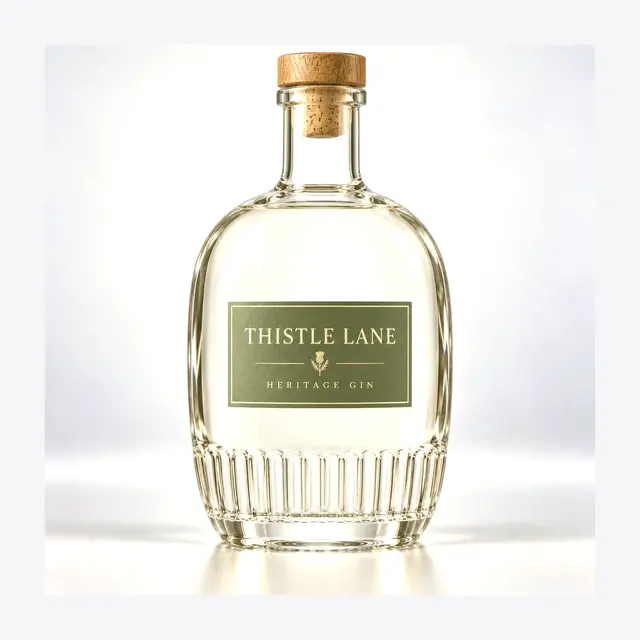
A shared mould becomes a brand through decoration, and whiskey uses the full range. Screen printing puts branding directly on the glass in one or more colours, which suits label-free looks and back-panel storytelling. Embossing and relief work into the mould itself — a crest, a wordmark, fluting around the heel — give permanent brand identity but require mould modification, so they belong in the first conversation rather than the fifth.
Spray coating and frosting change the whole surface. Applied labels remain the cheapest and most flexible route, and for a multi-SKU family where each expression needs different information, usually the right one.
Getting from brief to container
Send the fill (bourbon, blended, single malt, RTD), the destination market, an annual volume estimate and a decoration direction. We come back with a technical drawing confirming capacity, neck finish and critical dimensions, and with sample bottles for a line trial before anything goes into production.
Capacities, minimum quantities and lead times depend on the specific mould, the decoration route and current line scheduling, so we quote them per project rather than publishing numbers that would be wrong by the time you read them. Every quotation ships with the drawing, and every production lot with its inspection documentation.
Common questions
Can I get an exclusive shape without paying for a bespoke mould?
Usually yes. Most of these moulds are shared, and exclusivity comes from decoration — embossing, screen printing, coating and closure choice together make a bottle unmistakably yours. A fully bespoke mould is worth it when the silhouette itself is the brand asset; otherwise it adds tooling cost and a higher minimum for a difference most shoppers will not register.
Is 700ml or 750ml right for my market?
750ml is the standard US spirits size; 700ml is standard across the EU and UK. Several moulds in this range run in both. If you are shipping to more than one of those markets, confirm the fill size per destination with your importer before artwork is finalised — relabelling is cheap, re-tooling is not.
Do heavy-base bottles cost more to ship?
Often, yes. Sea freight is priced on volume until you hit the container weight limit, and heavy glass reaches that limit first. On a full-container programme the difference between a standard and a heavy-base mould can move the landed cost per bottle more than the glass price does. Ask for the loading plan alongside the quotation so you can see it.
Can you match a bottle I have already seen on shelf?
Send photographs with a ruler in frame, or better, send the bottle. We can identify whether an existing mould in the catalogue is close enough, or scope what a bespoke mould would involve. We will tell you when a shape is protected by someone else’s design registration rather than quote it.
What quality documentation comes with a run?
Annealing verified per ASTM C148, internal pressure resistance per ISO 7458 and thermal shock per ISO 7459, plus dimensional checks against the approved drawing. Ask for the test records with the quotation, not after delivery.