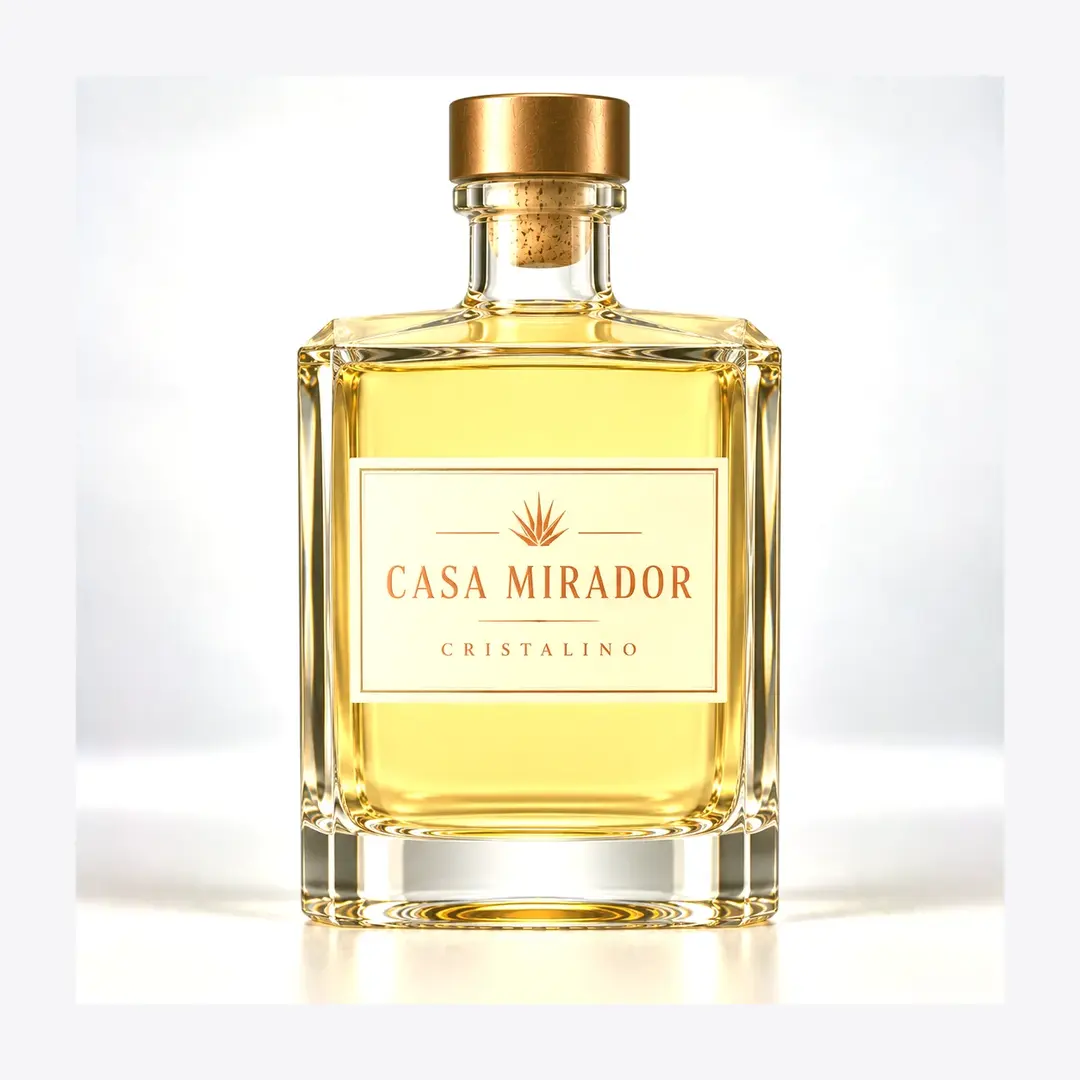
Model BO-1 is a square-section spirits bottle in clear flint glass with a stance you can read from across the aisle: broad flat faces, crisp vertical edges, and a sharp, nearly horizontal shoulder that breaks into a tall straight neck. The bar-top lip at the finish is compact, and the base carries serious weight with a smooth recessed punt area. Where soft-cornered bottles negotiate, this one asserts. It belongs to the design language of American whiskey, reposado tequila, and any brand that wants its bottle to stand like a building on the shelf. This brief helps brand owners, distilleries, and importers evaluate the mold for such programs. The photograph shows no printed capacity, dimensions, weight, or finish code — confirm all specifications with the factory before committing to labels or closures.
Four Flat Panels Equal Label Architecture
The commercial core of a sharp square bottle is information architecture. Four flat faces give you structured zones that round bottles cannot: a front panel for brand and marque, a back panel for story and provenance, and two side panels that can carry regulatory text, batch codes, or nothing at all — clean glass as breathing room. Tequila producers use the side panels for NOM numbers and agave provenance; American whiskey brands use the back for mash-bill storytelling. Because each panel is optically flat, fine type and detailed engravings reproduce crisply, whether applied as labels or direct screen print. Share your label set with the factory early so panel dimensions can be confirmed against the actual mold.
The Sharp Shoulder as a Stance
Shoulder geometry is body language. A sloped shoulder relaxes a bottle; a hard, flat shoulder squares it up like a suited silhouette. On shelf, that reads as confidence and tradition simultaneously — the reason the form dominates bourbon and premium tequila fixtures. The sharp break also creates a deliberate shadow line under retail lighting, giving the bottle visual separation from neighbors. There is a practical dimension too: the near-horizontal shoulder provides a natural registration reference for neck labels and tax strips, which sit level without fighting a curve. For brands building a masculine, heritage, or craft-distillery code set, this shoulder does heavy lifting at zero recurring cost.
Square Case-Packing Math
Operations teams like square bottles for a reason marketing rarely mentions: they pack tight. Square sections eliminate the air gaps that round bottles leave in a case grid, typically improving case and pallet density meaningfully for the same nominal capacity. Cases stack with less lateral play, dividers can be lighter, and shelf trays present a flush, architectural face to the aisle. The exact packing gain depends on the bottle’s final dimensions, so run the numbers with the confirmed dimension sheet — but if your program ships full containers, the freight efficiency of a square format belongs in the total-cost comparison against round alternatives.
Tall Neck Proportions and Closure Ritual
The neck on BO-1 is long relative to the body, which keeps the whole silhouette upright and gives the bar-top closure a proper stage. A wooden-headed T-cork looks native on this form; the long glass column below it makes the opening gesture feel deliberate. Bartenders benefit as well — the tall neck offers a secure two-finger grip point above the shoulder for speed pouring. As with every closure-facing detail on this page, the neck-finish drawing and closure tolerance are factory-confirm specifications; provide your stopper reference for physical fit-checking on samples.
Customization Paths Beyond the Stock Mold
A sharp square stock mold still leaves room for proprietary moves, and they ladder sensibly with volume. At entry level, decoration does the work: full-panel screen print, embossed-look metallized labels, and a custom capsule over the bar-top can make BO-1 visually unrecognizable from its catalog siblings. At mid volumes, the closure becomes the signature — a wooden T-cork head cut to your profile, stained, and branded turns the top of the bottle into the identifier consumers remember. At higher volumes, mold modification enters the conversation: a heel emboss of your marque, a shoulder deboss, or a panel cartouche pressed into the front face are the classic half-steps toward a proprietary mold. Each tier has a volume threshold and a tooling cost, and both are factory-confirm items — but mapping this ladder early lets your brand plan its differentiation budget across two or three years instead of spending it all at launch.
Quality and Production References
BO-1 production is annealed for stress relief with ASTM C148 as the reference method, and lots can be verified for internal pressure resistance (ISO 7458) and thermal shock (ISO 7459) where your filling process requires. Square bottles concentrate stress at the vertical edges, which makes annealing discipline and edge inspection particularly relevant on this form — ask the factory for the lot-level records corresponding to your order.
Worth noting for tequila and mezcal programs specifically: square bottles with sharp shoulders have become the de facto register for premium agave spirits in export markets, which means the form now carries category expectation. Buyers scanning a fixture read a sharp square bottle as a serious agave product before they read the label — an advantage for new brands that want instant category credibility, and a reason to differentiate through closure, color, and print so the bottle does not blend into the very fixture it helps you join.
Ordering and RFQ
Send target quantity, destination port, closure choice, and decoration direction through our contact page. First-time importers can walk the full sequence in our import guide, and if you are still calibrating order size, the MOQ guide explains how volume moves unit pricing on molds like this one. Pre-production samples are available for closure fit, label registration, and line trials.
Frequently Asked Questions
Which spirits categories suit the BO-1 sharp-shoulder square bottle?
The form is native to American whiskey and premium tequila, and it works for any brand building a confident, architectural shelf presence — rum, gin, and baijiu programs also use it. Suitability for your fill volume depends on the mold’s actual capacity, which is a factory-confirm specification.
Is the capacity or dimension sheet available for this mold?
The product photograph carries no printed capacity or dimensions, and we do not state figures we cannot verify. Request the cavity volume, brimful capacity, and full dimension sheet from the factory before label design, carton work, or regulatory filing.
Do square bottles really ship more efficiently than round ones?
Square sections remove the air gaps between bottles in a case grid, so case and pallet density typically improve for the same nominal capacity. The real gain depends on the final dimensions — run the comparison with the confirmed dimension sheet, especially if you ship full containers.
Can the flat panels take direct screen printing?
Yes — the optically flat faces are well suited to direct screen print, including fine type and detailed artwork, and they also accept standard paper or film labels. Share your artwork with the factory early so panel dimensions and print registration can be verified on a pre-production sample.
What closure fits this bottle?
The compact finish visible in the photograph is a bar-top style seat, typically paired with T-corks or synthetic stoppers; a wooden-headed cork looks native on this form. Neck-finish drawing and closure tolerance must be confirmed by the factory against your chosen stopper.
Are there special quality concerns with square bottles?
Square forms concentrate forming stress at the vertical edges, so annealing discipline (reference ASTM C148) and edge inspection matter. Production lots can also be verified for internal pressure (ISO 7458) and thermal shock (ISO 7459); ask the factory for the records tied to your lot.


