

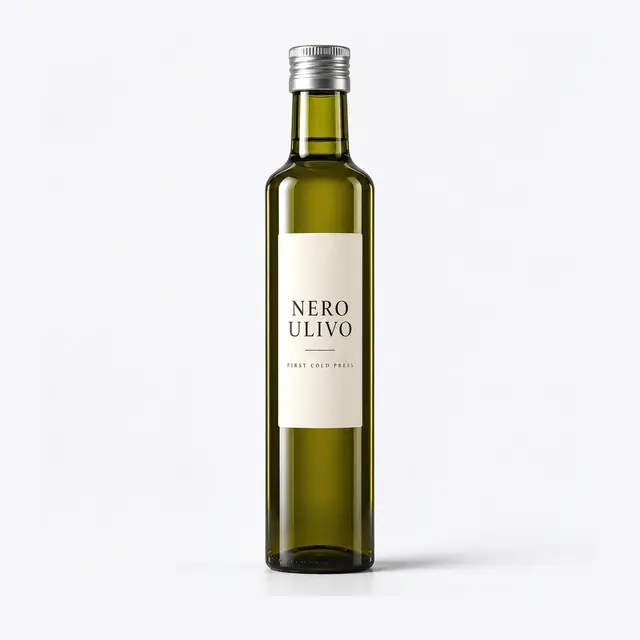
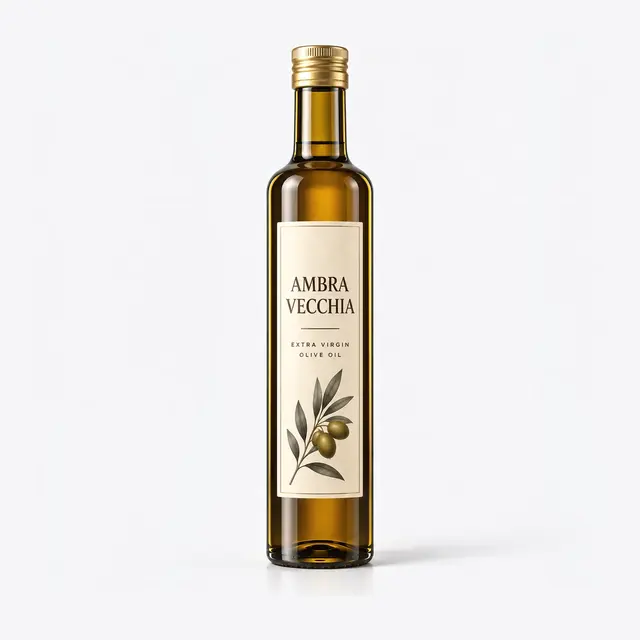

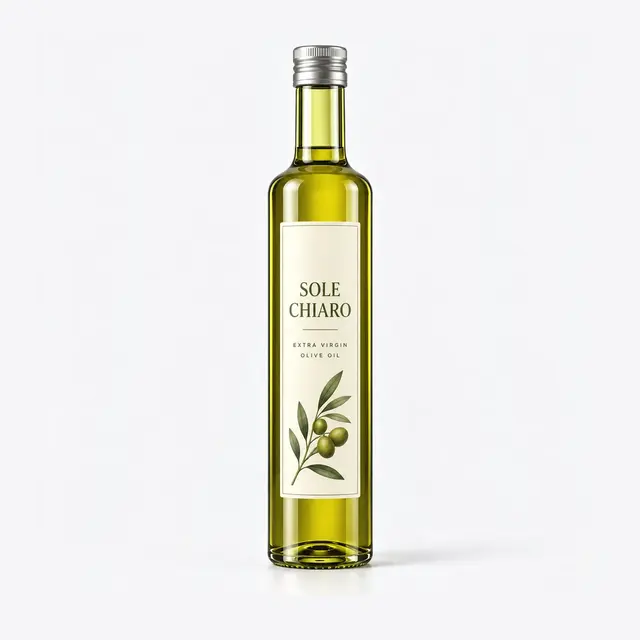
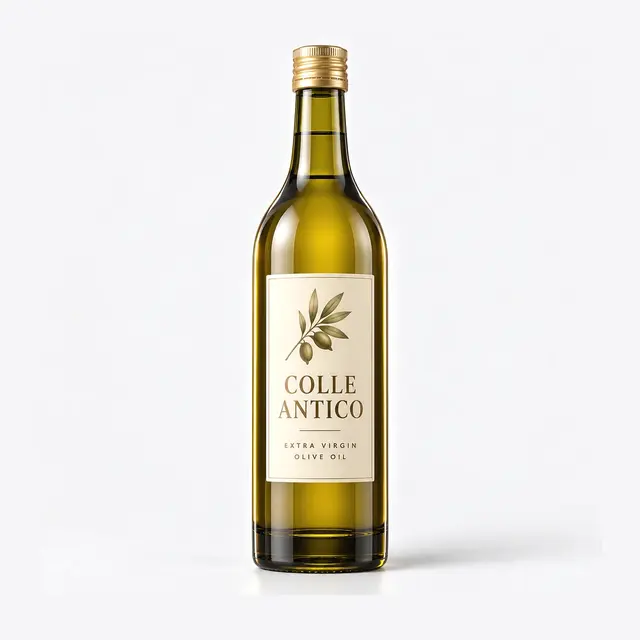
Marasca, Dorica or round
Three shapes carry almost all of the olive oil trade, and the choice between them is more about positioning and logistics than about the oil.
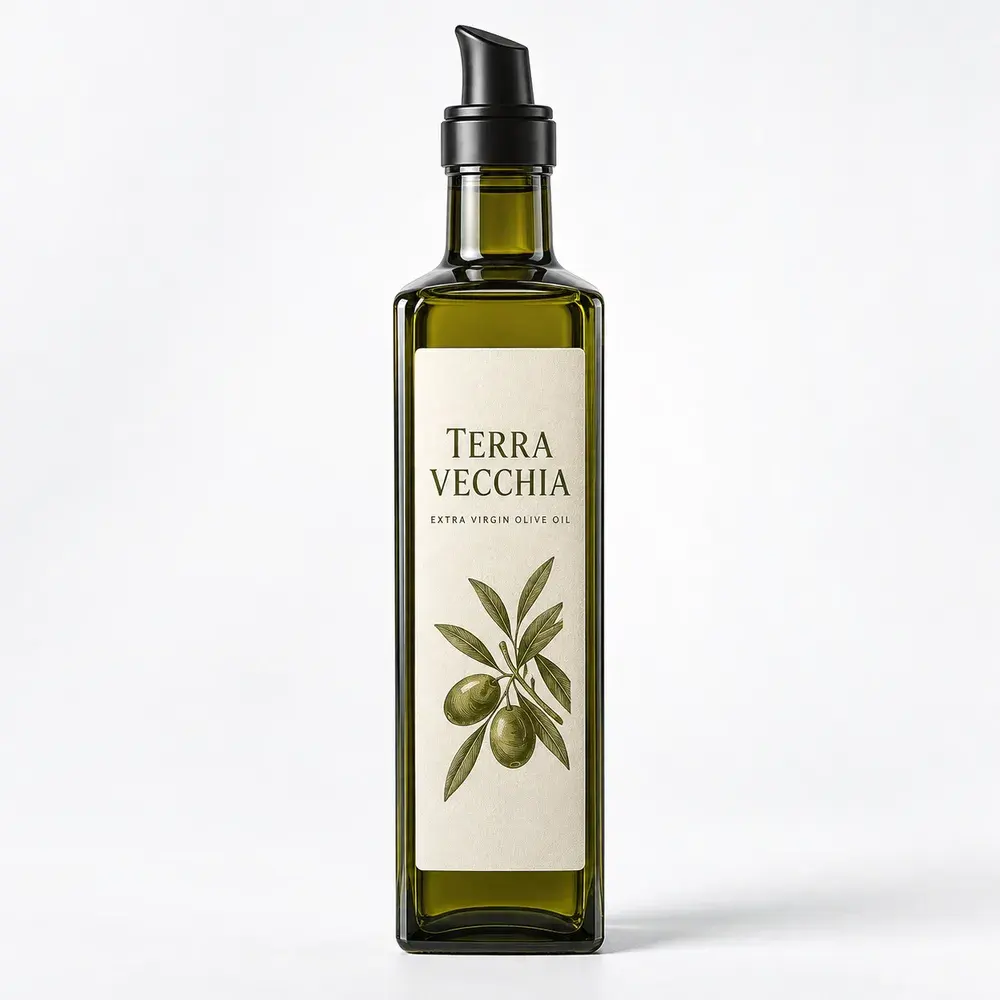
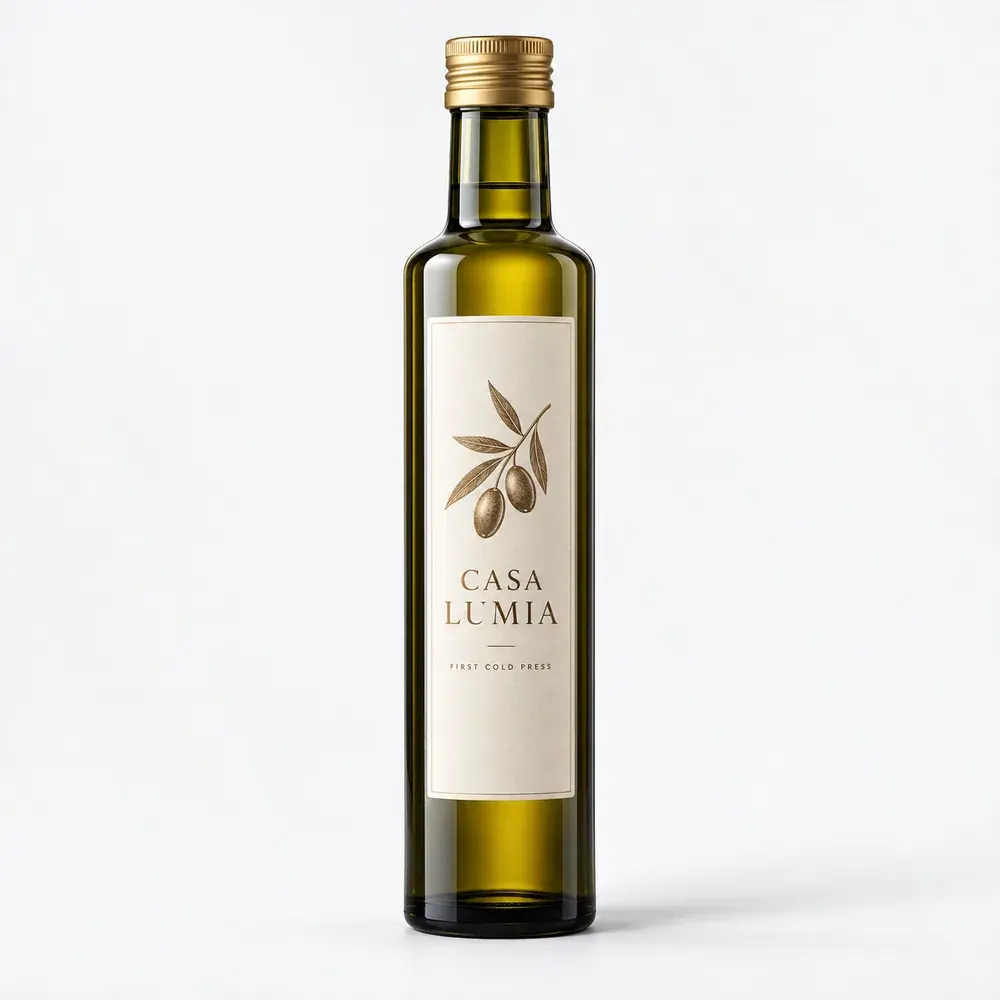
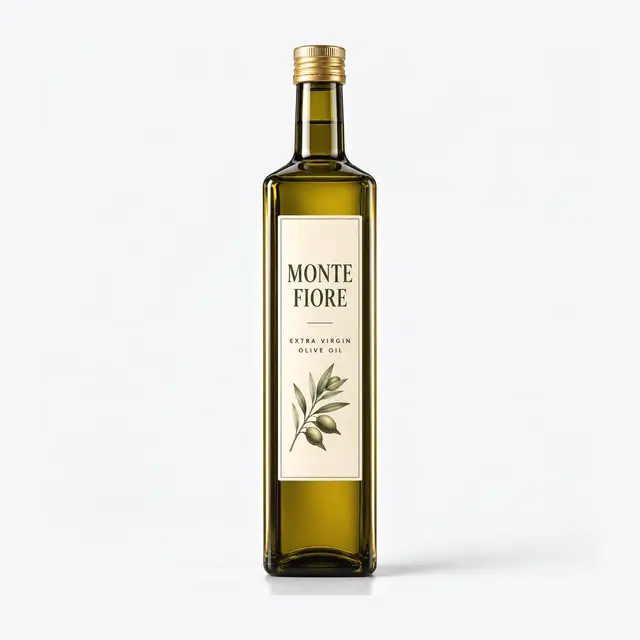
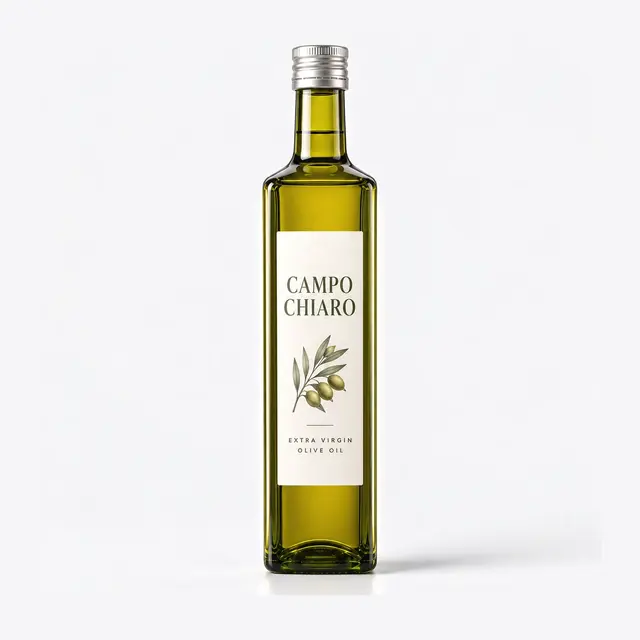
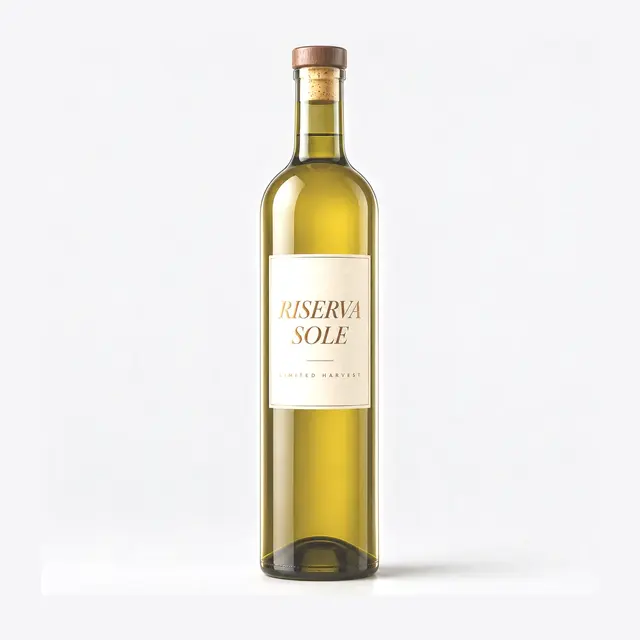
The Marasca is the square-shouldered Italian bottle that most people picture when they think "olive oil". Its flat faces take a large label, it packs densely because squares tessellate, and it carries strong provenance associations. The Dorica is the slim round with a tall neck — more elegant, more common on delicatessen shelves, and easier to pour accurately. Plain rounds sit between the two and tend to be the value-tier choice.
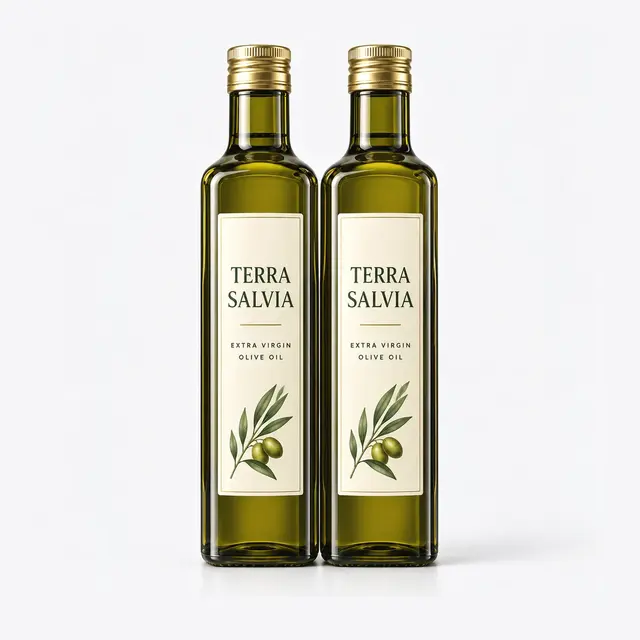
Square bottles are worth a second look on freight grounds alone. A square footprint wastes less space in a case than a circle does, which compounds through cartons and pallets into a real difference per container. For a category where the product is heavy and the margins are thin, that is not a rounding error.
Light is what spoils olive oil
Oxidation driven by light and heat is what turns good oil rancid and strips out the polyphenols that premium oil is sold on. This is why the category settled on dark glass long before it was fashionable: antique green, dark green and amber all cut light transmission substantially, and amber cuts it most.
Clear glass shows the colour of the oil, which is a genuine selling cue for a fresh, green first-press product — and a genuine risk if the bottle sits under supermarket lighting for months. Brands that want both usually solve it with secondary packaging: clear glass inside a carton or a sleeve, so the oil is visible at the point of unboxing and protected in transit and on shelf.
If light protection is a functional requirement for your oil rather than a stylistic default, say so — it narrows the glass colour choice and it is something the factory can speak to specifically. Our amber glass page goes through what amber does and does not block.
Closures, pourers and anti-refill fitments
Olive oil bottles rarely ship with a bare neck. A pourer insert controls the flow and stops drips down the side of the bottle; anti-refill fitments are required for some protected designation products and are common in food-service formats where bottle refilling is a recognised fraud route.
All of these fit into the finish, which means the finish has to be chosen for them. A bottle specified with a plain screw finish and then fitted with a pourer sourced separately is the usual way this goes wrong. Bring the fitment specification to the drawing stage.
Cork-style finishes appear at the premium end and in gifting, where the ritual matters more than the pour control. They also need a matching neck, so the same rule applies.
Also vinegar, and why that matters commercially
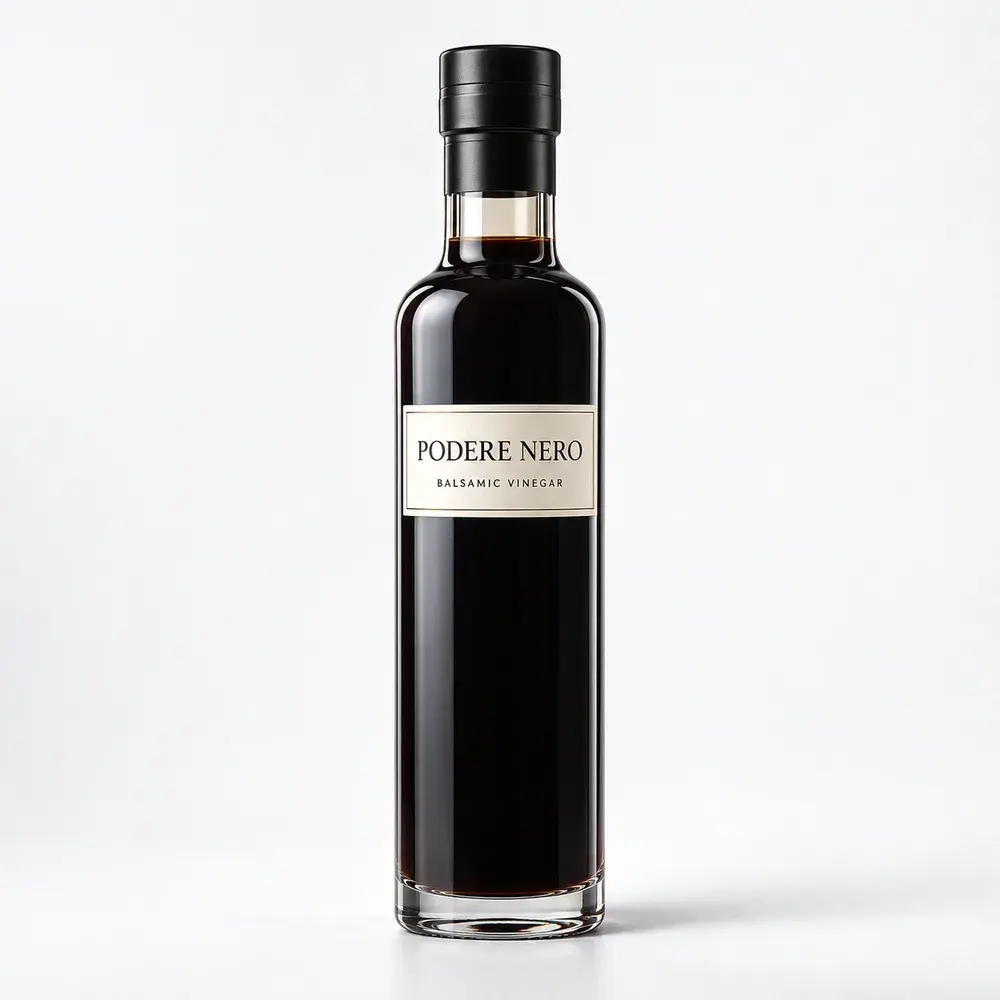
The same moulds run balsamic, wine vinegar and speciality condiment vinegars, and for a producer that is a useful piece of information rather than a footnote. Oil and vinegar frequently sell as a pair — a gift set, a deli duo, a restaurant table service — and running both from one mould family means one set of minimums, one closure specification and a pair that visibly belongs together.
The technical caveat is acidity. Vinegar does not attack glass, but it does affect cap liners and some fitment materials, so the closure specification should be confirmed for the actual product rather than carried across from the oil. Tell us if both fills are in scope and the closure question gets asked once instead of after the first delivery.
Dark glass serves vinegar less critically than it serves oil, since vinegar is far more stable under light. Where a pair has to match visually, that usually means choosing the glass on the oil’s requirement and letting the vinegar follow.
What to check when the samples arrive
Sample bottles are the point at which a specification stops being theoretical, and it is worth knowing what to look at. Four things catch most problems.
Colour consistency across the sample set, held together against a light source rather than one at a time — this is where furnace-to-furnace variation in antique green shows up, and it is the defect most likely to be visible on a shelf where six bottles stand side by side. Then the finish: screw the actual cap or pourer on and off several times and check it seats flush and square every time.
Third, stand the samples on a flat surface and look along the row for lean. A bottle that sits off-vertical will be labelled off-vertical. Fourth, fill one with water to your intended fill volume and look at where the liquid line falls relative to the label panel — this is the check that catches a brim-full versus declared-volume misunderstanding before it reaches artwork.
None of this replaces the dimensional report against the drawing, but it takes ten minutes and it catches the things a report does not describe.
Sizes and the retail ladder
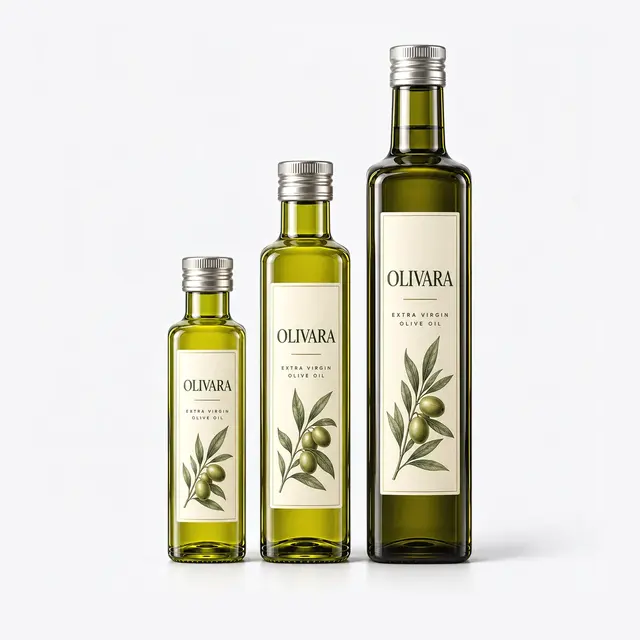
The moulds here run at 250ml, 500ml, 750ml and 1L, and several series are documented as families across two or three of those sizes. That matters commercially: olive oil sells on a ladder — a small size for trial and gifting, a mid size for household repeat purchase, a large size for heavy users and food service — and a ladder built from one mould family looks like a range rather than a collection of separate purchases.
Specifying the family at the start also means one closure specification, one label die-line system and one colour standard across the range. Retrofitting a second size from a different mould a year later is how shelves end up with two slightly different greens standing next to each other.
Common questions
Is amber or dark green better for olive oil?
Amber gives more protection; dark green carries stronger category associations and is what most of the trade expects. Both are legitimate. If shelf life under retail lighting is the priority, go amber; if provenance signalling is, dark green with a carton gives you both.
Can you supply pourers and anti-refill fitments?
Yes, coordinated with the glass so the finish and the fitment are specified together. If your product carries a protected designation with fitment requirements, send those requirements at brief stage — they constrain the neck finish and therefore the mould.
Do square bottles really ship cheaper than round ones?
Usually, because a square footprint tessellates and a circle does not, so you fit more bottles per case and more cases per pallet. The size of the gain depends on your carton design, so ask for the loading plan alongside the quotation rather than assuming a figure.
What capacity is standard for retail olive oil?
500ml is the most common retail size across Europe, with 250ml for premium and gifting and 750ml or 1L for value and food service. Labelling rules on stated volume differ by market, so confirm with your importer before artwork — the bottle drawing gives brim-full capacity, which is not the same number as the declared fill.