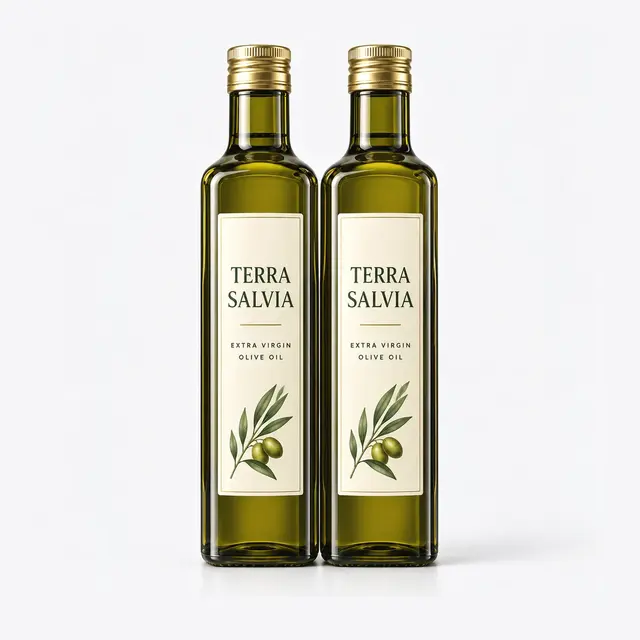
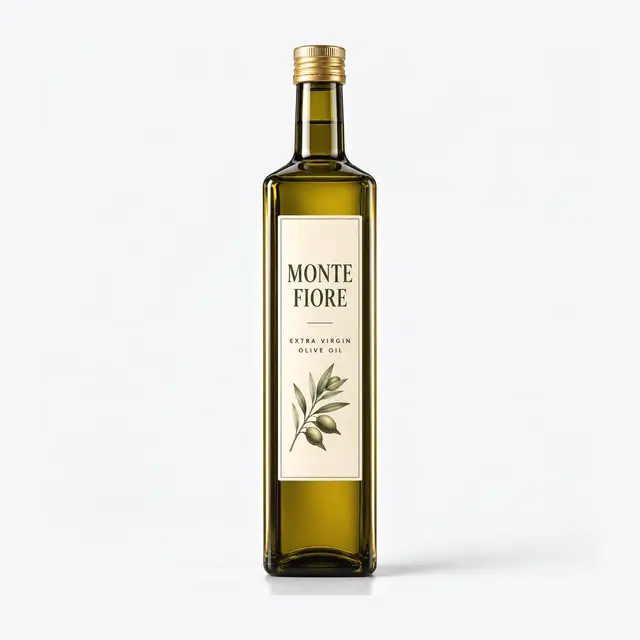
The Series 1814 is a coordinated three-size family of square marasca olive oil bottles, shown here in the classic staircase arrangement: two smaller units in a lighter green tone and a tall large-format unit in deep antique green. Together they cover the three commercial roles that almost every olive oil brand needs: a 250 ml class sampler and gift size, a 500 ml class household size, and a 750 ml to 1 liter class retail and food-service size. All three share the marasca square profile and the standard 31.5 mm threaded olive oil neck, so one closure system and one visual identity run across the whole range. Exact brimful capacity, weight, and dimensions of each size are confirmed on the technical drawings at quotation.
Choosing capacities is one of the most consequential packaging decisions an olive oil brand makes. Each size answers a different buying occasion, carries a different margin structure, and places different demands on filling, packing, and freight. This page walks through how buyers typically deploy a three-size marasca family, so you can brief us on the mix that fits your market rather than ordering sizes in isolation.
The 250 ml Class: Trial, Gift and Horeca
The smallest bottle in the family earns its place at the top of the funnel. As a sampler, it converts curious shoppers into repeat buyers at a low entry price. In gift and corporate programs, two or three small bottles of different grades or infusions make an attractive boxed set with a high perceived value per liter. For hotels, airlines, and restaurants, the same size works as a single-table cruet or an in-room amenity. Because the unit price of the glass is low, the small size is also where brands experiment with seasonal flavored oils without betting a full production run.
One practical note: small bottles carry relatively more closure cost per liter, so buyers usually pair them with standard ROPP caps rather than premium pourers unless the channel justifies it. We can advise on closure options per size when you request the family quotation.
The 500 ml Class: The Household Workhorse
The middle size is where weekly cooking oil lives. A 500 ml class marasca is large enough for regular household use yet small enough that a health-conscious consumer finishes it while the oil is still fresh, an argument premium brands increasingly print right on the label. For retailers, this size hits the psychological mid-price shelf slot and moves quickly, which keeps category managers happy and reorders frequent. In many European and Middle Eastern markets it is the single highest-velocity olive oil SKU, and brands that can only launch one size usually start here.
The 750 ml to 1 L Class: Retail Flagship and Food Service
The tall bottle in the photo anchors the range. In the 750 ml class it is the traditional flagship retail size for extra virgin olive oil, the bottle that carries your fullest label story and your strongest margin per unit. Stretched toward one liter, the same silhouette serves value-oriented family shoppers and small restaurants that buy oil by the case for back-of-house use. Because this size holds the most oil per closure and per carton, it usually delivers the best glass-cost-per-liter economics in the family, which is why private-label programs lean heavily on it.
The large format also carries the brand’s visual authority. On shelf, the tallest bottle is the one shoppers photograph, gift, and remember, so many brands reserve their richest label materials and premium closures for this size even when smaller units use simpler decoration. The deep antique green tone of the tall bottle in the photo reinforces that flagship positioning: darker glass signals serious extra virgin olive oil to experienced buyers, and it provides the strongest UV protection in the family for a size that may sit longer between purchases.
One Label System Across Three Sizes
A three-size family only works commercially if the branding scales gracefully. The marasca’s flat panels make this easier: your designer lays out the label once, then adapts the same grid to each panel height without fighting curvature. Keep the brand block, grade designation, and harvest date in identical relative positions across sizes so loyal customers can spot their bottle instantly whether they reach for the sampler or the flagship. We supply die-line dimensions for each size with the quotation, and pre-production samples let you validate label registration on all three before the bulk run.
Planning MOQ Across a Size Family
Ordering three sizes at once changes the MOQ conversation. Each size has its own mold set and its own production minimum, but stock-program sizes can often be combined in one container so that no single SKU has to fill a full shipment alone. Our glass bottle MOQ explainer details how mixed-size containers are structured, and our sales team will propose a loading plan that balances the sizes against your sales forecast. Most brands weight the mix toward the middle size, with the sampler and flagship sized at roughly half those volumes each, but your channel data should drive the final ratio.
Testing, Compliance and Export Packing
All three sizes are produced to the same inspection regime: internal pressure per ASTM C147, thermal shock per ISO 7459, and vertical load per ISO 8113, with wall-thickness mapping on the square corners where stress concentrates. The glass is food-contact soda-lime, with compliance documents available for your market. Bottles are packed in divider cartons and shrink-wrapped pallets as shown below, and the logistics process is covered in our China import guide. To receive capacity-confirmed drawings and a three-size quotation, contact us with your target mix.
Frequently Asked Questions
Can I mix the three sizes in one order to meet MOQ?
Yes, stock-program sizes can usually be combined in a mixed container so no single SKU carries the full shipment volume alone. Each size still has its own production minimum, and we will propose a loading plan that matches your sales forecast.
What are the exact capacities of the three bottles?
The family covers the 250 ml, 500 ml, and 750 ml to 1 liter classes based on the proportions shown. Exact brimful capacity, weight, and dimensions per size are confirmed on the technical drawings issued with your quotation.
Do all sizes use the same closure?
Yes, all three share the standard 31.5 mm olive oil neck finish, so one ROPP cap or pourer system works across the range. That means a single closure supplier and one capping setup for the whole family.
Can I get samples of each size?
Yes, we supply samples of each size so you can test filling, labeling, and shelf presence before committing. Samples are generally free; courier cost is paid by the buyer and credited against the first bulk order.
Which size should a new brand launch first?
Most new brands start with the 500 ml class because it is the highest-velocity household size in many markets, then add the 250 ml sampler for promotion and the 750 ml flagship as distribution grows. Your channel data should drive the decision, and we can share market observations during quoting.
What quality standards apply to the family?
Every size is tested for internal pressure per ASTM C147, thermal shock per ISO 7459, and vertical load per ISO 8113. The glass is food-contact compliant soda-lime, and test reports are available with your shipment documents.