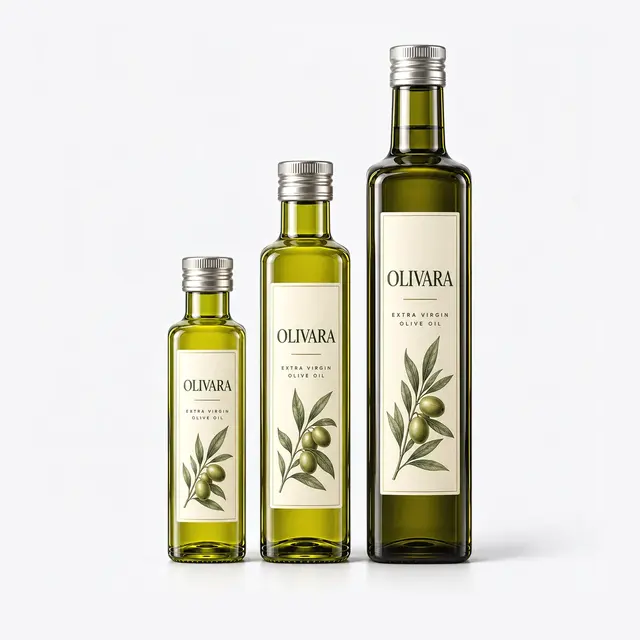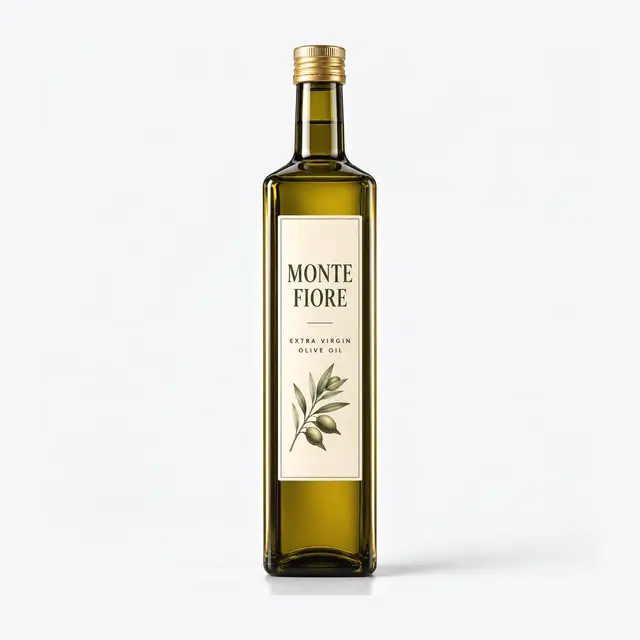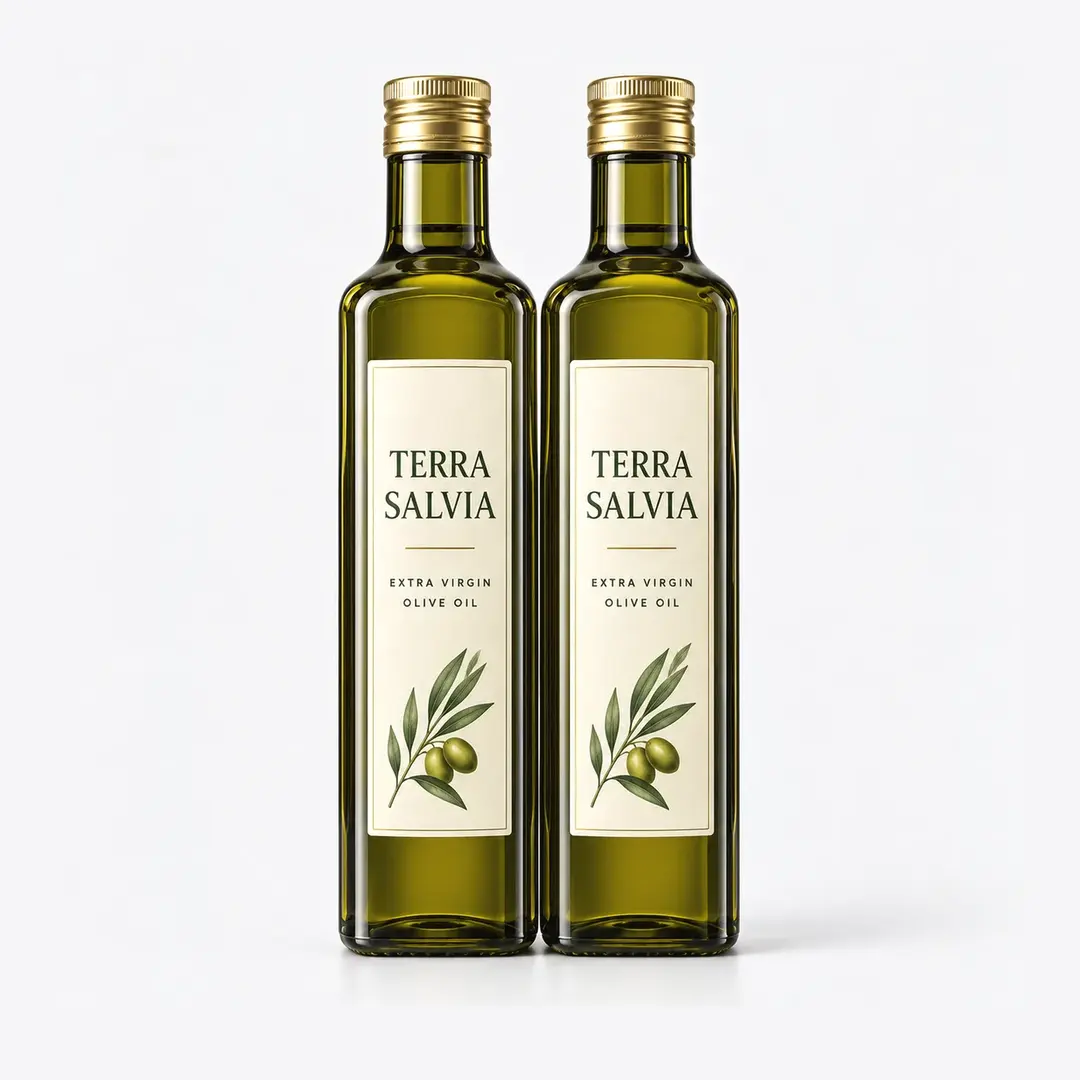
The Series 1881 pairs two identical antique green marasca olive oil bottles, a square-profile format sized for the heart of the retail market, where the 500 ml class drives the majority of supermarket and specialty-store volume. Both bottles share the same deep green glass, flat label panels, and threaded neck finish for the standard 31.5 mm olive oil closure. This is the bottle for brand owners and importers who think in terms of shelf facings, case counts, and pallet layers: its square footprint is engineered to put more sellable units into every meter of shelf and every cubic meter of container. Exact capacity, weight, and dimensional tolerances are confirmed on the technical drawing at quotation.
Olive oil is a logistics-heavy product. Glass is heavy, freight is priced by volume and weight, and retail shelf space is rented by the centimeter. In that equation, bottle geometry is a profit lever. The marasca square exists precisely because it converts more of the space you pay for into product you can sell, and the Series 1881 is a clean, modern execution of that proven commercial idea.
Shelf Efficiency: More Facings per Meter
On a retail shelf, a round bottle wastes the triangular gaps between neighbors; a square bottle does not. Line up marasca bottles facing forward and the row is nearly solid product, which means more facings per shelf meter and less frequent restocking for the retailer. Buyers for supermarket chains notice this. When your brand can offer the same liters of oil in a shorter shelf run, you make the category manager’s job easier, and that argument carries weight in listing negotiations, especially for private-label programs where the retailer owns the shelf economics.
The flat front panel also reads straighter at eye level. There is no curved surface to bend your brand name out of view at the edges, so a single facing communicates the full label. For brands investing in premium label design, that visibility advantage compounds the packing advantage.
Carton and Pallet Density: The Freight Payoff
The efficiency story continues through the supply chain. Square marascas nest into divider cartons with minimal void space, so a standard export carton holds more bottles than it would with an equivalent round format. More bottles per carton means fewer cartons per pallet, higher pallet density, and a better container utilization rate on ocean freight. Across a year’s volume, the landed-cost difference per bottle is material, and it is one of the main reasons the marasca has remained the default olive oil shape for generations.
We can provide carton layouts and pallet loading plans for the Series 1881 at quotation stage so you can model landed cost precisely before you commit. If you are comparing this bottle against a round alternative, ask for both loading plans side by side; the numbers usually make the decision for you.
Glass Color and Product Protection
The antique green tone visible in the photo is the classic olive oil glass for good reason: it filters a substantial portion of the UV light that oxidizes extra virgin oil and degrades its flavor and polyphenols. For a 500 ml class bottle that may sit under supermarket lighting for weeks, that protection is a genuine quality feature, not an aesthetic afterthought. The color is furnace-integrated, consistent across production runs, and fully recyclable within standard glass streams.
Closure System and Line Compatibility
The threaded finish accepts the standard 31.5 mm olive oil closure family: ROPP aluminum caps with tamper-evident bands, non-drip pourer fitments, and economy screw caps. The marasca’s defined shoulder gives handling equipment a reliable contact surface, and the square body runs well on modern lines with simple lane guides. We supply matched closures on request so bottles and caps arrive as a validated set; always confirm the finish drawing with the factory before sourcing caps elsewhere.
Private Label and Decoration Options
The flat panels of the marasca are an open canvas for brand building. Pressure-sensitive front and back labels apply cleanly on the square faces without the curling or flagging that curved bottles can suffer, and the broad shoulder accepts neck collars and tamper sleeves for premium presentation. Beyond labels, we support screen printing, acid-etch frosting, and color coating for brands that want a distinctive shelf block; minimums and pricing for decoration are quoted per process, and pre-production samples are made for approval before the run starts.
For private-label buyers building a store-brand olive oil line, this bottle’s neutral, classic proportions accept almost any design language, from minimalist modern typography to traditional Mediterranean illustration. Because the shape itself is instantly recognized by consumers as an olive oil bottle, your label budget works harder: shoppers already know what is inside before they read a word, which frees your design to sell brand and grade rather than explain the category.
Inspection Standards and Export Packing
Square bottles concentrate stress at their corners, which is why Series 1881 production is monitored for wall-thickness distribution and annealing quality, then sampled against ASTM C147 internal pressure, ISO 7459 thermal shock, and ISO 8113 vertical load standards. Bottles ship in divider cartons on shrink-wrapped export pallets, as shown below. Minimums depend on stock status; our glass bottle MOQ guide explains how order minimums are structured, and our China import guide covers the full ordering process. For a quotation with confirmed specifications, decoration pricing, and current production lead time, contact our team with your target volume, destination port, and launch schedule.
Frequently Asked Questions
What is the MOQ for Series 1881 marasca bottles?
Minimums depend on whether the size is running as a stock program or a dedicated production run. Stock sizes typically start from a container-scale minimum that keeps freight cost per bottle low. Tell us your target volume and we will quote the exact MOQ and carton configuration.
Can I receive samples before confirming a bulk order?
Yes. We ship physical samples so you can verify shelf appearance, label fit, filling behavior, and cap application. Samples are generally free; the buyer covers courier charges, which we credit against the first bulk order.
Which closures are compatible with this bottle?
The neck is finished for the standard 31.5 mm olive oil closure system, including ROPP aluminum caps with tamper-evident bands and non-drip pourer inserts. We can supply matched closures as a leak-tested set, and the finish drawing is provided at quotation.
How many bottles fit in a container?
Exact counts depend on the confirmed capacity and carton layout, which we calculate at quotation with a pallet loading plan. Square marascas pack significantly denser than round bottles of the same volume, so container utilization is one of this format’s main advantages.
Is the antique green glass food-safe and protective?
Yes. The glass is food-contact soda-lime with furnace-integrated antique green color that filters much of the UV spectrum responsible for olive oil oxidation. Compliance and migration test documentation is available with your shipment.
What quality tests are performed before shipment?
Production is sampled against ASTM C147 internal pressure, ISO 7459 thermal shock, and ISO 8113 vertical load standards, with wall-thickness and annealing checks on square formats. Third-party pre-shipment inspection can be arranged on request.