Filed under glass olive oil bottles; the moulds we quote for this are pictured at the foot of the page.
An olive oil bottle is quoted per project, and the figure moves mainly with three things: how much glass the bottle carries, which furnace colour it is melted in, and how many you order. Shape matters far less than buyers expect, while glass colour matters more, because for olive oil the colour is also the light protection. Closures, decoration and container loading then decide what the pack costs once it reaches your filler.
Start with the colour, because it protects the oil
After oxygen, light is the second thing that ruins olive oil. Photo-oxidation breaks down polyphenols and produces off-flavours within weeks under shop lighting, so the glass colour is a shelf-life decision before it is a styling one.
| Glass | Light behaviour | Where it fits |
|---|---|---|
| Flint (clear) | Lets wavelengths below about 450nm through almost unhindered | Oil that sells through quickly from dark storage, or markets where shoppers insist on seeing the colour of the oil |
| Antique green | Reduces transmission materially | Mainstream extra-virgin oil on a lit retail shelf |
| UVAG (UV-absorbing glass) | Blocks essentially everything below 450nm, with a near-black appearance | Oils positioned at the top of a range, or long exposure to retail lighting |
Flint is the baseline, antique green sits above it and UVAG above green. The difference comes from furnace chemistry, not from a coating. The colour is in the glass itself, so it cannot scratch off, and it has to be weighed against an extra-virgin oil going stale on the shelf before its best-by date.
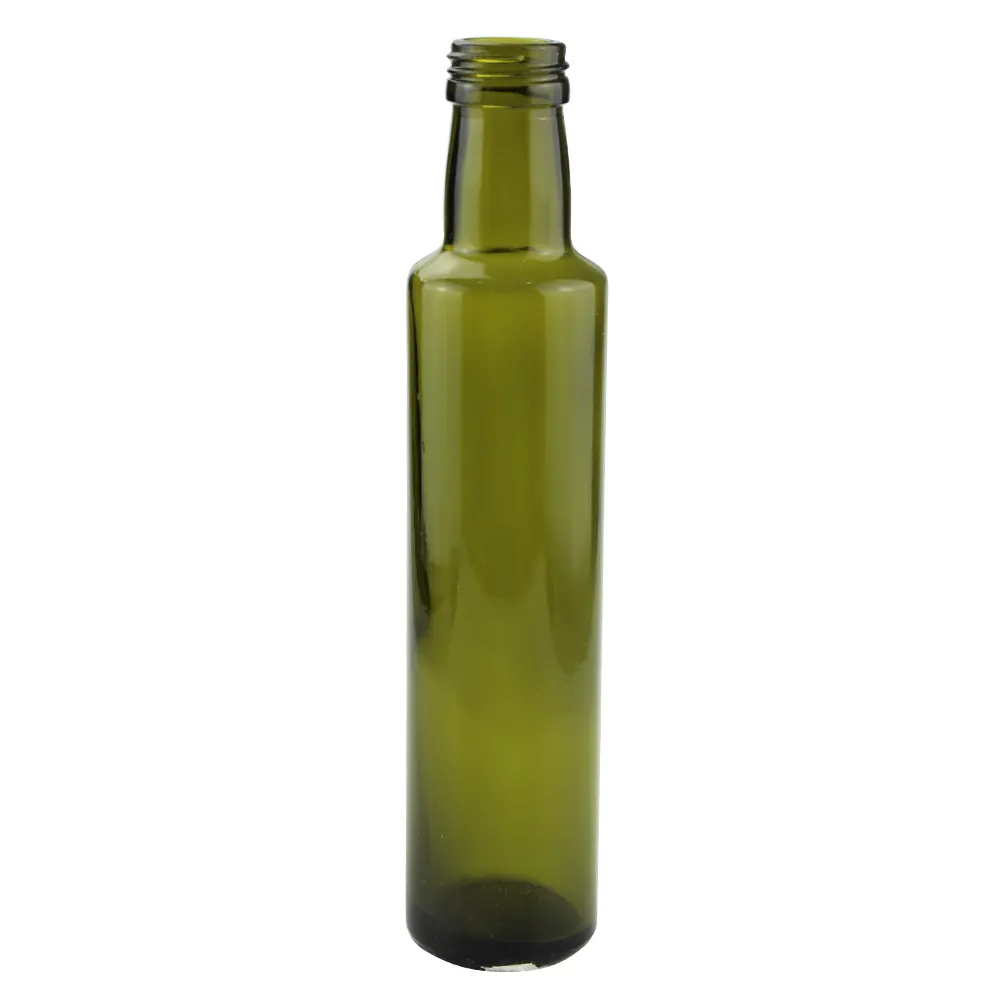
Marasca, dorica and the gift shapes
Two shape families cover most of the trade. The marasca is the square-shouldered bottle seen on most extra-virgin shelves: it does not roll, it packs tightly, and its flat panels accept a label cleanly. The dorica is the tall round cylinder associated with Mediterranean table oil, and it runs more easily on high-speed lines built for round bottles.
Round-shoulder (bola) and amphora-style bottles sit in the gift and top tiers, where the silhouette is part of what the customer is buying.
At the same capacity and colour, the difference in quoted cost between marasca and dorica is small enough to ignore. Choose on brand and on what your filling line accepts. The common stock formats are:
| Capacity | Shape |
|---|---|
| 250ml | Marasca |
| 500ml | Marasca or dorica |
| 750ml | Marasca or dorica |
| 1000ml | Marasca |
Quotes for these are normally built on the bottle alone, packed in divider cases, FOB a Chinese port. The underlying logic of glass weight, furnace colour and volume tiers is the same one we set out in the general guide to how glass bottles are priced. If the range also includes tapenades or spreads in jars, the honey jar cost model is the closer comparison.
The closure is where oxygen gets in
The standard closure for olive oil is a 31.5mm ROPP aluminium cap, rolled onto the neck at the filler. It is tamper-evident and oxygen-tight, and it is often supplied with an integrated pourer fitment, either a non-drip spout or a flow restrictor.
Whatever closure you choose, write an oxygen-transmission requirement for the liner into the specification. In a finished bottle of oil, oxygen enters through the closure and not through the glass.
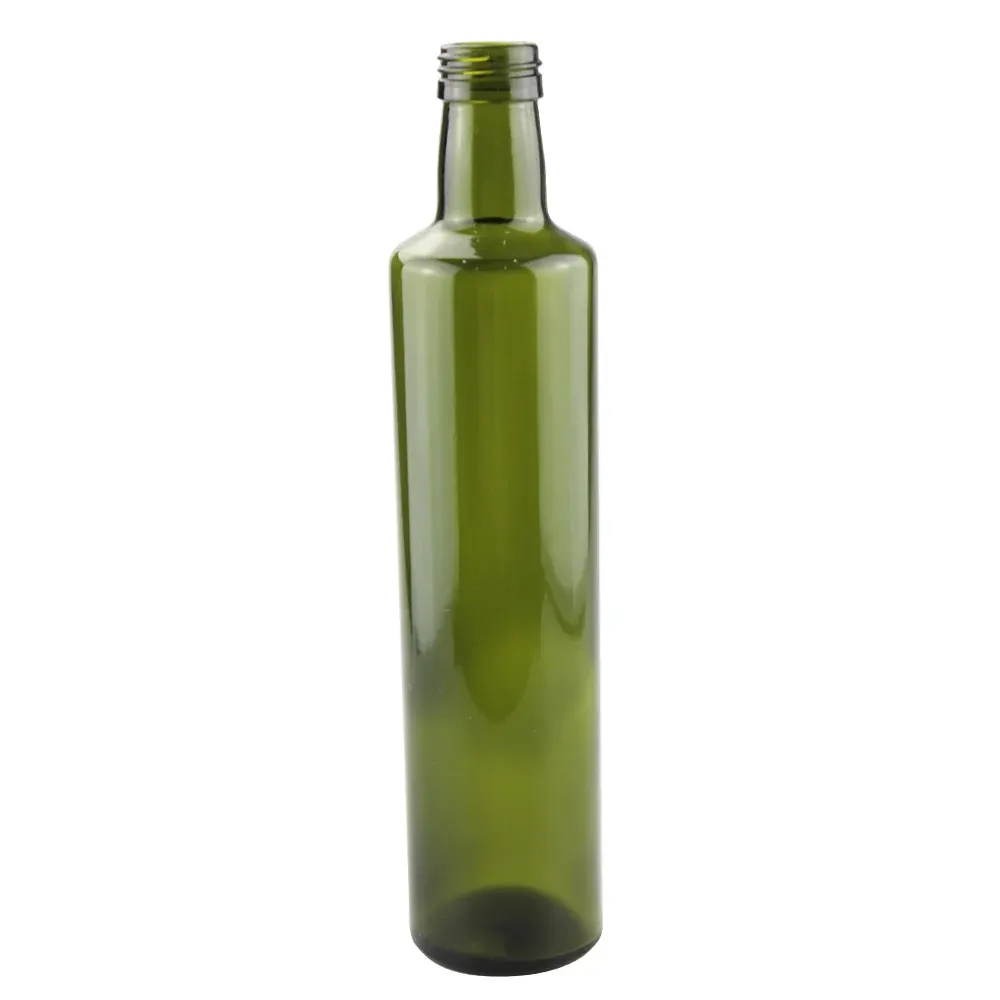
Decoration and container loading
Frosting and spray colour are available but uncommon on oil bottles, since dark glass already does the visual work. Embossing is a different matter: it is cut into the mould, so a logo cannot be added to a true stock bottle.
Freight is where shape pays back. A 40HQ container takes about 32,000-36,000 square 500ml marascas, against 28,000-30,000 round bottles of the same capacity, and square marascas pack about 12% more bottles per pallet than round doricas. That lowers the freight carried by each bottle.
Three checks before the container sails:
- Order 2% spare glass to cover breakage and line rejects.
- Keep caps on a separate line of the packing list.
- Confirm that the ROPP chuck on your filler matches the 31.5mm finish.
Sampling, documentation and Incoterms are covered step by step on our olive oil bottle wholesale page.
Frequently asked questions
What does a 500ml olive oil bottle cost?
It is quoted per project, because the mould, the decoration, the quantity and the freight terms all change the answer.
Does dark glass cost more than clear?
Yes, and UVAG more than antique green, because of what goes into the melt. For extra-virgin oil sold under retail lighting it is inexpensive protection against photo-oxidation.
Is marasca or dorica the cheaper shape?
The bottles themselves are close at equal capacity. The real gap is in freight, where the square marasca fits more units on a pallet. Pick the shape for brand positioning and treat the freight saving as a bonus.
What is the minimum order for olive oil bottles?
Minimums are set per project, since they depend on the mould and on the line it runs on. To get one, send us the capacity, neck finish, closure type, quantity and destination port.
Can a stock olive oil bottle carry a custom embossed logo?
Not on a true stock mould, because embossing is part of the mould itself.