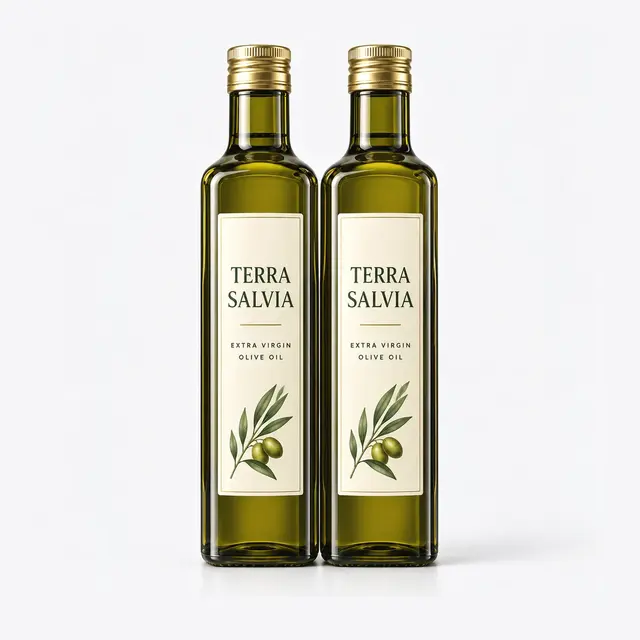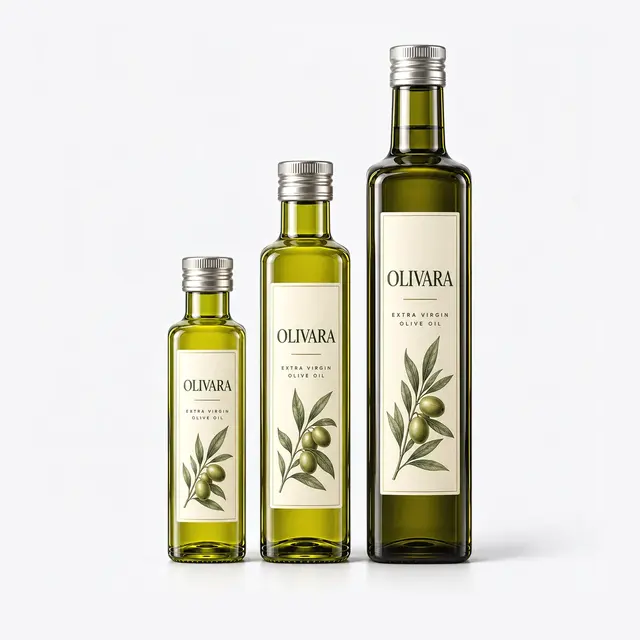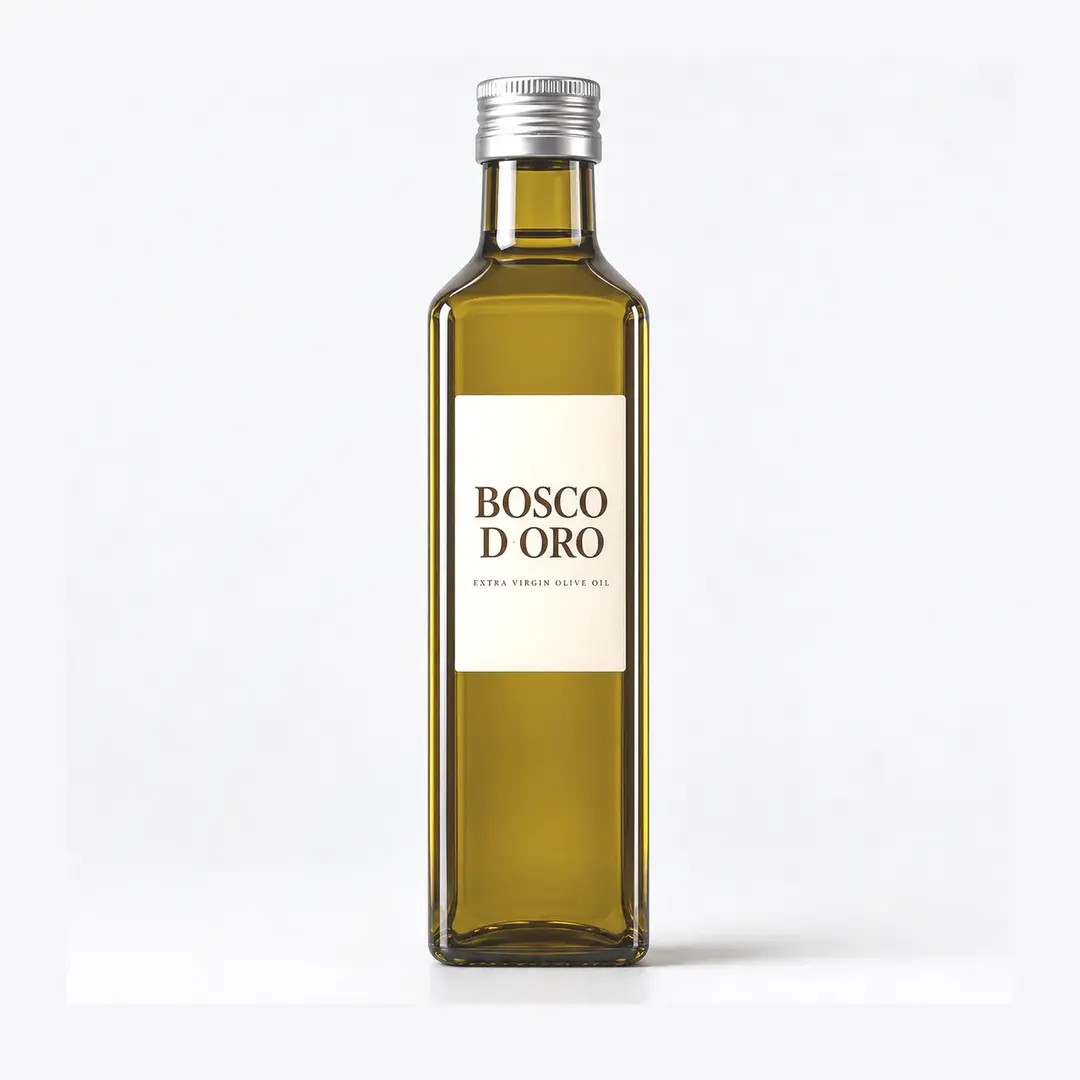
Series 1712 is a square-section marasca olive oil glass bottle in a deep amber-olive tinted glass, shown in the photo with flat panels, crisp shoulder transitions and a 31.5 mm ROPP thread finish for standard aluminum olive oil caps. The marasca is the workhorse format of the Mediterranean olive oil trade, and this series is built for brands, bottlers and importers who think in terms of shelf facings, case cube and pallet density as much as aesthetics. If your commercial reality is retail planograms, export cartons and container loading math, a square marasca earns its keep every step of the way.
The Square Marasca: Built for Shelf Efficiency
Retail shelf space is rented by the centimeter, and square bottles simply waste less of it. Where round bottles leave diamond-shaped gaps between every four neighbors, square marasca bottles stand shoulder to shoulder with no dead air, so a facing of Series 1712 presents more units and more label in the same linear space. Category managers notice this; brands that pack more product per facing get reordered more readily.
The flat front and back panels also behave better on shelf. A square bottle cannot roll, sits squarely in wire shelf dividers, and keeps its label facing forward without the slow rotation that round bottles suffer as customers handle them. For premium oils where the label is the salesman, that consistent front-facing presentation is worth real money.
Case Packing, Pallet Density and Freight Math
The same geometry that wins on shelf wins in the carton. Square bottles pack into cases with minimal void space, so a 12-bottle case of marasca bottles is measurably smaller than the equivalent round-bottle case at the same capacity. Smaller cases mean more cases per pallet layer, more pallets per container, and a lower freight cost per bottle landed at your warehouse.
For export buyers, this math compounds. Olive oil is heavy, dense freight, and glass is the biggest cube driver in the landed cost of a private-label program. Buyers who switch from round to square formats at the same nominal capacity often find an extra layer or an extra column of cases in every 40-foot container. Exact case dimensions and palletization schemes for Series 1712 are provided with the quotation so your logistics team can verify the numbers before ordering.
Glass Tint and Product Protection
The deep amber-olive tint visible in the photo sits in the same protective family as the antique green and amber glasses used across the quality end of the olive oil trade. Colored glass absorbs the ultraviolet and blue light that drive photo-oxidation in extra virgin olive oil, protecting polyphenols and fresh aromatics through months of retail lighting and distribution. The exact tint designation and light-transmission specification for this series can be confirmed with the factory at quotation.
The flat panels of the marasca also reduce the lensing effect that curved walls create under spotlights, so the oil inside is exposed to less concentrated light than in some round formats. Combined with a colored tint, that makes the square marasca a sensible default for oils with real shelf-life ambitions.
Neck Finish and Closure Pairing
Series 1712 carries the standard 31.5 x 24 mm ROPP olive oil finish, accepting roll-on pilfer-proof aluminum caps with tamper-evident bands and optional non-drip pourer inserts. This is the closure system the Mediterranean trade is built around, so caps, pourers and capping heads are all commodity items your co-packer already runs. We can supply matched closures, or the bottle works with your existing cap supplier.
Thread dimensions and pourer compatibility are confirmed on the technical drawing and validated with physical samples before production, so there are no surprises at the capping station.
One handling note specific to square formats: because the corner panels are flat, the bottle presents a broad contact surface to conveyor side guides, which actually reduces scuffing compared with round bottles that pivot against rails. Filling lines that already run square marasca or square spirits formats will need little more than a guide-width adjustment. If your line has only ever run round bottles, plan a short changeover trial with our samples before the production lot arrives, and confirm star-wheel pockets and labeler orientation with your co-packer.
Quality Control Standards
Every lot of Series 1712 passes dimensional gauging, visual inspection and performance testing before packing. Internal pressure resistance is verified with reference to ASTM C147, thermal shock endurance follows ISO 7459, and container pressure testing follows ISO 7458 methodology. Square bottles carry different stress patterns than round ones at the corners and heel, so annealing is monitored by polariscope with particular attention to those zones.
The glass is food-grade soda-lime, compliant with EU and FDA food-contact expectations, with heavy-metal migration controlled within regulatory limits. Test reports and compliance declarations are available to your quality team during sampling.
Ordering Process and Customization
Minimum order quantities for this stock mold follow one efficient furnace run; current figures and the logic behind them are in our guide to glass bottle MOQ. Samples ship within days for filling, capping and labeling trials, and lead time from deposit to ex-works is typically a few weeks for stock molds. Bottles ship on shrink-wrapped export pallets or in printed cartons, photographed before container loading.
Decoration options for the flat marasca panels are extensive: pressure-sensitive labels, screen printing, frosting and hot stamping all work well on the flat surface. If you are planning your first container of packaging from China, our guide to importing glass bottles from China covers Incoterms and inspection. For a quotation on Series 1712 with case and pallet specs, contact our team with your capacity, annual volume and destination port.
Frequently Asked Questions
How much can I save on freight with square marasca bottles?
Savings come from cube efficiency: square bottles pack with almost no void space, so cases are smaller and more cases fit per pallet and per container. The exact gain depends on capacity and case configuration, but buyers commonly fit an extra column or layer of cases per 40-foot container versus round bottles at the same capacity. We provide case dimensions and palletization schemes with every quotation so you can calculate your own numbers.
What is the MOQ for Series 1712?
The MOQ is one efficient production run of the stock mold, typically around one 20-foot container load for this bottle size. Smaller trial quantities are sometimes available from warehouse stock. Contact sales for the current MOQ and any stock lots on hand.
Do square bottles run on standard filling lines?
Yes, most modern olive oil lines handle square marasca bottles routinely. The main difference versus round bottles is at infeed and labeling, where the line needs to control bottle orientation. We recommend sending samples to your co-packer before ordering so changeover settings can be validated.
Which closure fits Series 1712?
The bottle carries the standard 31.5 x 24 mm ROPP olive oil finish for roll-on pilfer-proof aluminum caps, with or without non-drip pourer inserts. We can supply matched caps and pourers or work with your existing closure supplier. Thread dimensions are confirmed on the technical drawing before production.
Is the tinted glass food-grade for edible oils?
Yes. Series 1712 is food-grade soda-lime glass compliant with EU food-contact rules and FDA expectations, with heavy-metal migration controlled within regulatory limits. The tinted glass also absorbs UV and blue light that would otherwise accelerate oxidation of the oil. Compliance documents are available during sampling.
Can I get samples and how long is production?
Physical samples ship by courier within a few days for filling, capping and labeling trials; the courier cost is credited against your first order. Production of a stock mold typically takes three to four weeks from deposit, plus sea freight of roughly two to five weeks depending on destination. We quote FOB, CIF or DAP as you prefer.