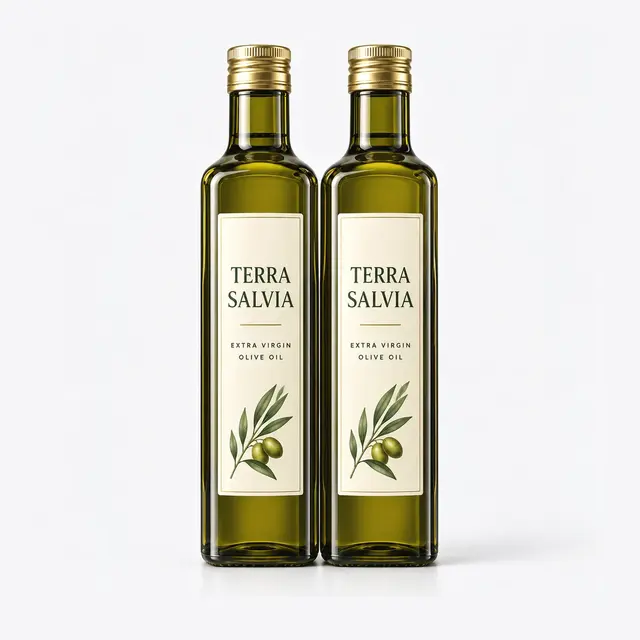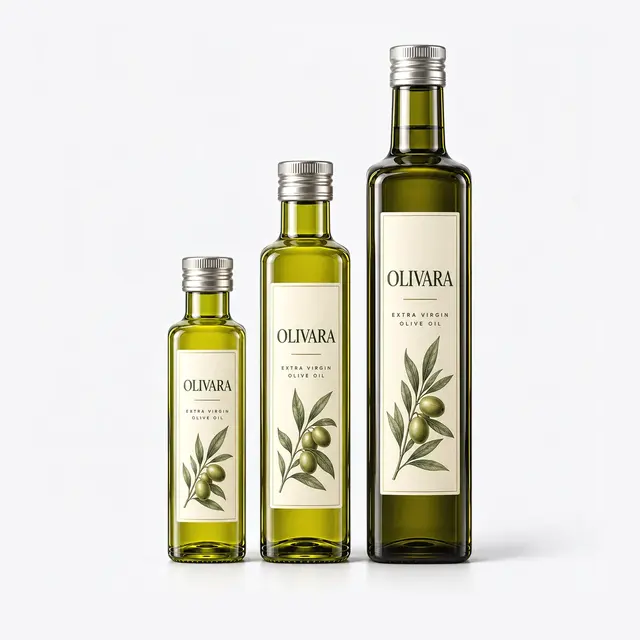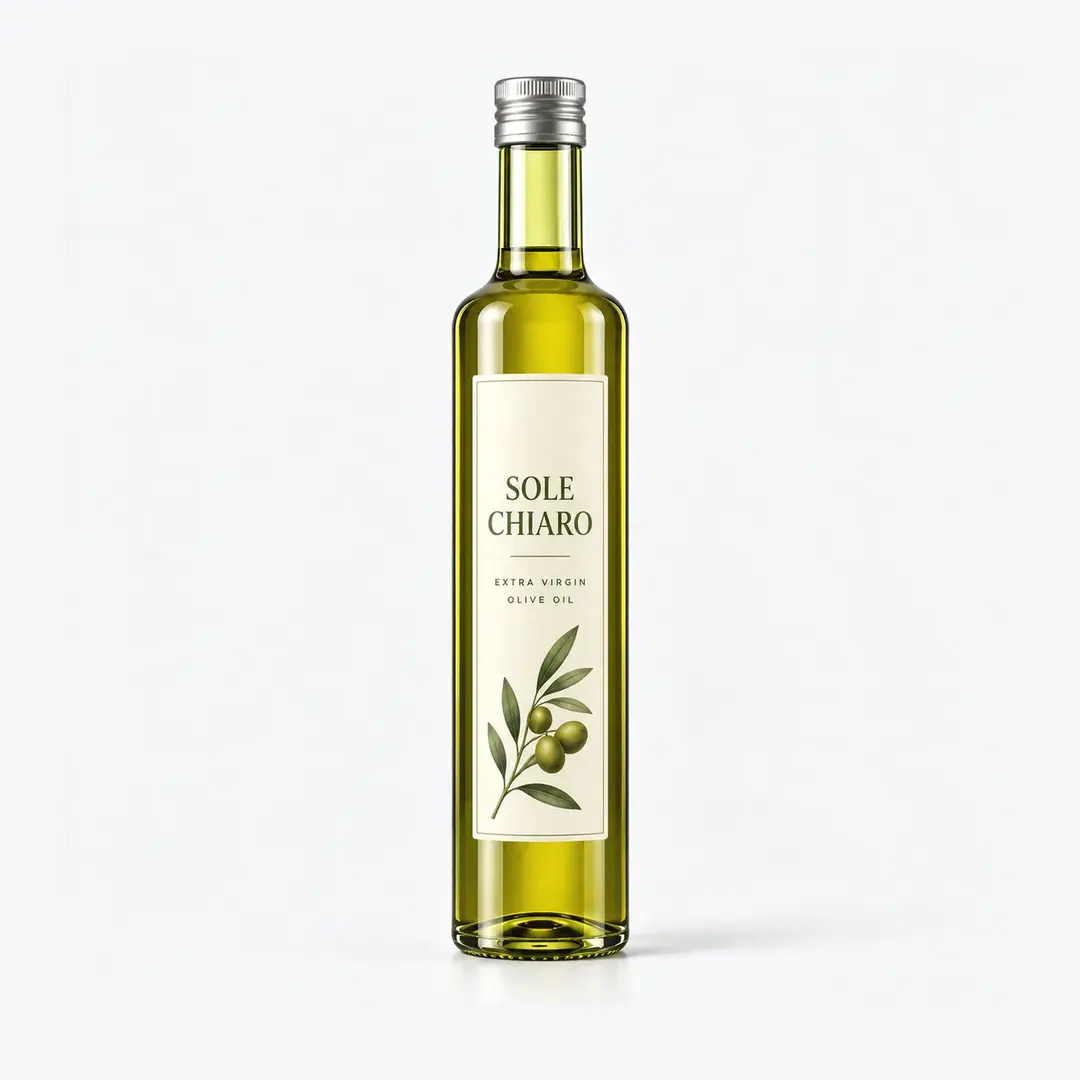
Series 1652 is a tall, round olive oil glass bottle in a light yellow-green tinted glass, shown in the photo with a slim cylindrical body, a crisp angular shoulder and a 31.5 mm ROPP thread finish for standard aluminum olive oil caps. Where dark antique green hides the oil completely, this lighter tint lets the golden-green color of the oil itself show through and do part of the selling. The series is aimed at mainstream retail brands, high-volume co-packers and importers who run fast filling lines and want a fresh, modern shelf look without moving all the way to flint glass.
Light Green Glass: Letting the Oil Color Do the Selling
Shoppers cannot taste olive oil on the shelf, so they read visual cues, and the color of the oil is one of the strongest. A vibrant golden-green oil in a lightly tinted bottle signals freshness and quality in a way that dark glass simply cannot. Series 1652 sits in the middle of the tint spectrum: enough color to communicate a Mediterranean, olive-oil identity, but transparent enough that the product inside remains clearly visible.
This positioning works especially well for mainstream and value-tier extra virgin, for blended olive oils, and for markets where consumers associate very dark bottles with older-fashioned brands. It also suits flavored and infused oils where visible herbs, chili or lemon peel in the bottle are part of the appeal. The trade-off versus dark green is reduced light protection, so this tint makes most sense for products with fast stock rotation, or where the brand compensates with case-ready shelf packaging or shorter supply chains.
A Tall Round Profile Tuned for High-Speed Filling
The round cross-section of Series 1652 is the friendliest geometry a filling line can meet. Rotary and linear fillers, vacuum filling heads, timing screws, star wheels and wrap-around labelers all handle round bottles without orientation devices, and change parts for dorica-type round bodies are commodity items across line builders. For co-packers running thousands of bottles per hour across multiple SKUs, a round bottle with a straight body wall is the format that keeps efficiency numbers high and changeover minutes low.
The tall, slim proportions add further advantages. More bottles fit per meter of conveyor and per pallet layer, the straight wall gives labelers a consistent surface at speed, and the defined shoulder provides a reliable handling point for grippers and air conveyors. Dimensions and tolerances are confirmed on the technical drawing at quotation, and samples are available so your filler can validate settings before the production lot ships.
Choosing Between Light Green, Antique Green and Flint
Glass tint selection is a marketing decision as much as a technical one. Dark antique green maximizes light protection and suits premium EVOO with long shelf-life ambitions. Flint glass puts the oil fully on display and suits fast-turning flavored oils and foodservice formats. Light green, as in Series 1652, splits the difference: visible oil color, a recognizable olive-oil identity, and partial light screening that is meaningfully better than flint.
Many brand families run two tints across tiers: dark green for the flagship extra virgin, light green for the everyday line. If you are building such a range, we can supply both tints in matching silhouettes so the family reads as one design on shelf. Light-transmission specifications for each tint can be confirmed with the factory when you request samples.
ROPP Closures and Pourer Fitments
The neck finish is the olive oil industry standard 31.5 x 24 mm ROPP thread, accepting roll-on pilfer-proof aluminum caps with tamper-evident bands and optional non-drip pourer inserts. Caps in silver, gold, black and green pair naturally with the light tint, and we can supply matched closures or work with your existing cap supplier. Thread geometry and pourer compatibility are confirmed with physical samples before production so your capping torque and pourer fit are validated on the real bottle.
QC Standards and Testing
Every lot of Series 1652 passes dimensional gauging, visual inspection and performance testing before packing. Internal pressure resistance is verified with reference to ASTM C147, thermal shock endurance follows ISO 7459, and container pressure testing follows ISO 7458 methodology. Annealing is checked by polariscope so bottles survive line handling, hot filling where applicable, and export freight without stress failures.
Color consistency matters more in a light tint than a dark one, because small batch variations are visible. Furnace campaigns run controlled batch recipes with colorimetric checks between lots, and retained color standards from your first run serve as the reference for reorders. The glass itself is food-grade soda-lime, compliant with EU and FDA food-contact expectations, with migration controlled within regulatory limits and documentation available during sampling.
MOQ, Samples and Export Logistics
Minimum order quantities for this stock mold are built around one efficient furnace run; current figures and the reasoning behind them are in our guide to glass bottle MOQ. Samples ship by courier within days for filling and labeling trials, with the courier cost credited against your first order. Production lead time from deposit to ex-works is typically a few weeks for stock molds, and bottles travel on shrink-wrapped export pallets with layer pads, photographed before container loading.
If this is your first time buying packaging from China, our overview of importing glass bottles from China walks through Incoterms, inspection options and documentation. To price Series 1652 in your target capacity, contact our sales team with your annual volume and destination port, and we will reply with a quotation, the technical drawing and a sampling plan.
Frequently Asked Questions
Does light green glass protect olive oil as well as dark green?
No, light green provides only partial light screening. It blocks more UV than flint glass but significantly less than dark antique green or amber. This tint suits oils with fast stock rotation, shorter supply chains, or brands that compensate with case-ready shelf packaging. If maximum shelf life under bright retail lighting is your priority, we recommend the dark green or amber series instead.
What is the MOQ for Series 1652?
The MOQ follows one efficient production run of the stock mold, typically around one 20-foot container load for this bottle size. Smaller trial quantities are occasionally available from warehouse stock. Contact our sales team for the current MOQ and stock position.
Will this bottle run on my existing filling line?
Almost certainly, if your line already handles round olive oil bottles. The straight cylindrical body and standard proportions work with rotary and linear fillers, star wheels and wrap-around labelers without orientation devices. We send samples before production so your filler or co-packer can validate settings and change parts.
Which caps fit this bottle?
The neck is the standard 31.5 x 24 mm ROPP olive oil finish for roll-on pilfer-proof aluminum caps, with or without non-drip pourer inserts. Silver, gold, black and green caps all pair well with the light tint. We can supply matched closures, or the bottle works with your existing cap supplier; thread dimensions are confirmed on the technical drawing.
How do you keep the light tint consistent across reorders?
Light tints show color variation more than dark ones, so furnace campaigns run controlled batch recipes with colorimetric checks between lots. We retain a color standard sample from your first production run and use it as the reference for every reorder, and you receive a retained sample for your own records.
What are the lead time and shipping terms?
Production of a stock mold typically takes three to four weeks from deposit, plus sea freight of two to five weeks depending on destination port. Bottles ship on shrink-wrapped export pallets with layer pads, photographed before container loading. We quote FOB, CIF or DAP and handle export documentation including packing list, certificate of origin and food-contact declarations.