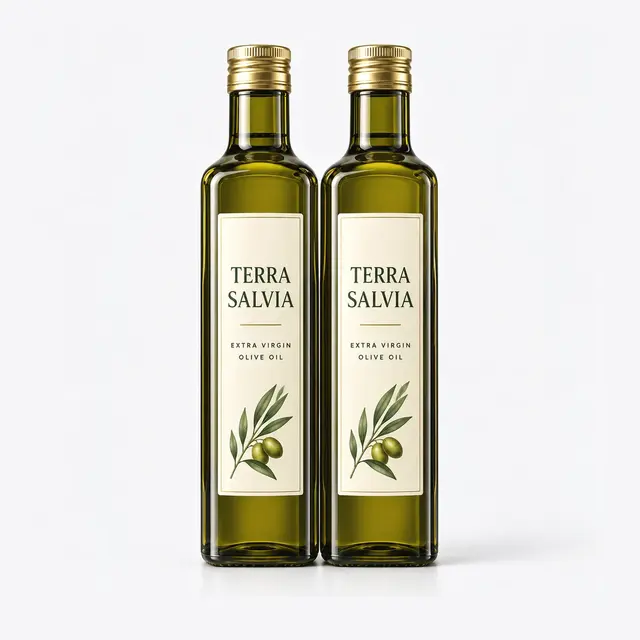
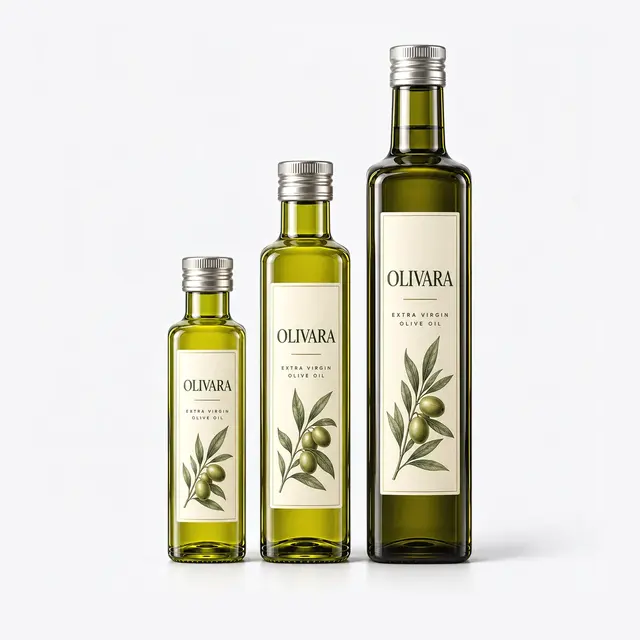
Series 1752 is a tall round olive oil glass bottle blown in rich amber glass, shown in the photo with a slim cylindrical body, a clean angular shoulder and a 31.5 mm ROPP thread finish for standard aluminum olive oil caps. Where most of the olive oil aisle is a wall of green, an amber bottle immediately sets a brand apart while delivering the strongest natural light protection that colored glass can offer. This series is aimed at specialty oil producers, infused and flavored oil brands, private-label buyers and importers who want premium shelf presence plus maximum product protection in one package.
Amber Glass: The Strongest Natural Light Filter in the Aisle
Amber glass earns its reputation in the most light-sensitive product categories on earth: pharmaceuticals, beer and chemicals all default to amber for a reason. The iron and sulfur compounds that create the amber color absorb nearly all ultraviolet radiation and a large portion of visible blue light, the exact wavelengths that drive photo-oxidation in olive oil. In comparative terms, amber offers a stronger light barrier than antique green and dramatically more protection than flint or lightly tinted glass.
For olive oil, that protection translates directly into flavor stability. Polyphenols, tocopherols and the delicate fruity aromatics of a fresh extra virgin degrade fastest under light exposure; bottling in amber slows that degradation and extends the window in which the oil tastes the way the mill intended. If your distribution chain involves bright retail lighting, long transit or warm climates, amber is the conservative, quality-first choice.
Where Amber Bottles Win: Infused Oils, Specialty Blends and Private Label
Beyond pure protection, amber carries strong shelf signals. Consumers associate amber glass with apothecary, craft and small-batch products, which makes Series 1752 a natural fit for infused olive oils, garlic and chili oils, truffle oils, specialty blends and premium private-label lines. A retailer building a differentiated gourmet set, or an importer launching a house brand against established green-bottle competitors, gets instant visual separation without spending on custom molds.
The amber background also flatters minimalist label design. Cream, kraft, black and metallic label stocks all read cleanly against amber, and screen-printed white ink looks sharp and modern. For gift sets and corporate programs, the apothecary aesthetic photographs well, which matters more every year as online sales grow.
One commercial nuance worth knowing: amber cullet is less common in some glass-producing regions than green cullet, so not every factory can hold color consistency across large runs. Our furnaces run amber campaigns with controlled batch recipes and colorimetric checks between lots, so the tenth pallet matches the first. If your brand plans to reorder across seasons, ask for a retained color standard sample from your first production lot and keep it as the reference for future runs.
Line Compatibility of the Round 1752 Body
The round cross-section and straight body wall keep Series 1752 friendly to standard filling equipment. Rotary and linear fillers, vacuum filling heads, timing screws, star wheels and wrap-around labelers all handle round bottles without orientation devices, and change parts for dorica-type round bodies are common across line builders. The tall slim footprint keeps conveyor density high and simplifies case packing into standard olive oil cartons.
If you run multiple SKUs through a co-packer, this shape typically slots into an existing round-bottle changeover with minimal adjustment, which keeps co-packing fees and downtime down. Dimensions and tolerances are confirmed on the technical drawing at quotation so your filler can verify star-wheel and labeler settings in advance.
Closures and Tamper Evidence for Amber Oil Bottles
The neck finish is the olive oil industry standard 31.5 x 24 mm ROPP thread, accepting roll-on pilfer-proof aluminum caps with or without non-drip pourer inserts. The tamper-evident band breaks on first opening, satisfying retail and regulatory expectations in most export markets. Cap colors that pair well with amber, including gold, black, bronze and natural aluminum, are widely available, and we can supply matched closures or work with your current cap supplier.
Exact thread geometry and pourer compatibility are confirmed with samples before production, so your capping head settings and torque specs are validated on the real bottle rather than assumed from a catalog page.
Inspection and QC Standards
Production lots of Series 1752 go through dimensional gauging, visual inspection and performance testing before packing. Internal pressure resistance is verified with reference to ASTM C147, thermal shock endurance follows ISO 7459, and pressure testing of containers follows ISO 7458 methodology. Annealing is checked by polariscope so bottles withstand filling line handling and long sea freight without stress failures.
The amber soda-lime glass is food-grade and complies with EU and FDA food-contact expectations, with heavy-metal migration controlled within the limits your market requires. Documentation and third-party reports are available during the sampling stage.
Commercial Terms: MOQ, Sampling, Shipping
Minimum order quantities for this stock mold are structured around one efficient production run; the details and current figures are in our guide to glass bottle MOQ. Samples ship within days so you can validate filling, capping and labeling before committing, and lead time from deposit to ex-works is typically a matter of weeks for stock molds. Bottles travel on shrink-wrapped export pallets with layer pads, and every container load is photographed before sealing.
Packing follows the same discipline as production: bottles are stacked on export-grade pallets with cardboard layer pads, corner protectors and shrink wrap, or packed in printed cartons when your filler prefers carton feeding. New to sourcing packaging from China? Our walkthrough on importing glass bottles from China explains Incoterms, inspection options and paperwork. For pricing on Series 1752 in your target capacity, contact us with your annual volume and destination port and we will respond with a quotation, technical drawing and sampling plan.
Frequently Asked Questions
Does amber glass protect olive oil better than green glass?
Yes. Amber glass absorbs nearly all UV and most visible blue light, giving it a stronger light barrier than antique green. For oils that will sit under bright retail lighting or travel through long, warm distribution chains, amber measurably slows photo-oxidation and preserves polyphenols and fresh aromatics for longer.
What is the MOQ for Series 1752 amber bottles?
The MOQ is based on one efficient production run of the stock mold, typically around one 20-foot container load for this bottle size. Exact numbers depend on the capacity ordered, and smaller quantities are occasionally available from stock. Contact sales for the current MOQ and stock position.
Can I order samples to test on my filling line?
Yes, we dispatch physical samples so you can verify filling height, capping torque, pourer fit and labeling performance. Samples normally leave within a few days by courier; the courier charge is credited against your first production order.
Which caps and pourers fit this bottle?
The neck is the standard 31.5 x 24 mm ROPP olive oil finish, compatible with roll-on pilfer-proof aluminum caps and non-drip pourer inserts. We can supply matched caps in gold, black, bronze or natural aluminum, or you can use your existing closure supplier. Thread dimensions are confirmed on the technical drawing before production.
Is the amber glass food-safe for edible oils?
Yes. The bottle is food-grade soda-lime glass compliant with EU food-contact rules and FDA expectations for glass packaging. Heavy-metal migration is controlled within regulatory limits, and compliance documentation plus third-party test reports can be provided during sampling.
Can I get this bottle in a custom capacity or with embossing?
The stock mold covers standard olive oil capacities; decoration such as screen printing, frosting and label application is available at normal order volumes. A custom capacity or embossed branding requires a new mold, which is economical at higher annual volumes, generally from several hundred thousand units. We will give you an honest recommendation based on your volumes.