Part of our series on honey jars wholesale — read the overview first if the format is new to you.
A honey jar price is quoted per project, FOB a China port, and it is the sum of two separate items: the glass jar and the lid. The jar price follows the weight of glass, the shape and the order quantity; the lid price follows the closure type and whether it is printed. Freight to your door comes on top.
Jar weight by size and shape
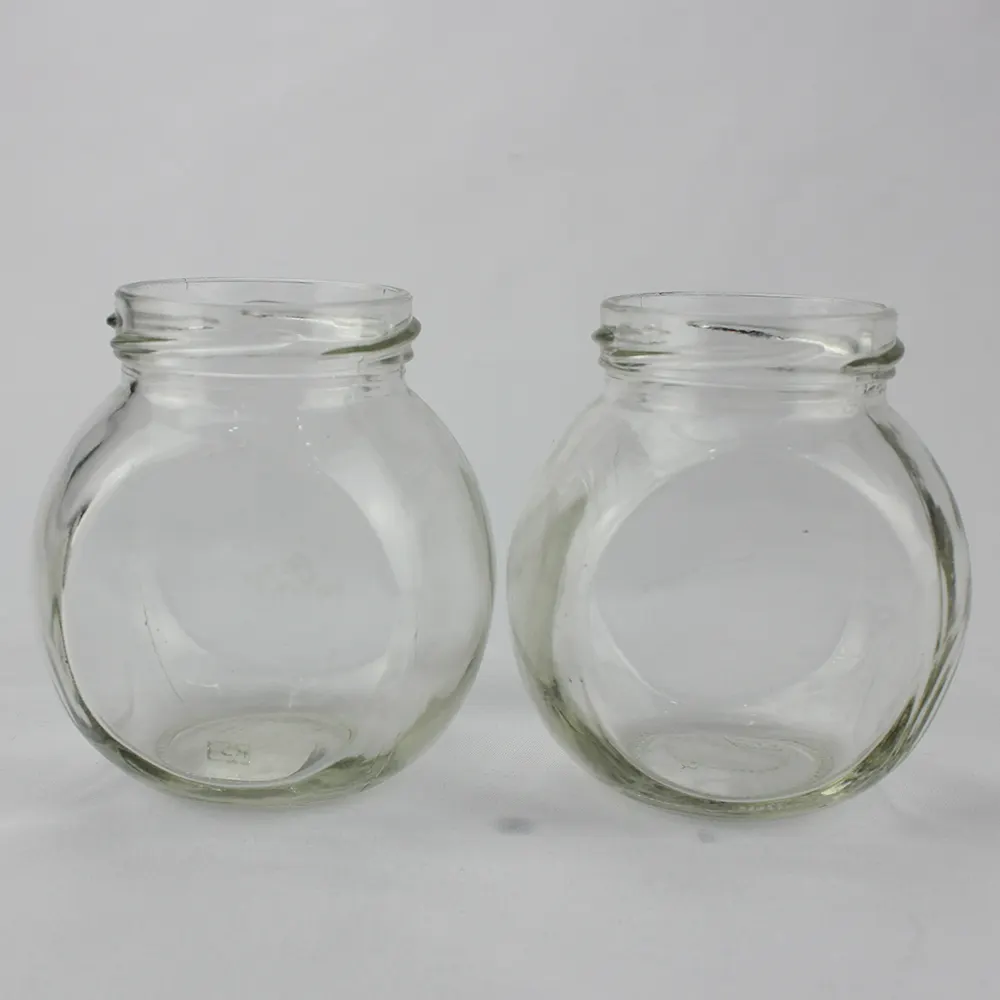
Jars are sold by the piece but made by the kilogram, which makes glass weight the first number to read on any quote. A 360 g jar contains about 30% more raw material than a 280 g one, and its price reflects that. The stock flint (clear) moulds most honey packers choose from are listed below.
| Jar, nominal capacity | Honey fill | Lug finish | Glass weight |
|---|---|---|---|
| Round 250 ml | ~340 g | 58 TO | ~180 g |
| Round 350 ml | ~500 g | 63 TO | ~220 g |
| Round 500 ml | ~700 g | 70 TO | ~280 g |
| Round 720 ml | ~1 kg | 82 TO | ~360 g |
| Round 1000 ml | ~1.4 kg | 82 TO | ~460 g |
| Hexagon 280 ml | ~380 g | 58 TO | ~230 g |
| Hexagon 500 ml | ~700 g | 70 TO | ~330 g |
Compare the two 500 ml rows. The hexagon carries more glass and also forms more slowly, so a hexagon jar costs more than a round one of similar capacity. Round flint jars with a lug finish are the cheapest shape per millilitre.
Closures are a separate line on the quote
Lids come from a different supply chain than glass and are priced per unit on their own line.
| Closure | Sizes | What to know |
|---|---|---|
| Metal lug (twist-off) with plastisol liner | 58 / 63 / 70 / 82 TO | Black, gold and silver as stock colours; safety button included |
| Metal deep cap | 70 / 82 TO | Taller skirt for a more upmarket look |
| PP plastic screw cap | 63 / 70 mm | Gives no vacuum seal, so suitable for liquid honey only |
| Wooden lid with dipper | Fits 70/82 TO jars | Gift lines; assembled by hand |
| Custom printed lug cap | Any TO size | Offset printed; carries its own minimum run |
Why two quotes for the same jar differ
Once the jar and lid are fixed, most of the remaining difference between suppliers, or between months, comes down to two things.
- Furnace inputs. Soda ash and natural gas are the two large costs in making glass, and both move from month to month. This is why a glass quote carries a validity period, commonly 30 days, and why a lapsed quote may come back at a different figure.
- Order quantity. A mould change and the line downtime around it cost the plant the same whether the run is short or long. Spread over 10,000 jars those fixed costs weigh heavily on each piece; spread over 60,000 they nearly disappear. A full 40HQ container holds roughly 30,000–60,000 jars depending on size, and ordering by the container is the most effective step a small packer can take to lower the unit price.
Square and hexagon families cost more than round jars, though they also tend to sell for more at retail. The cost model that applies across all glass packaging, including weight, cullet, energy and quantity tiers, is set out in our guide to glass bottle pricing.
When to buy jars
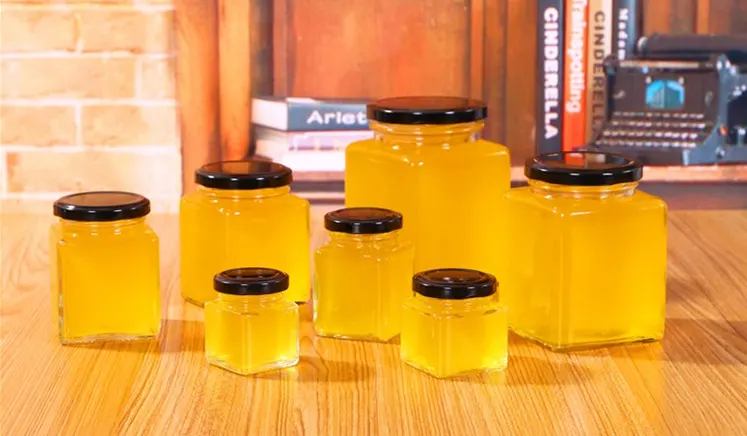
Honey is packed seasonally, and jars are best bought out of season. Packers in the northern hemisphere fill from August to October, after the summer harvest. Their better buying window is March to May, when glass plants have spare capacity and sea freight is soft.
In the southern hemisphere, Argentina and Australia for example, the harvest runs from December to March, so those packers place jar orders from August to October.
For a programme that repeats every season, a blanket order with scheduled releases is the usual way to hold a price. The furnace slot is reserved and the price is fixed against the energy index at signing.
Frequently asked questions
Which honey jar is cheapest per unit?
Prices are quoted per project, but the weight table shows the direction: a round flint jar on a stock mould uses the least glass per millilitre, and a stock-colour lug cap is the simplest closure.
What does a custom embossed jar cost?
Embossing needs its own mould, and the mould is the main cost. The figure is quoted once the drawing and the expected volume are known.
Are samples charged?
Sample, inspection and claims terms are agreed for each project before an order is placed.
How do I get an exact quote?
Give five details when you request a quote: the jar size or the honey weight per jar; the shape (round, hexagon or square); the lid type and colour; the quantity per order together with annual volume; and the destination port. If you are still choosing a jar, start with our honey jar range overview.