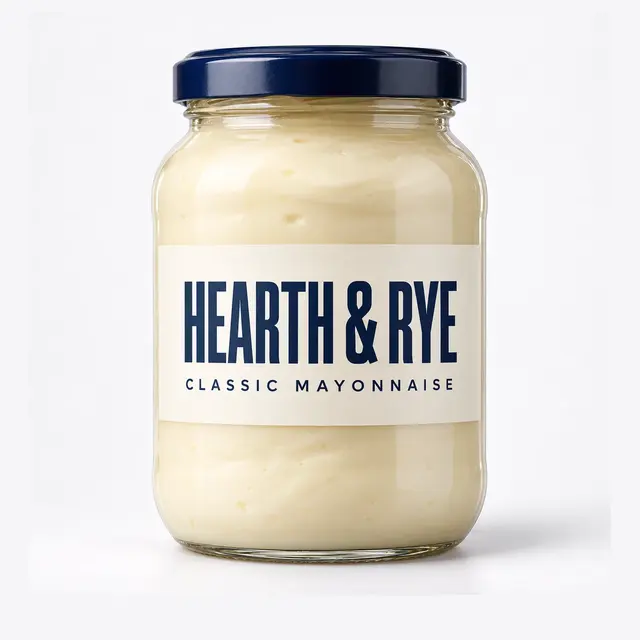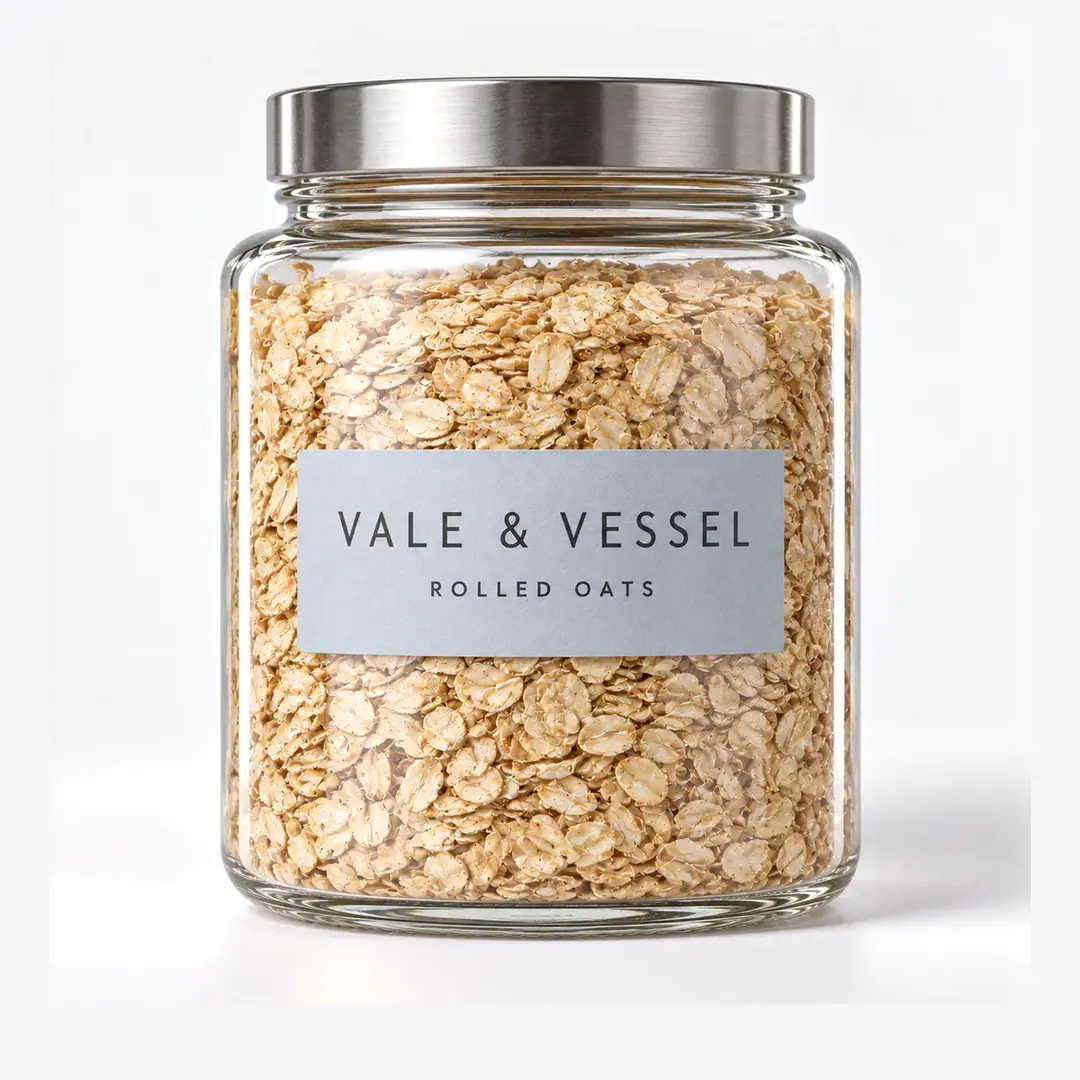
These 1100ml bulk glass jars with stainless steel lids occupy the large-format end of the storage category: big enough for family-size dry goods, back-of-house foodservice ingredients and countertop canister programs, and finished with a metal lid that signals durability rather than disposability. Buyers for this format are typically foodservice distributors, specialty grocery brands building bulk or refill lines, and housewares companies sourcing canister sets. The wide body shows contents clearly, the generous mouth admits scoops and measuring cups without knuckle-scraping, and the stainless lid stands up to the daily open-close cycles that destroy lesser closures. Capacity, finish and lid specifications are confirmed on the technical drawing at quotation.
Family-Size and Foodservice Positioning
At 1100ml, this jar sits where household storage meets light commercial use. In the home it handles a kilogram of rice, a family supply of pasta, breakfast oats or baking staples, keeping contents visible so restocking happens before the pantry runs dry. In cafes, bakeries and small restaurants the same jar organizes back-of-house ingredients on open shelving, where health inspectors and chefs both appreciate being able to see contents and quantity at a glance.
The format also serves the growing refill and zero-waste retail channel, where stores merchandise dry goods in large clear containers and customers fill their own bags. For that application the jar works as both storage and display, and the stainless lid keeps the presentation clean through hundreds of daily openings. If your program involves repeated consumer access, tell us at inquiry so lid fit and gasket choice are validated for high-cycle use.
Stainless Lids for Daily Reuse
The stainless steel lid is the feature that separates this jar from single-use packaging. It resists dents, does not absorb odors, wipes clean without staining, and keeps its appearance through years of kitchen handling. For brands selling canister sets, the metal lid also carries the perceived value that justifies premium retail pricing; consumers read a steel lid as a durable good rather than a container they will replace next season.
Sealing performance depends on the gasket system paired with the lid. For dry goods, a well-fitted gasket keeps pantry moths and humidity out and aromas in. For products that need a firmer hermetic seal, discuss gasket material options with our team during sampling so the closure is matched to your contents and expected open-close frequency. Lid finish options, including brushed and polished surfaces, can be reviewed against your brand direction at quotation.
Dry Goods, Snacks and Back-of-House Organization
Contents that oxidize or stale quickly benefit most from glass-plus-metal storage. Nuts, trail mixes and snack products keep their crunch and flavor far longer behind an impermeable glass wall with a well-seated steel lid than in any plastic bin, and the transparency turns the jar into merchandising: roasted nuts, granola or dried fruit displayed at a cafe counter sell themselves. For specialty food brands, a filled 1100ml jar makes a strong gift-basket anchor or a club-store premium SKU.
Back-of-house buyers value the same properties for different reasons. Standardized containers across flour, sugar, grains and legumes simplify inventory counts, reduce pest exposure compared with opened bags, and survive the wash cycles that cloud and crack plastic within months. Many foodservice buyers standardize on two or three jar sizes from our range and refill them from bulk deliveries, cutting both packaging waste and ingredient cost per kilogram.
Branding and Canister Set Programs
For housewares and private-label programs, this jar anchors canister sets well. It pairs naturally with smaller storage jars to build three- or four-piece families, and the body accepts silk-screen printing, decals or etched-look decoration for brand marks and content labels. Stainless lids can carry printed or embossed branding for programs with sufficient volume, giving the set a finished, coordinated look at retail.
Decoration for large-format jars needs to survive real kitchen life: steam, splashes, frequent handling and repeated washing. We recommend discussing decoration durability requirements at sampling stage, and we can supply decorated samples for your own wash and abrasion testing before production. Confirm the final decoration specification with the factory so what you approve is what ships across every reorder.
Quality Control and Compliance Testing
Large jars carry more product weight and face more handling stress than small ones, and the inspection plan reflects that. Annealing quality is verified with reference to ASTM C148 so the glass is free of residual stress that could fail under load, thermal shock resistance is evaluated against ISO 7459 for buyers filling warm products or washing at high temperatures, and internal pressure performance is checked with reference to ISO 7458 where the application requires it. Rim and finish dimensions are gauged so lids seat consistently across the production run.
The soda-lime flint glass is suitable for direct contact with dry goods, snacks and staple foods, and food-contact documentation is available for import compliance. For retail chain programs, third-party pre-shipment inspection against your own quality protocol can be arranged on request.
Freight, Cartons and Pallet Loads
Large-format jars need honest freight planning, and we do it at quotation rather than after the fact. Jars ship in divided export cartons with lids packed to prevent metal-on-glass contact, palletized and shrink-wrapped, with pieces per pallet and per container calculated for your order. Because 1100ml jars are bulky, carton design and pallet pattern make a real difference to landed cost, and our team models both before you commit. Our guide on importing glass bottles from China covers the wider process, and the MOQ explainer shows how minimums work for large formats.
To price this jar for your program, send your intended contents, lid finish preference, decoration plans and annual volume. We will reply with a quotation, technical drawing and sampling options, including gasket recommendations matched to your use. Questions about canister set combinations, mixed loads with smaller jars or refill-retail applications are welcome through our contact page, where the export team answers with factory-level detail.
Frequently Asked Questions
What products is the 1100ml bulk jar best suited for?
It works best for family-size dry goods and foodservice ingredients: rice, pasta, oats, flour, sugar, grains, nuts, trail mixes and snacks. It also serves refill and zero-waste retail displays and club-store premium food SKUs where visibility and durability matter.
How does the stainless steel lid seal, and is it airtight?
The lid seals against a gasket fitted to the jar rim. For dry goods it keeps out humidity and pantry pests effectively. If your product needs a firmer hermetic seal or the lid will be opened many times daily, tell us at inquiry so the gasket material is matched and validated during sampling.
Can I build a canister set by combining this with smaller jars?
Yes. The 1100ml jar anchors canister sets well and pairs with smaller storage jars from our range to form three- or four-piece families. Coordinated decoration and matching stainless lids can be quoted across the set so it retails as one coherent product.
What decoration options are available for housewares branding?
The body accepts silk-screen printing, decals and etched-look decoration, and lids can carry printed or embossed branding at sufficient volumes. We supply decorated samples for your own wash and abrasion testing before production so durability is proven, not assumed.
What quality tests apply to a jar this size?
Annealing is verified with reference to ASTM C148, thermal shock resistance against ISO 7459 and internal pressure performance against ISO 7458 where required. Rim dimensions are gauged for consistent lid seating. Reports are available, and third-party pre-shipment inspection can be arranged.
How are these large jars packed, and how many fit in a container?
Jars ship in divided export cartons with lids packed to prevent metal-on-glass contact, then palletized and shrink-wrapped. Pieces per pallet and per container are calculated at quotation based on final carton design, so landed cost is clear before you order.