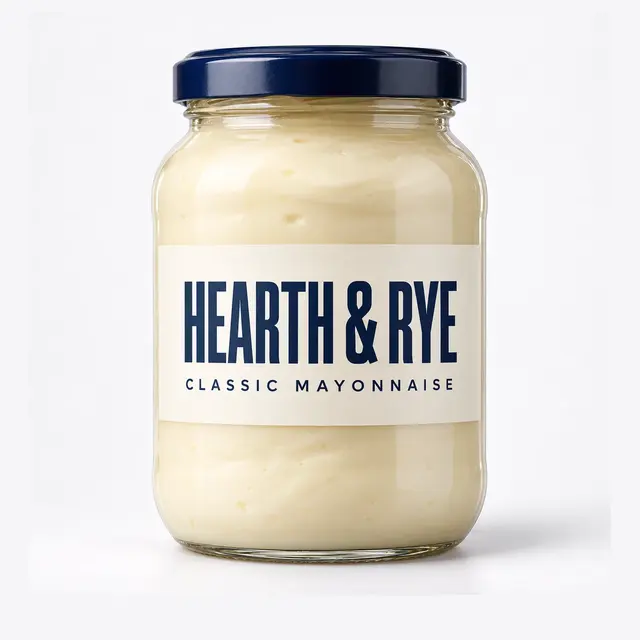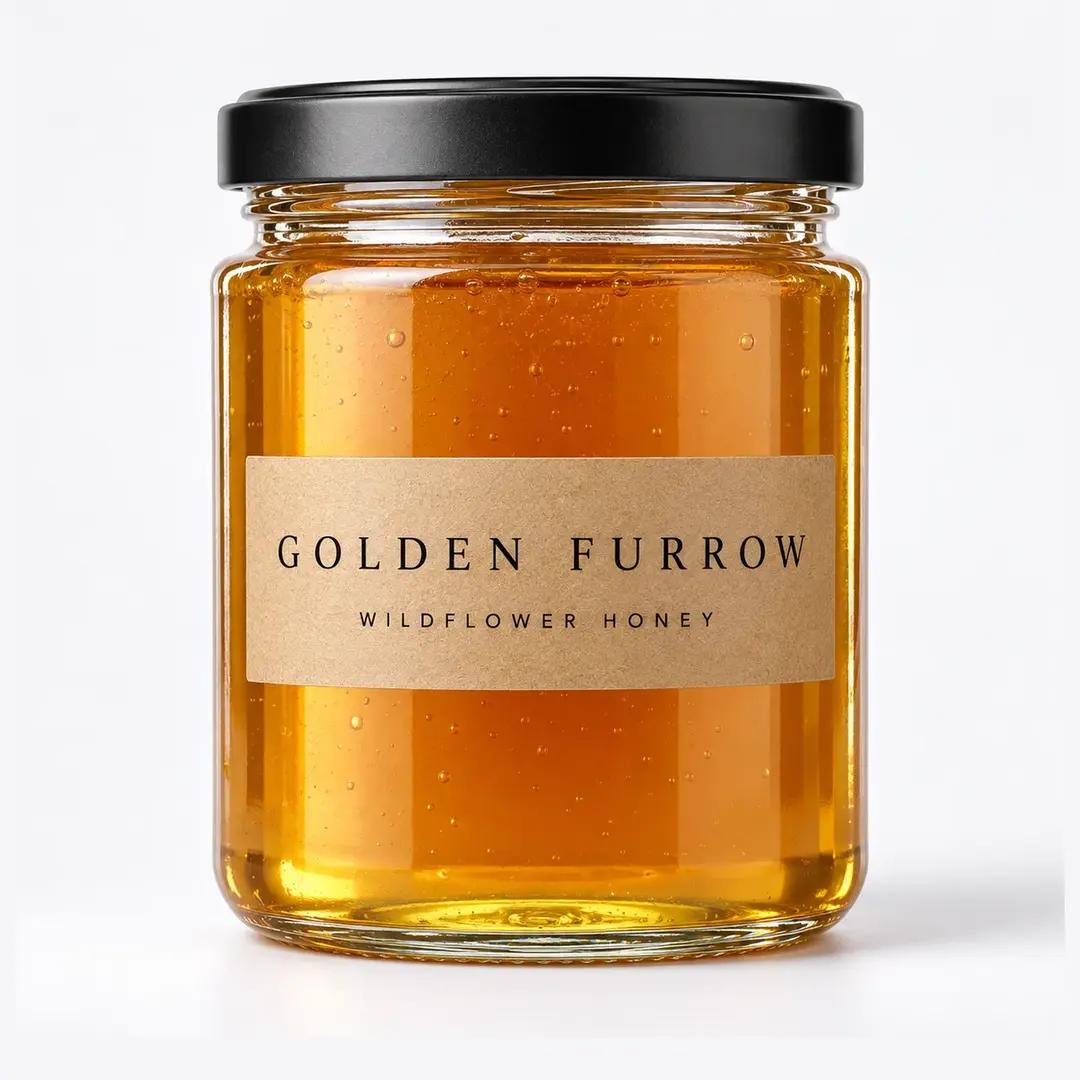
The 632 series is a 370 ml straight-sided round glass jar with a wide mouth and a twist-off finish, sized for premium food products where the package must justify a higher price per gram. It is the natural home of artisan honey, single-origin preserves, gourmet mustards and small-batch spreads – and it is aimed at brand owners and co-packers who want a jar that seals hermetically, showcases product color and texture, and looks like it belongs in a specialty food hall rather than a discount aisle. Jars ship wholesale with matched twist-off lids.
Why Honey Packers and Preserve Makers Choose Straight Walls
The straight-sided profile of the 632 series is a commercial decision, not just an aesthetic one. For honey specifically, a straight wall lets the consumer reach every corner with a spoon or honey dipper – no shoulder trapping product, no waste, no frustration. Crystallized honey, a mark of authenticity that many premium buyers actively seek, releases cleanly from straight glass. The same geometry serves whole-fruit preserves, chutneys and nut spreads, where a wide mouth and straight wall mean the product inside is fully accessible and fully visible.
Visibility is the second argument. Clear flint glass with a smooth, uninterrupted wall acts as a lens: golden honey, ruby strawberry jam and deep amber marmalade become their own decoration. Specialty food buyers shop with their eyes first, and a straight-sided jar gives your product maximum optical presence per shelf centimetre. Labels apply flat and true on the cylindrical surface, and the generous unbroken panel accepts either a small premium front label that lets the product show through or a full wrap for information-dense export SKUs.
At 370 ml, the format sits in the premium gifting and specialty retail band – substantial enough to feel generous, priced-accessible enough for impulse and basket-building purchases. Exact brimful capacity, finish dimensions and glass weight are confirmed on the technical drawing at quotation.
The Vacuum “Pop”: Twist-Off Seals for Premium Preserves
Premium food buyers have been trained by decades of grocery experience to listen for the pop. When a customer twists the lid of your honey or jam and hears the vacuum break, the package itself has just vouched for the product’s integrity – no preservatives required, no tampering, nothing lost since the day it was filled. That moment is a brand asset, and it is exactly what the twist-off lug closure on the 632 series is engineered to deliver.
The system works as it does across shelf-stable foods: plastisol or PVC-free compound in the cap softens during hot filling or steam-flush capping, conforms to the gauged glass finish, and seals under vacuum as contents cool. Honey is typically filled warm rather than hot, while jams and preserves are hot-filled in the 85 to 95 degrees Celsius range; both processes are routine for this package, and the closure compound is selected to match your fill temperature and product acidity. Torque application windows ship with the technical drawing so your capper applies the seal within specification from the first jar.
Quality Control: Small Jar, Full Protocol
A premium price point means zero tolerance for failure, so the 632 series passes through the same QC regime as our largest formats. Thermal shock resistance is verified per ASTM C149 and ISO 7459, confirming the glass tolerates the temperature differential of hot-filled preserves. Annealing quality is assessed per ISO 7458 under polarized light to eliminate residual stress. Finish dimensions are gauged so every cap engages its lugs correctly, and lot-release checks cover visual defects, weight and vertical load.
Small jars are packed with the same discipline as large ones: divided cartons, palletized and shrink-wrapped on an automated line, as pictured below. Food-contact declarations aligned to US FDA and EU food-contact frameworks are available for export shipments, and third-party inspection is welcomed before balance payment.
Branding, Decoration and Gift-Set Potential
The 370 ml format earns a disproportionate share of gift and hamper placements, so decoration options matter. Twist-off caps accept custom lithographed panels in your brand colors, with or without a vacuum safety button. The glass panel suits paper labels, clear film labels for a no-label look, or screen printing at sufficient volumes. Embossed branding in the glass itself requires a custom mold and is quoted separately – the economics are explained in our guide to glass bottle MOQ.
Many buyers pair this jar with smaller and larger siblings to build a range: a tasting trio for e-commerce, a tiered retail line from sampler to family size. If you are planning a multi-format program, mention it at inquiry so mold scheduling and freight can be consolidated.
A practical note for honey packers: filling temperature and moisture control decide both shelf life and crystallization behavior, and the package must support your process rather than fight it. The wide mouth of the 632 series accepts large-diameter honey nozzles and lets viscous product flow without stringing, while the gauged finish keeps cap application consistent across shifts. Co-packers running multiple honey brands on shared equipment favor straight-sided jars for exactly this reason – changeover is fast, label registration is repeatable, and rejects caused by skewed labels or misapplied caps stay near zero.
Sampling, MOQ and Ordering
Samples of the 632 series with matched lids are available for filling trials, vacuum-retention checks and buyer presentations – we recommend running your actual product through a thermal cycle before committing to a production lot. Minimum order quantities depend on mold status and decoration, quoted per project.
For buyers building a full import plan around this jar, our resource on importing glass bottles from China covers freight, documentation and quality checkpoints. To price the 632 series for your honey, preserve or gourmet spread SKU, send your product type, fill process, target volume and destination port through the contact page, and we will return a drawing, closure specification and firm quotation.
Frequently Asked Questions
Is the 370 ml 632 series a good jar for premium honey?
Yes – it is one of its primary applications. The straight wall lets consumers spoon out every gram including crystallized honey, the clear flint glass showcases color, and the wide mouth accepts honey dippers. Warm-fill honey processes are routine for this package; provide your fill temperature at inquiry so the closure compound is matched correctly.
Does the twist-off lid give the vacuum pop consumers expect?
Yes. The metal lug cap with plastisol or PVC-free compound seals under vacuum as the product cools after filling, producing the audible pop on first opening that signals freshness and tamper evidence. Caps are available with vacuum safety buttons, and torque windows are supplied with the technical drawing.
What is the MOQ for the 632 series?
MOQ depends on mold scheduling and decoration and is quoted per project. Stock-mold orders begin at a manageable wholesale lot; custom embossed branding requires a dedicated mold and a full run. Share your annual volume and we will structure the most economical order – the variables are explained in our glass bottle MOQ guide.
Can the jars and lids be branded?
Yes. Options include custom lithographed cap panels, paper or clear-film labels, screen printing at volume, and – with a custom mold – embossed branding in the glass. Decoration feasibility, placement and cost are confirmed on the technical drawing at quotation.
Can we get samples for vacuum-seal testing with our own product?
Yes, and we recommend it. Samples with matched lids are supplied for filling trials, thermal-cycle and vacuum-retention tests with your actual product. Sample freight is usually at the buyer’s cost and is commonly credited against the first production order.
Is this jar compliant for food export to the US and EU?
Soda-lime glass is chemically inert and we supply food-contact declarations aligned to US FDA requirements and EU Regulation (EC) No 1935/2004. Lid lining compounds are declared against the same frameworks, and third-party migration testing can be arranged on request. Tell us your destination market at inquiry so the documentation is prepared correctly.