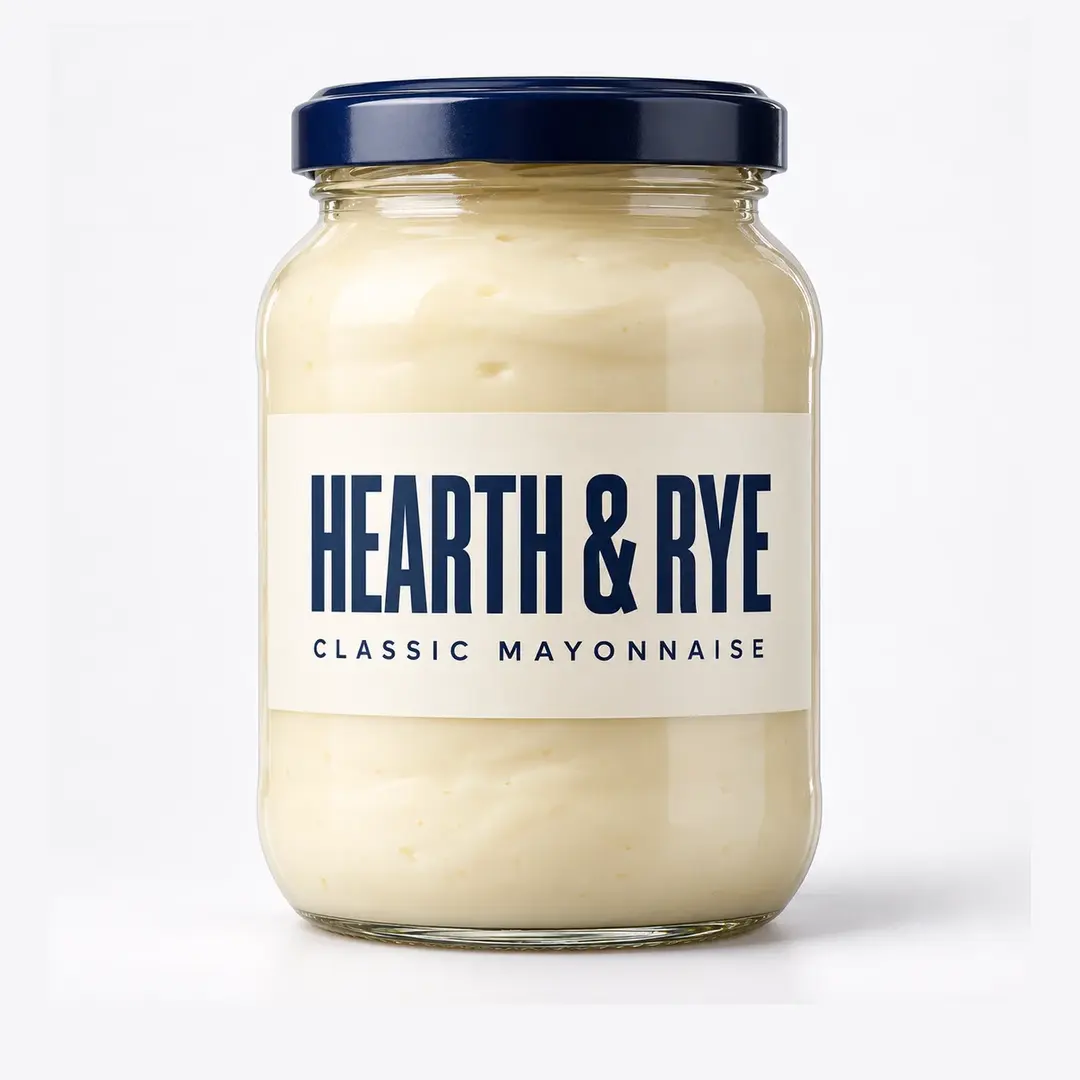
The 722 series is a 1050 ml round glass jar with a wide mouth, a softly shouldered profile and a twist-off finish – the classic one-litre-class container for shelf-stable foods. It is built for sauce manufacturers, mayonnaise and dressing producers, pickle packers and private-label buyers who need a jar that survives hot filling, holds a vacuum for a year or more on the shelf, and looks at home in both supermarket aisles and foodservice kitchens. Jars and matched twist-off lids ship together as a validated package.
A One-Litre Workhorse for Shelf-Stable Foods
The litre-class jar is the backbone of the ambient grocery business. At 1050 ml, the 722 series covers the formats shoppers expect for pasta sauce, salsa, mayonnaise, pickled gherkins, preserved fruits and cooking sauces – large enough for family consumption, small enough to turn over before quality fades after opening. For private-label programs, this single capacity can anchor an entire ambient range, simplifying procurement, warehousing and shelf planograms across SKUs.
The round, gently shouldered body is deliberate. It stands stably on high-speed conveyors, accepts wraparound or front-and-back labels without distortion, and gives consumers the familiar grip they associate with trusted pantry brands. The wide mouth allows fast filling of viscous and particulate products and – just as importantly – lets the end user spoon out every last gram, a small usability detail that shows up in repeat-purchase data. Brimful capacity, neck finish and glass weight are confirmed on the technical drawing at quotation so your filler, capper and case packer can be validated in advance.
Hot-Fill Processing and the Vacuum Lug Seal
Most products destined for this jar are filled hot – typically between 85 and 95 degrees Celsius – and rely on the twist-off lug cap to create a hermetic vacuum seal. The physics are simple but unforgiving: plastisol compound in the cap softens with heat and steam, conforms to the glass finish under capping torque, and as the product cools the headspace contracts and pulls the cap panel down. Done correctly, the result is a shelf-stable package with a clearly audible “pop” on first opening – the sound consumers have learned to trust as proof of freshness and safety.
That seal is only as reliable as the system behind it. Finish dimensions on the 722 series are gauged lot by lot so lugs engage correctly; cap compound is matched to your product’s acidity and fill temperature; and recommended application and removal torque windows are supplied with the drawing. If your line uses steam-flush capping, hot-fill-and-hold or tunnel pasteurization, describe the process at inquiry and we will confirm the jar-and-cap combination with the factory before sampling. For products filled cold and pasteurized in the sealed jar, the same conversation applies – the thermal profile simply changes.
Product Applications Across the Ambient Aisle
Tomato-based sauces and salsas are the highest-volume use: acidity plus hot fill plus vacuum cap is a proven preservation triangle, and glass shows off color and texture that plastic hides. Mayonnaise and dressings benefit from glass’s oxygen impermeability, which protects oils from rancidity across a long shelf life. Pickles and relishes in brine are chemically aggressive to many materials but not to soda-lime glass, which neither reacts nor taints. Fruit fillings, compotes and honey-based spreads round out the range – the 722 series handles all of them with the appropriate closure specification.
The format also earns its place in foodservice and co-packing programs. Contract packers value a one-litre round jar because it shares change parts, case dimensions and pallet patterns with established industry formats, keeping line integration simple when you move a recipe from pilot to contract production. For foodservice buyers – restaurant groups, caterers, institutional kitchens – the 1050 ml jar is a back-of-house staple: large enough to be economical across a week of service, small enough to handle safely and refrigerate after opening. If you supply both retail and foodservice channels, standardizing on this format simplifies procurement across both.
Labeling deserves a final note: the smooth, continuous body panel accepts both paper and film labels with strong adhesive wet-out, and the jar’s diameter suits standard case-packing patterns for the retail trade, keeping secondary packaging costs predictable.
Quality Control: Thermal Shock, Annealing and Dimensional Gauging
Hot-fill packaging lives or dies on thermal performance, so our QC protocol leads with it. Thermal shock resistance is tested per ASTM C149 and ISO 7459 – jars are subjected to a controlled temperature differential representing hot product against ambient glass, then inspected for cracks and failure. Annealing quality is verified per ISO 7458 using polarized light, exposing residual stress that would otherwise surface as spontaneous breakage weeks after filling. Vertical load, internal pressure where applicable, and finish dimensions complete the lot-release checklist.
Packaging integrity receives the same attention. Jars are packed in divided cartons, palletized and shrink-wrapped on an automated line, as shown below, and container loading is planned to keep glass static in transit. Pre-shipment inspection by SGS, BV or your nominated agent is welcomed, and food-contact declarations aligned to US FDA and EU food-contact frameworks accompany export shipments.
Wholesale Ordering: MOQ, Samples and Quotation
The 722 series is a wholesale program with order quantities planned in production lots. Whether you are launching a single private-label sauce or consolidating a full ambient range, the economics of mold scheduling, decoration and order size are explained in our guide to glass bottle MOQ. Samples of the jar with matched twist-off lids are available so you can run filling trials, pasteurization validation and torque checks before committing.
For buyers managing the full import cycle, our resource on importing glass bottles from China covers lead times, Incoterms and quality checkpoints. To receive a drawing, closure specification and landed-cost estimate for the 722 series, send your product type, fill temperature, annual volume and destination port via the contact page.
Frequently Asked Questions
What products is the 1050 ml 722 series best suited for?
It is the classic one-litre-class jar for shelf-stable ambient foods: pasta and cooking sauces, salsa, mayonnaise and dressings, pickles and relishes in brine, preserved fruits and honey-based spreads. The wide mouth handles viscous and particulate products, and the twist-off vacuum cap supports long ambient shelf life.
Can this jar be hot-filled at 90 degrees Celsius and tunnel pasteurized?
Hot-fill in the 85-95 C range followed by pasteurization is a standard use case. Thermal shock resistance is verified per ASTM C149 and ISO 7459, and annealing is checked per ISO 7458. Describe your full thermal profile – fill temperature, hold time and tunnel curve – at inquiry so the factory validates the glass and cap compound together.
How does the twist-off lid create a vacuum seal?
The metal lug cap carries a plastisol or PVC-free compound that softens under heat and steam during capping, conforms to the glass finish, then seals as the product cools and the headspace contracts. The result is a hermetic vacuum seal with the familiar pop on first opening. Application and removal torque windows are provided with the technical drawing.
What is the MOQ for the 722 series?
MOQ depends on mold scheduling and decoration choices and is quoted per project. Stock-mold orders start at a manageable wholesale lot; private embossing requires a dedicated mold run. Our glass bottle MOQ guide explains how order size, frequency and customization interact, and we will recommend the most economical structure for your volume.
Can we test samples on our capping line before ordering?
Yes – we encourage it. Samples with matched lids are available for filling trials, pasteurization validation, vacuum-retention checks and torque verification on your own equipment. Sample freight is normally at the buyer’s cost and is typically credited against the first production order.
What documentation comes with an export shipment?
Export orders include commercial documents plus food-contact declarations aligned to US FDA and EU food-contact frameworks. Third-party migration testing and pre-shipment inspection (SGS, BV or your agent) can be arranged. Share your destination market at inquiry and the documentation pack will be prepared to match its import requirements.


