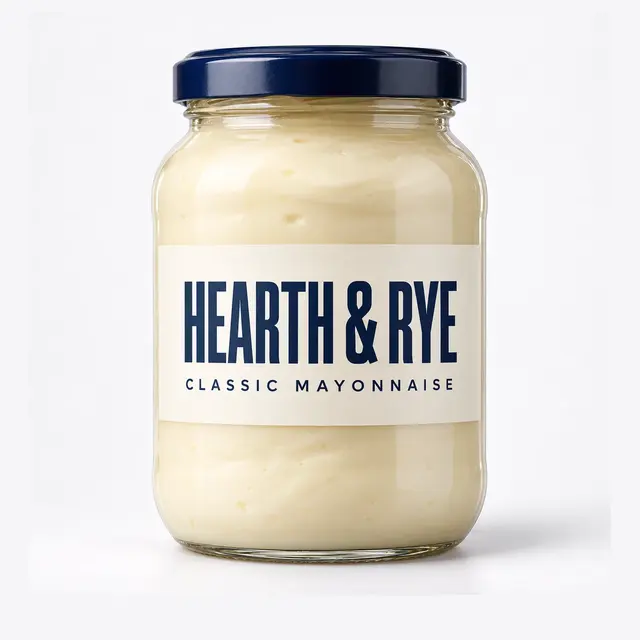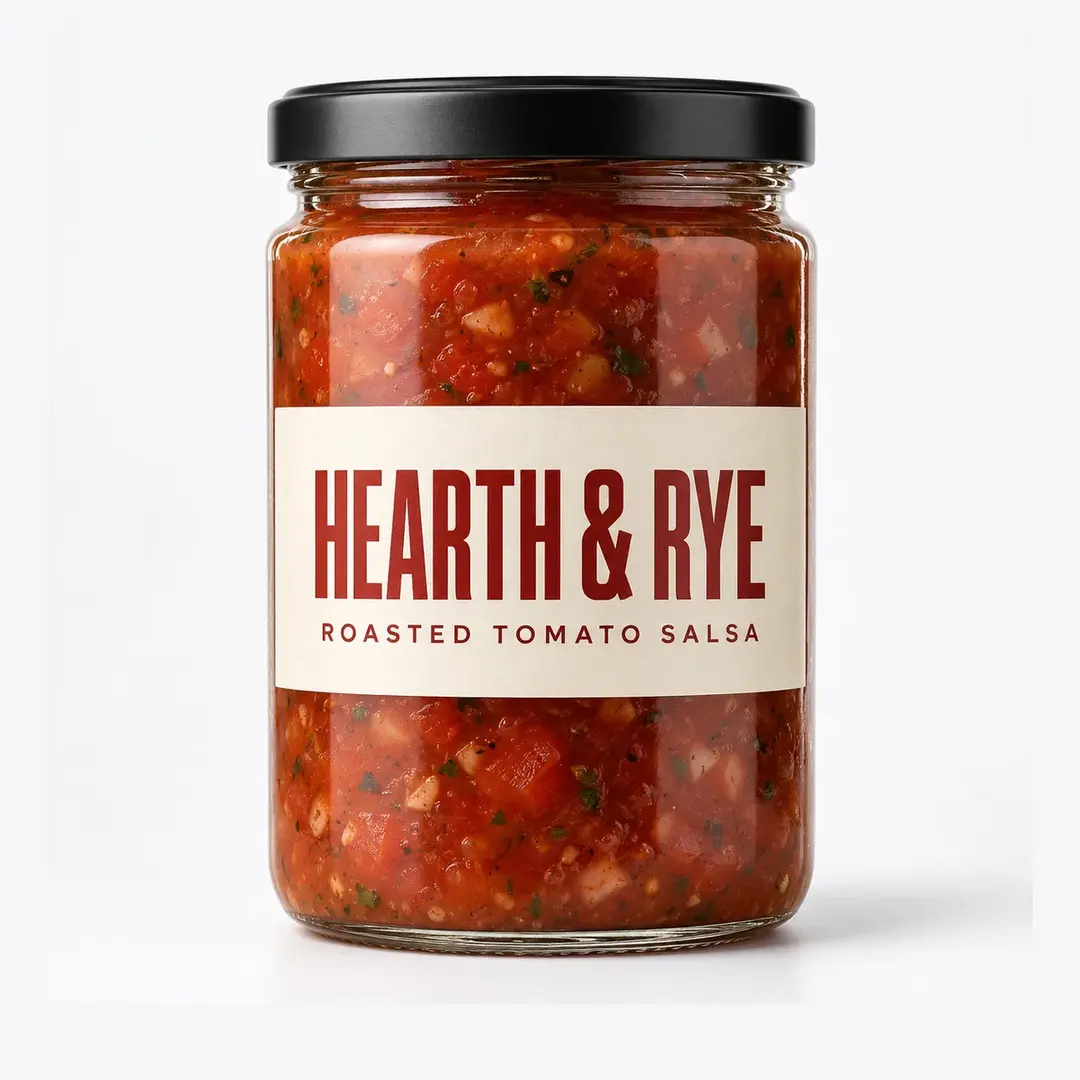
The 762 series is a straight-sided, round 630 ml glass jar with a wide mouth and a twist-off finish, built for food brands and co-packers that fill jams, sauces, salsas and condiments on semi-automatic or fully automatic lines. If you are a procurement manager sourcing a mid-capacity jar that runs fast, seals under vacuum and presents cleanly on a retail shelf, this series was designed with your line in mind. Jars are supplied with matched lids, so the container and closure arrive as one validated system rather than two components you have to reconcile yourself.
Why a Straight-Sided 630 ml Jar Fits High-Speed Filling Lines
Filling-line efficiency is decided by geometry long before the first pallet arrives. The 762 series keeps its wall straight from shoulder to base, which gives three practical advantages on a production line. First, the cylindrical body registers predictably against star wheels, timing screws and gripper belts, so changeover parts are simple and jams caused by tapered or shouldered profiles disappear. Second, a straight wall lets piston and vacuum fillers dive the nozzle deep into the jar without interference, cutting drip time between fills. Third, the uniform diameter means label applicators wrap a front-and-back or wraparound label without the skew and flagging that shaped jars introduce.
The wide mouth matters just as much. Chunky products – garden-style salsas, whole-fruit preserves, pickled relishes – bridge and clog at narrow openings, forcing operators to slow the line or clear blockages by hand. A wide mouth accepts large-diameter filling nozzles and lets viscous or particulate product flow without aeration. For hot-fill products, the wide opening also makes it easier to control headspace consistently, which is the foundation of a reliable vacuum seal downstream.
At 630 ml, the jar sits in the sweet spot of the condiment category: large enough to anchor a family-size SKU, compact enough to keep case weights manageable for e-commerce and club-store channels. Exact brimful capacity, neck finish dimensions and weight tolerances are confirmed on the technical drawing at quotation, so your engineering team can validate the jar against your filler and capper before you commit.
Hot-Fill and Pasteurization: What This Jar Is Built to Handle
Jam, chutney, tomato-based sauces and fruit spreads are typically filled hot, often in the range of 85 to 95 degrees Celsius, and many are then pasteurized or hot-filled and inverted to sterilize the headspace. That process punishes poorly annealed glass. The 762 series is produced from soda-lime glass with controlled annealing, and every production lot is checked for thermal shock resistance so the container survives the temperature differential between hot product and ambient filling-room conditions.
When you brief us on your process, tell us three things: the product temperature at the filler, whether you hot-fill-and-hold, tunnel pasteurize or retort, and your line speed. With that information we confirm the suitability of the glass specification and the closure compound with the factory, and we can recommend adjustments – for example, pre-heating jars on cold lines – if your temperature differential is aggressive. This process-matching conversation is standard in our quotation workflow and costs you nothing.
Lid Options: Twist-Off Closures Matched to the Finish
The series is quoted with metal twist-off lug caps in the matching neck finish, lined with a plastisol or PVC-free compound selected for your product’s acidity and process temperature. Twist-off lug caps are the workhorse of shelf-stable foods: applied under steam or on hot product, the plastisol flows to the glass finish and, as the contents cool, the headspace contracts and pulls a vacuum. The consumer hears the freshness “pop” on first opening – a small detail that carries enormous trust for jam and sauce brands.
Cap panels can carry your lithographed branding or a stock color, and safety buttons (vacuum indicators) are available so retailers and consumers can see at a glance whether the seal is intact. If your line uses continuous-thread caps instead, discuss it with us at inquiry; finish compatibility and torque windows are confirmed with the factory before samples are produced.
Quality Control: Thermal Shock, Impact and Seal Integrity
Our QC protocol for food jars references internationally recognized test methods. Thermal shock resistance is verified per ASTM C149 and ISO 7459, the two standards most buyers cite for hot-fill suitability – samples are cycled through a controlled temperature differential and inspected for failure. Internal pressure and vertical load are checked where the application demands it, and annealing quality is assessed per ISO 7458 using polarized light, which reveals residual stress invisible to the naked eye. Finish dimensions are gauged against the drawing so caps apply and release within the torque window your capper is set to.
Every outgoing lot ships with a packing inspection: jars are nested in cartons with dividers, palletized and shrink-wrapped on an automated line, as shown below, so glass arrives at your plant in the condition it left ours. Third-party inspection (SGS, BV or your nominated agent) is welcomed before the balance payment.
Food-Contact Compliance for Export Markets
Soda-lime glass is inherently inert, but export buyers need paperwork, not adjectives. We supply food-contact declarations aligned to US FDA requirements and EU Regulation (EC) No 1935/2004 on materials intended to come into contact with food, and heavy-metal migration testing can be arranged through accredited laboratories on request. Lid lining compounds are declared against the same frameworks. If your market has specific requirements – California Proposition 65 screening, for example – flag it at inquiry so the documentation pack is built correctly the first time.
MOQ, Samples and How to Order
Because this is a wholesale program, orders are planned in production lots rather than retail quantities. The minimum order quantity depends on whether you take a stock mold or request customization, and the trade-offs are explained plainly in our guide to glass bottle MOQ. Physical samples of the 762 series with matched lids are available so you can run a line trial, a thermal-cycle test in your own facility and a consumer-panel check before the production order.
For buyers consolidating a container program from China – jars, caps, cartons and ocean freight under one plan – our primer on importing glass bottles from China walks through Incoterms, lead times and documentation. When you are ready for a firm quotation on the 762 series, send your target annual volume, filling process and destination port through our contact page, and our team will return a drawing, a cap specification and a landed-cost estimate.
Frequently Asked Questions
What is the minimum order quantity for the 762 series 630 ml jar?
MOQ depends on whether you order from the stock mold or request customization such as a private emboss. Stock-mold orders start at a manageable wholesale lot that we quote per project, while custom embossing requires a full production run. Share your annual volume and we will recommend the most cost-efficient route – the trade-offs are also explained in our glass bottle MOQ guide.
Can I get samples with lids before placing a production order?
Yes. We supply physical samples of the 762 jar with matched twist-off lids so you can run filling-line trials, thermal-cycle tests and torque checks on your own capper. Sample freight is typically at the buyer’s cost and is credited against the first production order in most cases.
Which lid types fit the 762 series finish?
The series is quoted with metal twist-off lug caps in the matching finish, lined with plastisol or PVC-free compounds chosen for your product’s acidity and fill temperature. Vacuum safety buttons and custom lithographed panels are available. If your line runs continuous-thread caps, tell us at inquiry and we will confirm finish compatibility with the factory.
Is this jar suitable for hot-fill jam at around 90 degrees Celsius?
Hot-fill in the 85-95 C range is a standard application for this series, provided the process is specified at quotation. Thermal shock resistance is verified per ASTM C149 and ISO 7459, and annealing quality is checked per ISO 7458. Tell us your fill temperature, headspace and whether you tunnel pasteurize, and we will confirm the specification with the factory.
What is the typical lead time for a wholesale order?
Lead time depends on order size, decoration and whether the mold is in current production. As a working rule, allow time for drawing confirmation, sampling, production, packing and ocean freight; your quotation will state a firm schedule. Repeat orders on a confirmed specification move considerably faster than first orders.
Can the jars be customized with our brand?
Yes. Options include embossed branding in the glass (requires a custom mold and higher MOQ), custom-colored or lithographed caps, pressure-sensitive or wraparound labels applied by you, and custom carton printing. Decoration feasibility and cost are confirmed on the technical drawing at quotation.