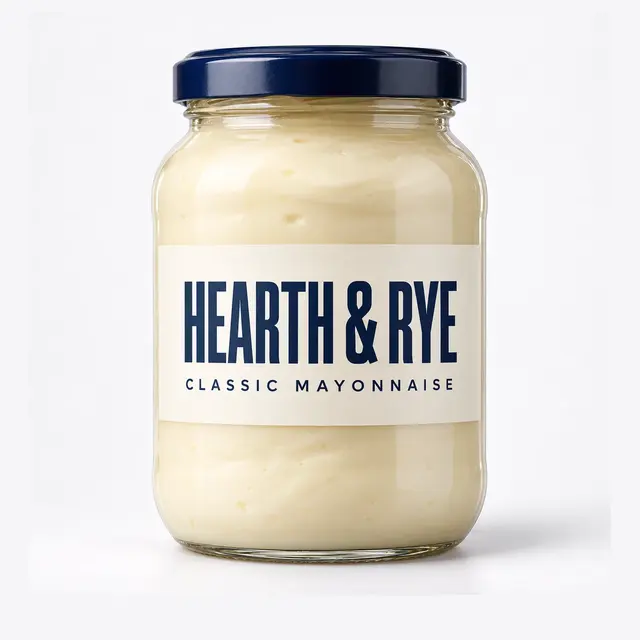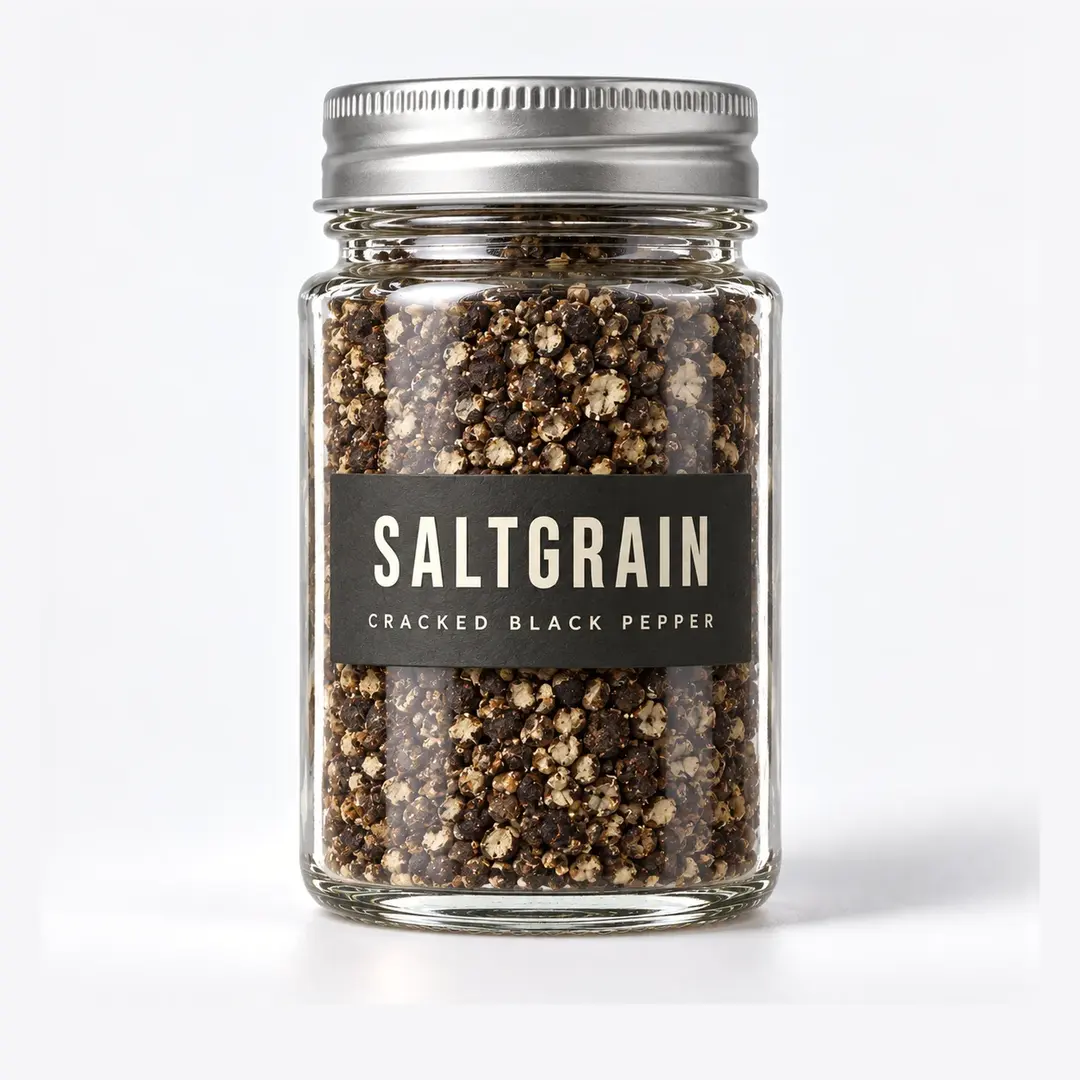
These 100ml straight glass containers are built for buyers who run small-format programs: spice brands packing premium ground blends, food companies launching sample sizes, and promotional agencies assembling tasting kits. The straight-sided body keeps the footprint compact, maximizes label area, and shelves densely in retail trays, while the metal cap gives a clean, tamper-evident closure that consumers already trust. If you are sourcing a small jar that must protect dry, aroma-sensitive contents and still look sharp on shelf, this format is a practical starting point. Exact neck finish, weight and cap thread are confirmed on the technical drawing at quotation.
Designed for Spice and Seasoning Programs
Ground spices, herb blends, salts and dry rubs are among the most demanding products a small jar can hold. They lose volatile aromatics quickly, they cake when moisture sneaks in, and they show every speck of dust through clear glass. A 100ml straight container answers these pressures well. The fill volume matches the 60 to 90 gram net weights typical of retail spice lines, the wide, straight wall accepts a full wrap or front-and-back label without distortion, and the compact height fits standard spice racks and supermarket shelf trays.
For private-label spice programs, the format also simplifies range building. One jar geometry can carry an entire line from smoked paprika to sea salt, with the metal cap color doing the work of differentiation. Buyers typically standardize on one or two cap colors across the range and let the label system communicate variety, which keeps decoration costs down and reordering simple.
Moisture Barrier and Aroma Protection
Glass is effectively impermeable to water vapor and oxygen, which is why it remains the reference material for hygroscopic products. In a 100ml spice jar, the real leakage path is never the wall; it is the closure. That is why cap liner selection matters more on this format than on almost any other. A pulp-backed or foam liner with a suitable facing gives ground spices the dry microclimate they need through distribution, warehousing and the months a jar may sit in a consumer’s cupboard.
For particularly moisture-sensitive blends such as onion powder, garlic granules or citrus-based seasonings, we recommend discussing liner specifications with our team before the first production run. A small upgrade in liner material routinely outperforms a costly switch to a heavier jar, and it avoids the clumping complaints that damage a young spice brand’s reputation. Confirm the final liner build-up with the factory during sampling so the closure is validated against your actual product, not a generic specification.
Metal Cap Options and Liner Choices
The containers are supplied with metal caps, the familiar twist closure used across the spice and preserve industries. Metal caps tolerate the dusty environment of spice filling halls better than most plastics, they crimp or twist on at high line speeds, and they accept printing or embossing for brands that want the lid to carry a logo or a color code. For co-packers running several customers on one line, metal caps also change over quickly between SKUs.
Liner choice should follow the product. Dry spices generally run well on standard foam or pulp liners; oily seasonings such as chili-crisp blends or sesame mixes need a liner facing that resists fat migration; and any product heading into hot or humid export markets deserves a liner validated for those conditions. If your line includes a paste or semi-liquid SKU alongside dry spices, tell us at inquiry stage so we can quote cap and liner combinations for both from the same tooling where possible.
Trial Sizes, Sampling and Promotional Kits
Beyond retail spice lines, this 100ml format is a strong sampling vehicle. Sauce and condiment brands use it for trial sizes that let consumers test a flavor before committing to a full bottle. Subscription box curators like it because the straight wall takes a printed label cleanly and the small volume keeps parcel weight under postage thresholds. Corporate gift and event buyers use it for custom-blend salts and rubs filled to order.
For sampling programs, run economics matter as much as unit price. Our glass bottle MOQ guide explains how minimum order quantities work for small formats and how sampling runs can be structured so a test campaign does not force a full container commitment. Many buyers start with a pilot quantity of these 100ml containers, validate the market response, and then scale into regular production on the same drawing.
Quality Control and Compliance Testing
Every production lot of these containers passes a defined inspection plan before packing. Annealing quality is verified to confirm the glass is free of residual stress that could cause spontaneous breakage, checked against the methods of ASTM C148. Internal pressure resistance and thermal shock performance are evaluated with reference to ISO 7458 and ISO 7459 respectively, so buyers filling warm products or running the jars through a pasteurization step can request test data relevant to their process. Dimensional checks on the neck finish ensure caps apply and torque consistently on automated lines.
For food-contact compliance, the flint glass composition is a stable soda-lime formulation suitable for direct contact with dry and acidified foods. Documentation supporting food-contact declarations is available on request, and third-party inspection can be arranged before shipment for buyers whose import programs require it.
Ordering, MOQ and Export Packing
These containers are packed in export cartons with dividers, then palletized and shrink-wrapped for sea freight. Because the jars are small and light, a pallet holds a large piece count, which keeps per-unit freight cost low even on long routes. For a realistic picture of total landed cost, our guide on importing glass bottles from China walks through carton design, container loading and the documents your customs broker will need.
To start an order, send us your target cap color, liner requirement and estimated annual volume. We will return a quotation with the technical drawing, sampling options and a production schedule. Repeat orders run on the same drawing and mold set, so once your specification is locked, reordering is a short email rather than a new project. Questions about cap compatibility, liner validation or mixed-container loading are welcome at any stage through our contact page, where our export team responds with practical, factory-level answers.
Frequently Asked Questions
What is the minimum order quantity for these 100ml straight glass containers?
MOQ depends on whether the jar is running from an existing mold or needs new tooling. For a current mold, trial quantities are usually possible; the exact threshold is confirmed at quotation. Our glass bottle MOQ guide explains how pilot runs and full production runs are structured for small formats.
Which metal caps fit these containers, and can I choose the color?
The containers take a metal twist closure matched to the jar’s neck finish, which is confirmed on the technical drawing at quotation. Caps are available in standard colors such as gold, black, silver and white, and custom colors or printed lids can be arranged for larger programs.
Are these jars suitable for ground spices that clump easily?
Yes. Glass itself is impermeable to moisture, so protection comes down to the cap liner. For hygroscopic spices like onion or garlic powder, we recommend a validated foam or pulp liner with a suitable facing, tested against your actual product during sampling.
Can I order a small pilot run for a sampling or subscription box campaign?
Yes. Many buyers use this 100ml format for trial sizes and promotional kits. Pilot quantities can be structured so you validate the market before committing to a full container load. Share your estimated volume and timeline and we will propose a sampling plan.
What quality tests are performed before shipment?
Each lot is checked for annealing quality with reference to ASTM C148, and pressure and thermal shock performance are evaluated against ISO 7458 and ISO 7459. Neck finish dimensions are gauged so caps apply consistently on automated lines. Test reports are available on request.
How are the jars packed for sea freight, and what documents do you provide?
Jars are packed in divided export cartons, palletized and shrink-wrapped. We provide the commercial invoice, packing list and bill of lading, and can support food-contact declarations and third-party pre-shipment inspection if your import program requires them.