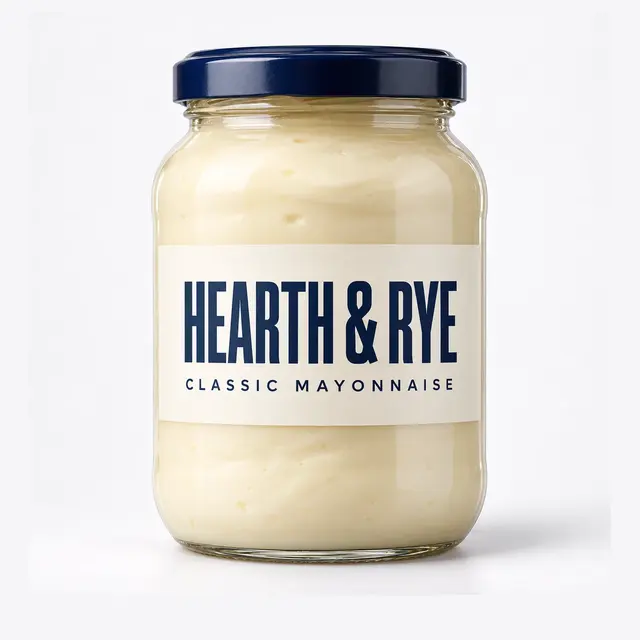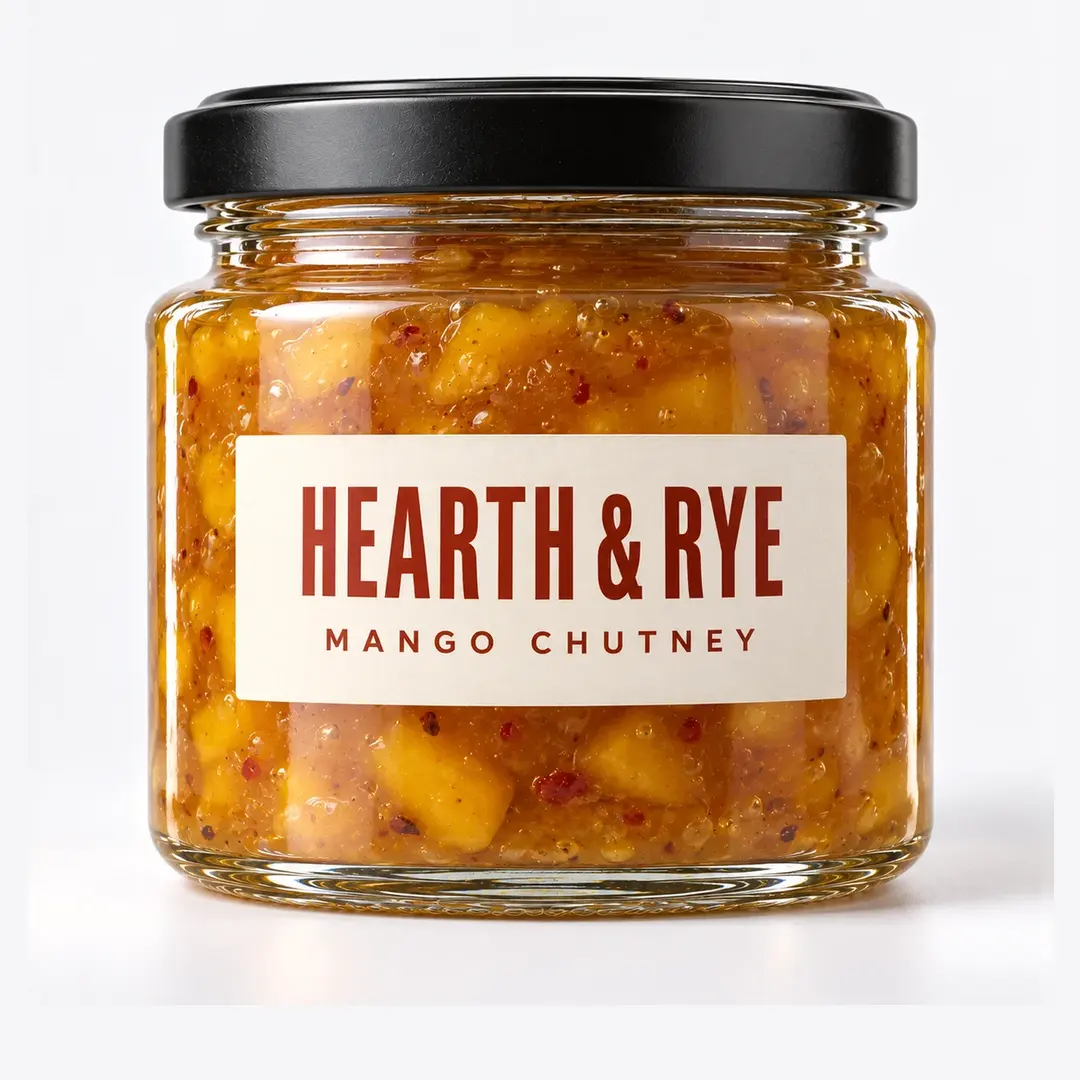
These transparent 330ml wide-mouth glass jars are the kind of container a co-packer reaches for first: big enough for a meaningful retail portion of pickles, salsa, chutney or preserved vegetables, small enough to price accessibly, and shaped so that chunky products fill fast without bridging at the neck. For brands packing acidified vegetables, chunky sauces or deli-style antipasti, this jar is a genuine workhorse. The clear flint glass shows the product honestly, the wide mouth accepts whole gherkins and pepper pieces without damage, and the neck finish runs standard twist closures that co-packers already stock. Specific dimensions, weight and finish are confirmed on the technical drawing at quotation.
Built for Pickles, Salsas and Chunky Fills
Chunky products punish narrow jars. Cucumber spears wedge at the shoulder, salsa bridges above the neck ring, and whole chilies tear when operators force them through a tight opening. The wide mouth on this 330ml format removes that friction. Fillers can drop vegetables vertically, piston depositors can run salsas and chutneys at a steady cadence, and hand-packing lines for premium antipasti move noticeably faster because operators are not fighting the container.
The 330ml volume also sits in a commercially useful position. It is large enough to present as a family or sharing size for table olives, cornichons or pickled onions, yet light enough to keep unit freight cost low and shelf pricing competitive. Many buyers run it as the middle SKU in a three-size range, flanked by a small tasting jar and a large foodservice format.
Why Co-Packers Standardize on This Format
Contract packers live and die by changeover time, and this jar helps on several fronts. The wide mouth accepts a broad spread of products, so one container can serve a pickle customer in the morning and a pasta-sauce customer after lunch with nothing more than a cap change. The cylindrical body handles well on conveyors, labelers and accumulation tables, and the transparency lets quality staff spot fill-level drift or foreign material without stopping the line.
For buyers consolidating several products into one supplier relationship, standardizing on a 330ml wide-mouth jar also simplifies purchasing. One drawing, one cap specification and one carton design can cover a surprising share of an acidified-foods portfolio, which is why this format appears so often in co-packer approved-container lists.
Caps and Liners for Acidified Foods
Pickles, salsas and preserved vegetables typically sit between pH 3.2 and 4.2, and the closure has to survive that environment for the full shelf life. The jar takes standard twist-off metal closures; for acidified products we pair them with plastisol-lined caps that form a reliable vacuum seal after the thermal process. The audible vacuum indicator that consumers press on the lid doubles as a tamper signal and a freshness cue at retail.
Liner selection should match the process, not just the product. A jar running a hot-fill-hold process has different liner demands than one going through a pasteurization tunnel, and oil-containing antipasti need a liner facing that resists fat. Share your process parameters at inquiry stage and we will recommend a cap and liner build-up, then validate it with samples from the production mold before your first full run.
Shelf Presence and Label Real Estate
Transparent glass is a quiet sales tool for vegetable products. Consumers buying pickles or preserved peppers want to see piece count, color and brine clarity before they commit, and this jar gives them an unobstructed view from every angle. The straight body wall leaves generous room for a wrap label or a front-and-back set, and the wide mouth allows a neck hanger or tamper band where retailers require one.
For private-label programs, the same geometry accepts silk-screen printing or decal decoration for a more permanent brand presentation. Many buyers start with paper labels to keep flexibility across SKUs, then move their two or three fastest movers to direct printing once volumes justify it. Our team can quote both decoration routes on the same drawing so you can compare total cost honestly.
Quality Control and Compliance Testing
Acidified food jars live a harder life than most containers: they are filled hot, sealed under vacuum, pasteurized, chilled and shipped long distances. Our inspection plan reflects that. Annealing is verified against the methods of ASTM C148 to ensure the glass carries no dangerous residual stress, thermal shock resistance is evaluated with reference to ISO 7459 for buyers running hot-fill or pasteurization, and internal pressure performance is checked against ISO 7458 where carbonated or pressure-sensitive processes apply. Neck finish gauges confirm that caps torque consistently and vacuum seals form reliably.
The soda-lime flint glass is suitable for direct contact with acidified foods, and food-contact documentation is available for import compliance. Third-party pre-shipment inspection can be arranged for buyers whose retail customers require it.
Export Packing and Pallet Planning
Jars ship in divided export cartons on shrink-wrapped pallets, with carton and pallet layouts optimized at quotation so you know exactly how many pieces ride in a 20-foot or 40-foot container before you commit. Because 330ml jars stack efficiently, freight per unit is modest, but pallet configuration still matters for landed cost, and our team models it during quoting rather than leaving it to chance. Our guide on importing glass bottles from China covers container loading, moisture protection and the paperwork your broker will expect.
To evaluate this jar for your line, send your product type, thermal process and target annual volume. We will respond with a quotation, technical drawing and samples from production tooling. Minimum order quantities vary with mold availability and decoration, and our MOQ explainer shows how pilot runs are structured. For cap compatibility questions or a mixed-container loading plan, reach the export team directly through our contact page.
Frequently Asked Questions
What products is this 330ml wide-mouth jar best suited for?
It performs best with chunky and whole-piece products: pickles, gherkins, table olives, salsas, chutneys, preserved peppers and deli antipasti. The wide mouth lets pieces drop in without damage and keeps piston fillers running at a steady speed on co-packing lines.
Can the jar handle hot-fill or pasteurization processes?
Yes, the jar is suitable for typical acidified-food thermal processes. Thermal shock resistance is evaluated with reference to ISO 7459, and we recommend sharing your fill temperature and process profile at inquiry so the cap, liner and glass specification are validated together during sampling.
Which closure should I use for pickles with a vinegar brine?
A twist-off metal cap with a plastisol liner is the standard choice for acidified products. It forms a vacuum seal after the thermal process and gives consumers a tamper-evident button. The exact neck finish and cap size are confirmed on the technical drawing at quotation.
What is the minimum order quantity for wholesale orders?
MOQ depends on mold availability and whether you need decoration. Existing-mold runs allow lower quantities, and pilot runs can be arranged before a full container commitment. Our glass bottle MOQ guide explains the structure in detail.
Can I get the jar with silk-screen printing instead of a paper label?
Yes. The cylindrical body accepts silk-screen printing and decal decoration as well as standard labels. Many private-label buyers start with labels across the range and move top-selling SKUs to direct printing once volumes justify it. Both routes can be quoted on the same drawing.
How are the jars packed and how many fit in a shipping container?
Jars are packed in divided export cartons, palletized and shrink-wrapped. Pieces per pallet and per 20-foot or 40-foot container are calculated at quotation based on the final carton layout, so you can model landed cost accurately before ordering.