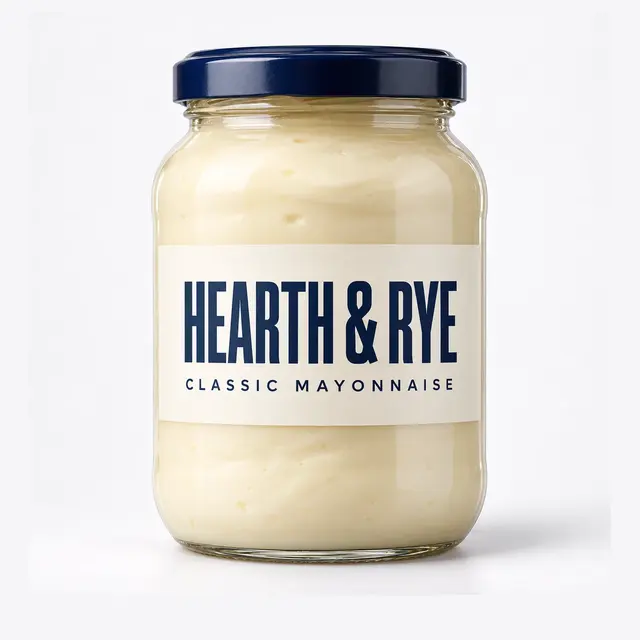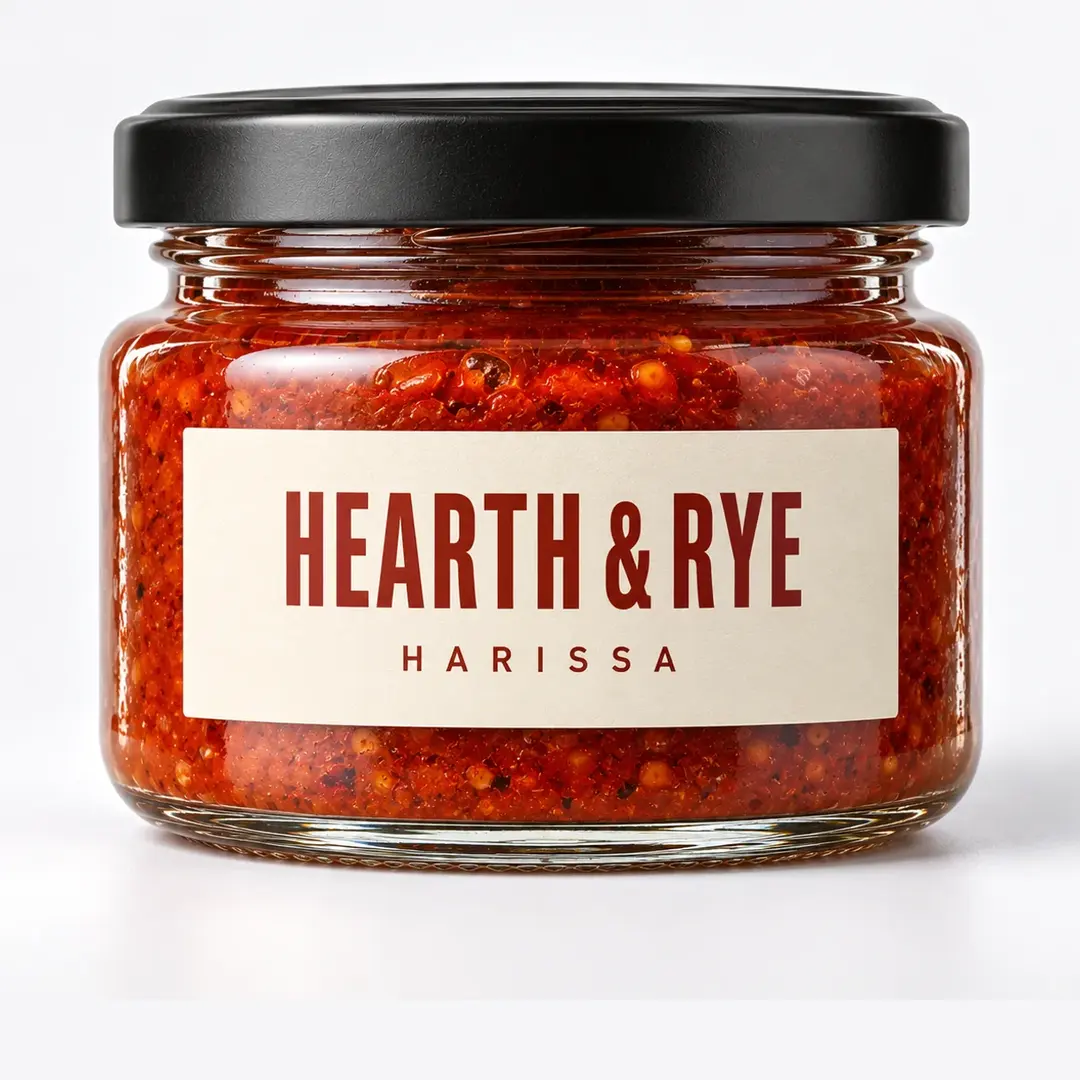
The 393 series is a compact, squat round glass jar with an extra-wide lug-finish mouth and a star-embossed base, made for sauce, dip, spread, and preserve producers who fill viscous or chunky products at speed. Co-packers, deli brands, and private-label food companies choose this format when line efficiency matters as much as shelf presence: the opening is nearly as wide as the body, so product goes in fast and comes out clean.
A Wide Mouth Built for Filling Speed
Jar geometry decides how fast your line really runs. On narrow-neck jars, thick salsa, chutney, or nut butter bridges at the shoulder, nozzles need frequent wash-downs, and giveaway climbs because operators slow the filler to avoid spills. The 393 series removes that bottleneck. Its mouth diameter is a large fraction of the body diameter, so piston fillers, auger depositors, and even hand-filling jigs dose directly into the body with minimal drip and almost no stringing.
The wide opening also shortens cleaning and changeover. Inspection of the empty jar is easier for camera systems, rinsing reaches every corner, and after filling there is no narrow thread to wipe before capping. Over a full shift, those seconds per jar convert into meaningful throughput, especially for small-format jars where per-unit labor dominates cost.
Squat Stability on the Line and the Shelf
The low, broad stance of the 393 series gives it a center of gravity close to the conveyor. Squat jars resist tipping at dead plates, transfer star-wheels, and labeler wrap stations, which reduces jams and breakage. On the retail shelf the same proportions read as generous: the shopper sees more product face and less glass, and the jar stacks two-high in ambient display trays without leaning.
The star emboss on the base is a subtle brand cue visible when the jar is lifted, and the punt geometry underneath supports stable vacuum pull-down after hot filling. Exact brimful capacity, neck finish, and weight are confirmed on the technical drawing at quotation, because those values set your fill-height calculation and label panel size.
Closures and Process Compatibility
The lug (twist-off) finish pairs with metal lug caps using plastisol liners, the standard hermetic closure for shelf-stable foods. Applied hot and cooled under control, the liner forms a vacuum seal whose safety button tells the consumer the pack is intact. Cap colors, printed tops, and tamper-evident bands are available, and we can supply jars and matched caps from one source so fit is guaranteed.
For process, the annealed soda-lime body tolerates normal hot-fill and water-bath pasteurization practice. Your technologist should confirm thermal-shock margin against the actual fill temperature and tunnel profile of your line; we supply the wall-thickness map and annealing data you need for that validation.
Quality Control and Food-Contact Compliance
Each 393 series run passes automatic dimensional gauging, camera inspection for seeds, blisters, and stones, and sampled laboratory testing. Thermal-shock resistance follows ASTM C149, residual stress and annealing quality are examined per ISO 7459 polariscopic method, and internal-pressure resistance is sampled per ISO 7458 where the application calls for it. The glass composition is food-contact soda-lime with no added lead or cadmium, and migration test reports can accompany your shipment for EU and US regulatory files.
Because this jar is aimed at high-speed filling, we hold tight tolerances on mouth concentricity and finish height, the two dimensions that determine capper head wear and vacuum consistency over a long production run.
MOQ, Packing, and Export Logistics
Jars ship in divider cartons on shrink-wrapped export pallets, with the loading plan issued alongside your quotation. The squat format pallets densely, so freight per jar stays low. For how mold occupancy, decoration, and furnace scheduling set the minimum order quantity, read our glass jar MOQ explained page before you brief your purchasing team.
First-time importers can follow our practical guide to importing glass bottles and jars from China, covering Incoterms, insurance, and customs documents. The 393 series runs from a stock mold, so there is no tooling charge on standard flint glass.
Ideal Products for This Format
This jar excels with spoonable, short-shelf-appeal foods: hummus and deli dips, salsa and relish, honey cream, nut and seed butters, baby-food style purees, pate, dessert sauces, and premium pet food toppers. The wide mouth lets the consumer reach the last spoonful without a scraper, a small usability detail that shows up in repeat-purchase reviews.
Decoration and Branding Options
The smooth cylindrical wall of the 393 series is an easy canvas. Paper or BOPP wrap labels apply cleanly on standard labelers, and the shoulder leaves room for a neck band or a tamper strip. For premium lines, screen printing and acid-etch frosting are available on request, and metal caps can carry your logo in one or two colors. Keep in mind that decoration has its own minimum quantities, so many buyers start with a labeled plain jar and upgrade to direct printing once volume justifies the setup.
If you sell a range, this squat format pairs well on the shelf with taller jars from the same family, letting you build a recognizable brand block across flavors and sizes.
Request a Quotation
Send us your product type, target fill weight, closure preference, and annual volume, and we will reply with the technical drawing, cap match, and a container loading plan. Line samples are available for filling trials. Contact the export team via the contact us page and reference the 393 series.
Frequently Asked Questions
What products is the 393 series jar best suited for?
Spoonable and viscous foods: hummus, salsa, relish, nut butters, honey cream, purees, pate, and dessert sauces. The extra-wide mouth lets fillers dose thick or chunky product fast and lets consumers empty the jar with a spoon.
What closure does the 393 series use?
A lug (twist-off) neck finish matched to metal lug caps with plastisol liners, forming a hermetic vacuum seal for shelf-stable foods. Neck dimensions and lug count are confirmed on the technical drawing at quotation, and caps can be supplied with the jars.
Can the jar run on an automatic piston filling line?
Yes. The mouth is nearly body-width, so piston and auger fillers dose directly into the body with minimal drip. Mouth concentricity and finish height are held to tight tolerances for consistent capping at line speed.
Is the 393 jar suitable for hot-fill and pasteurization?
Yes, for typical hot-fill and water-bath pasteurization practice with a vacuum lug cap. Thermal-shock resistance is sampled per ASTM C149, and we provide wall-thickness and annealing data so your technologist can validate the process margin.
What is the MOQ and are there tooling costs?
The 393 series runs from a stock mold, so there is no tooling charge for standard flint glass. Production MOQ depends on furnace scheduling and decoration; our MOQ explained page shows how the quantity is calculated for plain and decorated jars.
How are the jars packed for overseas shipment?
In divider cartons on shrink-wrapped export pallets. The squat shape pallets densely, keeping freight per jar low. Carton counts, pallet layout, and container loading plans are provided with your quotation.