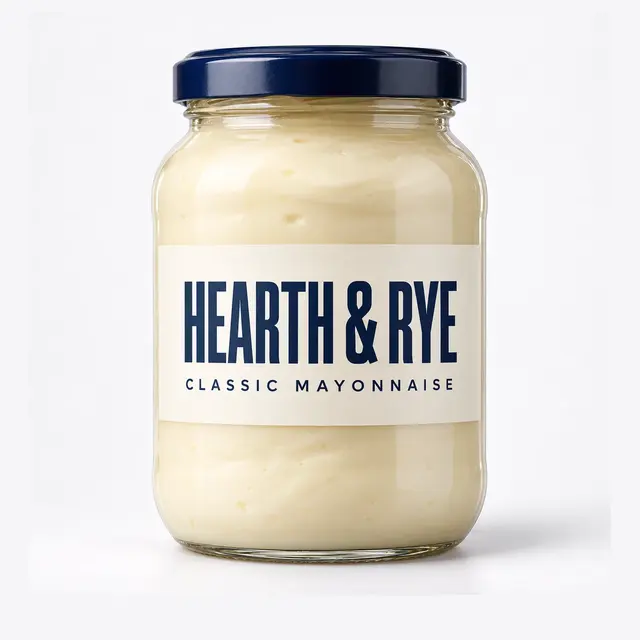
The 373 series is a squat round glass preserve jar with a gently flattened front panel and a wide lug-finish mouth, designed for jam, marmalade, jelly, and fruit-spread producers who need dependable shelf life from a twist-off vacuum seal. Preserve brands, orchard shops, and private-label packers choose this shape because it presents a broad label face to the shopper while the closure system quietly does the hard work of keeping fruit spreads safe for months at ambient temperature.
Shelf Life Starts with the Seal
A jar of jam succeeds or fails at the closure. The 373 series uses a lug (twist-off) neck finish matched to metal caps with a plastisol liner. Filled hot, capped immediately, and cooled under control, the liner hermetically seals the mouth while steam condenses in the headspace and pulls a vacuum. That vacuum is your shelf-life engine: it holds dissolved oxygen low, keeps the cap button down as a tamper signal, and preserves color and flavor far longer than any friction closure.
The broad, level sealing surface on this finish gives the liner generous contact area, which improves seal consistency at production speed. When your line runs well, vacuum values stay tight jar after jar, and warehouse reject rates for button-up failures stay near zero. Neck dimensions, lug count, and recommended cap specification are confirmed on the technical drawing at quotation, and we can supply matched caps from the same purchase order so fit is never in doubt.
A Shape Designed Around Jam
Preserve jars live a harder life than most packaging. They are filled at high temperature, sometimes pasteurized, warehoused through seasons, and finally opened and re-closed at the breakfast table for weeks. The 373 series answers each stage. The squat round body with its flattened panel resists the internal vacuum without visible paneling, the wide mouth accepts whole-fruit and chunky preserves without bridging, and the low profile stacks securely in case trays and pantry shelves.
The flat front is a deliberate gift to your designer: labels lie perfectly smooth with no curved-edge lift, and a front-and-back label set reads cleanly through the glass. For transparent jellies and marmalades with suspended peel, the broad viewing window turns the product itself into the decoration.
Process Compatibility for Preserves
Hot-fill-and-hold, water-bath pasteurization, and atmospheric cooling are all normal practice for this jar family, using annealed soda-lime glass with the thermal headroom preserve lines expect. Your process authority should still validate thermal-shock margin against your actual fill temperature and cooling curve, and we provide the wall-thickness map and annealing records needed for that file. For high-acid fruit products, the glass itself is chemically inert: no flavor scalping, no interaction with citric or ascorbic acid, and no migration of plasticizers, because the product touches only glass and the plastisol-lined cap.
Headspace practice matters as much as the jar. Fill too low and vacuum weakens; too high and product fouls the seal. We include recommended fill-height guidance with the drawing so your first trial run starts close to target.
Quality Control and Compliance
Every run of the 373 series passes automatic dimensional gauging and camera inspection for seeds, blisters, and stones, backed by sampled laboratory tests. Thermal-shock resistance is verified per ASTM C149, annealing quality and residual stress are examined per the ISO 7459 polariscopic method, and internal-pressure resistance is sampled per ISO 7458 where the application requires it. The batch is food-contact soda-lime glass with no added lead or cadmium, and heavy-metal migration reports can be issued with the shipment for EU and US import files.
Finish height and mouth concentricity receive extra attention on this series, because vacuum consistency is only as good as the sealing surface. Agreed AQL limits for visual and functional defects are written into your purchase contract.
MOQ, Packing, and Delivery
The 373 series runs from a stock mold in standard flint glass, so there is no tooling charge. Jars pack into divider cartons, stack on export pallets, and ship shrink-wrapped with a container loading plan issued at quotation. To understand how furnace scheduling and decoration set the minimum order quantity, read our glass jar MOQ explained guide before setting your purchasing calendar.
New importers can follow our walkthrough on importing glass bottles and jars from China, which covers Incoterms, insurance, documents, and destination charges in plain language.
Beyond Jam: Other Strong Fits
The same geometry suits marmalade, lemon curd, fruit butter, chutney, relish, compote, pie filling, and premium dessert sauces. Honey packers who prefer a broad label face also use this family, and the flat panel takes shrink sleeves cleanly if you want full-body graphics for a seasonal line.
Why Glass Remains the Preserve Standard
Retail data across preserve categories keeps pointing the same way: shoppers equate glass with quality, and they will pay more for fruit spreads they can see. Glass is impermeable to oxygen and moisture vapor, so the barrier that protects your jam on day one is identical on day four hundred. It is also endlessly recyclable without quality loss, an easy sustainability story for your label, and it survives the consumer’s kitchen long after the contents are gone. For brands building a premium preserve line, the container is not a cost to minimize but part of the product the customer is buying.
Get Samples and a Quotation
Tell us your product, fill weight, cap color, and annual volume, and we will return the technical drawing, a matched cap recommendation, and a landed-cost packing plan. Production-line samples are available so your technologist can run real filling and vacuum checks before the order. Reach the export team through the contact us page and mention the 373 series.
Frequently Asked Questions
How does the 373 series help jam shelf life?
Its lug twist-off finish pairs with plastisol-lined metal caps to form a hermetic vacuum seal after hot filling. The vacuum keeps oxygen low, holds the safety button down as a tamper signal, and preserves color and flavor for ambient shelf storage.
Which cap fits the 373 series jar?
Metal lug (twist-off) caps sized to the jar’s neck finish. Exact neck diameter and lug count are confirmed on the technical drawing at quotation, and we can supply matched plain or printed caps together with the jars.
Is the jar suitable for hot-fill and pasteurization?
Yes. The annealed soda-lime body is designed for typical hot-fill, hot-fill-and-hold, and water-bath pasteurization practice. Thermal-shock resistance is sampled per ASTM C149, and we supply wall-thickness data for your process validation.
What products besides jam fit this jar?
Marmalade, jellies, fruit curds, chutneys, relishes, compotes, pie fillings, dessert sauces, and honey all work well in this squat wide-mouth format with a broad label panel.
What is the MOQ for the 373 series?
It runs from a stock mold, so no tooling cost applies. Production MOQ depends on furnace scheduling and decoration choices; the MOQ explained page on our site shows how quantities are calculated for plain and decorated jars.
Can labels be applied to the flat front panel?
Yes. The flattened front is designed for smooth wrap or front-and-back label application with no edge lift, and shrink sleeves also conform cleanly to the body for full-body graphics.