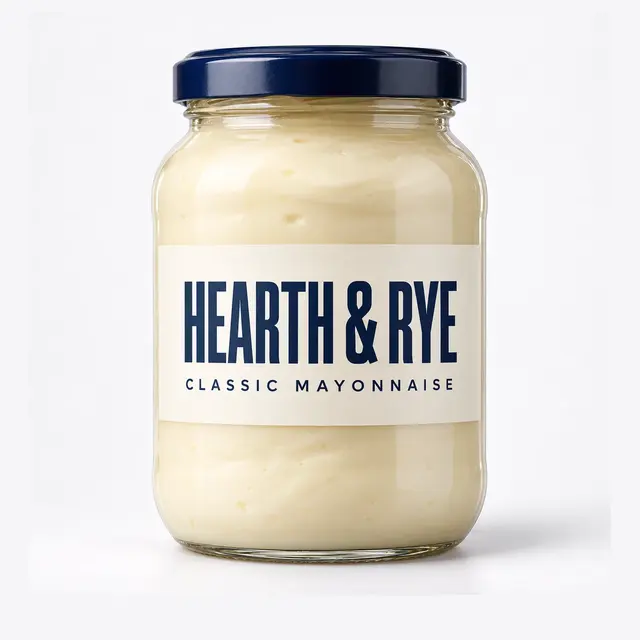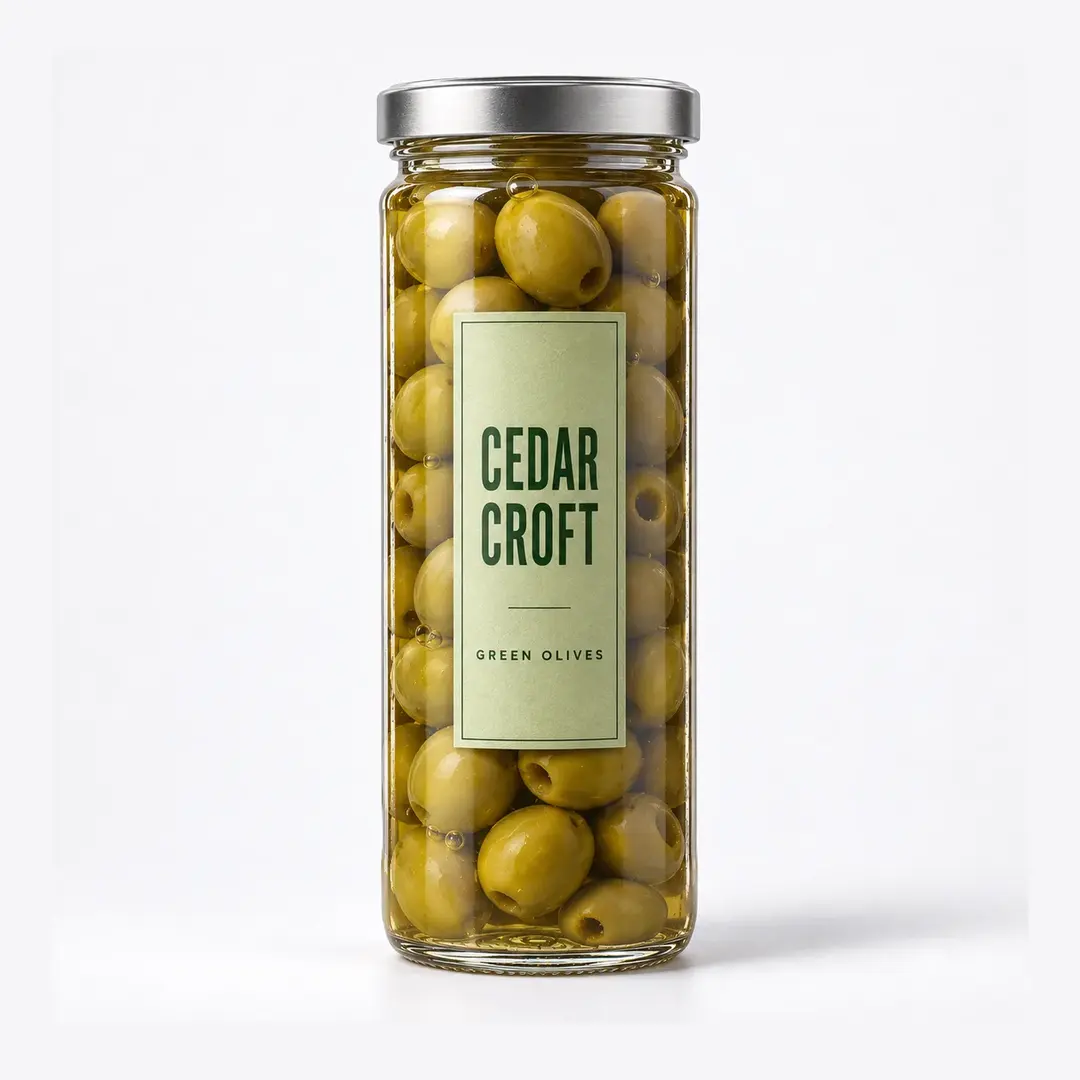
The 522 series is a 735 ml tall, straight-sided round glass jar with a wide mouth and a twist-off finish – a format shaped for pickled vegetables, olives, asparagus and other products that need vertical space and a clear view of what is inside. It is built for vegetable packers, antipasti brands, deli and foodservice suppliers who want a jar that packs long vegetables efficiently, presents them standing upright on the shelf, and seals under vacuum for a long ambient shelf life. Jars and matched twist-off lids are supplied together as a wholesale program.
A Tall Profile Built for Long Vegetables
Package height is a product decision. Pickled cucumbers, asparagus spears, green beans, carrot batons and whole spring onions all present best standing upright, tips aligned, in brine that shows their color. A tall jar like the 522 series lets the product stand the way it grew – which is precisely how premium pickled and preserved vegetables are merchandised across European deli counters, Middle Eastern grocery and North American specialty aisles. Squat jars force the same vegetables to be cut short or packed sideways; the tall format protects both presentation and yield.
The straight wall compounds the advantage. Vegetables pack densely and uniformly from base to shoulder, so piece count per jar is consistent – critical when your label declares drained weight and your customer counts spears. On the shelf, the uninterrupted glass panel shows the product from every angle, and the cylindrical surface takes a wraparound or front-and-back label cleanly. At 735 ml, the format covers the standard retail band for pickled vegetables and marinated antipasti, with brimful capacity, finish dimensions and glass weight confirmed on the technical drawing at quotation.
Wide Mouths and Packing Efficiency
Vegetable packing is where labor cost is won or lost, and the wide mouth of the 522 series is engineered for it. Hand-packing lines can place spears and whole cucumbers quickly without bruising product against a narrow opening; semi-automatic fillers and vibratory infeed systems meter olives, gherkins and cocktail onions without bridging; and brine filling at volume flows cleanly with minimal aeration. Headspace control – the foundation of vacuum sealing and correct drained weight – is straightforward when the opening gives operators and instruments a clear view and easy access.
The same wide mouth pays back at the consumer end: a fork or pair of tongs reaches product at the bottom of the jar without tipping brine everywhere, and the last olive is as accessible as the first. Small usability details like this are what separate brands that get reordered from brands that get replaced.
Drained-weight compliance deserves a mention here, because it is where vegetable packers most often fail retail audits. When your label declares a drained weight, regulators and retail QA teams will open jars and check – and consistent jar geometry is what makes consistent piece counts and fill weights possible. The straight wall and controlled brimful capacity of the 522 series remove package variation from the equation, so your fill-weight targets hold across lots. Dimensions and capacity tolerances are stated on the technical drawing issued at quotation, giving your QA team the data they need for specification files.
Case packing follows the same logic: the uniform cylindrical body tessellates efficiently in standard retail cases, so shipper utilization stays high and per-unit freight cost stays low – a detail that matters when brine-filled jars are heavy by nature.
Brine, Acid and Thermal Processing Compatibility
Pickled and marinated vegetables are aggressive products: low pH, high salt, acetic or lactic acid, often with oil, garlic and spices in suspension. Soda-lime glass is chemically inert in this environment – no corrosion, no flavor scalping, no liner to degrade – which is why glass remains the default package for premium pickles worldwide. Many vegetable products are hot-filled or pasteurized after capping; the 522 series is specified for these processes, with thermal shock resistance verified per ASTM C149 and ISO 7459 and annealing quality assessed per ISO 7458. Describe your process – fill temperature, pasteurization curve, any oil layer – at inquiry so the glass and closure compound are validated together by the factory.
The twist-off lug cap completes the system: plastisol or PVC-free compound matched to acidic brine, applied within a defined torque window, pulling a vacuum as the product cools. Vacuum safety buttons give retailers and consumers visible confirmation that the seal held from your plant to their shelf.
Quality Control and Transit Packing
Beyond thermal and annealing checks, lot release for the 522 series covers finish gauging so lugs engage correctly, visual inspection for stones, blisters and checks, and weight and vertical-load verification. Because tall jars have a higher center of gravity, packing is engineered accordingly: divided cartons sized to the jar, palletized and shrink-wrapped on an automated line, as shown below, with container loads planned to prevent movement in transit. Pre-shipment inspection by SGS, BV or your nominated agent is welcomed, and food-contact declarations aligned to US FDA and EU food-contact frameworks accompany export shipments.
Wholesale Program: MOQ, Samples and Ordering
The 522 series is supplied in production lots. Minimum order quantities depend on mold scheduling and decoration choices – our explainer on glass bottle MOQ shows how order size, customization and order frequency interact, so you can structure a first order that fits your launch plan. Samples with matched lids are available for packing trials with your actual vegetables, pasteurization validation and vacuum-retention testing.
For buyers building a complete import program around this jar, our guide to importing glass bottles from China covers freight planning, documentation and quality checkpoints. To price the 522 series for your pickle, olive or antipasti SKU, send your product, fill process, annual volume and destination port through the contact page – we will respond with a drawing, closure specification and a firm quotation.
Frequently Asked Questions
What products is the tall 735 ml 522 series designed for?
It is shaped for products that need vertical space and upright presentation: pickled cucumbers and gherkins, asparagus spears, green beans, carrot batons, olives and marinated antipasti. The straight wall keeps piece counts consistent for drained-weight declarations, and the wide mouth speeds both hand packing and semi-automatic filling.
Can the jar handle hot brine filling and pasteurization?
Yes. Hot-fill and post-capping pasteurization are standard applications. Thermal shock resistance is verified per ASTM C149 and ISO 7459, and annealing quality is checked per ISO 7458. Provide your fill temperature and pasteurization curve at inquiry so the factory validates the glass and cap compound for your exact process.
Which lids fit the 522 series?
The series is quoted with metal twist-off lug caps in the matching finish, lined with plastisol or PVC-free compound selected for acidic brine and, where relevant, oil layers. Vacuum safety buttons and custom lithographed panels are available, and torque windows are supplied with the technical drawing.
What is the MOQ for this series?
MOQ depends on mold scheduling and decoration and is quoted per project. Stock-mold orders start at a manageable wholesale lot; private embossing requires a dedicated mold run. Share your annual volume and we will recommend the most economical structure – the key variables are covered in our glass bottle MOQ guide.
Can we test packing and sealing with our own vegetables?
Yes – we recommend it. Samples with matched lids are supplied for packing trials, pasteurization validation, vacuum-retention checks and drained-weight verification with your actual product. Sample freight is normally at the buyer’s cost and is typically credited against the first production order.
How are tall jars protected during ocean freight?
Tall jars ship in divided cartons sized to the format, palletized and shrink-wrapped on an automated line, with container loads planned to prevent movement. Pre-shipment inspection by SGS, BV or your nominated agent can be arranged, and we share packing photos before dispatch on request.