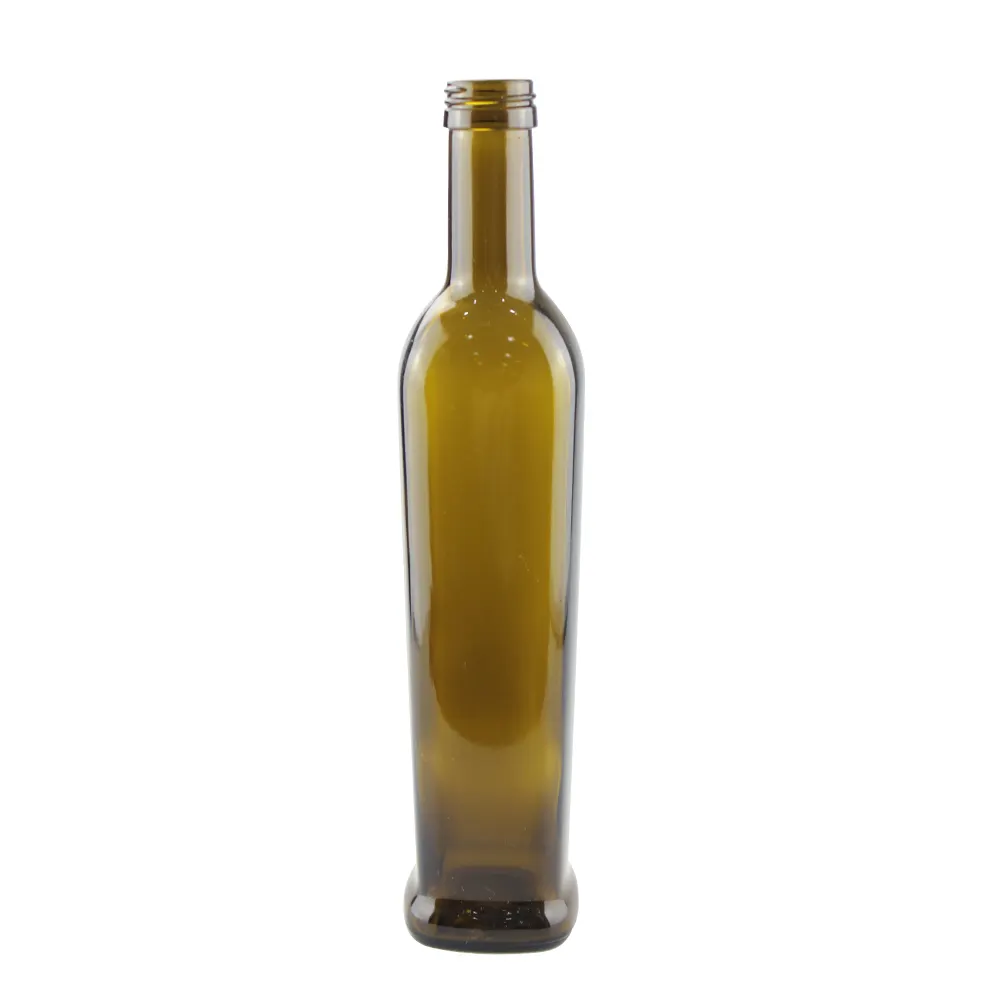
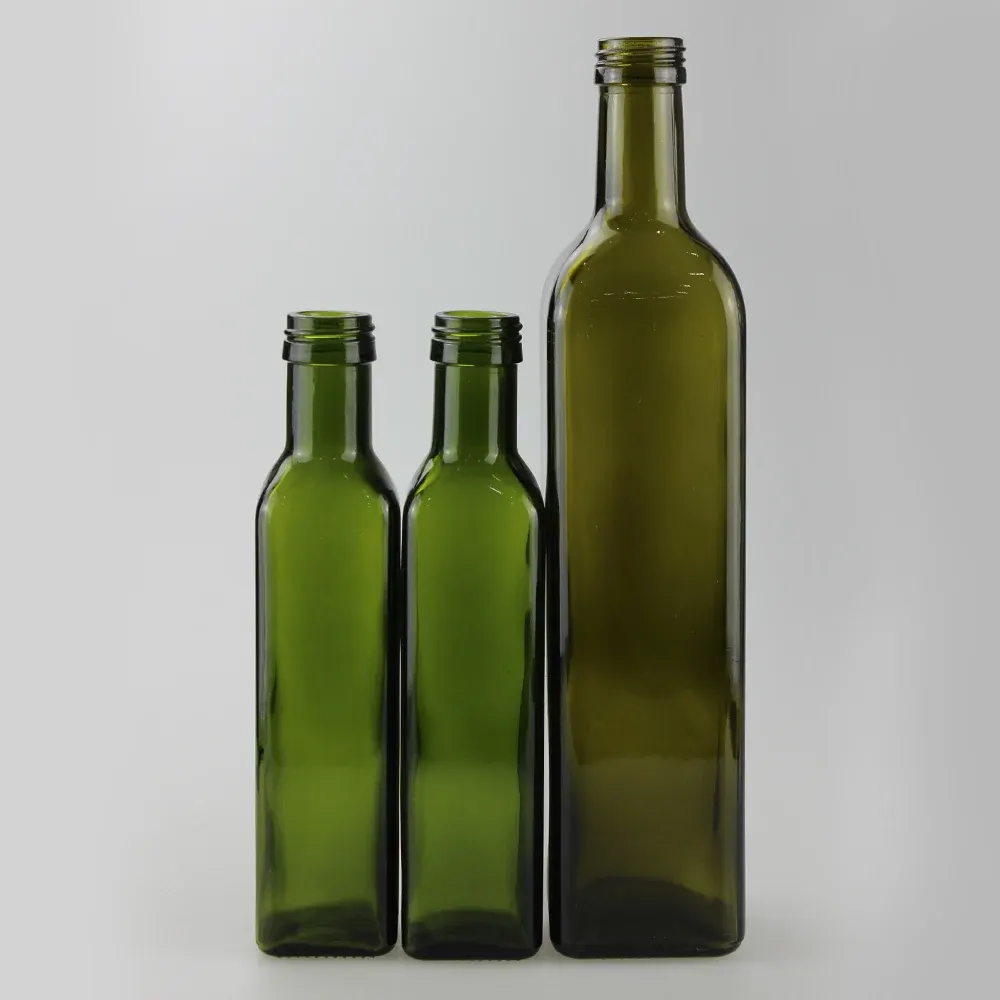
Part of our glass olive oil bottles range; the stock moulds are pictured at the end of this guide.
A custom olive oil bottle comes down to four specifications: coloured glass that shields the oil from light, a capacity matched to the sales channel, a 31.5x24mm neck with a pourer that cuts off without dripping, and branding formed into or fired onto the glass. Antique green is the usual choice for extra virgin oil because it blocks most UV below 450nm. Most brands do not need private tooling on day one; a stock shape in an exclusive colour with decoration is a workable first step.
Glass colour and light protection
After oxygen, light does the most damage to olive oil. Under shop lighting, photooxidation breaks down polyphenols and creates off-flavours in a matter of weeks, so colour is a quality specification before it is a styling one.
| Glass | Protection | When to choose it |
|---|---|---|
| Antique green | Blocks the large majority of UV below 450nm | Extra virgin oil sold through lit retail; the traditional deep olive tone |
| Amber | Comparable to antique green | A warmer look on shelf; somewhat better accepted by recycling streams in certain markets |
| Flint (clear) | Needs help from a sleeve or a UV-filter coating | Fast-turnover formats, sleeved bottles, coated bottles |
Our working rule is simple. If the oil is likely to spend more than eight weeks under store lights, specify coloured glass. Colour names differ from one plant to the next, so ask for the UV transmission curve of the actual glass instead of trusting the word "green" on a quotation.
Capacity and shape by sales channel
Nearly every custom olive oil project uses one or more of four sizes, and each belongs to a channel.
- 250ml: tasting sets, gift boxes and single-varietal lines, where the oil's value per liter can carry a costlier pack.
- 500ml: the standard for higher-end retail in Europe and in specialty shops elsewhere. A household gets through it while the oil is still fresh.
- 750ml: sits between upscale grocery and the restaurant table.
- 1L: foodservice, club stores and family packs positioned on value.
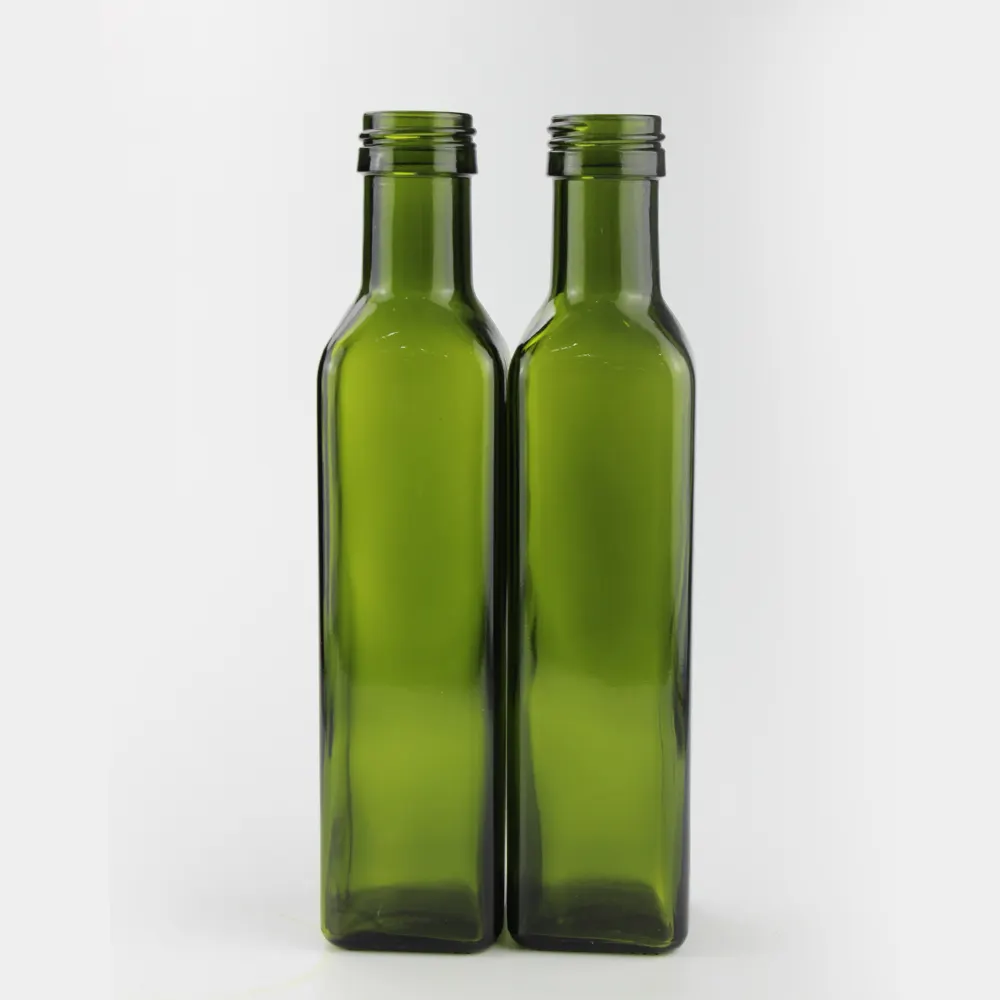
Two shape families cover the category. The marasca is square, packs tightly in a case and looks contemporary. The dorica is round, looks traditional and is comfortable to pour from. Stock moulds exist for both families in all four sizes.
Neck finish, pourer and cap
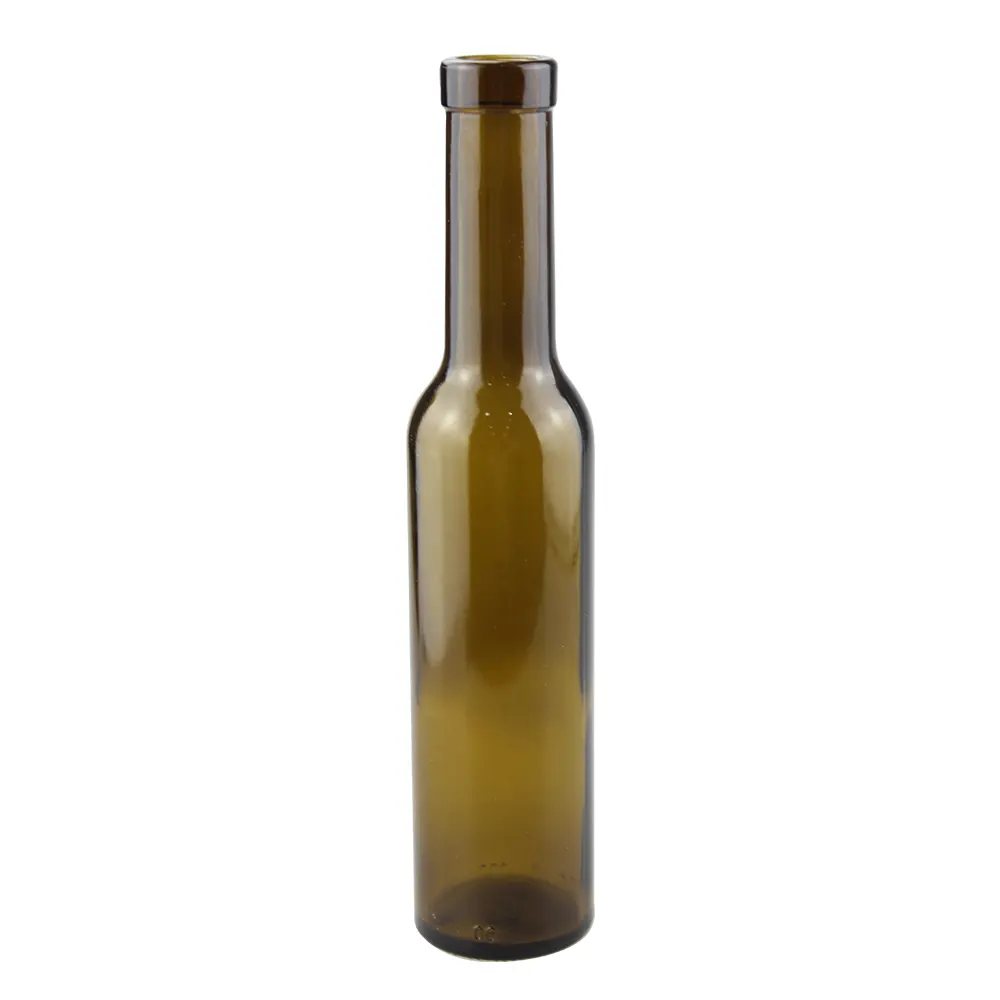
People handle the closure every time they cook, so pouring behaviour shapes whether they buy the oil again. The common standard is a 31.5x24mm neck finish that takes a plastic pourer insert under a tamper-evident ROPP aluminum cap.
A good insert does three things:
- holds the flow to a steady stream;
- stops cleanly thanks to a sharp cutoff edge on the spout, which keeps oil off the shoulder of the bottle and off the cook's fingers;
- lets air back in through a return channel, so the bottle does not glug.
Low-cost inserts leave out the anti-drip lip, and users notice the first time they pour. Higher-end lines sometimes move to weighted pourers or wooden-topped bartop stoppers, which give up some convenience in exchange for ritual.
Write an oxygen transmission requirement into the specification. A properly seated ROPP liner limits oxygen ingress enough to support an 18-to-24-month shelf life, and the supplier should prove it with torque and seal-integrity tests. Add flow-rate and leak testing to the RFQ, then confirm the result on filled sample bottles before production.
Embossing, label panels and printed decoration
Embossing is relief formed by the mould itself: an estate crest, a harvest-year panel, a texture. It is permanent, it can be felt, and it adds nothing to the unit cost once the mould exists. It also outlasts wet kitchens and rough handling that ruin paper labels.
Because the relief lives in the tooling, a finished stock bottle cannot be embossed afterwards. The options are a private mould, a modification to existing tooling (sometimes possible, and cheaper than a full new set), or surface decoration. Supply artwork at the drawing stage, and consider recessed relief, which resists abrasion better than raised detail.
A recessed label panel 1.5 to 2mm deep keeps label edges from scuffing in the case and in transit. Size it to your label die exactly.
On the surface, ceramic screen-printing inks are fired into the glass and suit restrained estate branding. Acid etching gives the frosted bands often seen on gift oils. Dark green glass absorbs low-contrast print, so use light inks or metallic foil on green and amber bodies.
Food-contact documents to request
Glass is inert in contact with food, and overall migration is nil. The paperwork is still needed, because retail buyers and border authorities ask for it.
- EU: a Declaration of Compliance that references Framework Regulation 1935/2004.
- US: food-contact status under FDA 21 CFR.
- Heavy metals: lead and cadmium leaching reports for the glass and, more importantly, for the decoration. Ceramic inks, spray coatings and foils have to pass on the finished decorated bottle.
Ask for these reports from a third-party lab such as SGS or Intertek, one per decoration type, renewed each year or whenever a formulation changes. If you sell to retail chains, also confirm that the plant works under a recognised hygiene or quality scheme, since retailer technical audits now reach packaging suppliers as well as fillers.
Stock shape first or private mould
There are two routes. One is a decorated stock bottle: an existing marasca or dorica in your colour, printed or etched. The other is a private mould with your own shape and embossing. Many brands phase the two, launching on stock glass and moving to private tooling when volume supports it.
The development steps are set out on our page about developing a custom glass bottle, and the cost side is covered in the guide to what olive oil bottles cost. To compare supply models, look at the stock olive oil bottles available in bulk or the wider food and beverage glass packaging range.
FAQ
What is the minimum order for custom olive oil bottles?
It is quoted per project. The figure depends on the mould and on the production line the bottle runs on.
How long does a custom olive oil bottle take to develop?
Timing is also set per project, after the mould, the decoration and the line schedule are confirmed.
Is clear glass ever acceptable for olive oil?
Yes, in limited cases: formats that sell through quickly, bottles that will be sleeved, and bottles given a UV-filter coating. Otherwise choose antique green or amber.