A glass container for food or drink has to clear two tests before appearance matters: the food-contact law of every market it ships to, and the thermal process on your filling line. On the thermal side the figure that counts is the temperature differential the glass must absorb, with a 42-degree differential under ISO 7459 as the working minimum for hot-fill. On the legal side, the EU and the US each expect a defined set of documents from the supplier.
Thermal and pressure requirements to specify
Food glass fails from heat far more often than from chemistry. A jar filled at 85 degrees Celsius in a 20-degree room sees a 65-degree differential, and it is that gap, not the fill temperature, that cracks glass. Thermal shock resistance is validated to ISO 7459. Hot-fill programs work to a minimum 42-degree differential, and pasteurization and sterilization programs set higher margins.
The three common processes load the container differently:
- Hot filling. One sharp differential at the moment of filling.
- Tunnel pasteurization. The filled container passes through spray zones that climb to 60 to 75 degrees and come back down. Every boundary between zones is a separate differential event.
- Retort at 121 degrees. The extreme case. It needs a container designed and annealed for retort, with heavier sections and specific geometry, so start from a container review and not from a catalog.
Annealing is the half of thermal performance you cannot see. Forming leaves residual stress in the glass, and the lehr, the annealing oven, has to relieve it. Glass that is under-annealed looks fine at inspection and breaks on your line weeks later. Ask for stress measurement to ASTM C148 on the golden sample; it is a five-minute check with a polariscope.
Carbonated drinks add internal pressure. Resistance is tested to ISO 7458, and the rating should cover your carbonation volumes plus the pressure spikes of the filling line.
Container choice by product category
| Product | Container and finish | What to confirm |
|---|---|---|
| Hot-fill sauces, salsas and jams (85 – 95°C fill) | Wide-mouth jar, lug twist-off finish | Enough glass weight to absorb the differential |
| Pasteurized juices and acidic drinks | Bottle rated for your tunnel profile | Thermal shock margin against your largest zone-to-zone step; cap liner against the acid profile |
| Carbonated beverages | Pressure-rated bottle, crown or 28mm PCO finish | ISO 7458 performance at your carbonation level |
| Oils, vinegars and ambient-stable products | Flint or green bottle, bar-top or screw finish | Decoration and shelf presence |
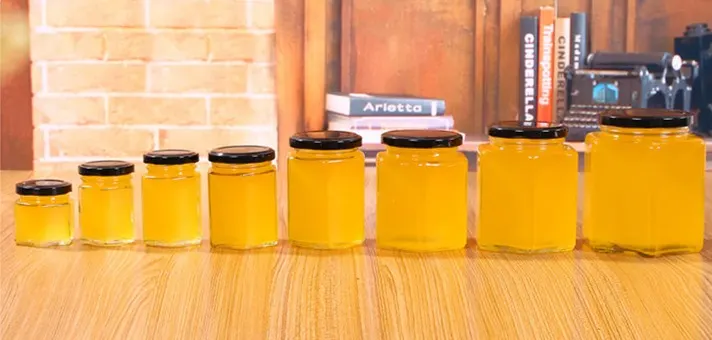
Weight is where hot-fill jars are most often under-specified. A 314ml salsa jar belongs at 230 to 260 grams; the 195-gram economy version leaves too little glass for the differential. Lug finishes are the norm in this category because the lug and the plastisol liner in the lid together form the vacuum seal that the shelf life depends on.
For carbonated products, state the carbonation level in the brief. A drink at 3.5 volumes of CO2 and one at 4.5 volumes call for different bottle specifications, and the closure has to be rated for the same pressure as the glass.
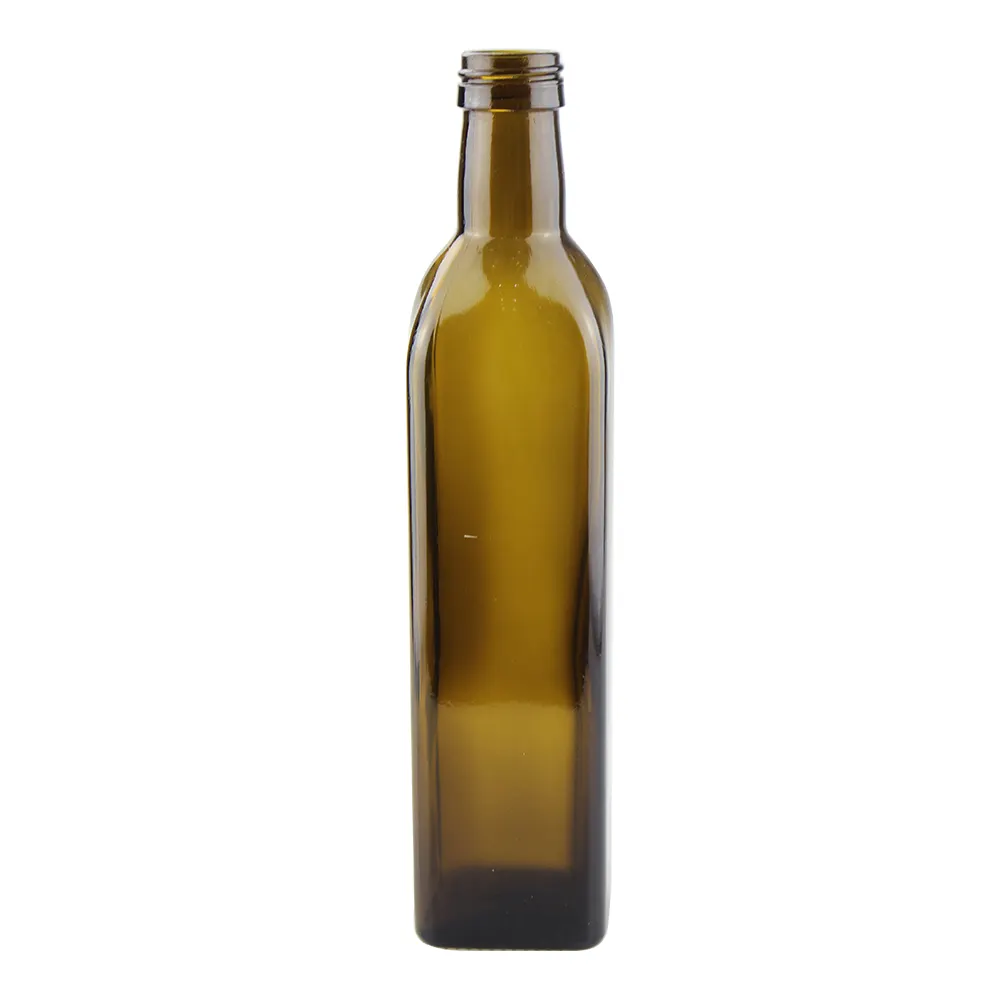
Oils and vinegars are the forgiving group, so most of the budget can go to decoration. Green glass for olive oil is partly tradition and partly function, since it filters some UV. The choice between clear and colored glass is worked through on our flint glass bottles page.
EU and US food-contact rules
European Union
Glass food packaging is covered by Regulation (EC) No 1935/2004. This framework law says a material must not pass constituents into food in amounts that endanger health, change the food's composition unacceptably, or affect its taste and odor. Soda-lime glass is effectively inert, which is why it has no positive-list migration limits of the sort applied to plastics.
In practice the supplier owes you a Declaration of Compliance (DoC), backed by migration testing where it applies. Lead and cadmium are the standard heavy-metal panel for glass. Manufacture must also follow the EU GMP Regulation 2023/2006.
United States
The FDA treats glass containers as food-contact substances under 21 CFR, and soda-lime glass is generally recognized as safe for its intended use. The working requirements are the lead and cadmium limits, together with state rules such as California Proposition 65, which calls for its own statements.
Decorated containers
Decoration falls under the same rules as the glass. Printing inks and coatings must meet food-contact requirements and must not migrate through or around the container. They must also stay clear of the food and, on drinking vessels, of the lip-and-rim area, which has specific limits. For that reason decoration zones are kept off the sealing surface by design. Ask for migration documents that cover the decorated article and not only the bare glass.
Alcoholic beverages and TTB capacities
For the US, TTB standards of fill set the permitted capacities: 750ml, 700ml, 375ml, 1L and others. The bottle's brimful capacity and fill point have to be engineered to the chosen standard when the specification is written. Label approval also interacts with where embossing and decoration sit. Settle the TTB capacity before tooling, because correcting capacity once molds are cut is costly.
Reference specifications for common food containers
The values below are planning references. Final figures are confirmed on the project drawing.
| Parameter | 212ml preserve jar | 314ml sauce jar | 500ml juice bottle | 750ml beverage bottle |
|---|---|---|---|---|
| Glass weight | 150 g | 245 g | 280 g | 420 g |
| Neck finish | 53-2030 lug | 63-2030 lug | 38-2000 / lug | Crown 26mm / bar-top |
| Hot-fill rating | 85°C fill | 90°C fill | Pasteurizable | Confirmed per project |
| Thermal shock minimum | 42°C differential | 42°C differential | 42°C differential | 42°C differential |
| Compliance documents | DoC + migration report | DoC + migration report | DoC + migration report | DoC + migration report |
When no stock container matches your process, tooling and finish engineering for jars are explained on the custom glass jars page. For matching a stock or custom route to your volume stage, see the scenarios on our packaging solutions collection.
Frequently asked questions
Which documents should I request from a food glass supplier?
For the EU, a Declaration of Compliance under Regulation 1935/2004, lead and cadmium migration test reports, and confirmation of GMP manufacture under Regulation 2023/2006. For the US, food-contact documentation under FDA 21 CFR with the lead and cadmium limits, plus Proposition 65 statements if you sell in California. Collect them before you commit to the order.
Will an ordinary jar take a 90-degree fill?
Only if it was specified for one. Filling at 90 degrees in a 20-degree room creates a 70-degree differential, and the jar's weight, glass distribution and annealing all have to be rated for that. We have the container checked by ISO 7459 thermal shock testing against your actual process.
Can a pasteurization-grade container be used in a retort?
Not by default. Pasteurization at 60 to 75 degrees Celsius is routine for standard hot-fill containers with an adequate thermal shock margin. A retort runs at 121 degrees under pressure, and a container has to be designed and its annealing validated for that duty.