Filed under glass jars with lids; the moulds we quote for this are pictured at the foot of the page.
A custom glass jar is defined by four things: the forming route, the neck finish, the capacity stated as overflow and as net fill, and the food-contact evidence behind the glass, liner and any coating. Of these, the neck finish is the one you cannot change later, because it fixes which lids, lug caps and vacuum seals will ever fit. Before volume production, ask for a first article measured against the drawing, covering capacity, wall thickness, mouth diameter, colour and annealing.
Decoration routes, retail boxes, inserts and whole-set budgeting are handled separately on our packaging site. What follows is the engineering side of the jar body, across a range from 60 ml to 1,100 ml. Stock shapes for comparison are in the glass jar catalogue.
Stock body or private mould
The first decision is whether you need a new shape at all. A stock jar runs on a mould that already exists and has been paid off, so there is no tooling charge and samples arrive quickly. A private shape needs its own mould set: usually a blank (or baffle) mould and a blow mould for each cavity, plus the tooling that forms the finish. That adds a longer sampling stage and raises the minimum for the programme.
Many brands get most of the shelf effect they want from a stock body paired with a custom lid and decoration. Raise the question in the first inquiry, and ask how many cavities the mould would have, because cavitation feeds straight into piece cost and minimum quantity. We also ask the plant for a CAD file or drawing of the finish before anything is committed.
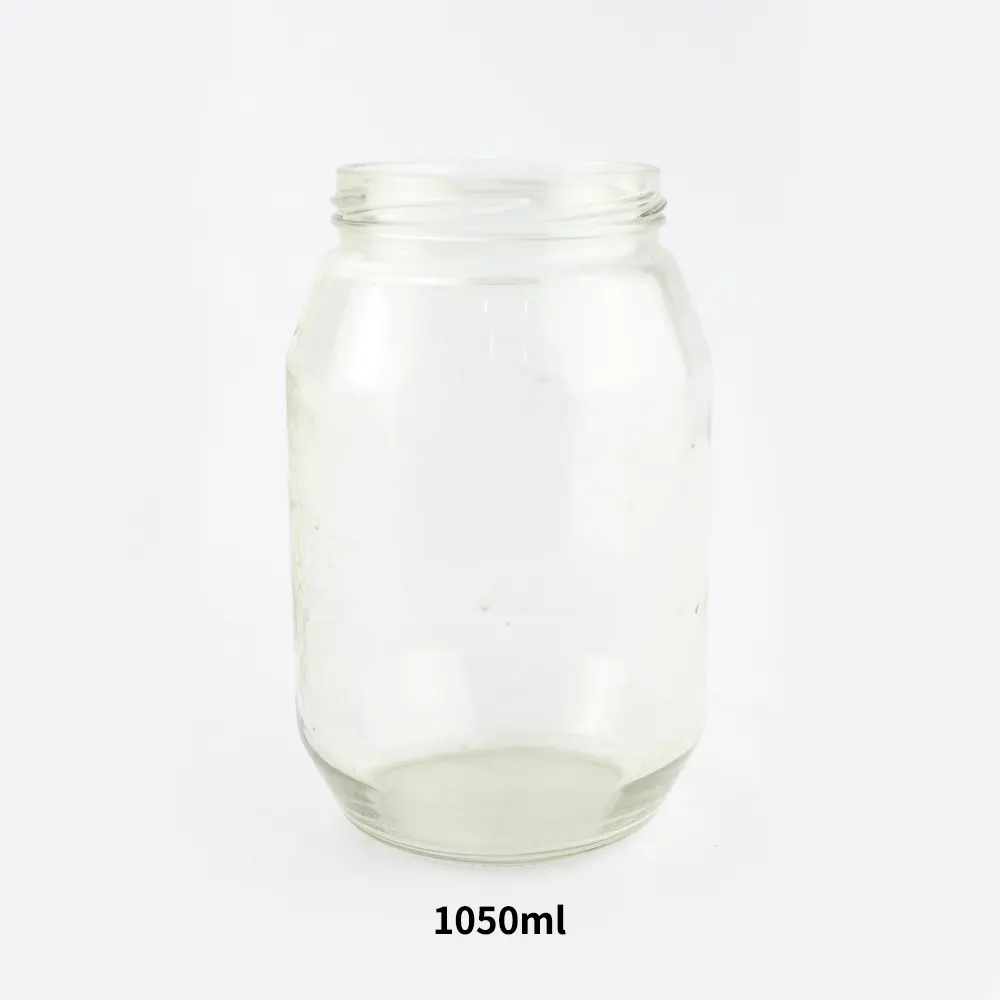
Shape and forming route
Jar shape is a production choice as much as a branding one, because the geometry decides how the glass is formed and what the mould set looks like. It also sets the label area, filling speed and pallet density.
Two forming routes cover almost all jars. In press-and-blow, a gob of molten glass is pressed into a preliminary shape called a parison and then blown out to the final cavity. It handles short necks and wide openings well, which is why it is the usual route for wide-mouth jars. In blow-and-blow, the neck is blown first and the body afterwards, which gives closer control of the neck and is typical for narrow-mouth jars and bottles. The route limits which finish diameters are realistic and how tight a capacity tolerance you can ask for, so if a particular lid is already chosen, settle the route before any steel is cut.
| Shape | Usual forming route | Typical contents | What to expect |
|---|---|---|---|
| Wide mouth | Press-and-blow, short neck and open finish | Honey, pickles, jams, body butters | Simple to fill and scoop from, large label face, tolerant of thick product |
| Narrow mouth | Blow-and-blow, controlled neck | Oils, syrups, sauces, dressings | Controlled pour and small footprint; the neck needs a tighter finish tolerance |
| Square | Press-and-blow with flat tooling | Spices, pantry staples | Packs densely on shelf; the label sits on a flat panel |
| Hexagonal | Press-and-blow, multi-cavity | Honey for the gift market | Distinctive outline; the mould is more complex |
| Round cylinder | Either route | Coffee, dried goods, candles | Most economical, stacks best, easiest to label and fill |
Think about your own line as well. Round jars index cleanly through fillers and labellers. Square and hexagonal jars want wider lanes and slower indexing, and a wrap label can lift or shadow at the corners unless the drawing calls for a flat panel. With an automatic capper, the finish has to stay inside tolerance so the chuck seats on every jar.
Capacity, overflow and net fill
Two jars can both be sold as "500 ml" and behave differently on a filler. The reason is that glass capacity is normally quoted as overflow, meaning filled to the brim, while the quantity you declare and sell is net fill.
The gap between them is headspace. You need it for thermal expansion during hot-fill, for product that rises in transit, and for the space the lid and liner take up. A jar listed at 500 ml overflow may carry only ~470 ml of saleable product. Give the supplier your net target and ask for the measured overflow, then calculate headspace from those figures. Skipping this step is a frequent source of complaints that a jar looks half empty.
| Capacity | Typical net fill | Common products | Wall and handling |
|---|---|---|---|
| 60–125 ml | 50–110 ml | Samples, spice testers, wax melts | Thin wall; finish chips easily, so handle in sets |
| 250 ml | 220–240 ml | Jams, sauces, spice refills | Medium wall; a sensible first size for a food brand |
| 500 ml | 450–480 ml | Honey, pickles, coffee, candles | Medium-heavy wall; the general-purpose size |
| 750 ml | 700–730 ml | Bulk honey, sauces, gift packs | Heavier wall; check label panel height against the cap |
| 1,000–1,100 ml | 940–1,050 ml | Pantry storage, fermenting, food service | Heavy wall; case weight and pallet density become factors |
Wall thickness follows size. Small jars are made thin to save glass and weight, and large ones heavy enough to survive stacking and thermal shock. For hot-fill, ask for a wall and base profile rated to your temperature: a thin-wall 1,100 ml jar can stress-crack under hot brine where a thick-wall 250 ml jar would be fine. Ask too for the case pack and pallet pattern at your chosen size.
Neck finish, lid and seal
The closure does more than cover the opening. It holds vacuum, keeps oxygen and moisture out, and provides the tamper evidence a retailer may ask for. Our closure selection guide goes deeper on each family.
Lid families
- Metal twist caps (lug or continuous thread). The default for shelf-stable food. Airtight and tamper-evident at correct torque, and the best match for hot-fill and long shelf life.
- Bamboo lids. Natural and giftable, used on honey, spices and cosmetics. They normally need an inner liner or a separate seal to act as a real barrier.
- Cork stoppers. Traditional, common on oils, syrups and decanters. Cork is porous, so it is a poor choice for oxygen-sensitive contents.
- Clip-top (bail) lids. The French preserving-jar style with a rubber gasket, well suited to pickles and preserves.
How each seal works
A vacuum seal forms when a lug cap is applied to a hot-filled or steam-exhausted jar and the cooling product draws the lid down; it is the most robust option for long shelf life. A pressure-sensitive (PT) liner bonds to the rim on contact and suits dry, low-risk goods. Induction sealing welds a foil membrane onto the finish, giving a leak-proof and tamper-evident barrier for liquids in transit. Gaskets and rubber rings seal by compression, which makes them easy to open but less oxygen-tight as time passes.
| Seal | Typical neck finish | Vacuum and oxygen control | Best suited to |
|---|---|---|---|
| Vacuum, lug cap | 63-400, 70-450, 82-2025 | Strong vacuum, low O2 | Hot-fill jams, sauces, pickles |
| PT liner, screw cap | 43-400, 53-400, 63-400 | Moderate, contact bond | Spices, dried goods, cosmetics |
| Induction foil | Any continuous thread | Best barrier, with tamper evidence | Liquids, retail, export |
| Gasket or ring (clip-top, cork) | Bail or custom | Compression seal, looser | Preserves, oils, gifting |
Specify finish and lid together
A neck finish is written as diameter by thread style, for example 63-400. That code sets the thread pitch, the seat and the sealing surface, and a lid only fits if it was made to the identical code. A finish and lid that do not match are the leading cause of leaking jars, so we ask the plant to confirm that both components are drawn to the same finish standard.
Torque is the second variable. Too little and no vacuum forms; too much and the thread strips or the glass cracks at the finish. Your filler should work to a target torque band and you should audit it on the line. Vacuum has to survive cooling and the whole distribution cycle. If it has bled away after two weeks, the seal was never properly made. A seal test run with your real product, with vacuum reported over time, is worth requesting.
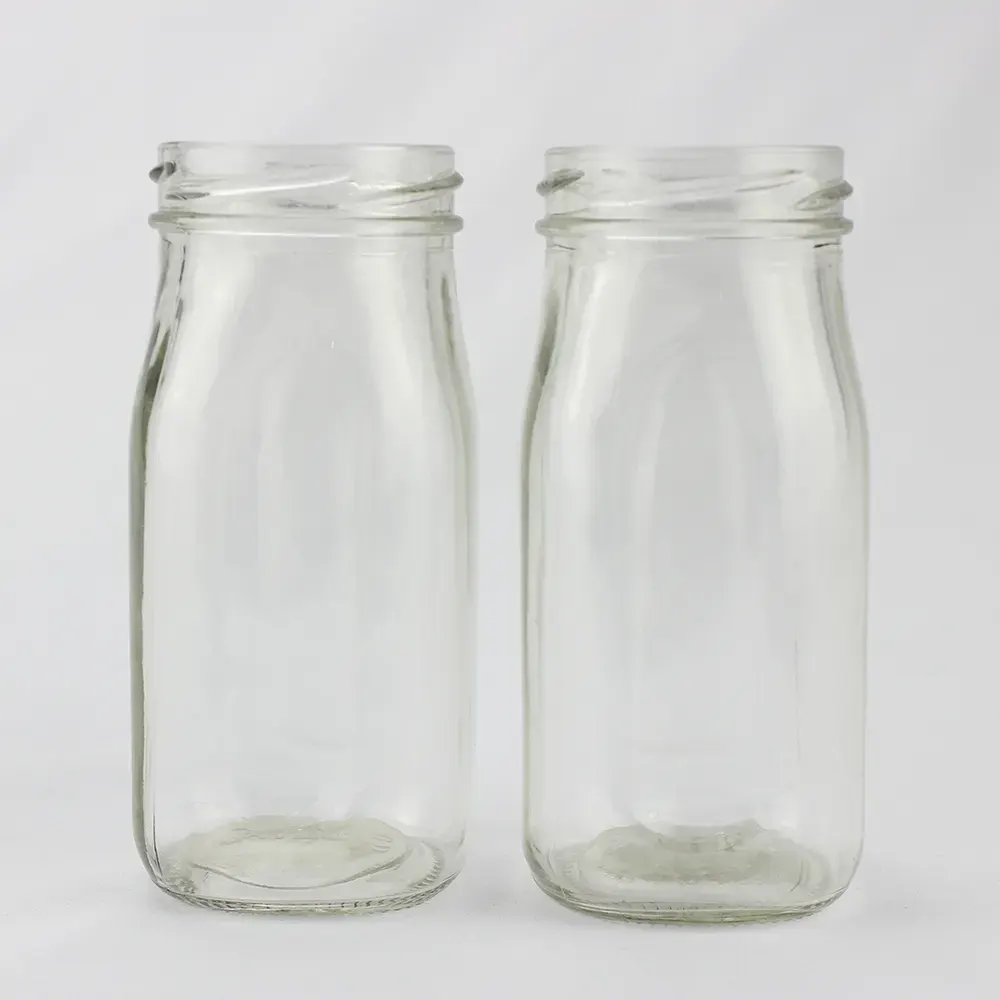
Diagnosing a jar that leaks
When sealed jars leak or lose vacuum, resist the urge to turn the capper up. Most leakers come from finish drift or the wrong lid, and torque is the last thing to touch. Work through the checks in this order:
- Jar finish. Measure outer diameter, seat height and thread against the finish drawing. If drift exceeds tolerance, reject the lot, or have it sorted or re-cut.
- Lid. Measure inner diameter and seat, and check gasket compression and thread match. A mismatch means the wrong component was supplied, and the lid lot should be replaced.
- Liner and torque. Check liner type, liner placement and the torque band applied. Correct the process and re-seal a sample.
Finding the fault at the first step spares you a day spent adjusting a capper that was never the problem.
Food-contact compliance and hot-fill
For a food jar, compliance covers three materials: the glass, the liner inside the lid, and any coating.
In the United States, coatings on components that touch food are assessed under FDA 21 CFR 175.300, which deals with resinous and polymeric coatings, within the wider food-contact framework. In the EU, Regulation (EU) 10/2011 covers plastic materials and articles intended for food contact, and the finished article has to be suitable for its use. Treat these as the baselines your paperwork should map to, and confirm the exact scope with the supplier and your own regulatory contact.
Hot-fill is a separate requirement. Filling at around 180°F (82°C) or higher, which is normal for jams, sauces and pickling brines, calls for glass made and annealed to tolerate thermal shock. A jar intended for cold-fill can crack, so put the fill temperature in your first message. The relevant test frameworks are ISO 7459 for thermal shock and thermal endurance and ASTM C148, which covers the annealing point of glass by beam-bending. Ask which conditioning and test regime will apply to your jar.
"It's food-grade" is not evidence. Before production, collect:
- a material declaration for the glass formulation, the liner and any coating;
- migration test reports, or equivalent compliance evidence, for the intended food and market;
- a first-article inspection (FAI) record on the actual jar and lid, with finish, wall and seal measured;
- hot/cold water-bath or seal-integrity results if you hot-fill or ship long distances.
A supplier that cannot produce these readily has told you something useful.
What changes by product category
The glass chemistry is shared, but finish, wall and lid shift with the contents. More detail on food formats is in our wide-mouth food jar application notes.
- Honey. Hexagonal or round jars in clear or extra-clear glass, with a wide mouth that takes a dipper. Metal lug lids keep crystallised honey stable; bamboo with an inner liner gives an artisan look. Brands that rotate floral varieties benefit from a label panel that is easy to change, and retail sales call for a finish that takes a tamper-evident lid.
- Jam and preserves. The jar must take the filling temperature and the shock of cooling. Wide mouths help when packing whole fruit, and lug or twist lids create the hermetic vacuum that protects colour and flavour. Acidic recipes need glass with good chemical durability and a confirmed hot-fill rating. Avoid thin walls.
- Sauces and condiments. Tomato, chili and BBQ sauces are hot-filled, acidic and often exported. A narrow or medium mouth with a continuous-thread finish suits pouring, and an induction liner adds protection against leaks. Check that vacuum lasts through the longest leg of the journey.
- Candles. Wide-mouth round jars are standard for soy and paraffin wax. The glass has to withstand sustained heat without crazing, so ask for a heat-stable formulation and confirm the base can carry the wax mass. Appearance matters more than food compliance, though food-grade glass is a safe default if you also sell food.
- Cosmetics and body care. Balms, body butters and creams use the same formats with a plastic or bamboo lid over a pressure-sensitive or foam liner. The finish must stay clean. With frosted or coated glass, confirm the coating tolerates the formula and any wiping or alcohol exposure.
- Spices and dry powders. Keep headspace minimal, since oxygen dulls aroma and moisture causes clumping. Narrow mouths limit exposure, metal twist caps hold freshness between uses, and square bodies pack tightly on shelves and racks. For very fine powders, choose a lid with a tight inner seal so nothing works its way through the thread.
Reference specifications for an RFQ
The combinations below are typical starting points. Finish, colour and other details move with cavitation, decoration and destination, so each line is confirmed per project.
| Shape | Capacity (ml) | Typical neck finish | Glass colour | Lid | Seal | Typical use |
|---|---|---|---|---|---|---|
| Wide-mouth round | 250–500 | 63-400 / 70-450 | Flint, extra-clear, amber, frosted | Metal lug or PT screw | Vacuum or compound | Honey, jams, butters |
| Narrow-mouth round | 60–250 | 43-400 / 53-400 | Flint, extra-clear | Twist-off or plastic screw | PT liner or induction | Oils, sauces |
| Square spice | 60–250 | 43-400 / 53-400 | Flint, amber | Metal screw | PT liner | Dense shelf display |
| Hexagonal honey | 250–500 | 63-400 | Extra-clear, amber | Metal lug, or bamboo with liner | Vacuum or gasket | Gifting |
| Straight-sided cylinder | 500–1,100 | 70-450 / 82-2025 | Flint, amber, coated | Twist-off or PT | Induction or vacuum | Coffee, candles |
| Low-profile pantry | 750–1,100 | 82-2025 | Flint, amber | Twist-off | Induction | Bulk storage |
A complete request names the product, net fill, fill temperature, the finish and lid as a pair, and the evidence you expect. Send it through the jar project inquiry form. Published stock references include the 722 series jar with lids and the 762 series jar with lids; the wider range sits in the bottle and jar product centre, and bottle shapes that carry the same design into drinks or personal care are covered under custom glass bottles.
FAQs about custom glass jars
What is the minimum order for a custom jar?
It is quoted per project. The drivers are whether the mould is stock or new, how many cavities it has, the decoration, and the line the jar runs on.
Can any custom jar be hot-filled?
No. Only glass formulated and annealed for thermal-shock resistance should be hot-filled; a cold-fill jar may crack or shatter. Tell the supplier your fill temperature and any cooling steps afterwards, and ask for hot/cold water-bath test documents for the proposed jar. The lid and liner need the same temperature rating, because a liner that softens will leak however sound the glass is.
Are bamboo and cork lids safe for food?
They can be. Both are more porous than metal, so they fit foods with low water activity, such as honey and spices, better than liquids with a long shelf life, unless an inner liner or seal is added. Check that the liner and any coating are food-contact grade, then store your product in the sealed jar for its full intended shelf life before ordering a production run.
How should I approach samples?
Stock jars with standard lids can be sampled quickly. Samples from a private mould come later and normally follow a tooling deposit. Test with your real product as early as you can, since sealing, fill and label problems appear there and a jar of water does not behave like a jar of honey.
What documents will an auditor or retailer expect?
The material declaration, migration or equivalent evidence mapped to your market (FDA 21 CFR 175.300 for the US, EU 10/2011 for Europe), the first-article inspection record for jar and lid, and thermal-shock or seal-integrity results where you hot-fill or export. Gather them before production starts.