Pick a closure by its sealing mechanism before you look at styles: a vacuum-sealing lug cap for anything hot-filled or pasteurised, a torque-sealed screw cap or ROPP shell for cold-filled liquids, a cork or bar-top where the opening gesture matters, and a pump, sprayer or dropper where the product is dosed. Fill process and product chemistry narrow the choice, and the capper on your line confirms it. The closure is the smallest part of a glass pack and the cause of most of its failures, so settle it early.
Four filters to apply in order
- Fill process. Hot-filled and pasteurised products need a plastisol-lined twist-off lug that forms a vacuum. Cold-filled products can take a continuous-thread screw cap.
- Product chemistry. Aggressive solvents call for specific liner materials. Carbonation needs a pressure-rated crown or a specialised finish.
- How the pack is opened and used. A spirit brand may want the pull of a bar-top, a sauce the pop of a safety button, a serum the controlled dose of a dropper.
- The filling line. The chucks and torque range of your capper have to suit the finish you have chosen.
For finish dimensions, torque figures and liner detail behind each of these, see the closure guide covering neck finish standards and liners.
The five mechanisms side by side
| Mechanism | Typical finishes | Suited to | Check on the line |
|---|---|---|---|
| Twist-off lug with plastisol | 38–82 mm | Hot-fill foods needing a vacuum seal | Lug alignment at the capper; vacuum test |
| Continuous-thread cap | 18/410–89/400 | Beverages, personal care, chemicals | Torque window; liner match |
| ROPP aluminium | 18–31.5 mm | Value spirits, wine, oils | Chuck jaws; quality of the formed thread |
| Bar-top or cork | 18.5 mm, GPI 28-400 | Spirits, wine | Bore gauge; extraction force |
| Pump, sprayer or dropper | DIN18, 18/410–28/410 | Dosed formats, sprays, serums | Gasket chemistry; dose variance |
These are planning references, confirmed against the project drawings.
Lug caps for hot-filled and pasteurised food
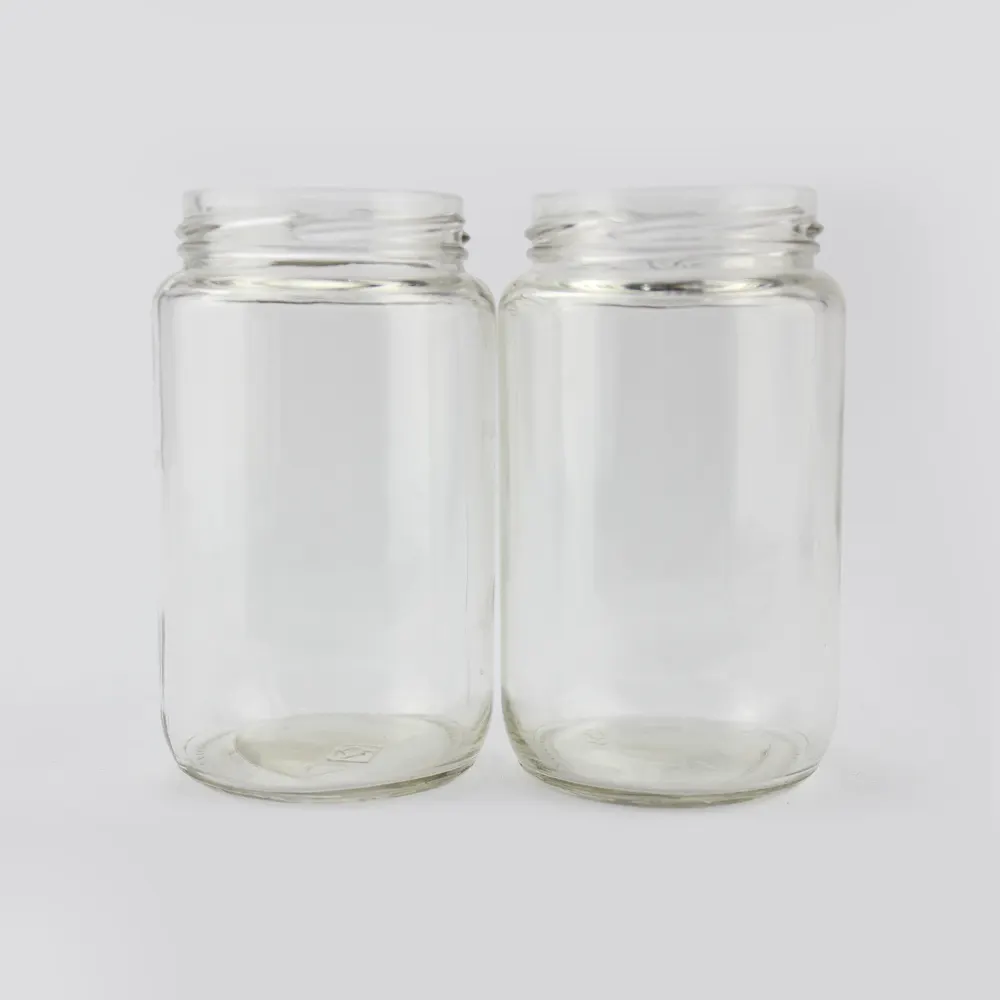
Twist-off lug caps come in 38 mm, 43 mm, 48 mm, 58 mm, 63 mm, 70 mm and 82 mm and carry a plastisol compound. In the pasteuriser the plastisol softens and flows onto the glass finish; as the contents cool it sets into a hermetic vacuum seal, and the safety button pops when the jar is first opened.
Use them for sauces, jams, pickles, juices, baby food and anything else that is hot-filled, pasteurised or retorted. Jar and bottle formats supplied with their closures are listed under bulk glass bottles with caps.

How a lug finish differs from a continuous thread
A lug finish has 3–6 short, interrupted tabs. The matching lugs on the cap engage with a quarter-turn, so capping is quick and re-sealing is adequate; the vacuum does the real sealing work. A continuous-thread finish has a full helical thread and is identified by codes such as 28-400, where 28 is the diameter in mm and 400 the thread style. It tightens progressively, gives finer control of torque and accepts a wider range of components.
Screw caps and ROPP for cold-filled liquids
Continuous-thread (CT) finishes run from 18/410 up to 89/400 and include GPI 28-400 and the 28 mm and 38 mm beverage finishes. A CT closure seals by being torqued down against a liner. It re-closes reliably through many openings and takes caps, pumps, sprayers and droppers alike.
ROPP, short for roll-on pilfer-proof, works differently. An aluminium shell is placed over an 18–31.5 mm finish and the thread is rolled into it on the bottle during capping. That adds tamper evidence and suits high line speeds, which is why value spirits, wine and edible oil use it as standard.
Wine programmes in CT and ROPP are covered on the wine bottle neck finish page, and the neighbouring cork-finish range under bulk glass bottles with corks.
Corks, bar-tops and stoppers where opening is part of the product
This group covers natural cork on the 18.5 mm wine finish, technical cork, bar-tops with a cork or synthetic shank beneath a decorative head, and glass stoppers for decanter-style bottles. They need the closest gauge control of any finish: a bore that varies by 0.2 mm changes the force needed to pull the stopper dramatically.
A bar-top makes sense when the opening gesture supports the brand's positioning. Screw caps, whether ROPP or CT, fit value tiers, high-speed lines and products re-closed every day, such as mixers and cooking wine.
Closure options by category:
- closures for vodka bottles
- closures for tequila bottles
- closures for gin bottles
- glass bottles supplied with corks
- glass bottles supplied with stoppers
Pumps, sprayers and droppers for dosed products
A dispensing closure is a CT finish plus a mechanism. The usual pairings are:
- lotion and treatment pumps on 20/410–28/410
- fine-mist sprayers on 18/410–24/410
- dropper assemblies on DIN18 and 18/410
- disc-top and flip-top caps for squeeze formats
Three things drive the choice: the dose per stroke, which ranges from 0.12–2.0 ml; whether the gasket is compatible with your formula; and how consistent the output is from one stroke to the next.
Matched bottle-and-dropper sets are on the dropper glass bottles page, and decorative caps for fragrance on the perfume bottle caps page.
Liner materials by product type
A mismatched liner is the most common closure failure, so match it to what is in the bottle.
| Liner | Use it for |
|---|---|
| Plastisol compound | Vacuum seals on hot-fill food |
| PE foam | General cold-fill liquids: water-based, low-alcohol, oils |
| Pressure-sensitive | Tamper evidence on dry products |
| Induction heat-seal foil | A hermetic, tamper-evident barrier for juices and sauces |
| PTFE-faced | Aggressive solvents and essential oils |
| PVDC-lined | Wine screw caps needing controlled oxygen transmission |
Give us the alcohol %, oil content and acidity of the product with your enquiry. We specify the liner and have its compatibility tested before a volume order.
Sourcing the bottle and closure together or apart
Buying the two from different suppliers is possible, but the tolerance risk then sits with you. A difference of only 0.2–0.3 mm between the bottle maker's finish gauge and the closure maker's leads to the familiar faults: leakers on the line, caps that back off in transit, and bar-tops that come out in the consumer's hand.
If you do split the order, exchange drawings and gauge certificates in both directions and run a torque and leak validation on combined samples before committing to volume. The lower-risk route is a matched set: we coordinate bottle and closure as one leak-tested unit with a single quality file and one tolerance chain.
There are three ways to buy a closure programme:
| Route | When it fits |
|---|---|
| Stock bottle with a stock closure, as a matched set | Launch; the fastest to validate |
| Modified closure: custom liner, colour or embossed head | Brand colour on a seal that is already proven |
| Full custom: bottle mould plus proprietary closure | Icon programmes and global SKUs |
Closure details to put in an RFQ
Six items let us specify the set without a round of questions. Send them with your enquiry:
- the finish code from the bottle drawing, or a sample bottle to match
- closure type and material
- liner material, with notes on fill process and product chemistry
- any tamper-evidence requirement
- capper type and the torque range it applies, for CT and lug closures, if you fill yourself
- annual quantity, which is one of the main drivers of closure cost
For a decorative closure such as a bar-top head or a sprayed cap, add the Pantone reference and the artwork.
Frequently asked questions
Can a cold-filled product use a lug cap?
The lug system relies on the vacuum that forms after hot filling or pasteurisation. For cold-filled liquids a continuous-thread cap sealing against a liner is the usual choice.
Can one bottle carry two different closures?
Yes, within a stock bottle family. Many brands put a bar-top on the flagship and a ROPP cap on the value extension.