Every product family we quote — spirits, wine, beer, oil, cosmetics and jars — is listed under bulk glass bottles.
Bulk glass bottles with corks seal reliably only when the neck bore, the cork shank and the fill process are specified together. Cork is a compression seal: the shank is squeezed radially by 15–25% and pushes back against the glass, so a bore that runs 0.5mm wide leaks and one that runs 0.5mm narrow crumbles corks or splits necks. Decide the closure type first, then fix the bore and shank dimensions against it, and have the pair leak-tested as a combination.
Choosing between bar-top and driven corks
The first question is how the consumer opens the bottle. A bar-top, also called a T-cork, has a rigid head of wood, plastic or metal on a cork shank and is pulled out by hand. It suits spirits, oils, vinegar and condiments, where the bottle is opened and resealed many times. A driven cork is pushed fully into the neck and removed once with a corkscrew, which is the wine tradition and the right choice where long ageing is intended.
| Closure | How it is built | Typical use | Opening |
|---|---|---|---|
| Bar-top, wood head | Wood cap on a natural or agglomerated shank | Premium spirits, olive oil, vinegar | By hand, resealable |
| Bar-top, plastic head | PP/ABS cap on an agglomerated or synthetic shank | Mid-tier spirits, liqueurs, syrups | By hand, resealable |
| Natural straight cork | One punched piece of cork | Wine meant for ageing, craft projects | Corkscrew, opened once |
| Agglomerated or 1+1 cork | Bound granules, often with natural discs at the ends | Fast-rotation wine, value lines | Corkscrew, opened once |
On a bar-top, the head material is a branding choice. The shank material is a different kind of decision, because it governs shelf life and consistency.
Shank materials compared
- Natural single-piece cork has the best elasticity and the strongest story for an upmarket product. It costs the most and varies slightly from piece to piece.
- Colmated or agglomerated cork is made of granules held by a food-grade binder. Dimensions are consistent and the cost sits in the middle. It suits spirits and oils that will be consumed within 1–3 years.
- Synthetic shanks carry zero TCA risk and hold their dimensions exactly, though consumers perceive them differently.
For spirit bar-tops, an agglomerated shank under a wood or plastic head is the usual industry choice.
Bore, shank and moisture figures to specify
Three sets of numbers decide whether the seal holds.
Neck bore. Bar-top finishes for spirits typically call for an 18.5mm bore. Wine cork finishes run 21–22mm, and wide craft formats 24mm+.
Shank diameter and compression. The shank is sized against the bore as actually measured, not the nominal figure on a drawing. For an 18.5mm bore, a 23–24mm shank compresses into place with a suitable insertion force, typically 25–45kg for bar-tops, while leaving a pull-out force a consumer can manage.
Moisture. Natural cork is conditioned to 5–8% moisture so that it recovers properly after compression. Cork that is too dry crumbles; cork that is too wet grows mould. Agglomerated and synthetic shanks avoid this variability, which is one reason spirit projects default to them.
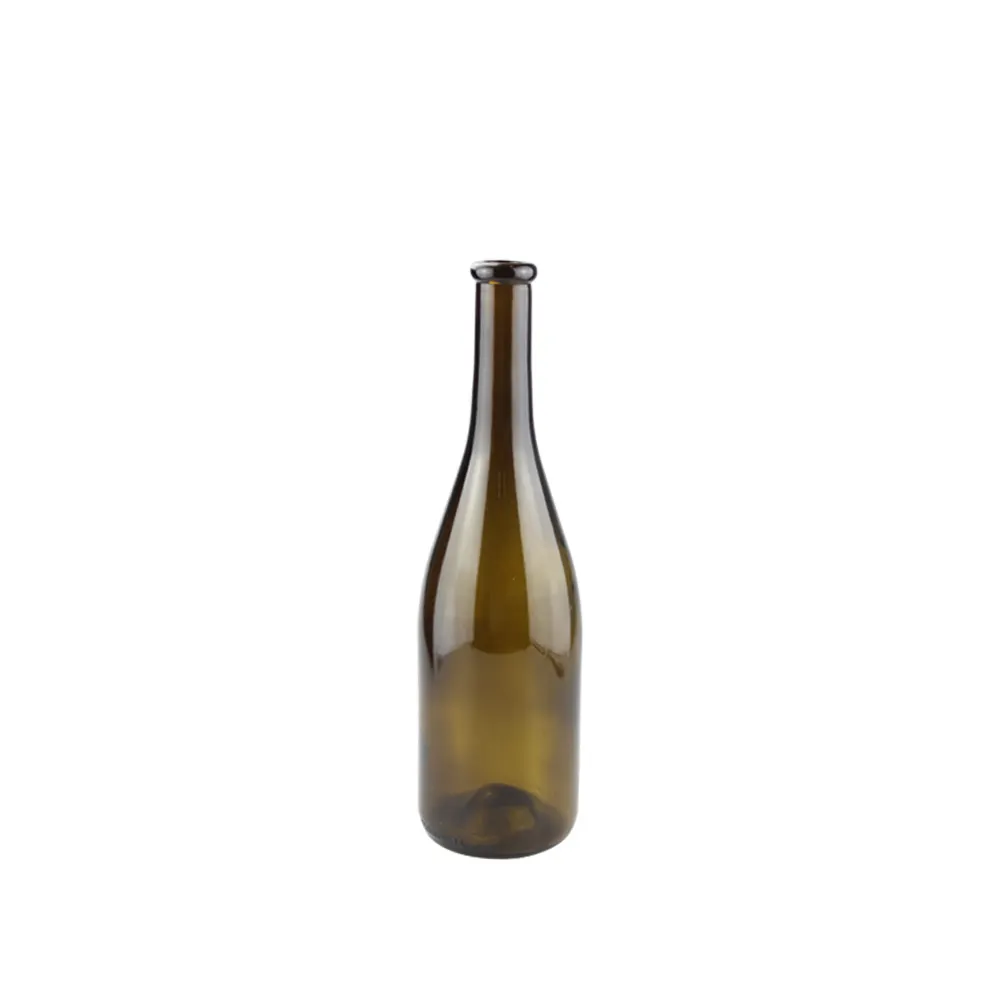
The working rule is not to buy bottles and corks from suppliers who never speak to each other. We arrange matched pairs that are validated together: bore gauging data for the bottles, compression-set data for the corks, and an inversion leak test on the two combined.
Capacities, bores and glass weights
Cork finishes are available from 50ml miniatures up to 3L. The common bulk sizes are below.
| Capacity | Typical bore | Glass weight | Usual application |
|---|---|---|---|
| 200ml | 18.5mm | 180–220g | Gift sets, sets of three oils |
| 375ml | 18.5–21mm | 280–350g | Craft spirits, dessert wine |
| 500ml | 18.5mm | 350–450g | Olive oil, liqueurs, vinegar |
| 700/750ml | 18.5mm / 21.5mm | 450–650g | Standard spirits and standard wine |
| 1L–1.75L | 18.5–21.5mm | 650–1,100g | On-premise and magnum formats |
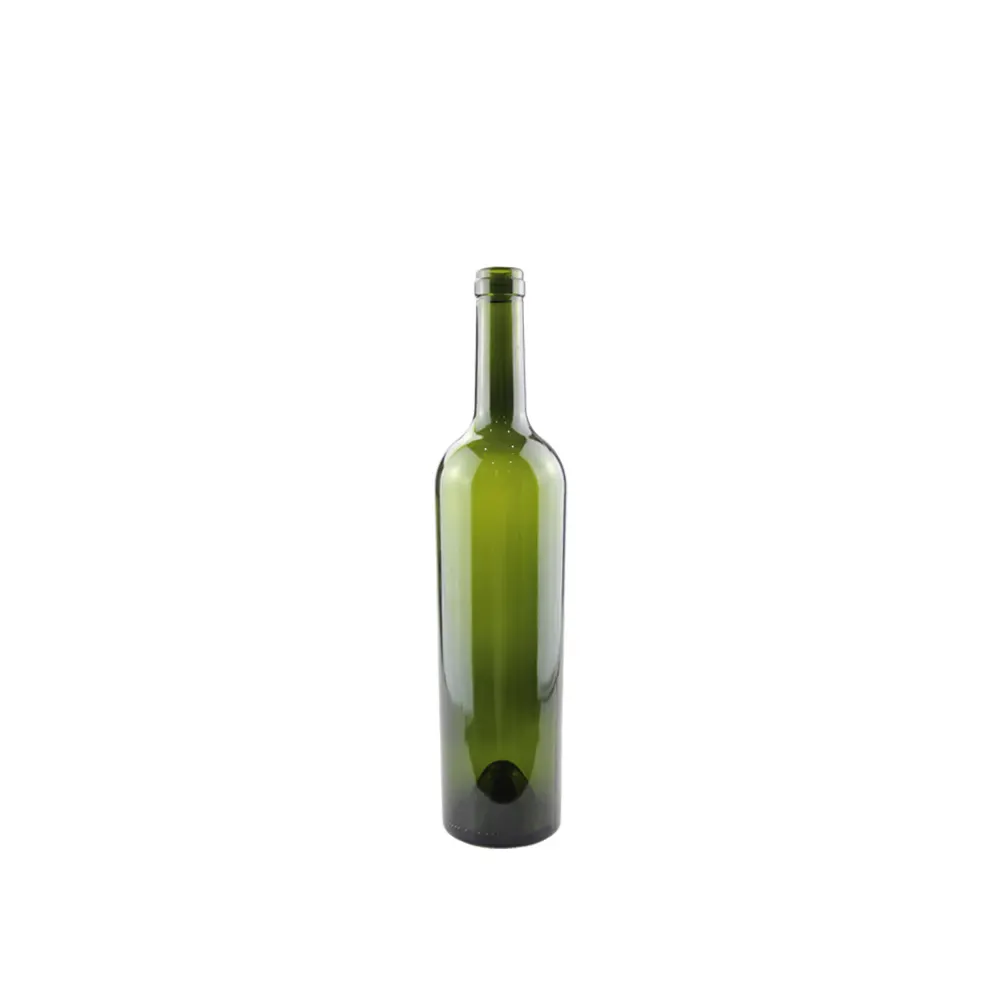
Pricing for a bottle-and-cork set is quoted per project. It moves with the mould (stock or custom), the closure construction, the quantity per SKU and the freight terms. Buyers who want screw-cap bottles instead can browse the full range of bulk glass bottles, and wine projects comparing shapes can look at the wine glass bottle collection.
Filling-line controls that keep corks seated
A correctly matched pair can still fail on a careless filling line. Four points need control:
- Fill temperature. Hot product expands in the neck and pushes corks out. Fill cool, or leave headspace for the expansion.
- Headspace. Keep it consistent at 8–15mm, depending on the format and on the temperature swings in your logistics chain.
- Corking force. Verify it on the line. An under-driven bar-top leaks; an over-driven one cracks the neck.
- Orientation in transit. Bar-top bottles travel upright. Wine with driven corks can lie on its side so the corks stay wet.
We send a fill-and-corking parameter sheet with every matched set.
Documents to request with the purchase order
Customs brokers and retail compliance teams ask for the same pack of papers, so request it when the order is placed and not after the container has sailed. It should contain:
- dimension and bore-gauge reports for each batch
- annealing verification per ASTM C148
- food-contact declarations for the glass (FDA 21 CFR / EU 1935/2004)
- declarations for the cork components: food-grade binder, and TCA screening where applicable
- leak-test records for the validated bottle-and-cork pair
To start a project, send the capacity, the closure preference (bar-top or driven cork), the contents and the annual volume through the quote request form.
FAQs about bulk glass bottles with corks
How do I stop corked bottles leaking in transit?
Beyond matching the shank to the measured bore and controlling fill temperature and headspace, add a capsule or shrink sleeve over the closure for mechanical security, and pack the bottles upright with dividers. Matched pairs are checked by inversion leak test, with torque and pull-force records, before they ship.
Are cork-sealed glass bottles acceptable for food and spirits export?
Yes. The glass meets FDA 21 CFR and EU 1935/2004 food-contact expectations, and corks come with food-grade binders and, where relevant, TCA-screening documents. TCA is 2,4,6-trichloroanisole, the compound responsible for cork taint. Bar-top heads for spirits can carry tamper-evident features, and migration documentation is available on request.
Which shank should a spirits brand start with?
Most start with an agglomerated shank, because its dimensions are consistent from piece to piece and it needs none of the moisture conditioning that natural cork does. Natural cork is worth considering when the elasticity and the story matter more than uniformity.