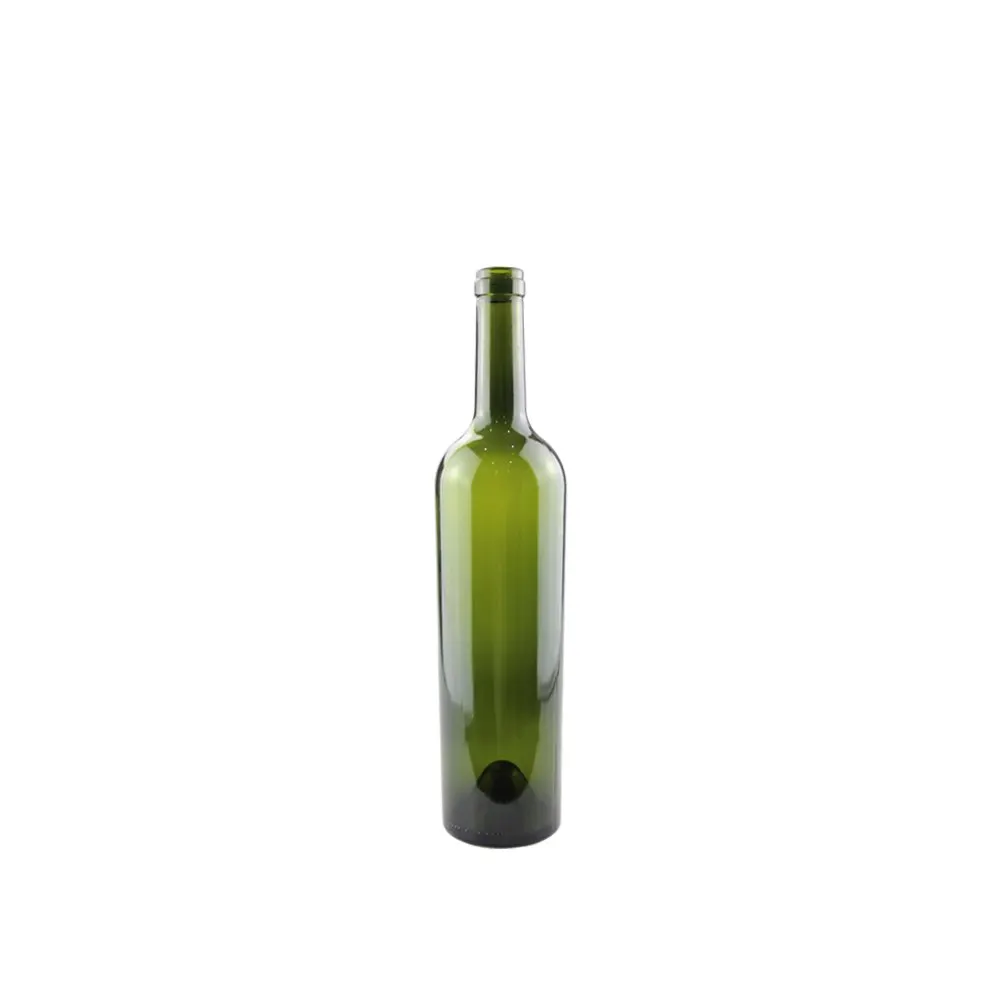
Part of our empty wine bottles range; the stock moulds are pictured at the end of this guide.
Quick answer
What bore and cork size does a wine bottle neck take?
A Bordeaux wine bottle has a bore of about 18.5 mm and takes a 24 mm natural cork, nominally 44 mm long, compressed by roughly 20%. Burgundy necks are wider, around 19.5 mm, so the same cork sits at lower compression; sparkling necks are narrower, around 17.5 mm, and hold a wired mushroom cork. A screw cap seals on the flat land at the top of the finish with nothing elastic to absorb variation, so moving a wine from cork to screw cap is a mould decision.
| Format | Bore (indicative) | Closure |
|---|---|---|
| Bordeaux / claret 750 ml | 18.2–18.8 mm | 24 mm cork, 44 mm long; 30H60-family screw finish |
| Burgundy 750 ml | 19.2–20.0 mm | 24 mm cork, often longer |
| Champagne / sparkling 750 ml | 17.2–18.0 mm | Crown cap during second fermentation, then a wired mushroom cork |
| Alsatian / flute 750 ml | 18.2–18.8 mm | 24 mm claret-type cork |
This page answers one narrow question for one specific reader: the winery technical contact, the brand owner or the importer who has already chosen a bottle format and a closure family, and now needs to know whether the moulded neck in front of them will actually take the cork, the screw cap and the capsule they intend to buy. It is a matching page, not a range page. Capacity, overall height, body diameter and the general format survey belong to the wine bottle sizes article; the making, printing and shrinking of the sleeve itself belongs to the wine bottle capsules article; the full container range sits on the wine bottles hub; the claret format has its own dedicated page; and the label panel, decoration area and application behaviour belong to the wine bottle labels page. Everything below stays on the interface between glass and closure: bore, neck outside diameter, finish height, compression, insertion and extraction force, and the fit tolerance between the finish and the capsule. If your question is which bottle to choose, this is the wrong page. If your question is whether the bottle you have chosen will seal and look right, this is the right one.
What a Wine Bottle Neck Finish Is, and Which of the Four Numbers You Actually Need
The finish is the moulded neck section that a closure engages. On a wine bottle it begins at the top lip, where the wine leaves the bottle, and ends somewhere above the shoulder where the cylindrical neck stops being a cylinder. Everything a cork, a screw cap, a crown cap, a wire cage or a capsule touches is inside that band, and every dimension inside that band is cut into the mould and therefore fixed before the first bottle is blown.
The practical difficulty is that the phrase wine bottle neck finish gets used for at least four different measurements, and buyers who believe they are discussing one of them are often discussing another. The first is the internal bore, sometimes written as the mouth diameter or the cork entry diameter: the inside of the neck, measured across the opening, normally at a defined depth below the lip. This is the number a cork has to be compressed into, so it is the number the cork supplier needs. The second is the neck outside diameter, measured at defined heights: this is what the corker jaws grip, what the capsule has to shrink down onto, and what the wire cage on a sparkling bottle hooks behind. The third is the finish height, the distance from the lip to the point where the corker or the capping head releases the neck, and on sparkling formats the position and profile of the lip itself. The fourth is the closure designation in the case of any threaded or crown finish, such as a 30H60 screw finish or a 29 mm crown, which describes a profile rather than a single diameter.
A request that says only wine bottle finish size will therefore produce at least two answers and possibly four, all of them correct and none of them sufficient. The first move on any technical thread about a wine bottle finish size is to name the number you mean. The second is to ask for the value together with a tolerance and a measuring height, because a bore quoted as 18.5 mm is a nominal figure and the tolerance around it is what decides whether the closure seals.
One more distinction belongs here because it causes most of the arguments. The bore of a glass bottle is not a machined hole. It is formed by a plunger in a hot mould, so it carries a slight taper, a small amount of ovality and a surface that can be smooth, slightly rippled or marked by a mould seam depending on tooling condition. Bore ovality is the difference between the largest and smallest diameter measured across the same section, and it matters because a cork or a screw cap liner has to seal around the whole circumference at once. A neck whose average bore is exactly on nominal but whose ovality is at the wide end of the tolerance will leak on one side while passing a single-point measurement on the other.
Bordeaux, Burgundy and Champagne: Why Three Bottles of the Same Volume Have Different Necks
The three classic still and sparkling families share a nominal 750 ml capacity and share almost nothing else at the neck, and the differences are not decorative. They are consequences of what has to be pushed into the bottle, how hard it has to be held and what the bottle has to survive afterwards.
Bordeaux, or claret, necks. The straight-sided claret bottle carries the most standardised neck in the still-wine trade. The bore is typically quoted in the region of eighteen and a half millimetres across a range of roughly eighteen point two to eighteen point eight millimetres depending on the mould and the market, and it is designed around a twenty-four millimetre diameter natural cork of forty-four millimetres nominal length. That pairing compresses the cork by something in the region of twenty per cent, which is enough to generate a reliable radial seal without making the cork impossible to insert at speed or unreasonable to pull out at the table. Because the claret neck is short and the shoulder is low and square, the cork sits close to the lip and very little neck length is available for anything else, which is why the Bordeaux capsule has to cover a short run and why the shoulder is the natural landing point for the sleeve.
Burgundy necks. The sloping-shouldered Burgundy bottle is the same nominal volume with a visibly different neck. The bore is generally wider, commonly quoted around nineteen and a half millimetres and running in a band of roughly nineteen point two to twenty millimetres, and the neck walls are typically thicker because the form carries more glass in the shoulder. The same twenty-four millimetre cork therefore sits at a lower compression than it would in a claret neck. Two consequences follow. The insertion is gentler on the cork, which reduces breakage and dust on the bottling line, and the extraction is lighter in the hand. The trade-off is that a wider bore at the same cork diameter gives a lower radial sealing pressure and a slightly different path for oxygen ingress, which is why a cork grade that performs well in a claret neck may need to be reassessed for a Burgundy one rather than copied across. The wider neck also accepts a proportionally larger capsule, so a sleeve programme built for claret will not transfer to Burgundy without a new article.
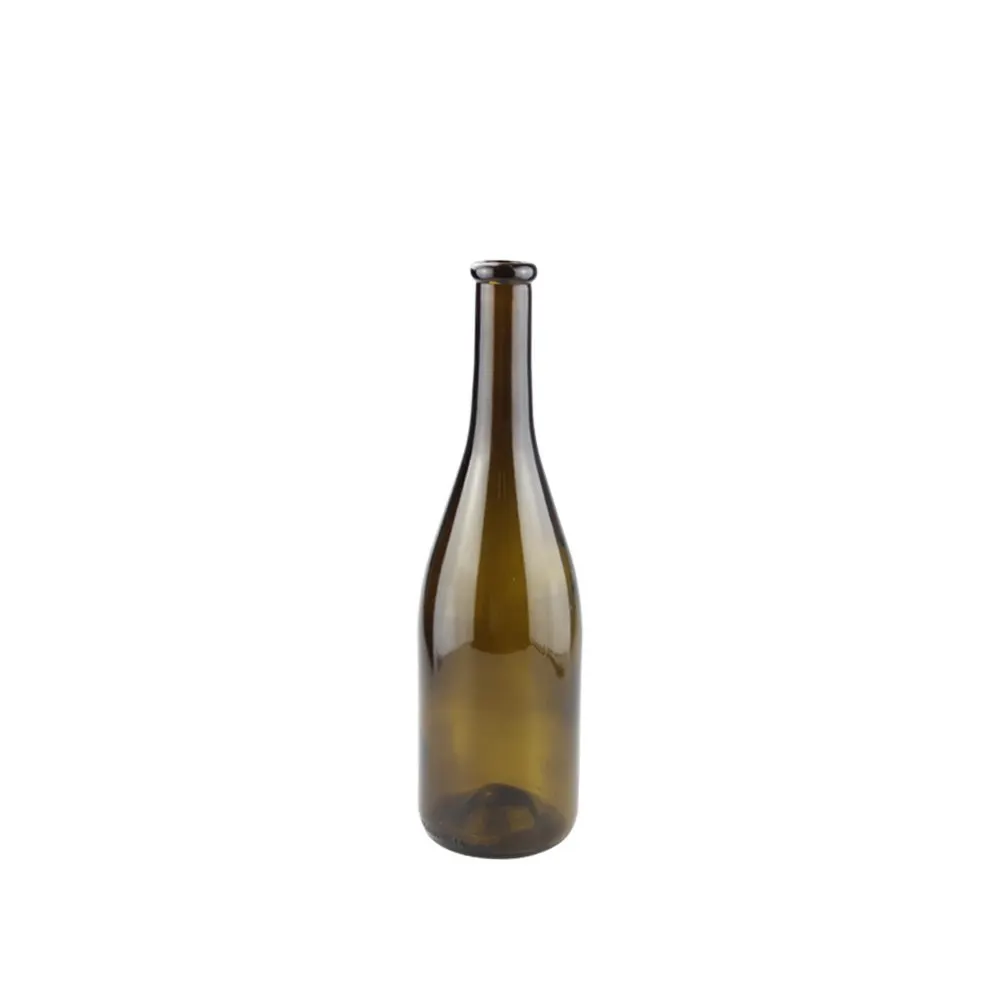
Champagne and sparkling necks. A sparkling wine neck is a different engineering problem, not a wider version of a still wine neck. It has to hold several bar of internal pressure, so the bore is smaller, commonly quoted in the region of seventeen and a half millimetres, and the cork is much larger, typically thirty to thirty-one millimetres across before compression, giving a compression ratio far above anything used for still wine. The neck also carries a distinct lip with a square underside, because the wire cage that retains the cork hooks behind that lip and the whole closure is a mechanical restraint as much as a seal. Sparkling bottling is normally a two-stage process: a crown cap, commonly a twenty-nine millimetre crown in this application, closes the neck during the second fermentation and is later removed at disgorging, after which the mushroom cork is inserted and wired. This means a sparkling neck has to accept two different closures at two different moments in its life, and both interfaces have to be right on the same mould.
Alsatian and other flute necks. The tall Rhine-style flute is usually built around a claret-type cork diameter, but the neck is longer and the shoulder transition is higher and more gradual. Nothing about the closure changes at the sealing surface, and a great deal changes for the capsule: the sleeve has further to travel, has more circumference to shrink down over a longer taper, and has a larger printed area, which changes how the artwork distorts. A flute programme copied from a claret capsule specification frequently fails on appearance rather than on function, which is the harder kind of complaint to resolve after the wine is already in the bottle.
What Each Closure Family Demands of the Finish
Natural cork. A natural cork seals by radial compression against the bore wall. The cork is squeezed in a set of jaws, driven into the neck, and then tries to expand back against the glass. The seal therefore depends on the elastic recovery of the cork, the compression applied and the internal finish of the bore. This has a direct consequence for the glass specification: the bore surface matters. A mould seam, a chipped internal lip, a patch of rough glass or a ring of mould lubricant residue inside the bore can all produce a leak path that no cork grade can close. It also means that natural cork, being a variable natural material, will absorb some of the dimensional variation in the glass, which is exactly why a line that is comfortable on cork becomes uncomfortable when the closure family changes.
Agglomerated and micro-agglomerated cork. Technical corks are built from granulated cork and a binder, which makes their density far more uniform than that of natural cork and gives a much narrower spread of insertion and extraction forces across a production run. They seal in the same radial way, against the same bore, so the glass requirement is similar, but the predictability changes the specification conversation. Where natural cork tolerates a wider bore tolerance, a technical cork lets a winery define a tighter force window and expect the closure supplier to hold it. The questions that then belong on the table are binder and sensory neutrality, and whether the closure has been qualified for the intended ageing period, not the neck geometry alone.
Composite corks with natural discs. A composite closure with natural cork discs at the wine contact faces behaves like natural cork at the interface and like a technical product in the body. The practical effect at the neck is a firmer body, so insertion force tends to sit at the higher end of the range, and a more consistent extraction feel than an equivalent natural grade. The glass side of the specification does not change, but the force window in the purchase order does, and it has to be agreed between the winery and the closure supplier rather than assumed from the bottle drawing.
Screw caps. A screw cap is a different sealing mechanism and it changes the glass specification more than any other single decision. The cap seals on the flat annular land at the top of the finish, using a liner that is compressed between the cap shell and that land, and the thread holds the shell down onto it. There is no compressible cork expanding against a wall, and there is no elastic material anywhere in the joint that can absorb variation in the glass. Every dimensional wobble in the finish therefore transfers directly into the seal: the flatness and width of the land, its perpendicularity to the axis of the bottle, the thread profile and its start position, the finish height and the bore all have to sit inside a much tighter band than a cork-finished neck requires. This is the single most useful thing a buyer can understand before switching a wine from cork to screw cap, because the switch is a mould decision, not a packaging decision, and a bottle that has been running perfectly on cork for years will usually fail a thread-and-seal qualification in its current geometry. The pairing of finish and cap is normally qualified by a thread and sealing evaluation carried out by the cap supplier on bottles from the actual mould, not on a generic sample.
The Wine Bottle Neck Finish Reference Table: Bore, Cork, Screw Cap and Capsule
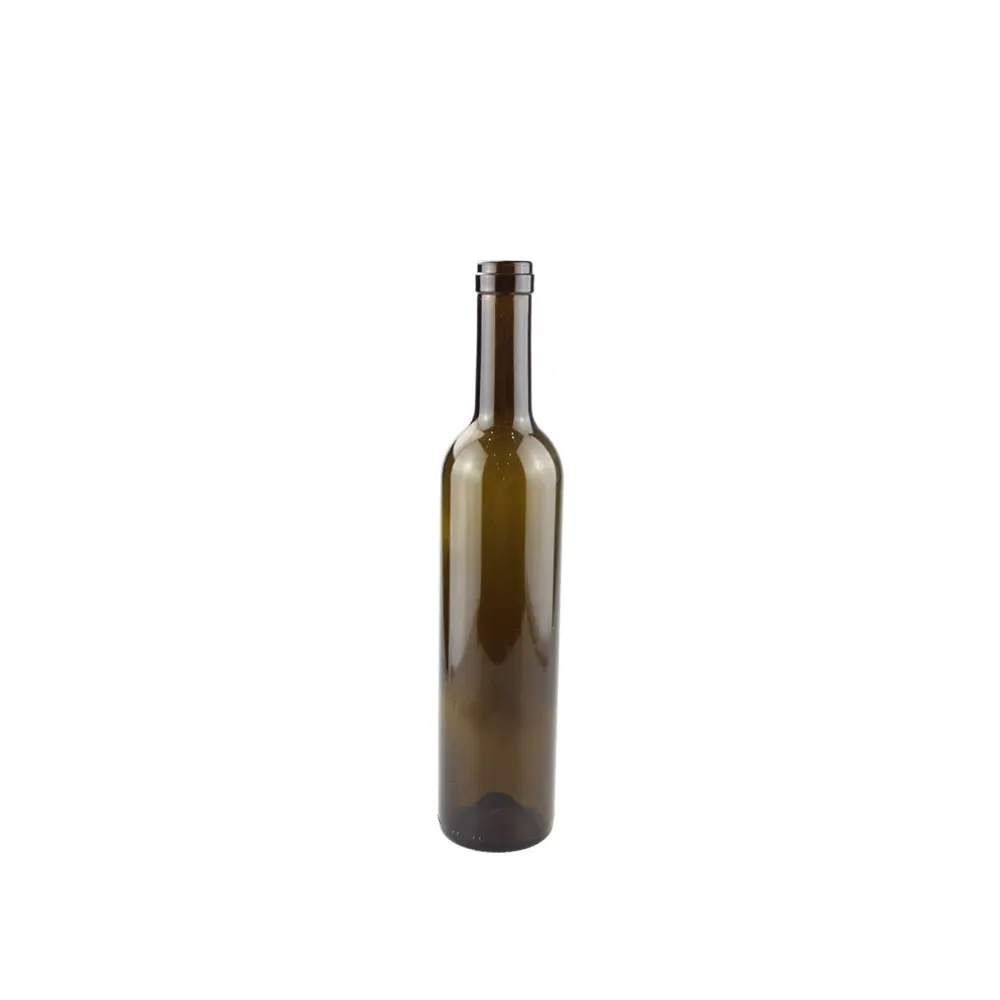
The table below is a working reference for the four neck families that appear most often in wine enquiries. The bore figures are indicative population values drawn from common commercial practice, not a drawing and not a quotation; the same nominal format can be supplied with a different bore if the mould is made that way, and the signed drawing governs every order. Read it as the shortlist you bring to a technical conversation, then ask the factory to confirm the actual bore, its tolerance, the measuring depth and the bore ovality limit for the mould that will run your bottles.
| Wine bottle format | Bore (neck internal diameter), indicative | Cork specification that suits it | Screw cap finish that suits it | Capsule fit points to watch | What to confirm with the factory |
|---|---|---|---|---|---|
| Bordeaux / claret, 750 ml | About 18.2 to 18.8 mm, commonly quoted near 18.5 mm | 24 mm diameter natural cork, nominal 44 mm length; technical and composite equivalents in the same diameter | A standard still-wine threaded finish of the 30H60 family, subject to the cap supplier qualifying the specific mould | Short neck run and low square shoulder, so the sleeve lands on the shoulder, not on a long taper | Bore at the measuring depth, ovality limit, neck outside diameter at the capsule coverage band, cork head position below the lip |
| Burgundy, 750 ml | About 19.2 to 20.0 mm, commonly quoted near 19.5 mm | 24 mm diameter cork, often a longer format because the neck is longer; lower compression than in a claret neck | A threaded finish of the same nominal family but a larger neck outside diameter; never assume the claret article transfers | Longer sloping taper means more shrink travel and a longer printed area, so artwork distortion is larger | Compression ratio agreed against the actual bore, force window for the chosen cork grade, capsule article matched to the longer taper |
| Champagne and sparkling, 750 ml | About 17.2 to 18.0 mm, commonly quoted near 17.5 mm | Mushroom cork of roughly 30 to 31 mm before compression, wired to the lip; a crown cap closes the neck during second fermentation | Not a screw cap application in the conventional sense; the neck is closed with a crown cap during vinification and with a wired cork for sale | The capsule or foil covers the wire cage and the cork head, so the covered height is much greater than on a still bottle | Lip profile and underside geometry for the wire, bore ovality at high compression, crown seat geometry, qualification for the internal pressure |
| Alsatian / flute, 750 ml | About 18.2 to 18.8 mm, claret-type cork entry | 24 mm diameter cork, claret-type diameter and often claret-type length | Threaded finishes in the same nominal family are used, but the higher shoulder changes the capping head approach | Long neck and high shoulder, so sleeves need more shrink and more artwork safety margin | Neck length from lip to shoulder, neck outside diameter over a longer band, capsule article rated for the extra travel |
Insertion Force and Extraction Force: What the Numbers Mean at the Table
Insertion force is the axial load the corker applies to drive the closure into the neck, and extraction force is the axial load required to pull it back out. Both are measured, both are specified, and both are usually written into the purchase order as a window rather than a single value, because closure materials vary and because the number depends on how the test was run.
On the insertion side the value is dominated by the compression ratio between the cork diameter and the bore, the length of cork travelling through the bore, the friction between cork and glass, and the condition of the cork surface. A tighter bore and a drier cork both raise the force. Too high an insertion force is not a strength, it is a line risk: the cork can deform unevenly, shear, or shed dust, and the corker jaws and the neck guide wear faster. Too low is worse, because a cork that went in easily will not generate enough radial pressure to seal, and it may creep back out of the neck over months in the bottle, which the trade describes as the cork backing out.
On the extraction side the value is the consumer’s only physical experience of the closure, so it is simultaneously an engineering number and a product decision. A very low extraction force feels cheap and can signal a loose seal; a very high one breaks corks and frustrates the person opening the bottle, and the fragments end up in the wine. Wineries therefore tend to define a window that suits the audience and the ageing intent, and ask the closure supplier to certify it. Indicative commercial windows for still wine are commonly in the low tens of decanewtons, and a figure that is quoted without its test conditions should be treated as marketing rather than engineering, because extraction force moves with the pull speed, the temperature at test, the cork moisture conditioning, the time the cork has been in the bottle and the amount of compression set it has taken. A cork pulled after a week and the same cork pulled after two years are two different measurements of two different joints.
One related dimension is often left off the drawing and causes disproportionate trouble: the cork head position after insertion, expressed as the distance the top of the cork sits above or below the lip. The target is normally defined as the head sitting level with or a controlled distance below the lip. A head sitting too high collides with a capsule that was dimensioned for a lower profile and can push the sleeve out of shape; a head sitting too low means the cork has been pushed too deep, which makes extraction harder, raises the risk of the cork being driven into the bottle altogether and reduces the volume of cork still available to seal against the bore near the lip. Cork head position depends on the corker setup as much as on the glass, which is why it belongs in the line qualification rather than in the bottle drawing alone.
Capsule Fit and the Tolerance Stack Nobody Checks Until Bottling Day
A capsule, or sleeve, is applied over the cork head and down the neck, then shrunk with heat so that it grips. Its fit is the result of a stack of tolerances that live in three different documents and are almost never stacked up before the first order: the neck outside diameter at the coverage band, with its tolerance; the capsule as supplied, with its own diameter tolerance and shrink ratio; and the actual cork head height after insertion, which is a line variable.
When those three sit at their worst-case combination the symptom is always visual, and it always appears after the wine is bottled. If the neck is at the low end of its diameter tolerance, the sleeve does not grip: it rotates when the bottle is handled, the printed panel sits out of register with the label, and the sleeve can slide up and expose the cork. If the neck is at the high end, the same sleeve is over-stretched: it tears at the shoulder, splits along a seam, or bridges across the top of the cork head instead of collapsing onto it, leaving a stretched shiny patch where the artwork should be flat.
The way to close this out is to ask the factory for the same four measurements on the actual production samples: neck outside diameter at the top and bottom of the coverage band with tolerances, the usable neck length from the lip to the shoulder landing point, the shoulder angle, and the cork head position measured on samples after insertion. Then ask the capsule supplier to state the shrink ratio and the recommended application temperature and dwell time, and check that the artwork was laid out with a safety margin for the shrink. The capsule is where a small dimensional disagreement becomes a visible one, because it is the only component that is stretched over the other two and seen by the consumer at the same time.
Where the neck is threaded, the interaction moves from the capsule to the cap. A screw cap has a tamper-evident skirt that is designed to fit a specific finish height and a specific thread profile, and a liner that is compressed against the land by a defined application torque. If the finish height varies along the thread, the skirt either bridges the pilfer band before it is opened, or fails to engage it properly, and the tamper band looks wrong on the shelf before anyone notices anything about the seal. The same advice applies as for cork: qualify the finish and the cap together on bottles from the running mould, and keep the qualification record with the drawing.
Where Neck Finish Data Gets Misused, and When to Escalate to Procurement
The most common misuse is treating wine bottle finish size as a single number and then comparing suppliers on it. A supplier who quotes a bore of 18.5 mm and a supplier who quotes an 18.6 mm bore are not necessarily offering the same neck, because the tolerance, the measuring depth and the ovality limit are missing from both figures. The second most common misuse is buying the cork independently of the bore. A cork is not a size, it is a pair with a bore, and a cork diameter quoted without the neck it will sit in says nothing about the compression it will achieve or the force it will generate. The third is buying against a headline cap diameter. A thirty millimetre screw cap is not one article, and the finish code behind it determines whether it will thread onto the bottle at all, let alone seal.
Two further misuses are worth naming because they cost money quietly. Capsules are frequently chosen from a catalogue by appearance and then discovered to be dimensioned for a different neck family, which is why a sleeve approved on a claret neck should be re-checked before it is used on a flute or a Burgundy. And reference values published by standards bodies or in supplier literature are population values, not your values: the fact that a format is commonly quoted at 18.5 mm does not mean the mould you have booked produces 18.5 mm, and the only figure that binds anybody is the one on the signed drawing with a tolerance attached.
Escalation is warranted when any of the following is true. A mould change is on the table, because the finish is cut into the mould and a neck change after tooling is a new tool. The closure family is changing, for example from cork to screw cap, because that changes the sealing mechanism and consequently the finish geometry and the dimensional band. A leak appears on a line whose bottles are inside the drawing tolerance, because that usually means two specifications disagree rather than one being defective. The format is not a standard one, such as a magnum, a squared or flattened bottle, or an oversized decorative form, because non-standard forms are where published reference values stop being useful. And the decoration programme requires a specific neck length or a specific neck outside diameter, because a decorator’s process window can be narrower than the bottle drawing.
Those decisions sit next to three related ones that live elsewhere. If the open question is which capacity and which overall format to buy, that is the territory of wine bottle sizes, which covers the capacity and body geometry consequences of each format. If the open question is specifically the claret family, including shoulder height and the traditional proportions that come with it, the Bordeaux wine bottles page handles it. If the subject is the sleeve itself, its material, printing and shrinking behaviour, that belongs to wine bottle capsules, while the label panel and decoration area are covered on wine bottle labels. The wider container range, format by format, sits on the wine bottles hub. This page stays on the interface, because the interface is where the leaks and the wrinkled sleeves are decided.
Frequently Asked Questions About Wine Bottle Neck Finish
What does the number in a wine bottle neck finish actually measure?
It depends on which number is being quoted, and that is the first thing to establish. A bore figure describes the inside of the neck, which is what a cork is compressed into and what a screw cap liner seals above. A neck outside diameter describes the outside of the neck, which is what the corker jaws grip and what the capsule shrinks onto. A finish code such as a 30H60 designation describes a whole threaded profile, not a diameter, and a crown designation describes a profile in the same way. When a supplier answers a question about wine bottle finish size, ask which of those four measurements is being given, at what height or depth it was taken, and what the tolerance is. A number without those three qualifiers cannot be used to decide whether a closure will fit.
Can I use the same cork in a Bordeaux and a Burgundy bottle?
Often the same nominal cork diameter is used in both, but the result is not the same joint, because the bores differ. A claret neck is generally narrower, so a twenty-four millimetre cork is compressed more and generates a higher radial sealing pressure; a Burgundy neck is generally wider, so the same cork is compressed less and is easier to insert and pull. Both can work, but the compression ratio, the target force window and the expected oxygen behaviour all differ, so a cork grade approved in one format should be re-assessed against the actual bore of the other rather than carried across on the basis of the diameter alone. If the compression is at the low end in the wider neck, the closure supplier should confirm the grade is still suitable for the intended ageing period.
Why do screw cap bottles need tighter tolerances than cork-finished bottles?
Because the sealing mechanism is different in kind. A cork expands against the bore wall and its elasticity absorbs small variation in the glass. A screw cap seals on the flat land at the top of the finish, compressing a liner between the cap shell and that land, and there is no elastic material in the joint that can take up variation. Any deviation in the flatness, width or perpendicularity of the land, in the thread profile, in the finish height or in the bore therefore transfers straight into the seal. That is why a switch from cork to screw cap is a mould decision rather than a packaging decision, and why the finish and cap are normally qualified together by a thread and sealing evaluation run on bottles from the actual mould.
How much cork compression is needed to seal a still wine?
Compression is the difference between the cork diameter before insertion and the bore it is pushed into, expressed as a percentage. Still wine is commonly made with a twenty-four millimetre cork in a neck with a bore in the region of eighteen to twenty millimetres, which puts the working compression in the rough region of twenty per cent depending on the exact pair. The correct figure for any specific product is a decision made jointly with the closure supplier, because it interacts with the cork grade, the intended ageing period, the required oxygen transmission and the extraction force the winery wants at the table. The bottle drawing should therefore carry the bore with a tolerance and the measuring depth, so that the compression can be calculated rather than guessed.
What are insertion force and extraction force, and who sets the target?
Insertion force is the axial load needed to drive the closure into the neck on the bottling line, and extraction force is the axial load needed to pull it out again. Both are measured values, and both depend on the test conditions, including the speed of the test, the temperature, the moisture conditioning of the cork and the time the closure has already spent in the bottle. The winery and the closure supplier normally agree a window together, because the window has to satisfy two different things: the bottling line, which needs a force it can apply repeatedly without damaging corks, and the consumer, who experiences the extraction force as the only physical part of opening the wine. Any figure quoted without its test conditions should be treated as indicative.
Why do capsules wrinkle or split on some bottles and not others?
Almost always because of a tolerance stack rather than a single fault. The fit of a shrunken sleeve depends on the neck outside diameter at the coverage band, the neck length and shoulder angle, the height of the cork head after insertion, and the shrink behaviour of the capsule at its application temperature and dwell time. When the neck is small and the sleeve is generous, the result is a loose sleeve that turns and slides; when the neck is large or the shrunk sleeve is over-stretched, the result is a tear at the shoulder, a split seam or a shiny bridged area over the cork head. Measuring all four inputs on production samples, and checking that the artwork was laid out with a shrink safety margin, resolves the majority of these complaints before bottling.
How do I tell the factory which closure I am using?
Send the closure family and the specific article, not just the words cork or screw cap. For a cork that means the diameter, the length, the grade or material type, and the closure supplier’s recommended compression or force window. For a screw cap it means the finish code and the cap article number, plus the supplier who will qualify the thread and seal. Add the cork head position you expect after insertion, the capsule article and its shrink ratio if a sleeve will be applied, the bottling line details including the corker or capper model, and the destination market. With those items the factory can answer against a drawing rather than against a range, and you will know before tooling whether the neck you have chosen will accept the closure you intend to buy.
Send the Format, the Closure and the Line, and Get a Matched Finish Drawing Back
The useful enquiry for this subject is short and specific. Send the bottle format, whether it is claret, Burgundy, flute or sparkling; the closure family and the exact article, meaning the cork diameter, length and grade or the cap finish code and cap article; the capsule or sleeve article if one will be used; and the relevant details of the filling line, including whether the corker or capper has been qualified on this finish before. If you already have a neck drawing or a previous specification, send it, because it is faster to confirm or correct an existing document than to start from a verbal description. If you do not yet have the closure fully specified, say so and send the shortlist, since the compression ratio and the force window are decided by the pairing rather than by the bottle alone.
What should come back is a finish drawing that states the bore with its tolerance and measuring depth, the bore ovality limit, the neck outside diameter over the capsule coverage band, the finish height and the lip or thread geometry, plus a statement of which closure the drawing was dimensioned around and what the factory recommends for the cork or cap you have named. Ask for the same measurements to be reported on the pre-production samples, and keep that record with the drawing, because it is the document that settles arguments later. Where a coating, a decorated sleeve or a wired sparkling closure is involved, confirm that the finish being offered has actually been used with that closure before, and if it has not, treat the first small run as a qualification rather than a production order.
Send the format, the closure and the line. The answer on the neck follows from those three, and it is a much shorter conversation than discovering the mismatch on the filler.