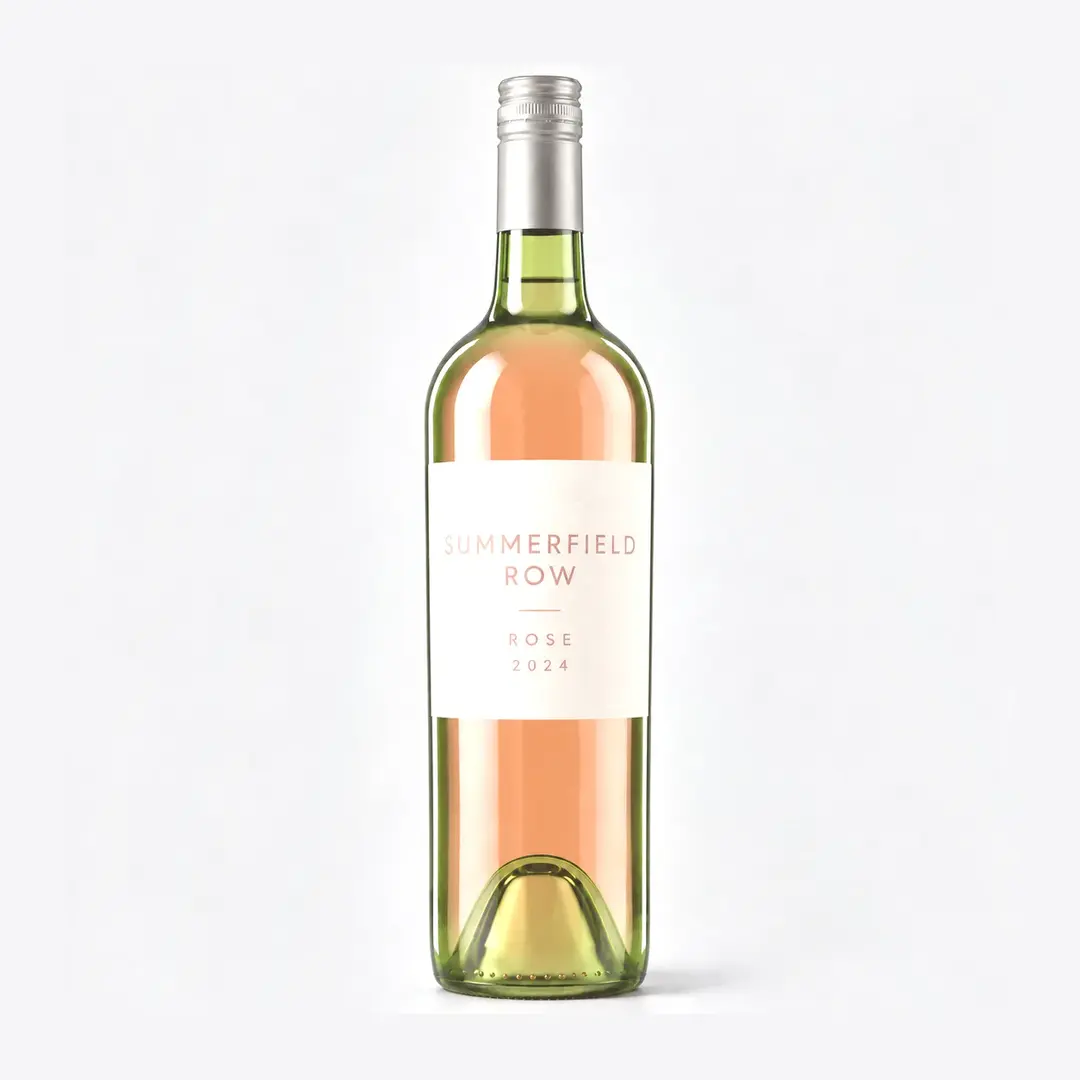
These 750ml green wine bottles in the classic Bordeaux shape are specified most often for wines that will be drunk young: unoaked reds, chillable light reds, rosé and fresh blends whose whole selling window runs twelve to eighteen months from bottling. For that style of wine, glass color is not a heritage affectation; it is a packaging decision with a measurable effect on flavor stability. The bottle photographed here shows the mold’s character clearly: a light antique-green glass with a bright, even tone, a gently tapered body, a high domed punt, and a threaded screw-cap finish on the sample shown, the closure most early-drinking programs now choose.
Why Glass Color Matters for Early-Drinking Wines
Unoaked reds and rosés are bottled to preserve primary fruit, and primary fruit is fragile. The same light energy that makes a retail shelf attractive degrades the aromas a young wine is sold on. Flint glass shows the wine’s color but offers little screening; dark glass screens well but hides delicate hues. Green glass sits deliberately between those extremes. It filters a meaningful share of the short-wavelength light that drives lightstrike reactions while still reading as fresh and conventional on shelf, and for wines that will move through the supply chain quickly, that balance is usually the commercially correct one.
The honest way to frame it for a buying team: for a drink-now wine with sensible warehouse and retail practice, green glass plus turnover discipline delivers adequate protection at no cost premium. For long-aged wines, a darker antique green or amber would be the conservative choice, and shade options across this mold series can be confirmed with the factory at inquiry.
Lightstrike, Explained for Buyers
Lightstrike is the fault that develops when short-wavelength light triggers reactions in the wine that produce sulfurous, cabbage-like off-aromas; rosés and delicate whites are the most vulnerable, and young reds are not immune. The practical defenses are wavelength screening by the glass, secondary packaging that blocks light during storage, and retail rotation that limits time under display lighting. Green glass handles the first of those three around the clock, including the moments your supply chain forgets the other two: the afternoon on a shop windowsill, the week in a bright cash-and-carry aisle.
Specifying green for early-drinking lines is therefore less about tradition than about removing a variable. The wine you tasted at blending is the wine the consumer opens, even when the journey between included more light than anyone planned.
Reading This Mold: Punt, Shoulder and Finish
Three features stand out in the photographed bottle. The punt rises in a pronounced dome, strengthening the base against stacking loads and giving the bottle a composed stance in the fridge door and on the table. The shoulder sits high with an easy slope, keeping the claret code intact for consumers who read bottle shape as a style cue. And the finish on the sample shown carries a formed screw-cap thread, matched to the common roll-on pilfer-proof conventions used across early-drinking programs. Punt depth, capacity and finish dimensions are confirmed on the technical drawing at quotation; a cork-finish variant can be discussed where a market still expects it.
The light antique-green tone is consistent wall to wall, with clean distribution through the shoulder transition and a firm heel contact ring that stands up to conveyor rails and case dividers on high-speed lines.
Matching Closure to a Drink-Now Style
Screw cap has become the default closure for early-drinking wine for good reasons: total consistency bottle to bottle, no cork taint, fast application on the line, and easy opening and resealing for the consumer. The threaded finish on this mold accepts standard Stelvin-style capsules, and liner choice can be tuned to the oxygen transmission your wine style prefers; your closure supplier’s specifications pair cleanly with the finish gauges we hold to. For export markets where cork remains the expectation, a cork-finish version can be quoted alongside so your range stays coherent.
Fill height, headspace and application torque should be validated on your line with production samples, which we supply ahead of the main order so settings are locked before the container arrives.
Tested to Recognized Glass Standards
Whatever the shade, the glass underneath has to perform. Production lots of this mold are annealed to relieve forming stress, then sampled for thermal-shock endurance to ISO 7459 and internal pressure resistance to ISO 7458, the tests that matter for wines that may be chilled hard, shipped through hot containers or filled with lightly spritzed styles. Surface-strength behavior after abrasion is sampled, and finish dimensions are gauged against closure-supplier tolerances. Capacity tolerance, vertical load and coating uniformity are recorded on the lot certificate that ships with your documents, and reference samples are retained per lot.
Buying, Packing and Shipping
These bottles ship as shrink-wrapped bulk layers for depalletizing lines or in export cartons, on fumigated pallets with the loading plan confirmed at quotation. Minimum order quantities follow color and decoration; the breakpoints, including how to combine green and darker shades of the same mold in one container for tiered ranges, are set out in our glass bottle MOQ guide. If this is your first import, the full sequence from quotation to customs clearance is covered in our guide to importing glass bottles from China.
To price this mold for your next early-drinking release, send your annual volume, closure preference, destination port and target bottling window through our contact page. We will return a specification sheet, a shade recommendation for your wine style and a landed-cost picture your buying team can work from.
Frequently Asked Questions
Does green glass really protect early-drinking wine better than clear glass?
Yes. Green glass filters a meaningful share of the short-wavelength light that triggers lightstrike off-aromas, while flint glass offers little screening. For unoaked reds and rosé drunk within twelve to eighteen months, green glass combined with sensible storage and stock rotation provides practical protection at no cost premium over clear glass.
Is green or dark antique green better for my rosé program?
It depends on the selling window. For fast-turnover rosé with good rotation, standard green is usually adequate and keeps the bottle looking fresh. For longer storage or bright retail environments, a darker antique green screens more light; shade options across this mold series can be confirmed with the factory when you inquire.
What is the MOQ for these 750ml green Bordeaux bottles?
For stock green glass from this existing mold, a full container is the most economical unit, and we can combine shades or companion molds in one container for tiered ranges. Current breakpoints are in our glass bottle MOQ guide, or request the figure for your destination port.
Does the bottle come with screw cap or cork finish?
The photographed sample carries a threaded screw-cap finish matched to standard Stelvin-style capsules, which suits early-drinking styles. A cork-finish variant can be discussed with the factory for markets that expect cork. We quote both so you can match closure to your wine style and line.
Can we get samples to test filling and cap application?
Yes. Production samples ship ahead of the bulk order so your bottler can validate fill height, headspace, cap application torque and conveyor handling. Samples are normally free; you cover the courier cost, which is credited against your first order.
How are the bottles packed, and what lead time should we plan?
Bottles ship as shrink-wrapped bulk layers or in export cartons on fumigated pallets, with a container loading plan supplied at quotation. Production scheduling follows the confirmed purchase order; when you request a quotation we confirm the current furnace slot and a realistic sailing schedule for your bottling window.


