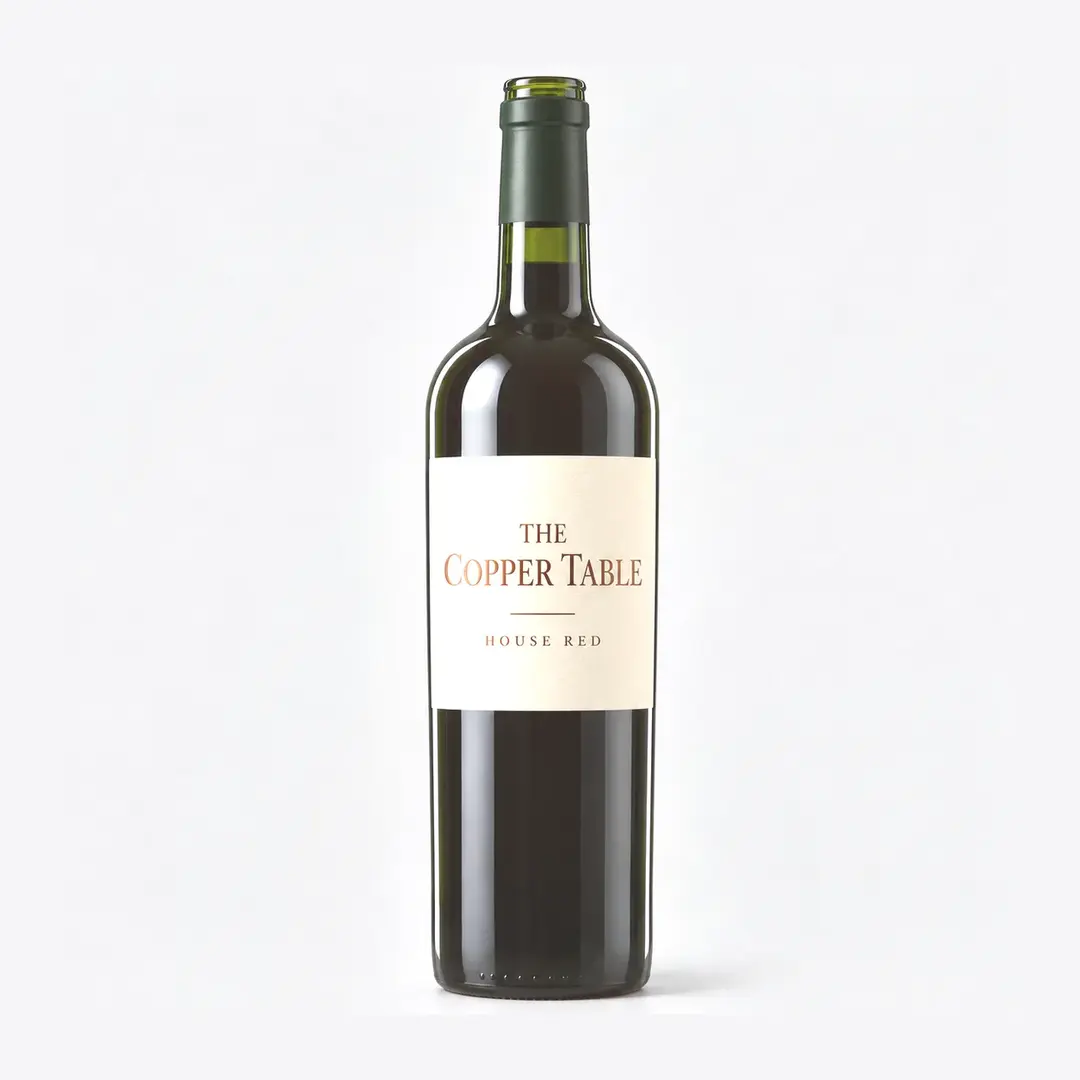
The 750ml Bordeaux Green Wine Glass Bottle 147 is the mold we point restaurant groups, hotel chains and contract bottlers toward when the brief is a house-wine program rather than a trophy release. It has to look right on a white tablecloth, pour cleanly through a double shift, and tolerate the rough-and-tumble of hospitality logistics. The bottle photographed here shows exactly that character: a moderately high shoulder, a long straight body with a gentle taper toward the heel, a crisp lip ring on the cork finish, and a moderate punt. It is a working silhouette, not a showpiece, and that is precisely why beverage directors keep reordering it.
Built for the Pass: A Bordeaux Shape That Works Service
House-wine packaging lives or dies in the details of service. Servers grab bottles by the neck dozens of times a night, often with wet hands, often from an ice-well or a crowded speed rack. The classic claret profile of mold 147 earns its keep here. The shoulder gives staff a clear visual reference when topping up carafes, and the straight body means front labels sit flat and legible at table height without wrinkling around a curve. Because the form is instantly familiar, a private-label house wine still reads as “proper wine” to the guest, which matters when the by-the-glass pour is your margin engine.
The green glass keeps the presentation traditional for both red and white house pours, and it hides the minor shade variation that high-turnover blended wines sometimes show. For banqueting, where bottles may be pre-set on rounds of ten, the balanced proportions of the mold keep table settings tidy and uniform across hundreds of covers.
Pour Ergonomics and Back-Bar Handling
Look at the neck on the photographed bottle: it is long enough for a confident three-finger grip and a controlled, glug-free pour, but not so long that the bottle becomes top-heavy in an ice bucket. The heel is firm and slightly tucked, so the bottle plants steadily on trays and pass counters instead of rocking. These are small things, and they are exactly the things sommeliers and F&B managers mention when they approve a mold for a multi-venue rollout.
Glass weight sits in the practical middle for this series: heavy enough to feel honest in the hand at the table, light enough that a case of twelve does not punish the person carrying it up a cellar stair. Exact weight, base diameter and brimful capacity are confirmed on the technical drawing at quotation, so your operations team can verify rack fit, fridge-door clearance and case weights before the first container ships.
Durability from Case to Cellar
Hospitality supply chains are hard on glass. Cases ride dollies across loading docks, pallets sit in damp cellar corners, and individual bottles are handled by far more hands than a retail bottle ever meets. Mold 147 is annealed to relieve forming stress, and wall thickness is distributed to put material where impacts actually land: the heel, the shoulder transition and the contact ring on the body. The defined lip ring on the finish is not just cosmetic; it gives capsules a clean shoulder to grip and protects the bore during corking.
If your program includes central bottling with onward distribution to venues, tell us at inquiry stage. We can review case dividers, pallet patterns and depot handling together, and confirm the specification against the routes your distributors actually run.
Closures and Fill-Line Compatibility
The photographed sample carries a cork finish suited to natural cork, colmated cork and technical 1+1 closures, which covers most house-wine positioning. If your program prefers screw cap for speed and consistency at the bar, a compatible finish can be discussed with the factory before tooling commitments. Standard capsule materials, from polylaminate to tin, dress the neck without special machinery.
The bore and finish follow the common 750ml claret conventions, so mold 147 drops onto mainstream filling lines without change parts beyond the usual handling set. Fill height, vacuum level and corker compression should be validated on your line with production samples; we supply samples precisely so your bottler can run that trial before the main order.
Quality Control for High-Turnover Programs
House-wine buyers rarely see the QC file, but they feel its absence when a pallet arrives with checks or a corker starts chipping finishes. Every production lot of this mold is annealed for stress relief, then sampled for thermal-shock endurance to ISO 7459 and internal pressure resistance to ISO 7458. Surface-strength behavior after abrasion is sampled, and finish gauges are checked against the cork supplier’s tolerances. Vertical load, coating uniformity and capacity tolerance are recorded on the lot certificate that ships with your documents.
For groups that audit suppliers, we share inspection reports per lot and retain reference samples, so a question from a venue six months after delivery can be answered against the actual production record.
Ordering, MOQ and Logistics for Hospitality Buyers
Most hospitality orders for this mold ship as full pallets of export cartons or as bulk shrink-wrapped layers, depending on whether you re-label, fill at origin or send glass to a contract bottler. Minimum order quantities depend on color and decoration; the practical breakpoints are explained on our glass bottle MOQ guide, which also covers how mixed pallets work when a group wants red and white house pours in one shipment. First-time importers will find the end-to-end process, from quotation to customs clearance, in our notes on importing glass bottles from China.
Lead time typically runs through mold scheduling, forming, inspection and ocean booking; confirm current production slots when you request a quotation. If you are consolidating a beverage program across venues, send the annual volume estimate and target delivery windows through our contact page and we will come back with a specification sheet, pallet plan and a per-venue cost picture you can take to your procurement committee.
Frequently Asked Questions
What is the minimum order for the 750ml Bordeaux Green Wine Glass Bottle 147?
MOQ depends on glass color and whether you add decoration such as screen printing. For standard green glass from an existing mold, a full-container order is the most economical route, and mixed pallets for red and white house wines can be arranged. Current MOQ breakpoints are listed in our glass bottle MOQ guide, or ask us for the figure tied to your delivery port.
Can we get samples before committing a venue rollout?
Yes. We supply production-run samples so your bottler can run fill-height and corking trials and your service team can check rack fit, pour feel and label alignment. Sample bottles are typically free; you cover the courier cost, which is credited back on the first bulk order.
Is this bottle better with cork or screw cap for a by-the-glass program?
The photographed mold carries a cork finish, which suits natural, colmated and technical 1+1 corks and presents well at the table. If speed and reseal consistency matter more at the bar, a screw-cap finish can be discussed with the factory before you commit. We can quote both finishes so you can compare line costs.
What is the lead time for a repeat hospitality order?
Repeat orders on an existing specification are faster than first runs because the mold schedule and documents are already set. Production plus ocean freight planning usually starts from the confirmed purchase order date; exact timing depends on current furnace schedules, so confirm the slot when you request your quotation.
How are the bottles packed for delivery to a central bottler or depot?
Standard export packing is carton cases or shrink-wrapped bulk layers on fumigated pallets, with dividers matched to the bottle’s heel and shoulder profile. We confirm pallet pattern and container loading plan with your quotation so your warehouse can verify dock and forklift compatibility in advance.
Can you match our current house-wine bottle if we switch suppliers?
In most cases yes. Send us a physical sample or the technical drawing of your existing bottle and we will compare capacity, finish, weight and punt geometry against our mold library. Where an exact match needs new tooling, we quote the mold cost and sampling timeline separately before any commitment.


