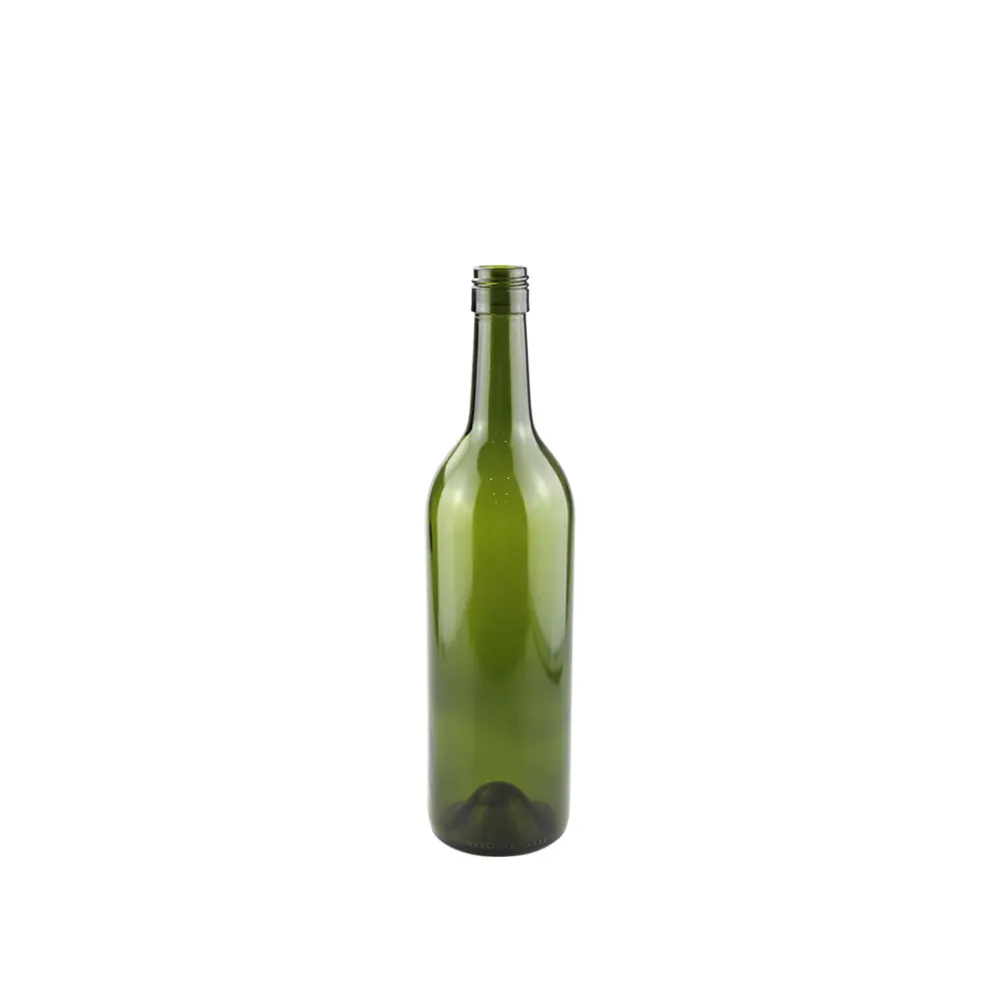
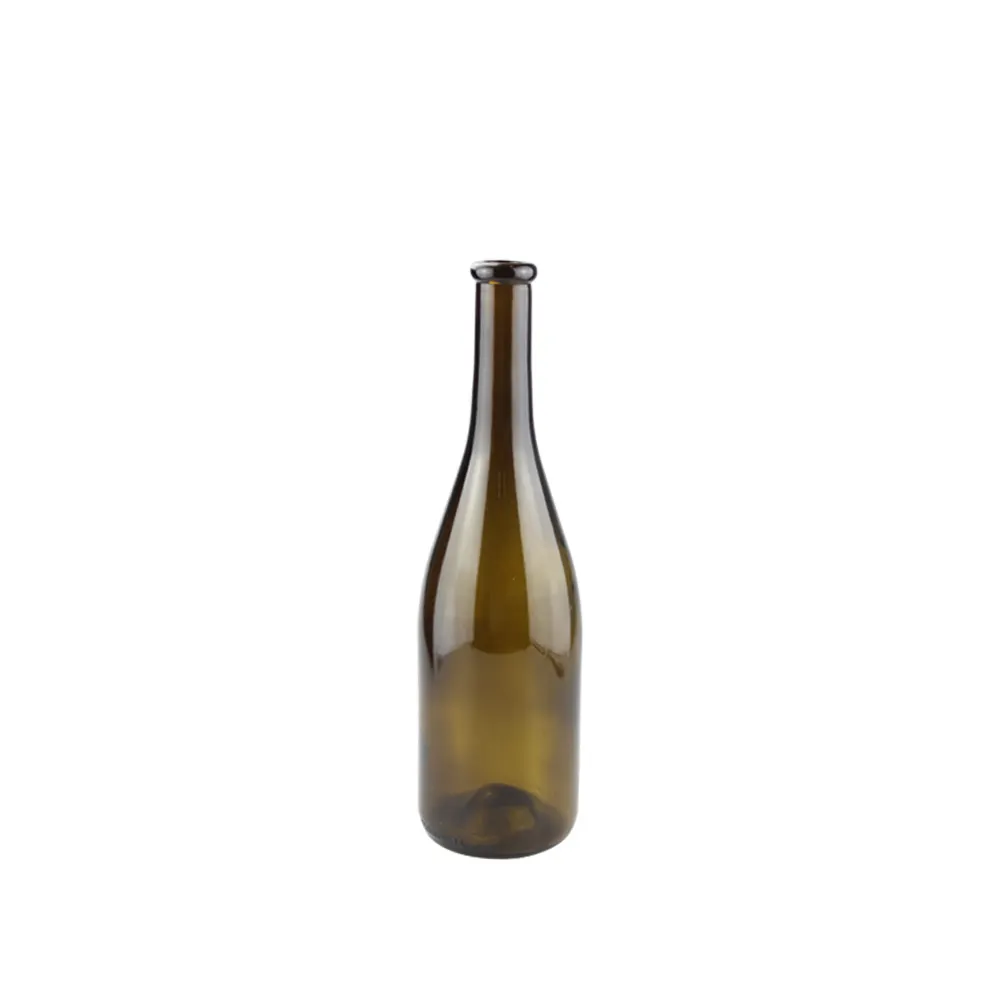
Part of our wine bottles wholesale range; the stock moulds are pictured at the end of this guide.
A 750ml Bordeaux bottle is a standardized shape, so a wholesale order comes down to four choices: glass colour, neck finish, weight tier and size split. Stock moulds cover the whole format, from 400 g flint with a BVS 30 screw finish to 650 g champagne green with a 21.5 mm cork bore. The choice that cannot be undone later is the neck, because a cork finish and a screw finish are made on different moulds.
Dimensions and weight tiers for a 750 ml Bordeaux
Stock Bordeaux bottles fall into three weight bands. The figures below are typical ranges for planning; the drawing of the model you pick, or a sample you have approved, is what fixes the real numbers.
| Attribute | Lightweight | Mid-weight (standard) | Premium heavy |
|---|---|---|---|
| Capacity | 750 ml nominal, about 755-770 ml brimful | 750 ml nominal, about 755-770 ml brimful | 750 ml nominal, about 755-770 ml brimful |
| Glass weight | 400-440 g | 480-520 g | 550-650 g |
| Height | 285-300 mm | 290-305 mm | 295-315 mm |
| Body diameter | 73-76 mm | 74-77 mm | 76-80 mm |
| Neck finish | BVS 30 screw or 18.5 mm cork | BVS 30 screw, 18.5 or 21.5 mm cork | 18.5 or 21.5 mm cork, BVS on some models |
| Glass colours | Flint, antique green | Flint, antique green, dead-leaf | Antique green, champagne green |
Brimful capacity, push-up depth, verticality and wall-thickness tolerance (normally ±0.5 mm) are set on the project drawing. Where a model's data cannot be published in advance, the quotation marks it as to be confirmed per project.
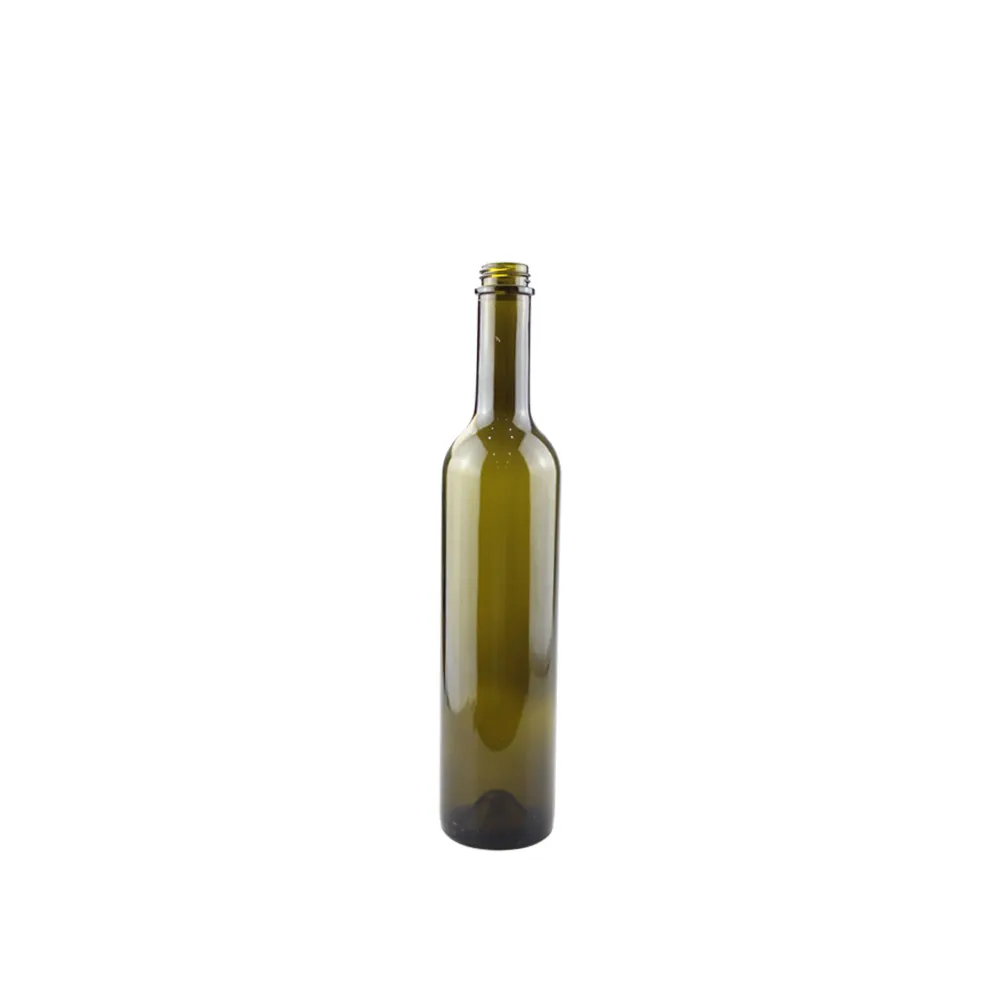
The same straight-sided, high-shouldered design is also available as a 375 ml half bottle and a 1.5 L magnum. Loading several sizes into one container is normal when a range launches together, and the rest of our wholesale wine bottle range follows the same logic.
Flint or green glass
Shape and colour send one combined signal. The abrupt shoulder says structured red when the glass is green; in clear glass the identical bottle reads as white or rosé while still looking more serious than a jug.
- Flint (clear) lets the wine's own colour do the decorating, which is why whites and rosés use it. It gives very little protection from light, so anything intended to age needs cartons and warehouse storage planned around UV exposure.
- Antique green and dead-leaf green are the usual picks for reds. They filter the UV that breaks down phenolics on the shelf and in the cellar.
- Champagne green is darker again and is chosen for high-end reds that will be cellared for a long time.
Colour also affects scheduling. A glass plant melts each green shade in its own colour window, so grouping several green SKUs into a single window reduces setup cost, while a flint item on the same order may run at a different time. We plan the colour window with the plant when we match your project, because it feeds into both cost and timing.
Cork finish or BVS 30 screwcap
BVS stands for Bague à Vis Stelvin; the finish takes a 30×60 mm aluminium closure. It no longer signals cheap wine. In Australia, New Zealand and a large part of the on-trade it is the default, and clear Bordeaux glass with a BVS 30 neck is the fastest-growing specification for crisp whites and rosés in new-world retail. The liner you choose, Saranex or tin-saran, determines how much oxygen reaches the wine and so how it develops in bottle.
A cork finish, with an 18.5 or 21.5 mm bore, is still what traditional channels and buyers of age-worthy reds expect. The bore is held to a tight tolerance so that natural, agglomerated and technical corks all compress and seal in a predictable way. For matching stoppers to the bore, see our guide to wine bottles supplied with corks.
The two necks need different tooling, and a Stelvin cap will not fit a cork-finish bottle. A brand that wants screwcap for its home market and cork for export should plan two SKUs from day one. Where the design allows, both necks can be quoted on one body mould so the range looks like a family.
Closures are tested as an assembly on the bottle you have chosen before mass release: torque retention on screwcaps, pull-force range on corks, and seal integrity during inverted storage at 40 °C for 24 hours.
How bottle weight changes a container load
Glass weight limits a container before case volume does. A 20 ft container takes roughly 11,000-13,000 mid-weight 750 ml Bordeaux bottles and fewer at heavy weights; a heavyweight bottle ships roughly 15-20% fewer units per container than a lightweight one. Put another way, 420 g against 550 g per bottle is a difference of roughly 1.5 tonnes of glass in a 20 ft box.
A landed budget has four main lines. The glass itself is the largest, driven by weight tier and colour window. Sea freight, insurance and duties come next, then closures (natural cork costs the most, BVS caps with better liners sit in the middle), and finally packing and inland freight for divider cartons, palletizing and export handling. Ask for tooling if there is any, sampling, closures, packing and freight to be shown as separate lines. The budget surprise we meet most often is a buyer who bargains hard on the bottle and overlooks a weight tier that costs far more in freight.
Packing for sea freight
Bottles travel in 5-ply corrugated cartons with dividers, so no glass touches glass, typically 6 or 12 bottles per case, on shrink-wrapped pallets. With correct packing, breakage in sea freight is normally well under 1%. Container loading is photographed, and drop-test reports or third-party inspection can be arranged on request.
What to put in the brief
Four answers are enough for a usable quotation in a single round:
- Colour: flint or one of the greens.
- Closure: cork bore size, or BVS 30 screw with your liner preference.
- Weight tier: lightweight, mid-weight or heavy.
- Size split across 375 ml, 750 ml and 1.5 L.
Send those through the Bordeaux bottle quote request. If a stock mould does not give you the shoulder or punt you want, the custom wine bottle development guide explains the alternative, and the full glass bottle catalogue shows the other formats we source.
Frequently asked questions
What is the minimum order for wholesale 750ml Bordeaux bottles?
It is quoted per project. The figure depends on the mould you select and the production line that mould runs on.
Which weight tier suits export?
Lightweight glass at 400-440 g keeps freight and carbon per bottle lowest. Mid-weight at 480-520 g is what most retail wines use. Heavy glass from 550 g upward signals quality at the expense of units per container. We show the container loading for your chosen tier in the quotation so the freight effect is clear before you commit.
Can I order halves and magnums with the 750 ml?
Yes. Give us the split between sizes and the production window and pallet layout are planned around it.
Can one Bordeaux bottle be closed with either cork or screwcap?
No. Each bottle is moulded for one closure type, so a range that needs both is two SKUs, ideally sharing a body design.