Part of our empty wine bottles range; the stock moulds are pictured at the end of this guide.
A standard cork-finish wine bottle has an 18.5mm bore, and the cork that seals it is cut oversize: 24mm for commercial lines, 22mm for hand corkers. Specify the bottle and the closure together, from matched lots, because most seepage, ullage and crumbling corks trace back to a neck and a cork that were bought separately to different tolerances. The same matching rules apply to a garage batch and to a container order.
Cork or thread: the neck finish comes first
A wine bottle is moulded either with a cork bore or with a BVS thread for a screwcap. That choice belongs to the bottle mould, so it has to be made before anything else on the order. Everything about the closure follows from it.
Shape carries its own closure conventions, built up over a century of trade. You can depart from them, but shoppers notice, and filling-line compatibility can change.
| Shape | Typical wines | Usual closure | Handling note |
|---|---|---|---|
| Bordeaux (claret) | Cabernet Sauvignon, Merlot, reds meant for the cellar | Natural or technical cork in the 18.5mm bore | High shoulder, straight wall |
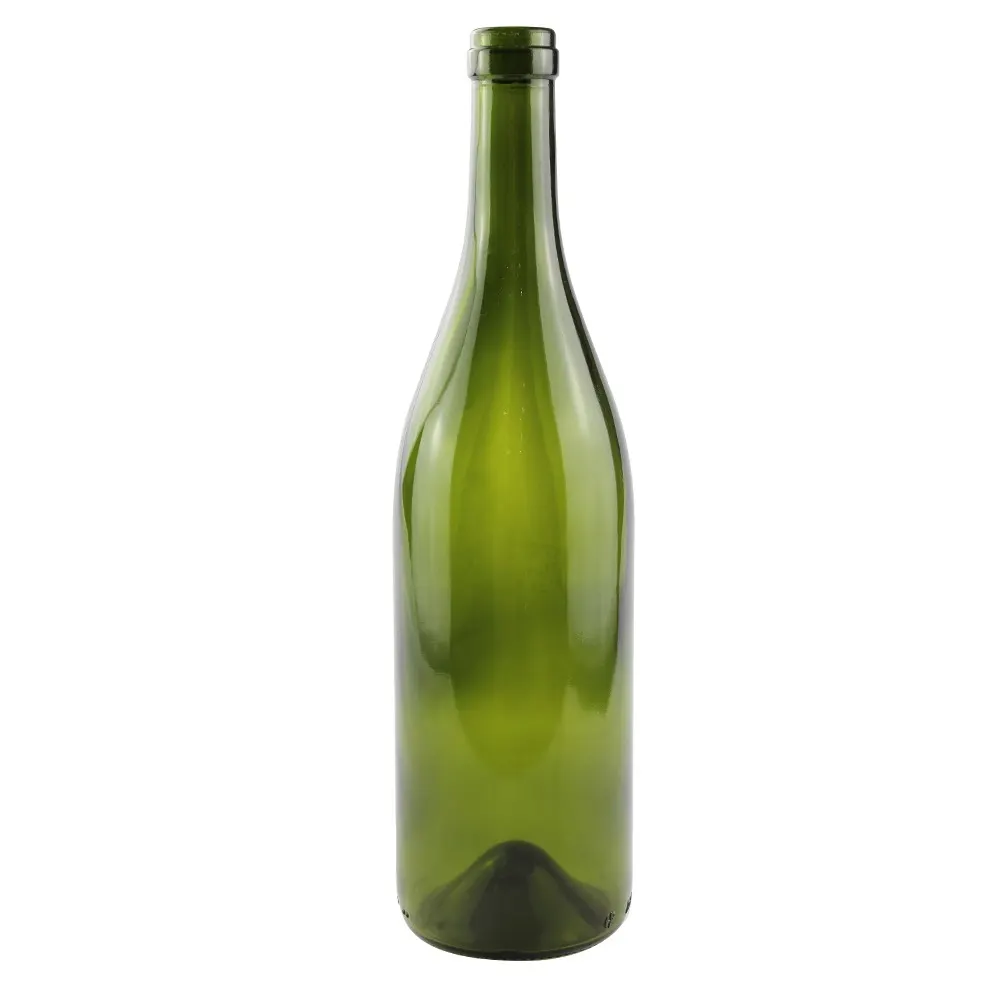
| Burgundy | Pinot Noir, Chardonnay, aromatic styles | Same bore and corks as Bordeaux | Wider body changes pallet density and case partitions |
| Rhine / Hock flute | Riesling, Gewürztraminer, aromatic whites | Longer corks of 44–49mm by tradition; screwcap for wines bottled young | More bottles per pallet tier, but tips more easily on conveyors |
The link between the Bordeaux shape and cork is strong enough that, in some markets, a screwcap on it still reads as a sign of a cheaper wine. The Bordeaux wine bottle range spans 400g lightweight to 650g heavy glass.
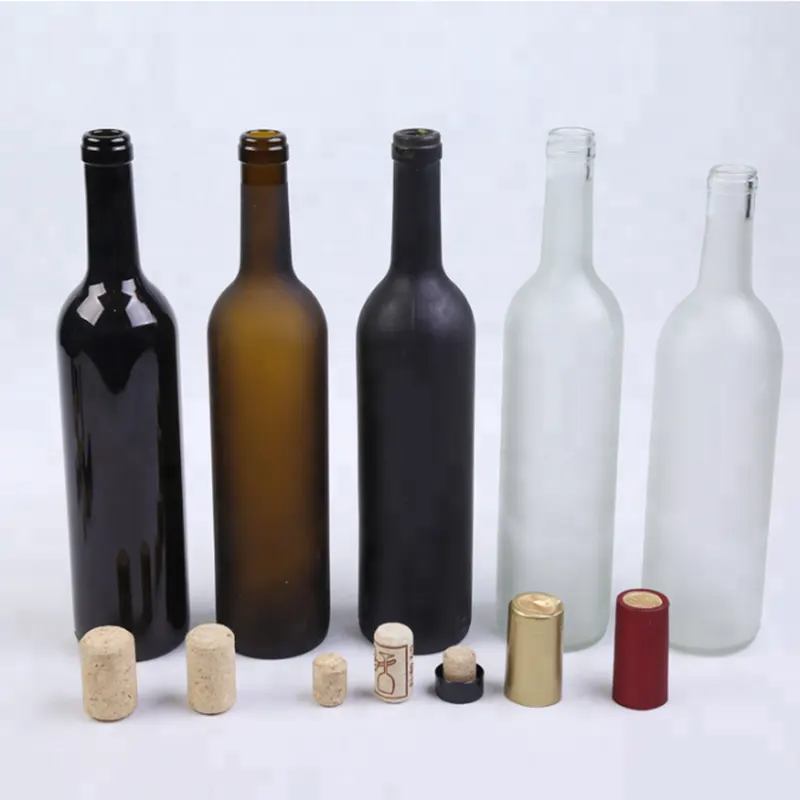
A Burgundy bottle suggests a lighter, more delicate wine, and that expectation affects how expensive a closure the pack needs to carry. A winery running both shapes has to adjust its case partitions for the wider one. The Rhine flute is brown in Germany and often flint or green elsewhere. Before fixing a combination, compare the Burgundy bottle options with the wine bottle size reference.
Four closure types compared
Choosing a closure is really a decision about wine style. The useful measure is OTR, the oxygen transmission rate: how much oxygen the closure lets through over time. Match it to the period in which the wine will be drunk.
| Closure | Oxygen transmission | Suited to | How it fails |
|---|---|---|---|
| One-piece natural cork | Low but variable | 5–20+ years of ageing | TCA taint (1–3%), crumbling |
| Technical / agglomerated cork | Low and consistent | 2–5 years | Extraction force drifts |
| Synthetic (moulded polymer) | Higher, consistent | Under 2 years | Oxidation beyond 18 months |
| Screwcap (Stelvin type) | Near zero, depending on liner | Fresh styles; some reds to 10 years | Reduction, the struck-flint character |
Natural cork is still the default for wines built to age. It admits a little oxygen, which supports development in bottle, and the pop remains part of wine service. Grade counts here: flor-grade cork, which has very few lenticels, measurably lowers the taint rate.
Technical corks are either agglomerated bodies capped with natural discs or micro-agglomerate made from steam-cleaned granules. Their TCA risk is close to nil, which makes them the volume choice for mid-tier commercial wine. Synthetics fit whites and rosés for immediate drinking, where uniformity and easy extraction outweigh ageing. Screwcaps lead for aromatic whites in Australia and New Zealand and are gaining in Germany.
In numbers, natural cork passes roughly 1–5 micrograms of oxygen a day, with wide variation from one cork to the next. Technical corks narrow that variation sharply. Synthetics let through several times as much, but evenly. Screwcap liners can be ordered from near-hermetic (tin saranex) to moderately permeable (saranex only), so the pack can be tuned to the wine.
A winery whose output is 80% wine for drinking within a year has no reason to buy natural cork, and a reserve range should not be trusted to synthetics. The full decision tree is on our closure selection hub.
Cork diameter and length for an 18.5mm bore
The bore measures 18.5mm at the top of the neck and tapers slightly inward below it. The cork is wider than the bore, and its compression makes the seal.
| Use | Cork diameter | Cork length | Compression |
|---|---|---|---|
| Home winemaking, hand corker | 22mm | 38–44mm | ~16% |
| Commercial still wine | 24mm | 44–49mm | ~23% |
| Reserve wines | 24mm | 49–54mm | ~23% |
| Synthetic closures | 21.5–22mm | 37–38mm | ~15% |
Three rules account for most mismatches:
- Size the cork to the corker. A hand tool compresses less evenly than a floor corker or line equipment. Driven by hand, a 24mm cork stalls or mushrooms, so home winemakers should keep to the 22mm row.
- Length buys time. Each extra 5mm of cork in contact with the glass adds years of dependable sealing, which is why reserve wines start at 49mm.
- Bore tolerance differs between plants. A cheap bottle held to 18.5mm ±0.5mm, paired with a precisely cut 24mm cork, gives uneven insertion force across a bottling run.
When bottles and corks are ordered as a set, ask for the neck drawing and the cork dimensional certificate for the same lot. Then run fifty matched units through your own corking equipment before the full order is released. Our pages on bulk glass bottles with corks and wholesale glass bottles with cork describe how pre-matched lots are put together.
Specifications that protect a wine meant to age
Three points deserve written contract terms on any ageing wine:
- Insertion depth: the cork should sit 0.5–1.5mm below the lip. That is deep enough to stop the capsule bulging and shallow enough to pull cleanly.
- Moisture content: 5–8%. Drier corks crumble; wetter ones invite mould.
- Storage position: wine under natural cork is aged lying down so the cork stays swollen. Synthetic and screwcap bottles can stand upright safely.
Ask the supplier to certify moisture content and the insertion-force range lot by lot. Careful buyers also stand a sample case upright for three months as a leak test before committing a vintage.
A home winemaker moving towards commercial volume works with the same physics and less machinery. The dependable setup is a floor corker that can compress a 24mm cork uniformly, technical corks at 24×44mm, and bottles from a single mould lot. The wine glass bottle collection lists the standard formats with both cork-finish and BVS necks.
What a bottle-and-cork order should state
| Item | What to fix | Reason |
|---|---|---|
| Shape and weight | Bordeaux, Burgundy or Rhine; weight in grams | Shelf signal, freight, stability on the line |
| Capacity | 750ml as standard; 375ml halves for sampling | Half sizes are covered under 375ml wine bottles |
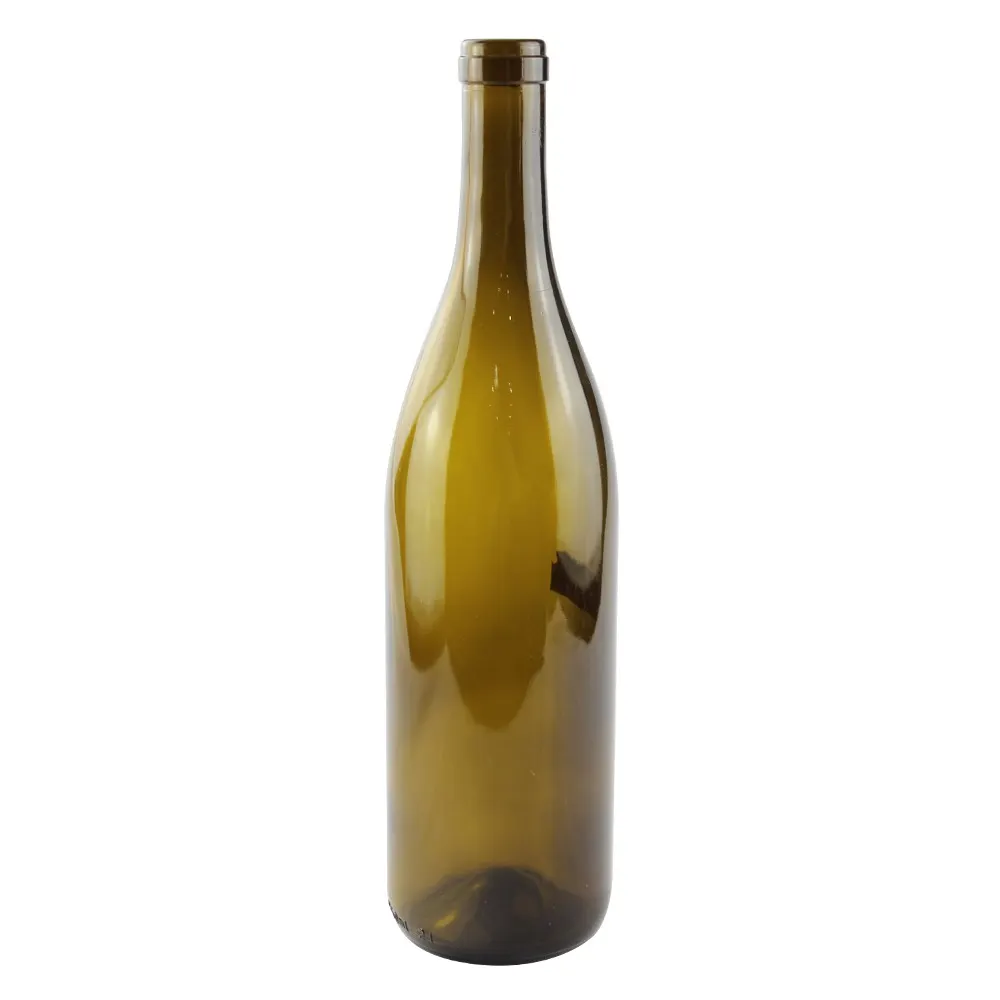
| Glass colour | Antique green for reds; flint for whites and rosés | UV protection against shelf appeal |
| Neck finish | 18.5mm cork bore or BVS thread | Sets the whole closure route |
| Cork type and grade | Natural flor, technical or synthetic; TCA-screened | Taint risk and ageing window |
| Cork dimensions | Diameter × length, matched to bore and corker | Insertion force, seal life |
| Capsules | PVC, polylaminate or tin, sized to the neck outside diameter | Finish and tamper evidence |
| Cases and partitions | Partitioned 12-pack cartons; pallet pattern | Transit breakage, use of space |
Small buyers order by the case of 12 bottles with corks to match. Commercial orders go by the pallet, which takes 56 to 72 cases of 750ml bottles according to shape and weight, with the corks boxed apart at 1,000 or 5,000 a carton. A 40-foot container carries roughly 22,000–24,000 standard 750ml bottles, and one bill of lading can cover mixed shapes: Bordeaux for the reds and Burgundy for the Chardonnay, for example, with corks matched to each.
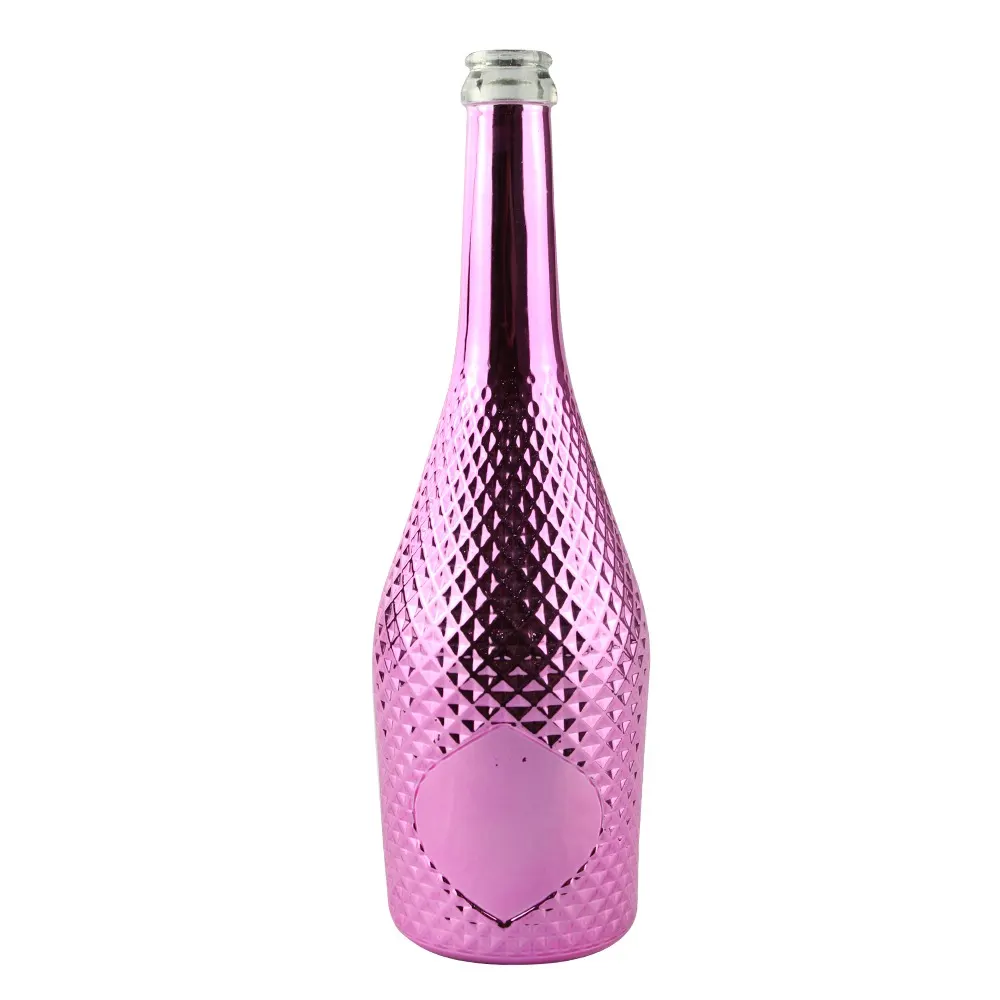
Embossing and proprietary moulds are a further layer on top of this list, handled as a custom wine bottle project. Sparkling wine is a different closure world, with crown caps and mushroom corks under wire hoods; see the sparkling wine bottle range. For capacities across other categories, use the glass bottle size chart.
Frequently asked questions
Which cork length should I pick?
Use 38–44mm for wine drunk young and 44–54mm for wine that will be kept.
Natural cork, synthetic or screwcap?
Go by the drinking window. Natural or technical cork fits wine that will age two years or longer. Synthetics suit wine consumed within 18–24 months. Screwcaps work best on aromatic whites and fresh styles.
Can bottles and corks be bought together in small quantities?
Yes. The benefit of a set is that the cork dimensions are matched to the bottle bore. Pricing is quoted per project and depends on cork grade, quantity and freight terms.
How many bottles go on a pallet?
Between 672 and 864 bottles of 750ml, packed in twelve-bottle cases. The cork cartons travel on the same pallet or on a companion pallet.
Why did my corks crumble on opening?
There are three usual causes. The corks were kept too dry before bottling, below 5% moisture. The bottles were aged standing up, so the cork dried out and shrank. Or the cork was a low grade with voids in its structure.
Is a screwcap bottle more expensive than a cork-finish bottle?
The cost difference lies in the closure, not the glass, and both are quoted per project. A screwcap also removes TCA risk and the need for corking equipment, which matters to a small winery without a line.