Part of our wine bottles wholesale range; the stock moulds are pictured at the end of this guide.
A 375 ml wine bottle is available on stock moulds in four styles, Bordeaux, Burgundy, dessert flute and pressure-rated sparkling, with an 18.5 mm cork finish or a BVS 30 screw finish on the still shapes. It pays off in channels that will pay more per millilitre, such as dessert wine, single-serve hospitality, tasting flights and gifting, because only the glass and the wine get smaller while the closure, capsule, label and handling stay almost the same as on a 750 ml bottle. Decide the channel first, then fix the shape, colour and closure around it.
Channels that suit a half bottle
The half bottle answers a serving problem, so it sells where that problem exists. Work out which of these you are supplying before you look at glass.
- Dessert and sweet wine. Sauternes-style, late-harvest and ice wines are poured in small measures over weeks. The smaller bottle fits how they are drunk and keeps the shelf price approachable.
- Airlines, rail, minibars and room service. A sealed half gives two generous glasses, leaves nothing to waste and avoids the liability of an opened bottle.
- Tasting rooms and wine clubs. Flight packs and club shipments sell on variety, and three halves make a better discovery pack than a single full bottle.
- Gifting. A half of a serious wine reads as a whole present.
- By-the-glass lists. The restaurant opens fresh bottles each service and never pours yesterday's wine at full price.
Freshness is the argument retailers and consumers grasp fastest: nobody is left with half a bottle oxidising in the fridge. Everyday table wine is the exception. That channel does not reward a higher price per millilitre, and the format rarely works there.
Typical specifications by style
The figures below are typical ranges for stock-mould half bottles, meant for planning. Exact dimensions come from the model drawing or an approved sample.
| Style | Glass weight | Height | Finish | Colours |
|---|---|---|---|---|
| 375 ml Bordeaux | 300-420 g | 230-250 mm | 18.5 mm cork, BVS 30 screw | Flint, antique green |
| 375 ml Burgundy | 320-450 g | 230-255 mm | 18.5 mm cork, BVS 30 screw | Flint, antique green, dead-leaf |
| 375 ml dessert flute | 250-400 g | 270-300 mm | Cork or screw | Flint, amber |
| 375 ml sparkling | 450-600 g, pressure-rated | 230-260 mm | Crown cork for tirage; mushroom cork with agrafe | Champagne green |
Brimful capacity, wall tolerance and punt depth are not stock values. They are fixed on the project drawing, and any model figure that has not been published is confirmed per project.
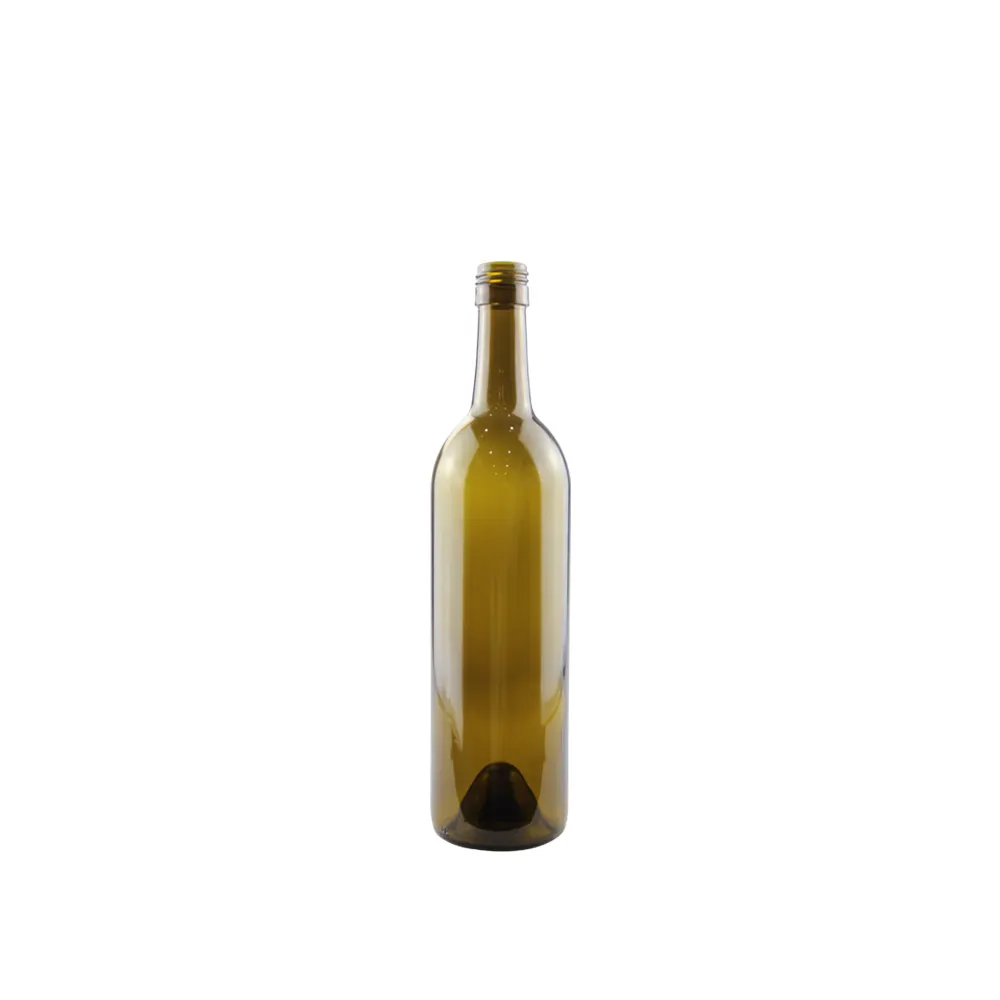
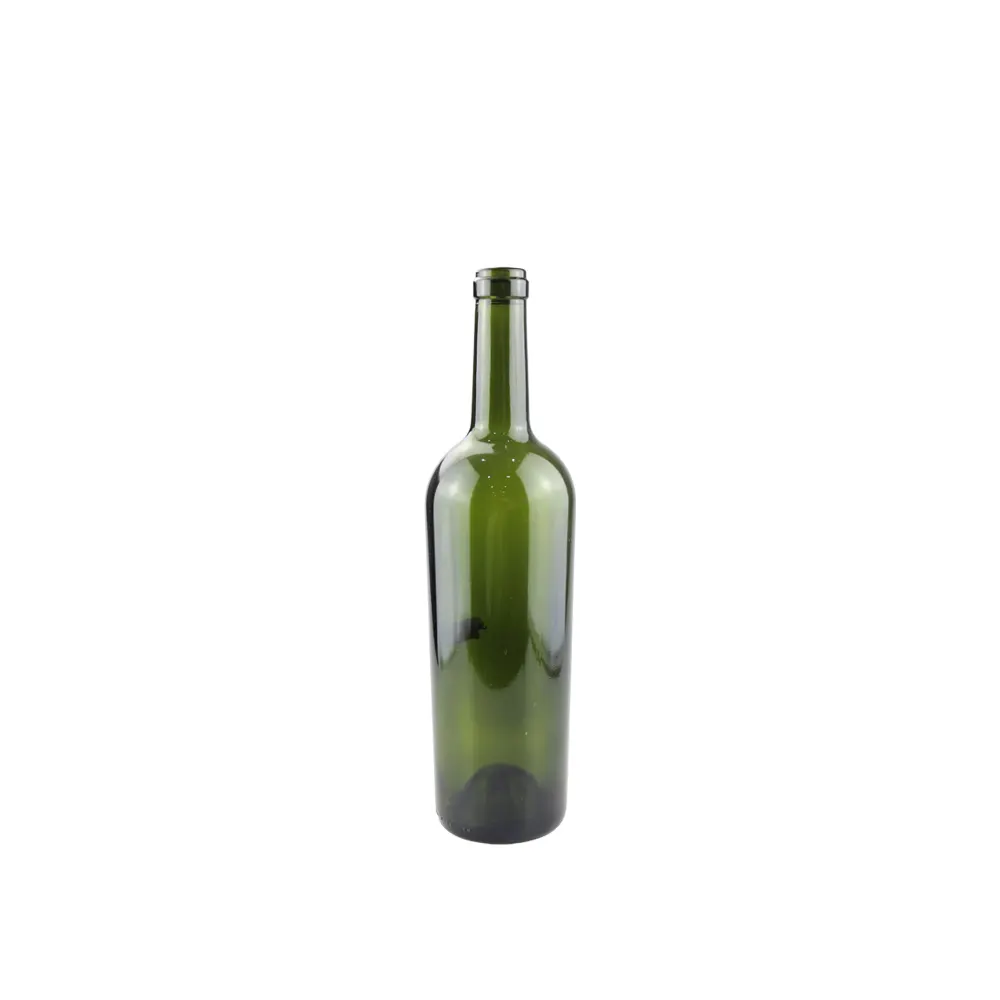
Colour follows the wine. Antique green is usual for reds; flint suits whites, rosés and dessert wines, where the gold of the liquid is part of the appeal; champagne green is for sparkling; amber can be requested for light-sensitive specialities. If you have several flint SKUs, plan them as one colour run instead of scattering them across separate ones.
Cork, screwcap and sparkling closures
A half bottle ages under the same oxygen-transmission behaviour as a full one but contains half the wine, so the closure has more influence on the result. Choose it by how long the wine is meant to wait.
| Closure | Use it for | Points to specify |
|---|---|---|
| Natural or technical cork, 18.5 mm bore | Higher-positioned halves intended for some time in a cellar | A cork grade matched to the shorter cellar life most half-bottle wines have |
| BVS 30 screwcap | Drink-now wines, hospitality and dessert wines | Gives a consistent seal, removes cork-taint risk on a small volume and opens with one hand |
| Crown cork, then mushroom cork and agrafe | Sparkling: crown for tirage, mushroom cork for the market | Pressure-rated glass only, tested by ISO 7458 methods |
Whichever you choose, we have it checked as an assembly on the actual bottle before mass release: bore gauging, torque or pull-force range, and a seal test with bottles stored inverted at 40 °C for 24 hours.
Still-wine glass must never be used for a carbonated wine. For the wider sparkling range, see our champagne and sparkling wine bottles.
Why the cost per millilitre is higher
Buyers new to the format often expect a half bottle to cost half as much. It does not, and the cause is structural. A mould cavity and a machine cycle turn out one bottle whatever its size. Closures, capsules, labels, case dividers and handling are close to identical. Glass weight and fill volume are the only inputs that fall.
Prices themselves are quoted per project and move with the mould, the decoration, the quantity and the freight terms. The sums have to be done for this format on its own figures, not inferred from your 750 ml costing. The test is whether your channel accepts a higher price per millilitre, which brings the decision back to the list in the first section.
Packing and container loads
Half bottles travel in divider cartons of 5-ply corrugated board, usually 12 or 24 to a case, which are then palletised and shrink-wrapped. Compared with full bottles, more fit in each case and more cases on each pallet. A 20 ft container carries roughly 18,000-22,000 half bottles.
We photograph each container as it is loaded, and a third-party inspection can be arranged if you ask for one.
Briefing a first order
Four decisions are enough for a usable quotation in a single round:
- Shape: Bordeaux, Burgundy, flute or sparkling.
- Colour.
- Closure: cork or BVS screw.
- Channel: dessert, single-serve, tasting or gifting, since it shapes the specification.
Send them through the quote request form. If the half is joining an existing range, compare it with the full-size shapes in the wine bottle collection, in particular the 750ml Bordeaux bottles, so both sizes share a family look. Other categories are listed in the full glass bottle catalogue.
Frequently asked questions
What is the minimum order for 375 ml wine bottles?
It is quoted per project, because it depends on the mould and on the line that mould runs on.
Should a 375 ml wine take cork or screwcap?
Go by the drinking window. Wines for immediate drinking, hospitality service and dessert styles are best under screwcap; halves meant to be cellared for a while suit cork.
Are 375 ml sparkling bottles available?
Yes, as a separate pressure-rated design that is considerably heavier than a still half. The weight range and closures are in the specification table.