Flint glass is the trade name for clear, colorless soda-lime container glass. It is the right choice when the look of the product helps sell it and the contents are stable in light; it is the wrong choice for anything light-sensitive, because flint lets through essentially all UVA. The second decision is between standard flint and extra-flint, and that one depends on how thick your glass sections are.
Standard flint or extra-flint
The difference is iron. Iron oxide comes into the batch with the sand and with recycled cullet, and at only 0.04 to 0.1 percent it gives glass the green-blue cast you notice at the edge of a thick pane or in a heavy bottle base. Standard flint lives with that cast. Extra-flint, also sold as low-iron or crystal flint, is melted from selected low-iron sand under tighter cullet control, which holds iron below roughly 0.02 percent and produces a water-white result.
The cast grows with path length. The further light travels through glass, the greener the glass appears, so a heavy base or a thick shoulder shows the tint long before a thin wall does. That gives a simple rule:
- Thin-walled food jars and bottles: standard flint reads as clear, and extra-flint is rarely worth specifying.
- Heavy fragrance bases and thick spirits shoulders: standard flint concentrates its tint exactly where the design puts the most glass, so extra-flint is the usual specification.
Extra-flint has to be written into the drawing. The tint is fixed when the batch is melted and cannot be corrected afterwards. The flacons on our custom perfume bottles page show the kind of section thickness that makes low-iron batch necessary. Extra-flint does cost more than standard flint, because the raw materials are selected; the difference is quoted per project.
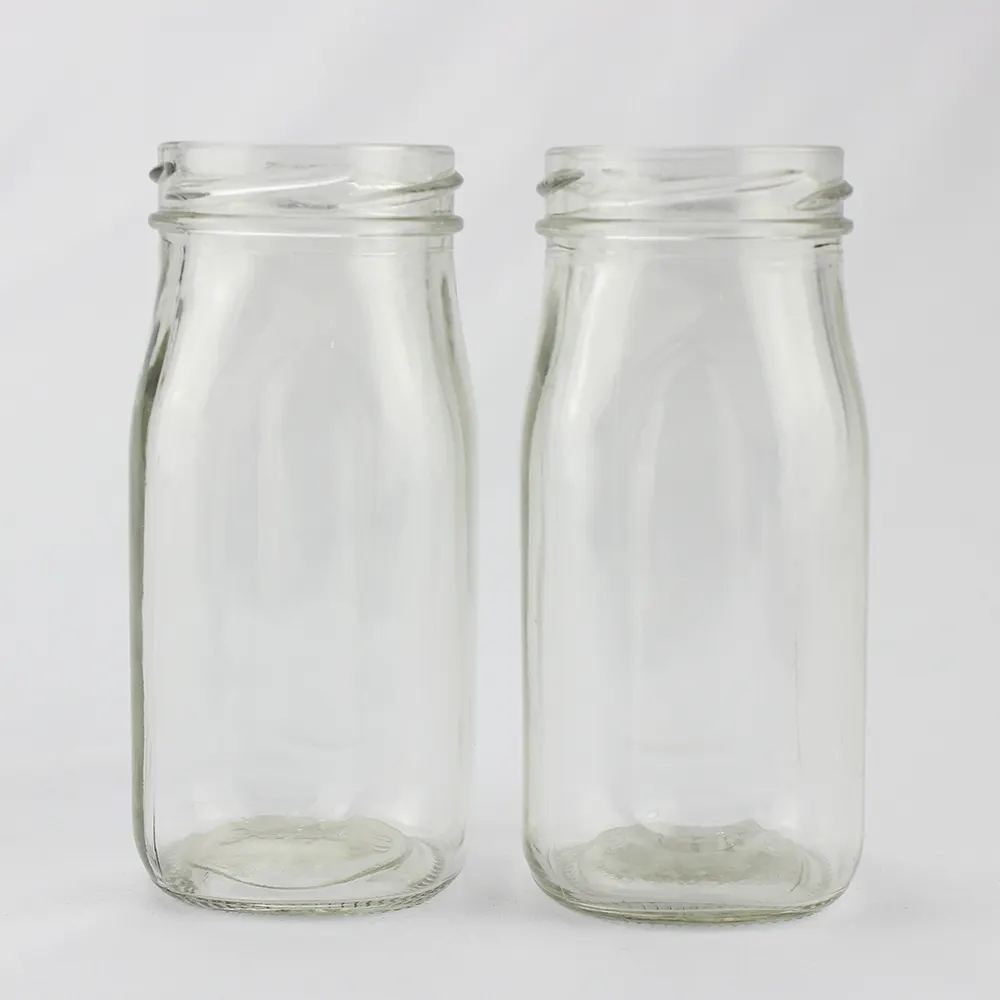
Flint compared with amber and green glass
In container glass, color works as a light filter before it works as styling. Flint passes roughly 90 to 91 percent of visible light per surface pass, and the remainder is reflected, which is where the sparkle comes from. The same openness applies to ultraviolet: standard flint transmits essentially all UVA (315 to 400nm) and a significant share of UVB.
| Property | Standard flint | Extra-flint (low-iron) | Amber | Green |
|---|---|---|---|---|
| Visible transmission | ~90% | ~91%, neutral at the edge | Reduced, warm cast | Reduced, green cast |
| UV filtering | Essentially none in the UVA range | Essentially none in the UVA range | Blocks most UV <450nm | Partial |
| Iron content | 0.04 – 0.1% | <0.02% | Colorant added | Colorant added |
| Typical uses | Food, sauces, water | Spirits, fragrance, skincare | Beer, pharma, light-sensitive actives | Wine, olive oil, heritage branding |
For honey, syrups, spirits and most sauces, UV transmission does not matter. For other contents it sets the shelf life. Riboflavin in milk breaks down measurably within days under fluorescent retail lighting, hop compounds in beer skunk under UV, and actives such as retinol and ascorbic acid oxidize at a rate a stability lab can chart.
Products that suit flint and products that do not
Flint fits when appearance drives the purchase and light stability is already proven. That covers clear beverages, honey and preserves whose color signals quality, and sauces where visible texture does the selling. It also covers products that travel in a carton, or under a label large enough to do the light-blocking. Flint is the dominant color for hot-fill and pasteurized formats, so food projects should read it together with the compliance notes on our food and beverage glass packaging page.
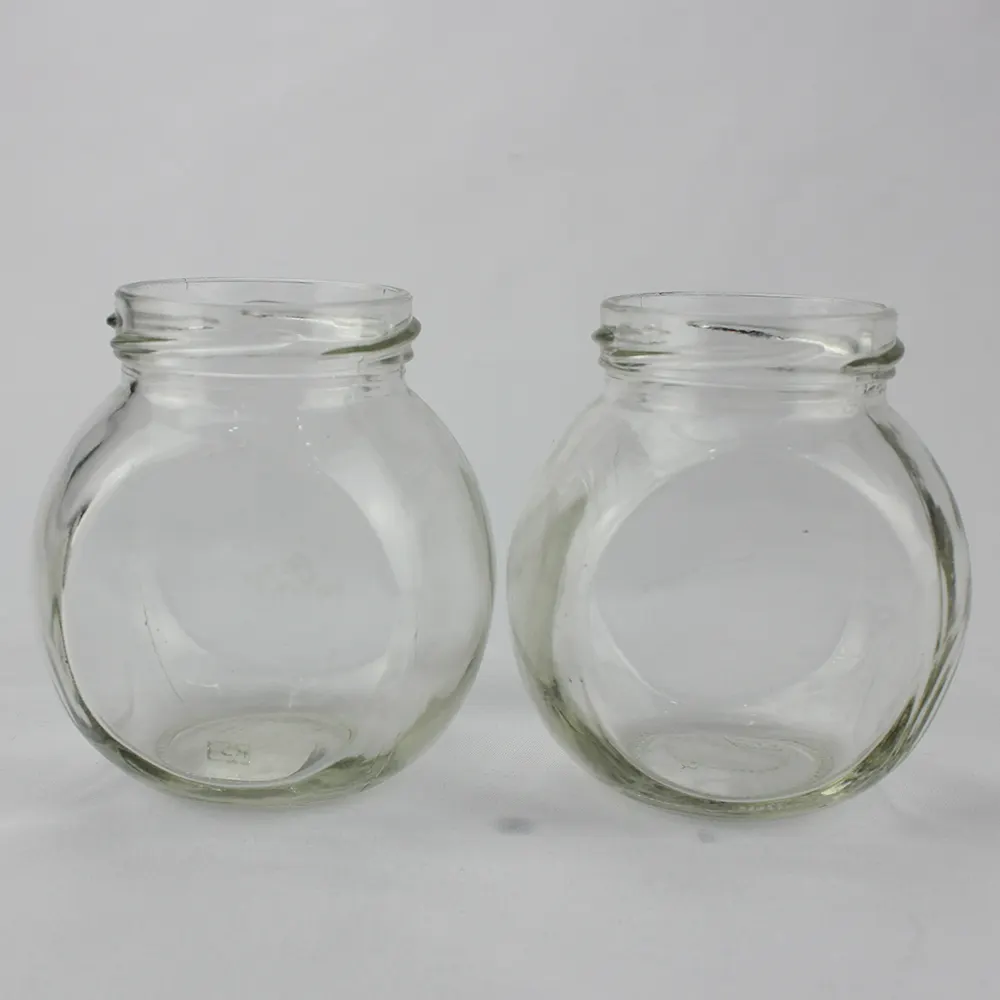
Where the contents have documented light sensitivity, specify amber. The same reasoning is applied to serums and tinctures on our dropper glass bottles page. If the brand insists on a clear look for a sensitive product, the alternatives are a full opaque coating or secondary packaging, and either one needs confirming with your own stability tests under retail lighting.
Composition of flint container glass
Flint is a soda-lime-silica glass, and the recipe has barely moved in a century. Three oxides make up nearly all of it:
- Silica (SiO2), roughly 70 to 74 percent. The network former, the structural backbone of the glass.
- Soda (Na2O), 13 to 16 percent. A flux that brings the melting point down from an impractical 1,700 degrees Celsius to a workable 1,500.
- Lime (CaO), 8 to 12 percent. The source of chemical durability. A glass made without it would slowly dissolve in humid air.
The last few percent are alumina, which adds durability, magnesia, which improves forming behavior, and trace elements. Iron is the trace element that decides how clear the glass looks. The word "flint" itself is a leftover from early English glassmakers, who used calcined flint as their silica source.
Typical flint container specifications
These figures are for planning. Each is confirmed on the project drawing.
| Parameter | 250ml jar | 500ml bottle | 750ml bottle | 1L jar |
|---|---|---|---|---|
| Glass weight | 195 g | 280 g | 420 g | 520 g |
| Wall thickness | 2.8 – 3.5 mm | 2.8 – 3.5 mm | 3.0 – 4.0 mm | 3.2 – 4.0 mm |
| Neck finish | 63-2030 lug | 28-400 / GPI | Cork / bar-top | 82-2030 lug |
| Extra-flint option | Available | Available | Available | Confirmed per project |
Flint is the default batch a furnace runs. It carries no colorant, and more stock molds exist in flint than in any other color, so an existing shape is often available. When no stock shape fits, the development stages are laid out on our custom glass packaging page.
Frequently asked questions
Is flint glass safe for food?
Yes. Soda-lime flint is the standard food-contact container material around the world. Produced to standard migration limits, it meets the EU 1935/2004 framework requirements and the US FDA food-contact provisions, and it is effectively inert toward acidic, alcoholic and fatty foods.
Will flint bottles and jars survive hot filling and pasteurization?
Yes, provided they are annealed and specified for it. Hot-fill at 85 degrees Celsius and tunnel pasteurization are routine for flint food containers. Validation is by thermal shock testing to ISO 7459, with a 42-degree differential as the minimum. What limits the glass is the temperature difference it meets, not the absolute temperature.
What changes if we move an amber or green bottle to flint?
Nothing mechanical. Molds and neck finishes do not depend on glass color. The work lies elsewhere: you need a new plan for light protection through labels, cartons or coatings, and the furnace has to be scheduled, since it must flush between color campaigns. Plan a color switch at least one production cycle ahead.