One of our guides on perfume bottles in bulk; start there for the overview.
A custom perfume bottle is settled in a fixed order: the capacity for each sales channel, then the neck finish, then the pump, collar and cap that seal on that neck, and only then the glass type and decoration. Most new fragrance brands do not need their own mould. A stock flacon with a chosen closure and a planned decoration stack carries a launch, and private tooling makes sense once volume supports it.
Capacity and typical dimensions
Perfume sells in sizes from 5 ml to 100 ml, and fitting the format to the channel matters more than perfecting a single hero size. Capacity also fixes the mould, the closure size and the carton, so decide the channel plan first.
- 5 ml: vials and mini sprays for samples, discovery sets and hotel amenities.
- 10 ml: travel sprays, rollerballs and upmarket sampler sets.
- 30 ml: the entry retail size, at an accessible shelf price.
- 50 ml: the main retail size worldwide for EDP and EDT.
- 100 ml: full-size bottles for gifting and value positioning.
The figures below are typical ranges across flacons currently in production. They are for framing an RFQ, and the real dimensions for your bottle are confirmed on a controlled drawing or an approved sample.
| Capacity | Height | Diameter | Glass weight | Usual neck finish |
|---|---|---|---|---|
| 5 ml | 48–58 mm | 22–28 mm | 25–40 g | Screw 13/415 or FEA 13 crimp |
| 10 ml | 65–85 mm | 20–26 mm | 30–50 g | Screw 13/415 or a rollerball fitment |
| 30 ml | 75–95 mm | 32–42 mm | 70–110 g | FEA 15 crimp or screw 18/415 |
| 50 ml | 85–110 mm | 38–50 mm | 110–180 g | FEA 15 or FEA 18 crimp |
| 100 ml | 105–135 mm | 45–60 mm | 180–280 g | FEA 18 or FEA 20 crimp |
Overflow (brimful) capacity, verticality and wall thickness tolerance, normally ±0.5 mm on the body, are written into the project drawing before the mould is released. Where we cannot publish a value for a particular model, we mark it as to be confirmed per project.
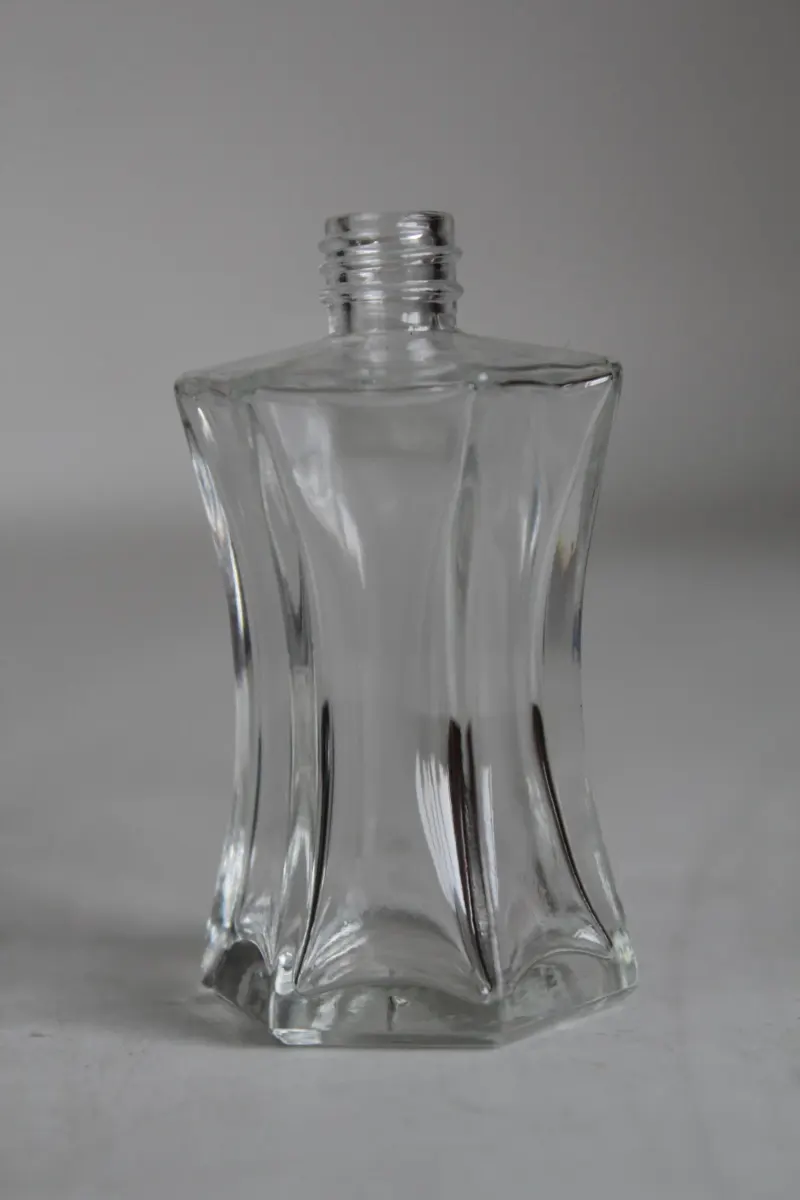
Neck finish and closure assembly
Neck finish is the point where perfume sourcing projects most often fail. A crimp pump made for FEA 15 will not seal on an FEA 18 neck, and a screw cap made for 18/415 will not go onto 20/410. Fix the neck finish before anything else, then buy pump, collar and cap as a single tested set.
Pump types
- Crimp pumps (FEA 13, 15, 18, 20): the fine-fragrance norm. An aluminum collar is crimped onto the neck and stays there.
- Screw pumps (13/415, 18/415, 20/410): refillable and simpler to assemble, and usual on travel and mid-market lines.
Cap materials
| Cap | Character |
|---|---|
| Aluminum | Metal cap, often brushed or matte |
| Zamac (zinc alloy) | Heavy and cold to the touch; the most expensive cap route, especially with a plated collar |
| Surlyn or resin | Clear or tinted, with lower tooling cost than zamac |
| Wood | Natural, cork-topped or lacquered; increasingly used by niche brands |
| Glass stopper | The classic flacon look, ground to fit for an airtight seal |
Each pump and cap combination we quote is leak-tested as an assembly before mass production: 24-hour inverted storage at 40 °C, with vacuum decay testing added on request. Compatibility is proven on the hardware, because a flacon that weeps in transit ends in a recall.
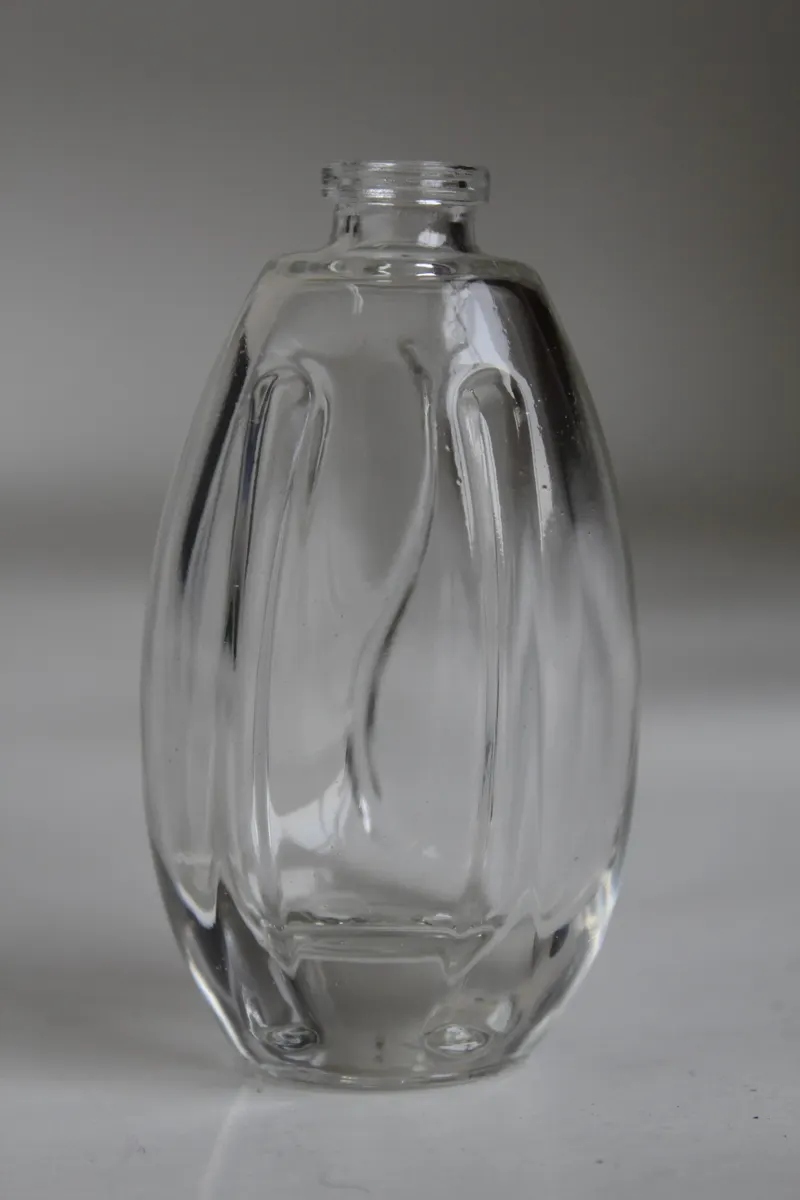
Glass type
Four glass options cover most fragrance work.
- Crystal flint is clear and brilliant, so it shows the colour of the juice. Heavy-wall versions exceed 200 g for a weightier feel in the hand.
- Opal, or white glass, is opaque and milky. It reads as soft, vintage or creamy.
- Coloured transparent glass in amber, emerald or cobalt gives a brand signature and adds UV protection for light-sensitive formulas.
- Frosted or matte surfaces are applied after forming and diffuse the light.
Decoration techniques and their order
Techniques can be stacked. A typical high-end build is an opal flacon with a frosted body, a hot-stamped logo and a gold electroplated collar. Every added layer brings more production steps, more inspection points and more cost, so plan the stack on purpose and keep the sequence right: frost first, print after, plate last.
| Technique | Used for | What to know |
|---|---|---|
| Frosting / acid etching | Matte, soft-touch bodies | Done on finished bottles, over the whole body or masked into a pattern |
| Screen printing | Logos, label text, blocks of colour | Fired ceramic enamel is permanent; organic UV inks fit a recyclability message |
| Hot stamping | Fine metallic lines | Several foil colours; works well over dark or frosted glass |
| Electroplating / metallization | Caps, collars, all-metal looks | Gold, silver, rose gold or gunmetal; durability depends on the base material |
| Spray coating / gradient | Full-body colour and ombré | Transparent or opaque lacquer; a gradient needs an approved colour master |
| Laser engraving | Batch codes and monograms | No consumables; very fine lines on glass or on metal caps |
Ask which of these steps a supplier runs in-house and which are sent out. Every hand-off is a place where quality can slip. Our comparison of screen printing routes for glass bottles goes further into the printing options.
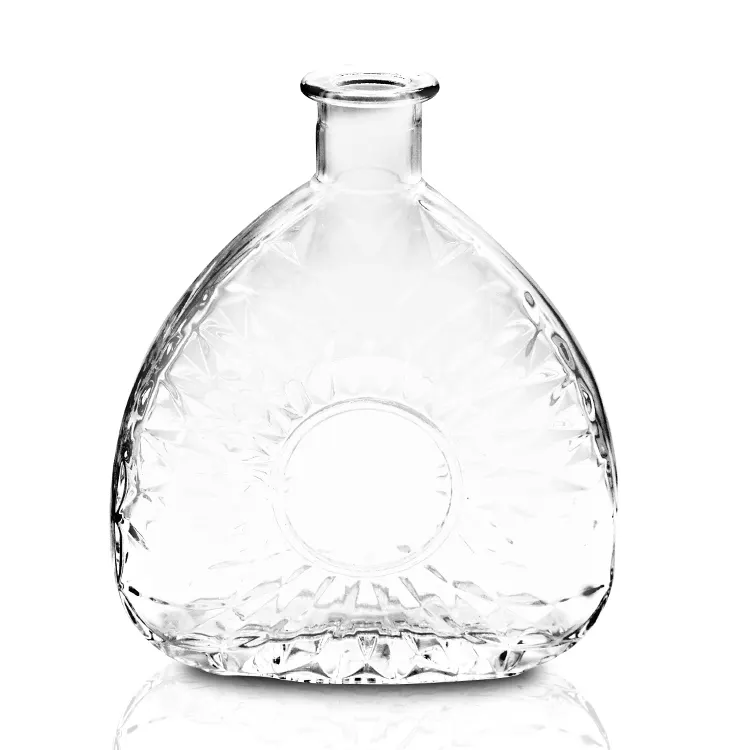
Stock, modified-stock or full custom mould
This choice sets the launch budget. Start with the first route and move along only when volume justifies tooling.
| Factor | Stock bottle with decoration | Modified-stock (custom cap or collar) | Full custom mould |
|---|---|---|---|
| Tooling | None | Quoted per project | Quoted per project |
| Development work | Decoration only | New closure parts | Mould machining and trial glass |
| Distinctiveness | Low to medium; decoration carries the identity | Medium to high | Exclusive; the mould belongs to your brand |
| Suits | Market tests, private label, quick launches | Growing brands that want a distinct touch point | Established houses with a signature flacon |
In trade terms, the full-mould route is OEM: your tooling, your specification, your quality standard. ODM is how most new brands begin, picking a stock bottle and closure and building identity through colour, frosting and print. The hybrid of a stock body with a custom closure puts the difference where a customer's hand actually goes. Our custom glass bottle page explains neck styles and closure compatibility and follows a project from sample to shelf, and the cosmetic glass bottle collection lists stock shapes suited to fragrance.
Quality and compliance checks
Perfume is a high-alcohol formula in a prestige pack, so the standard is nearer to cosmetics regulation than to everyday glassware. These are the checks we run or specify.
- Annealing: residual stress verified per ASTM C148. Badly annealed flacons crack when decoration is fired.
- Internal pressure and thermal shock: tested by ISO 7458 and ISO 7459 methods when the filling line calls for it.
- Capacity and tolerances: brimful volume measured on first articles, with body wall tolerance normally ±0.5 mm.
- Material safety: glass is chemically inert and is the preferred material in a packaging-safety assessment under EU Cosmetics Regulation (EC) No 1223/2009. Inks and coatings are specified in migration-safe grades.
- Seal integrity: the assembly leak test described above, passed before release to mass production.
Export packing
Flacons normally ship in 5-ply corrugated cartons with egg-crate dividers, palletized and shrink-wrapped. A 50 ml flacon typically packs 72–120 pcs per carton, depending on its shape. The dividers remove glass-on-glass contact, and breakage on properly packed sea freight is normally well under 1%. We photograph loading and can add drop-test reports on request.
How to read a quotation and brief a project
Comparing suppliers on the ex-works unit price alone misleads. The landed budget for a decorated flacon also includes the pump, collar and cap, packing and inland freight, and sea freight with insurance and duties. Glass is heavy, so freight is a real line and it varies by lane. Ask each supplier to show tooling, sampling, components, packing and freight as separate lines. A single all-in number hides the items you could negotiate.
A first inquiry gets a usable answer when it states:
- target capacity and channel (samples, travel, retail or gift);
- estimated quantity per order and per year;
- closure direction (crimp pump, screw pump or stopper) and any preferred cap material;
- decoration ideas or reference images, and whether artwork exists yet;
- destination market and target launch date.
Send those points through the quote request form and we can itemise glass, components, decoration, packing and freight for your volume.
Frequently asked questions
What is the minimum order for custom perfume bottles?
It is quoted per project and depends on the mould and the production line the bottle runs on.
How long does sampling take?
Timing is confirmed per project once the mould, the decoration and the line schedule are known. A stock bottle with decoration involves the least development work, and a full custom mould the most.
How much does a perfume bottle mould cost?
Tooling is priced per project. The whole quotation moves with the mould, the decoration, the quantity and the freight terms.