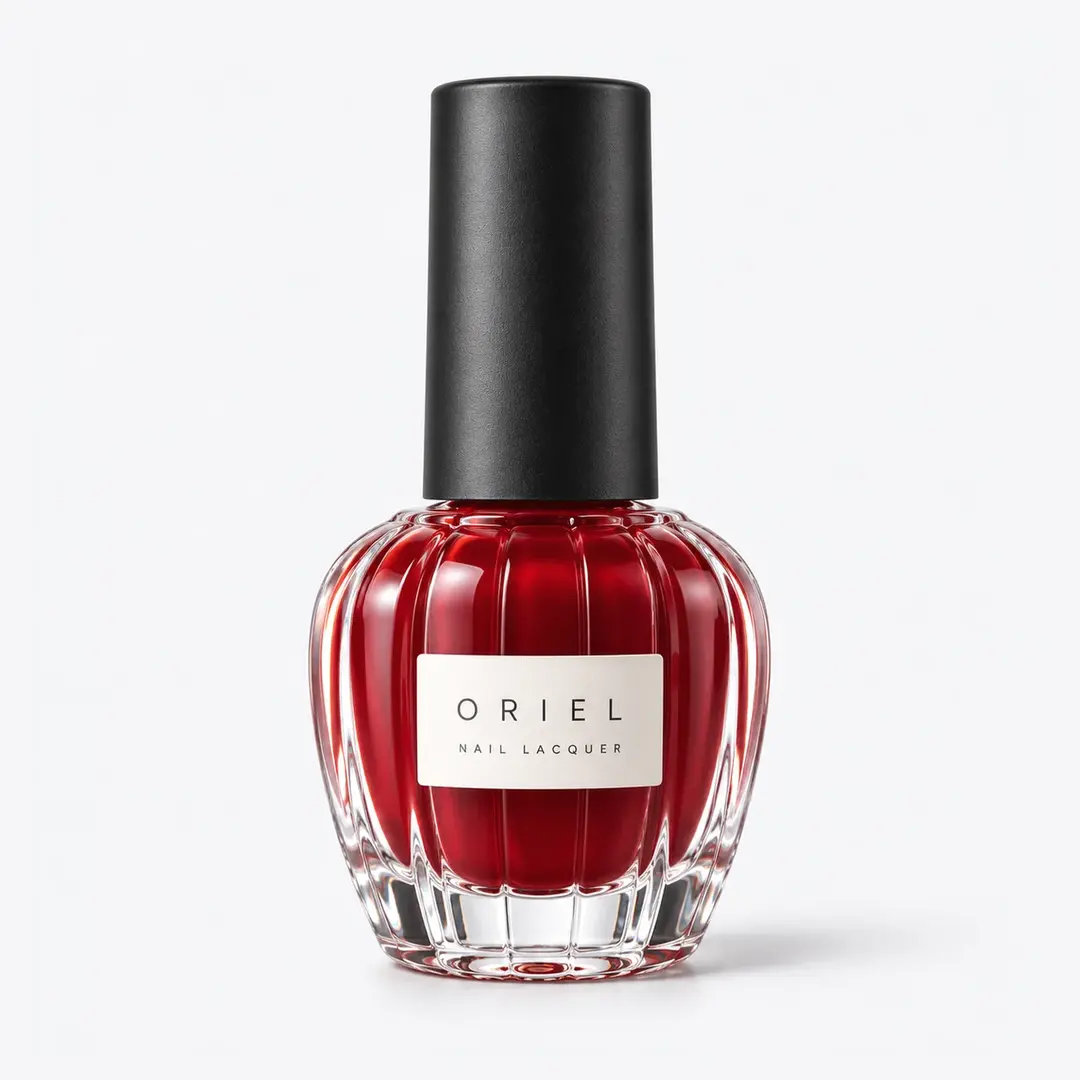
This 8ml nail lacquer bottle is built around a single non-negotiable requirement of the nail category: the customer buys the color, so the package must show the color with absolute honesty. The bottle in the photo is made from heavy, crystal-clear flint glass with a distinctive ribbed, melon-like silhouette, a thick decorative base, and a small precision neck finish sized for a brush-cap assembly. At 8ml it sits in the sweet spot of the nail market: generous enough to feel like a full-size product, compact enough to keep unit cost and shipping weight low, and small enough that the formula gets used while it is still fresh. This page is written for nail brand founders, private label buyers, and contract filler procurement teams who need the bottle, the brush, and the cap to work as one engineered system.
Why Nail Lacquer Demands Crystal-Clear Glass
No other cosmetic category sells color as directly as nail polish. A lipstick buyer sees a bullet; a nail buyer sees the actual liquid through the bottle wall, under store lighting, and makes the purchase decision in seconds based on whether the shade in the glass matches the shade in their imagination. That is why nail bottles are almost universally made from high-clarity flint glass rather than tinted or frosted material. Optical distortion is the enemy: any greenish cast from impure glass, any wave or seed in the wall, shifts the perceived color and generates returns and bad reviews. The crystal flint used for this bottle is selected for low iron content and high transparency so that a sheer pink reads as a sheer pink and a deep oxblood keeps its depth. The ribbed exterior adds shelf presence and grip without interrupting the large clear viewing panels between the ribs.
The Brush-Cap Assembly Is Half the Product
A nail polish bottle is never sold alone; it is one half of a two-part system whose other half is the cap with its integrated brush. The quality of the manicure experience depends almost entirely on that assembly: brush fiber material and cut, bristle length and fan width, stem length so the brush reaches the bottom of the bottle, and the wiper action of the neck insert that meters lacquer onto the brush. We supply this bottle with matched brush-cap assemblies in standard and wide-paddle brush formats, with cap shells in black, white, metallized, or custom-colored finishes. Neck finish dimensions are confirmed on the technical drawing at quotation, and if your brand has an existing cap supplier we will verify compatibility against their drawing before any production commitment is made.
Solvent Resistance and Formula Compatibility
Nail lacquer is among the most chemically aggressive products in the cosmetics aisle, carried in solvent systems built around ingredients such as ethyl acetate, butyl acetate, and nitrocellulose. These solvents attack many plastics and degrade adhesives, which is one reason glass remains the default primary container in this category after a century. Glass is fully inert toward lacquer chemistry: it will not swell, leach, or allow the slow solvent vapor transmission that thickens polish in plastic packaging. The vulnerable points are the cap liner and the brush stem, which is why liner material selection matters and why we recommend confirming liner compatibility against your exact formula during sampling. For gel-effect and breathable hybrid formulas with different solvent balances, the same testing logic applies and is straightforward to arrange.
The 8ml Format and Category Economics
Nail polish has one of the most forgiving unit economics in beauty, and the 8ml size is a major reason. The fill cost of the lacquer itself is modest, so packaging and brush quality dominate the bill of materials, which means upgrading to a distinctive heavy-base glass bottle like this one moves the retail perception dramatically for a relatively small absolute cost. The 8ml fill also aligns with how polish is actually consumed: most shades are used occasionally rather than daily, and an 8ml bottle is typically finished or replaced before the formula thickens past usability, reducing complaints. For brands, the format supports the shade-library business model that defines the category, where profitability comes from customers owning dozens of SKUs rather than finishing one. Keeping unit cost disciplined through a standard mold with a custom-decorated finish is how that model stays profitable.
Decoration and Brand Differentiation
Because the glass must stay transparent to show the color, branding on nail bottles concentrates on the cap, the base, and restrained print. The most common and effective approaches are a custom-colored or metallized cap shell carrying the brand logo, a small silk-screened mark or shade name on the bottle shoulder or base, and shade identification via a bottom label or printed dot. Full-body labels are rare because they hide the product. Some premium lines add a weighted or faceted cap for shelf presence. The ribbed silhouette of this mold already provides strong shelf differentiation before any decoration is applied, which lets smaller brands achieve a distinctive look without investing in a proprietary mold.
Quality Control and Standards
Nail bottles run under the same inspection regime as our skincare and fragrance containers. Neck finish dimensions are gauged so brush-cap assemblies torque consistently and the wiper insert seats correctly; annealing is verified by polarimetric inspection per ISO 7459 so the heavy base and thin neck survive filling-line handling; hydrolytic resistance is tested with reference to ISO 7458; and thermal shock endurance is checked against ASTM C149. For brands selling into the European Union, the container supports your EU Regulation 1223/2009 cosmetic product documentation, and batch test reports can accompany each shipment.
MOQ, Sampling, and How to Order
This is an existing mold, which keeps minimums accessible for emerging nail brands; the tier logic is explained in our guide to glass bottle MOQ. We strongly recommend ordering sample bottles with brush-cap assemblies for filling trials before committing to production, since lacquer viscosity and brush load interact. First-time importers will find packing and freight guidance in our walkthrough on importing glass bottles from China. Send your target quantity, cap color, and brush preference through our contact page and we will return a quotation with drawings, typically within two working days.
Frequently Asked Questions
Does the bottle come with the brush and cap?
The bottle is supplied empty, and we offer matched brush-cap assemblies in standard and wide-paddle formats with black, white, metallized, or custom-colored cap shells. We recommend ordering bottle and brush-cap together as a validated system.
Will nail polish solvents damage the glass?
No. Glass is fully inert toward lacquer solvent systems such as ethyl acetate and butyl acetate, which is why it has remained the standard nail container for a century. The cap liner is the part to verify against your formula, and we advise compatibility testing during sampling.
Why is the glass so clear instead of tinted?
Nail customers buy the color they see through the bottle, so high-transparency flint glass is essential. Any tint or greenish cast would distort the perceived shade and cause returns. The crystal flint used here is selected for low iron content and clarity.
Is 8ml a standard size for nail polish?
Yes, 8ml sits in the mainstream range for full-size retail polish. It provides enough product for regular use while keeping unit cost and shipping weight low, and most shades are used up or replaced before the formula thickens.
Can I get the cap in my brand color with a logo?
Yes. Cap shells can be produced in custom colors or metallized finishes and decorated with your logo. Since the glass must stay clear to show the lacquer, the cap is the primary branding surface in this category.
What is the MOQ and can I get samples first?
As an existing mold, minimums are accessible for emerging brands. We strongly recommend ordering samples with brush-cap assemblies for filling trials before production, since lacquer viscosity and brush load interact. Contact us for current tier pricing.


