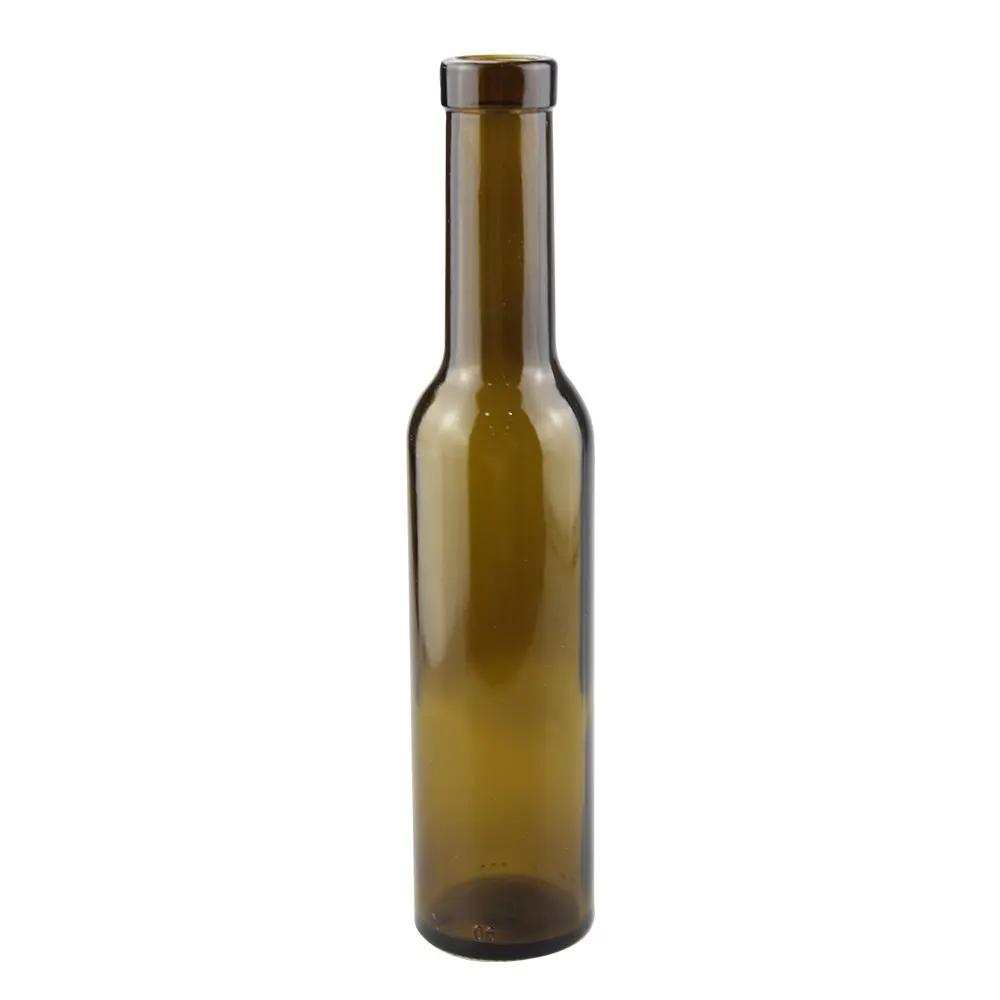
Part of our bulk olive oil bottles range; the stock moulds are pictured at the end of this guide.
Quick answer
What are the most common olive oil bottle sizes?
Five sizes carry most of the trade: 250, 375, 500, 750 and 1000 ml. The 500 ml is the default in northern European retail and the 750 ml in southern Europe and producing countries. The 250 ml is the premium, gift and tasting size, and the 1000 ml serves catering, refill and economy ranges.
| Size | Where it sells |
|---|---|
| 250 ml | Premium retail, gifts, deli ranges, tasting sets |
| 375 ml | Hospitality, gifts, a new price point |
| 500 ml | Northern European retail, North American speciality and online |
| 750 ml | Southern Europe, private label, traditional trade |
| 1000 ml | Foodservice, refill and economy ranges |
This page is for the buyer who has to decide how large the olive oil bottle should be before anyone argues about glass colour, neck finish or label artwork. The decision in front of them is the capacity tier, which in practice means choosing between the 250 ml, 375 ml, 500 ml, 750 ml and 1000 ml formats that carry most of the world’s olive oil, and then matching that tier to a market, a channel and a price position. This is a selection and dispatch page. It does not describe the bottle body in detail, and it does not cover the pieces that sit above the neck. The pourer, the insert, the liner and the cap on top of the neck belong to the olive oil bottle caps guide, because that page owns the seal and this page owns the reservoir. The commercial side of the same order, meaning case quantities, pallet patterns, mixed containers and how a shipment is built, belongs to the wholesale page, and the sizing logic for acidic products runs on different habits and belongs to the vinegar category. Nothing below quotes a unit price, a minimum order quantity, a tooling charge or a lead time, because a capacity tier cannot be priced honestly until the shape, the neck and the closure are all fixed.
How Capacity Tiers Map to Real Buying Habits
Capacity looks like a simple number, but on an olive oil shelf it is a market signal. Buyers who ask for a size chart are usually trying to answer a commercial question rather than a technical one, and the numbers only make sense once they are read against the way oil is bought in the destination country.
The 500 ml format is the workhorse of northern European retail. It suits households that cook with oil regularly but not heavily, it sits comfortably in a hand, and it fits the standard shelf and shipper dimensions used by most supermarkets. A brand entering the German, Dutch, Belgian or Scandinavian grocery channel usually finds that 500 ml is the format that has to exist before any other, and it is often the volume that retailers compare when they discuss price per litre on the shelf edge.
The 750 ml format is the southern European default and the classic wine-bottle silhouette. It is the format most associated with producing countries and with the traditional oil trade, it carries a strong visual association with quality, and it is the volume that many private-label programmes and regional distributors still build their range around. On price per litre it reads as better value than a 500 ml, which is exactly why it dominates in markets where oil is used generously.
The 250 ml format is where premium positioning lives. It appears in gift sets, tasting selections, delicatessen ranges, hotel and restaurant amenity programmes, and in any context where the buyer wants a low entry price and a strong shelf impression. Because a 250 ml bottle empties relatively quickly once opened, it is also the format that tolerates a shorter opened shelf life and a more delicate, less stable oil, which makes it a natural home for single-estate, early-harvest and unfiltered products that a buyer would not want sitting in a large container for months.
The 375 ml format is the quiet middle option, and it is often overlooked. It behaves like a half bottle, which gives it a hospitality and gifting role, and it gives a brand a way to offer a premium expression at a lower absolute price than a 500 ml without dropping to the sampling size of a 250 ml. In markets where the 500 ml and the 750 ml already crowd the shelf, the 375 ml is frequently the format that creates a new price point rather than competing with an existing one.
The 1000 ml format, whether written as 1 L or as 1000 ml, belongs to volume channels: catering and foodservice, refill and economy ranges, and markets where oil is decanted into a smaller table bottle by the consumer. It is the tier where glass weight, top load and case weight start to matter more than shelf appearance, and it is also the tier where the relationship between headspace and oxygen becomes most visible in the product’s flavour over time.
Alongside those five, smaller formats exist and are worth naming because they answer a different brief entirely. Formats in the 100 ml to 200 ml range are used for tasters, hampers, corporate gifts and sample programmes, and they are usually specified as part of a set rather than as a standalone line. Their engineering constraints are almost the opposite of a large format: the fill is small, the headspace ratio is less forgiving, and the label area is tight enough that artwork has to be designed for the container rather than adapted to it.
Three Questions That Fix the Tier Before Any Bottle Is Chosen
Sizing decisions go wrong when they are made from a photograph. The tier falls out cleanly if three questions are answered first, and each one narrows the range faster than a catalogue search.
The first question is where the product will be sold and how oil is bought there. If the destination is a southern European grocery channel, the 750 ml is close to compulsory and a range that starts at 250 ml will look like a speciality brand rather than a mainstream one. If the destination is a North American speciality retailer or an online subscription, the same brand may find that 500 ml sells better than 750 ml because of shipping weight, breakage risk and the way pantry space works in smaller kitchens. If the destination is foodservice, the tier is set by the kitchen’s usage rate rather than by shelf logic, and the answer is usually the largest format the operator can lift comfortably.
The second question is how the bottle is used once it is open. A bottle that is poured from dozens of times a day needs a tier and a top that allow a fast, controlled pour; a bottle that is opened twice a week needs a tier small enough to be finished within a reasonable time after opening. This is the question that ties capacity to the dispensing insert, which is why a size decision that ignores the closure usually has to be revisited. Small formats are commonly paired with a restricted or self-closing insert that limits flow, while larger formats are more often paired with an open pourer designed for volume. The accessory families themselves are described on the olive oil bottle caps page, including the neck finishes that each pourer family can actually grip, because the insert cannot be chosen independently of the neck the bottle mould produces.
The third question is what price position and range structure the brand wants. Capacity is the cheapest way to create a price ladder. A single oil sold in 250 ml, 500 ml and 750 ml gives a shop three price points, three facings and three entry prices from one production base. A brand that sells only one size has effectively decided to compete on a single number, and it should be a deliberate choice rather than a leftover. It is also worth deciding in advance whether the range will use one bottle shape across all tiers or different shapes per tier, because a range that shares a shape and a neck across sizes is far simpler to produce, stock and decorate than one that treats each tier as a separate design.
What Changes When You Move One Tier Up
Buyers who understand that changing capacity is not merely a change of number make better decisions, because almost every other variable in the pack shifts with it. The following are the items that move together, and they are the reason a size change should be treated as a specification change rather than a substitution.
- Headspace and oxygen exposure. A larger bottle holds more oil above which the same ullage space, in absolute terms, is a smaller fraction of the fill, but the oil that sits below it has a longer distance to travel before it is used, so the practical exposure window lengthens. Oil in a large format is typically consumed over more weeks after opening than oil in a small one, and oxidation continues throughout that period. The consequence is that colour choice and light protection matter more as the tier grows.
- Glass weight, wall thickness and top load. A tall format carries more glass to survive stacking and transit, and the relationship between wall thickness, weight and internal volume changes with the tier. Two bottles that look similar on a shelf can differ enough in weight to change case weight, pallet height and the filling line’s handling behaviour.
- Neck finish and closure family. Borrowing a neck from a smaller format to save tooling is a common and expensive shortcut. A wide neck on a small bottle can look out of proportion and can make the pour difficult to control, while a narrow neck on a large format slows the pour and can make the bottle awkward to empty. The neck should be chosen for the tier’s use case, and the closure follows the neck.
- Label area and decoration. The printable panel, the shoulder curve and the base edge change with capacity, and artwork rarely scales without adjustment. A label designed for a 500 ml bottle will usually need its typography, legal panel and barcode block rebuilt for a 250 ml, and a shrink sleeve behaves differently again because it follows the whole contour rather than a flat panel.
- Case pack and pallet arithmetic. Case configuration is normally built around whole layers and a stable pallet footprint. Moving from 500 ml to 750 ml changes the number of units per layer, the number of layers per pallet and therefore the container load. This is the point at which a size decision becomes a logistics decision, and it belongs with the wholesale conversation rather than with the shelf conversation.
- Line stability and filling behaviour. A tall, narrow bottle is less stable on a conveyor than a short, wide one, and the guide rails, star wheels and capping head of an existing line may not accept it without adjustment. A brand that already runs a line should check the tier against the line before the tier is frozen, because the cost of an unsuitable shape is paid at every filling run rather than once.
- Fill level, nominal quantity and net content declarations. The declared net quantity has to be met within the tolerance allowed by the destination market, and the fill height that achieves it depends on the bottle’s internal geometry, not just its nominal volume. A change of tier is a change of fill setting, and the calibration has to be re-established.
- Transit and breakage profile. Tall formats concentrate stress differently from short ones, and the packing method that protects a 250 ml bottle may be inadequate for a 1000 ml. Transit simulation before the first bulk shipment is the cheapest way to find this out, and the standard reference for such procedures is normally named in the buyer’s own contract.
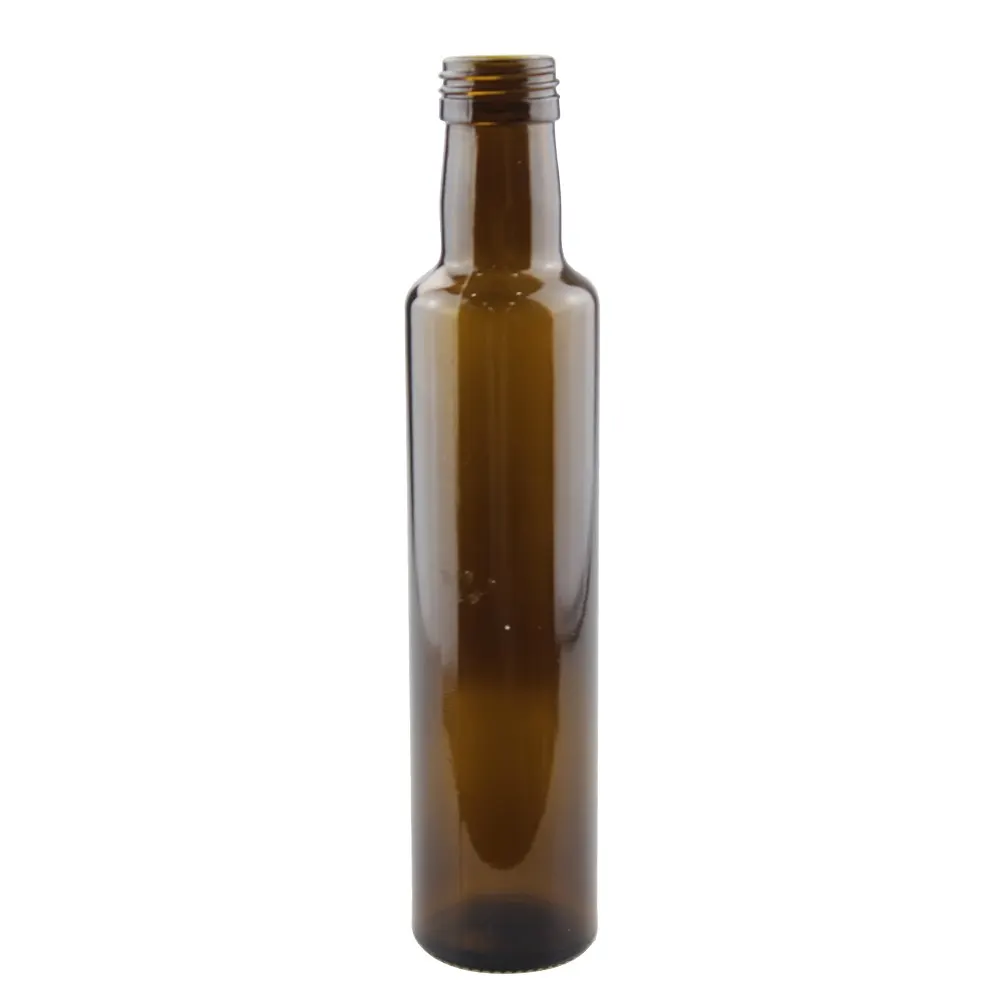
Capacity, Market and Positioning Selection Matrix
The matrix below maps each tier to the market habits it serves, the bottle proportions that normally suit it, the accessory direction that follows from its use case, the page that owns the next decision, and the items a buyer should confirm with the factory before the tier is locked. Treat the market descriptions as tendencies rather than rules, because a brand can succeed at any tier in any market if the positioning is deliberate.
| Capacity tier as a shelf position | Main markets and buying habits | Bottle proportion that usually suits it | Accessory direction implied by the tier | Where the next decision is owned | What to confirm with the factory |
|---|---|---|---|---|---|
| 250 ml | Premium and speciality retail, gifting, deli ranges, tasting sets, hotel and restaurant amenity; buyers accept a higher price per litre in exchange for a low entry price and a strong shelf impression | Slim, tall or a squat rounded shape with a short neck; a distinctive silhouette reads better than a scaled-down version of a large format | Restricted or self-closing insert to control a small pour, with a small-bore neck; tamper evidence usually matters because the pack is a gift or a retail impulse purchase | Accessory detail sits with the caps page; the commercial terms sit with the wholesale page | Whether the mould exists in this tier and neck, the achievable fill band, and whether the label panel is large enough for the mandatory information the destination market requires |
| 375 ml | Hospitality, gifting and premium line extensions; used as a half bottle and often the tier that creates a new price point rather than replacing an existing one | Slim or slightly squared with a shoulder that mirrors the larger formats in the same range | Pourer or cork-style stopper depending on the brand story; the neck is usually the same family as the 500 ml so closures can be shared | Neck and closure matching sits with the caps page; carton and shipper design sits with the wholesale page | Whether sharing a neck with the 500 ml affects the pour angle or the proportion, and how the smaller fill affects fill accuracy on the line |
| 500 ml | Northern European retail as the default format, North American speciality and online retail, mainstream grocery where shelf comparison happens on price per litre | Slim or rounded-square with a moderate shoulder; proportions are driven by shelf depth and hand feel rather than by decoration | Open pourer with drip control as the baseline, self-closing where the market has complained about drips; screw neck with a tamper-evident band is the usual configuration | Insert and cap selection sits with the caps page; case pack and pallet loading sit with the wholesale page | Nominal volume against brimful volume, the fill height that meets the declared quantity, and the dimensional tolerance band applied to the neck |
| 750 ml | Southern European and producing-country retail, private label, regional distribution and traditional trade; the format most strongly associated with quality oil | Slim tall along the lines of a wine bottle, or a squared shoulder shape for a more modern shelf presence; heavier glass is normal at this tier | Pourer insert with a generous bore, or a cork-style stopper where the look of cork is part of the positioning; the pour should be fast enough for cooking use | Closure families and their bore requirements sit with the caps page; container loading for the heavier case sits with the wholesale page | Glass weight and top load, case weight against the handling limits of the destination market, and the neck height that keeps the pourer clear of the shoulder |
| 1000 ml | Foodservice and catering, refill and economy ranges, bulk household use and markets where oil is decanted into a smaller table bottle | Wide, stable base with a modest height, or a squared shape that uses the pallet footprint efficiently; stability on the line matters more than elegance | High-flow pourer, often with a vent, or a simple large-bore screw cap where the pack is decanted rather than poured at the table | High-flow accessory selection sits with the caps page; pallet and container economics sit with the wholesale page | Fill accuracy on a large-volume fill, the top load that stacking requires, and whether the pack can be lifted and poured comfortably by the intended user |
Adjacent Categories and Why Their Sizing Logic Differs
Olive oil is rarely sold alone. A producer that bottles oil usually also bottles vinegar, dressings, infused oils or condiments, and the instinct is to reuse one bottle solution across the whole range. That instinct is right about tooling and wrong about sizing, because the buying habits around the neighbouring products are not the same.
Vinegar is normally bought in smaller quantities than oil in the same market, and it is used in smaller amounts per occasion. The result is that the tier that dominates a vinegar shelf is frequently one step below the tier that dominates the oil shelf, and a producer who mirrors the oil range exactly will often find the larger vinegar formats slow to move. Vinegar also pulls the accessory choice in a different direction, because a low-pH product places different demands on the wetted materials in the insert and the liner than a non-polar oil does.
Infused and flavoured oils lean shorter and smaller than the plain oil they are based on, because they are used as finishing products rather than as cooking volume, and because the flavour components may be sensitive to time and light. Their sizing logic follows the use occasion rather than the household’s consumption rate, which usually pushes them towards the 250 ml band even in markets where plain oil is sold in 750 ml.
Dressings and condiments behave differently again because they are often sold in a wider-mouth format, and the wider mouth is a functional requirement rather than a styling choice: the product is thicker, it may need to be spooned or shaken out, and it may contain particulates. A size decision made for a pourable oil does not transfer to a dressing, and the neck that suits one usually fights the other.
Catering and refill channels cut across all of the above. In those channels the deciding factor is the operator’s handling, so containers are sized to be lifted, stored on a shelf and poured repeatedly rather than to be displayed. The same oil can be sold in a 500 ml retail bottle and a 1000 ml catering bottle with no contradiction, and both are correct for their channel.
Which Page Owns Which Decision
This page is deliberately narrow. It owns one question: how large should the bottle be, given the market, the channel and the positioning. Everything downstream of that has an owner, and the fastest enquiries are the ones that respect the split.
The body of the pack, including shape, glass colour and light protection, is described on the olive oil bottles guide, which is the right place to settle whether the container should be clear, amber or dark green for the oil in question. The top of the pack, including the pourer family, the insert material, the liner and the cap, is settled on the olive oil bottle caps page, because the neck finish is the fixed point from which all of those parts are reverse-engineered.
The commercial layer sits with the olive oil bottles wholesale page, which owns case quantities, pallet configuration, mixed container loading and the terms that surround an order. Where the range includes vinegar, the sizing and accessory habits for a low-pH product are covered on the vinegar bottles wholesale page, and the two should not share a default specification by accident even when they share a bottle shape. Read together, the four pages form one decision chain: how much oil, in what glass, under what top, bought in what quantity. This page answers only the first link, but it answers it before the others are worth discussing.
One practical point about ranges is worth stating plainly. A producer who intends to sell several capacities should decide the full tier set at the start, not one tier at a time. A range designed together can share a neck, a shoulder treatment and a visual language, which makes the closures interchangeable, keeps the shelf coherent and reduces the number of separate specifications that have to be maintained. A range assembled tier by tier over several years usually ends up with three neck finishes, three closure systems and a decorative language that does not match.
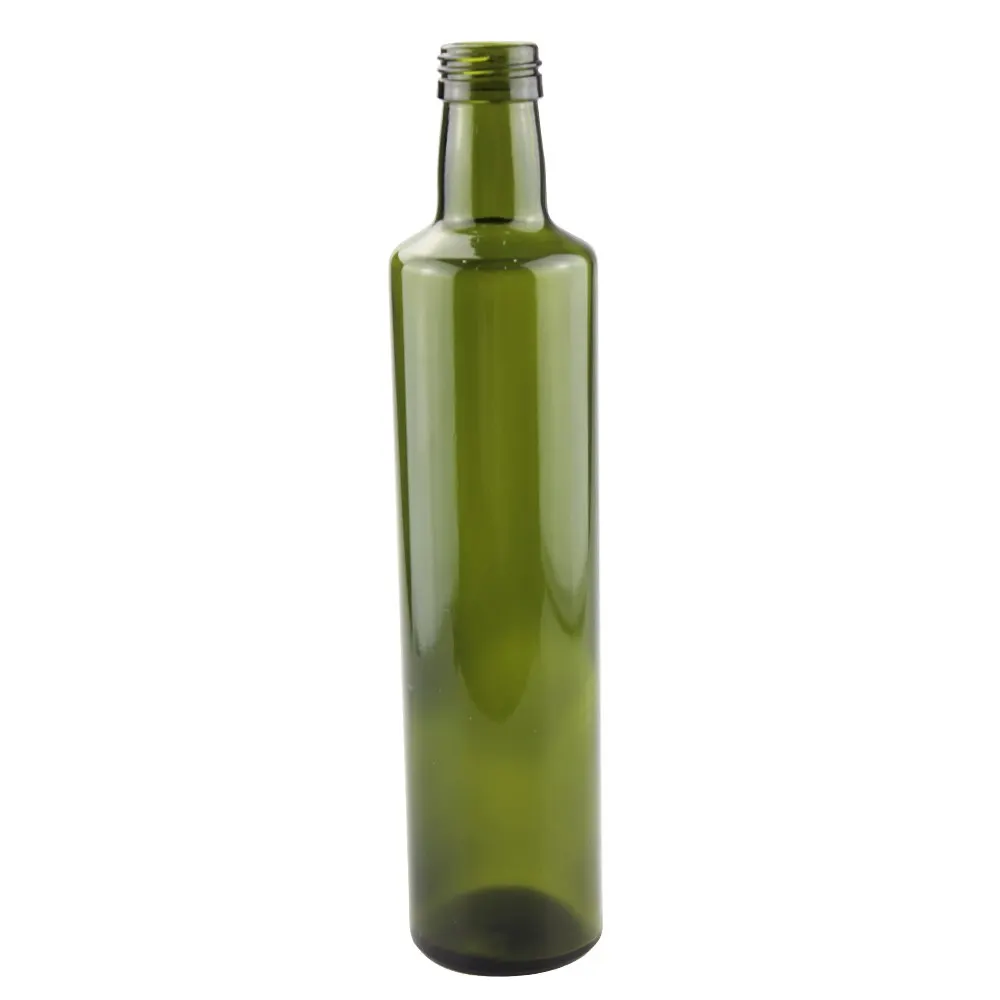
What to Confirm With the Factory Before a Size Is Frozen
The tier becomes a specification when the following items are confirmed. Each of them is a question rather than a number, because the answer depends on the specific mould and the specific market, and none of them should be assumed from a photograph of a similar bottle.
- Nominal volume against brimful volume. A bottle sold as 500 ml is not a 500 ml container. The nominal figure is the declared net content, and the bottle’s full capacity is larger so that a fill height exists below the neck. Ask where the fill line sits at the declared quantity and how much headspace remains above it.
- Dimensional tolerance on the neck. Neck diameter, thread profile and neck height all carry a tolerance band, and the closure has to work across the whole band rather than at the nominal value. A supplier who quotes a single diameter without a tolerance is describing a drawing, not a production reality.
- Sampling and acceptance. Incoming inspection is normally built on an agreed sampling plan, and ISO 2859-1 is the customary reference for attribute sampling by AQL. The acceptance rule for critical features such as neck dimensions, cracks and chips should be stated up front rather than settled at the first dispute.
- Glass colour options at that tier. Dark glass is a functional choice for oil, not only an aesthetic one, and the available colours can differ between tiers or between stock and custom moulds. Confirm what exists in the chosen tier before artwork is built around a colour.
- Whether the mould already exists. A tier that exists as a stock item and a tier that requires a new mould are different projects with different timelines and different risks. This is also the point at which the question of a shared neck across tiers should be asked, because it is far cheaper to settle before a mould is cut.
- Decoration method and panel size. The usable print area, the curvature across that area and the label application method all depend on the tier. Confirm the panel dimensions rather than assuming the artwork can be scaled.
- Compatibility with the existing filling line. Bottle height, diameter, base shape and centre of gravity all affect conveyor stability, guide rail settings and capping geometry. A buyer who already fills should send the line’s accepted bottle envelope with the enquiry.
- Food-contact documentation for anything wetted. Glass is the container, but the closure components are the wetted materials, and the documentation that a buyer will need in a European or North American market normally refers to frameworks such as EU 1935/2004 with EU 10/2011 for plastics, or FDA 21 CFR in the United States. Those references are named here as the usual public standards; they are not a claim about any particular supplier’s status.
Frequently Asked Questions About Olive Oil Bottle Sizes
What are the most common olive oil bottle sizes?
The five capacities that carry most of the trade are 250 ml, 375 ml, 500 ml, 750 ml and 1000 ml. The 500 ml and the 750 ml are the two default retail formats, split roughly along the line between northern and southern European buying habits. The 250 ml is the premium, gifting and tasting format, the 375 ml behaves as a half bottle and often creates a new price point, and the 1000 ml format belongs to catering, refill and economy channels. Smaller formats in the 100 ml to 200 ml range are normally specified as part of a set rather than as a standalone line.
Is 500 ml or 750 ml the better choice for a European launch?
It depends on which part of Europe and which channel. Southern European grocery and traditional trade are built around the 750 ml, and a range without it can look like a speciality brand rather than a mainstream one. Northern European retail is built around the 500 ml, which suits smaller households and standard shelf and shipper dimensions. A brand selling online across several markets often finds the 500 ml easier to ship and to price, while a producer selling into regional distribution in a producing country will usually need the 750 ml to be credible.
Why do small olive oil bottles usually come with a restricted insert?
Because the pour has to be controlled on a small container. A wide, free-flowing spout on a 250 ml bottle dispenses more oil than most uses require, and the excess tends to end up on the neck and the outside of the glass. A restricted or self-closing insert limits the flow and cuts the stream, which matters more as the capacity falls. It also protects against the fast, uncontrolled pour that a small bottle held at a steep angle produces.
Does a larger bottle really shorten the shelf life of the oil?
It changes the exposure window rather than the shelf life on the label. Oil in a large format is generally consumed over more weeks after opening than oil in a small one, and oxidation continues throughout that period, so the flavour has to survive a longer period of use. That is why larger tiers put more weight on light protection, on a genuinely oxygen-tight closure and on the initial quality of the oil. The declared shelf life is a separate question, set by the producer from its own stability work.
Can one bottle size serve both retail and foodservice?
It can, but the two channels usually want different tiers and different tops. Foodservice buyers prioritise handling and pour speed and generally move towards the larger formats, while retail buyers respond to shelf appearance and price per litre. When one size is used for both, the compromises show up in the closure rather than in the bottle, because a pourer that suits a kitchen is often too free-flowing for a table pack and vice versa. It is usually cheaper to define two tiers than to force one to serve both channels.
How is bottle capacity measured, and is 500 ml the full volume?
No. The figure quoted to the consumer is the declared net content, and the bottle’s brimful capacity is larger. A fill height is set below the neck so that headspace remains, and where that line sits depends on the internal geometry of the specific mould rather than on the nominal number. When specifying, ask for the nominal volume, the brimful volume and the fill band that meets the declared quantity within the tolerance of the destination market.
Should the size be decided before the bottle shape?
Yes, because the tier constrains the proportions that will work. A shape that flatters a 750 ml bottle often looks squat when reduced to 250 ml, and a silhouette designed for a small bottle can look thin and unstable when scaled up. Settling the tier first lets the shape be designed for the right proportions and the neck be chosen for the way the pack will actually be poured, which is cheaper than redesigning a mould after the fact.
Send the Positioning, the Capacity Tier and the Target Market
Three items are enough to get a useful answer. First, the product positioning, meaning whether the oil is a mainstream cooking oil, a premium single-estate product, a gifting item or a foodservice supply, because positioning determines how much of the price sits in the pack. Second, the capacity tier or tiers under consideration, including any intention to build a range across several tiers. Third, the target market and channel, because buying habits and mandatory labelling differ between them and both feed back into the tier decision.
With those three, a recommendation can be put together in one pass: the tier that fits the market, the proportions that suit the tier, the neck family that suits the intended pour, and the items that need to be confirmed against the actual mould. If the tier is still open, say so and describe the market and the price position instead. Comparing two candidate tiers at the enquiry stage costs nothing and is far cheaper than discovering after tooling that the shape does not carry the range. Minimum order quantities, unit prices and lead times are quoted against a finished specification, once the capacity, the glass and the closure are agreed.