Part of our olive oil bottles wholesale range; the stock moulds are pictured at the end of this guide.
Soda-lime glass does not react with vinegar, so the bottle itself is never the weak point of a vinegar pack. At 4–8% acetic acid and a pH of 2.2–3.0, the product attacks the cap coating and the liner instead, and a pourer that does not match the finish causes most of the remaining complaints. Specify the bottle, the reducer fitment and the closure as a single assembly, and add thermal-shock testing per ISO 7459 if the line hot-fills at 85–92 °C.
What the acid does to each part of the pack
Acetic acid at food strength leaves glass unchanged over any realistic shelf life. Five years in the bottle alters neither the container nor the flavour, which is why wine vinegar, sherry vinegar and aged balsamic, all of which can sit in the pack for years, are filled in glass as a matter of necessity.
The other materials behave differently. PET lets oxygen in slowly, which oxidises the delicate aromatics of a wine vinegar, and it can interact with the acid during multi-year storage. Metal containers depend entirely on an unbroken lining; once that fails they corrode and taint the contents.
In a glass pack the closure is the only non-glass surface touching the product, so that is where the specification effort goes:
- an acid-resistant coating on the inside of the cap;
- a liner compound rated for acidic foods, such as Saranex, PE-faced or food-grade pulp-and-poly, able to resist attack over 24+ months;
- for metal crowns and ROPP shells, coating integrity verified by the closure supplier's own test method;
- a food-contact declaration per EU 1935/2004 with the shipment.
Ordinary pulp liners break down in long storage and taint the vinegar, so name the compound rather than writing "food-grade liner".
Sizes, finishes and matching pourers
The figures below are typical planning values for vinegar and condiment bottles. Each project is confirmed against its own drawing.
| Capacity | Style | Approx. weight | Finish | Pourer |
|---|---|---|---|---|
| 100–250 ml | Gourmet or sampler | 120–220 g | 18 mm / 28 mm | 18 mm or 28 mm reducer |
| 250 ml | Marasca or dorica | 200–280 g | 28 mm / 31.5 mm ROPP | 28 mm drip-free reducer |
| 500 ml | Marasca or dorica | 320–420 g | 28 mm / 31.5 mm ROPP | 28 mm drip-free reducer |
| 750 ml–1 L | Foodservice | 500–700 g | 31.5 mm ROPP / 38 mm | 31.5 mm reducer or open pour |
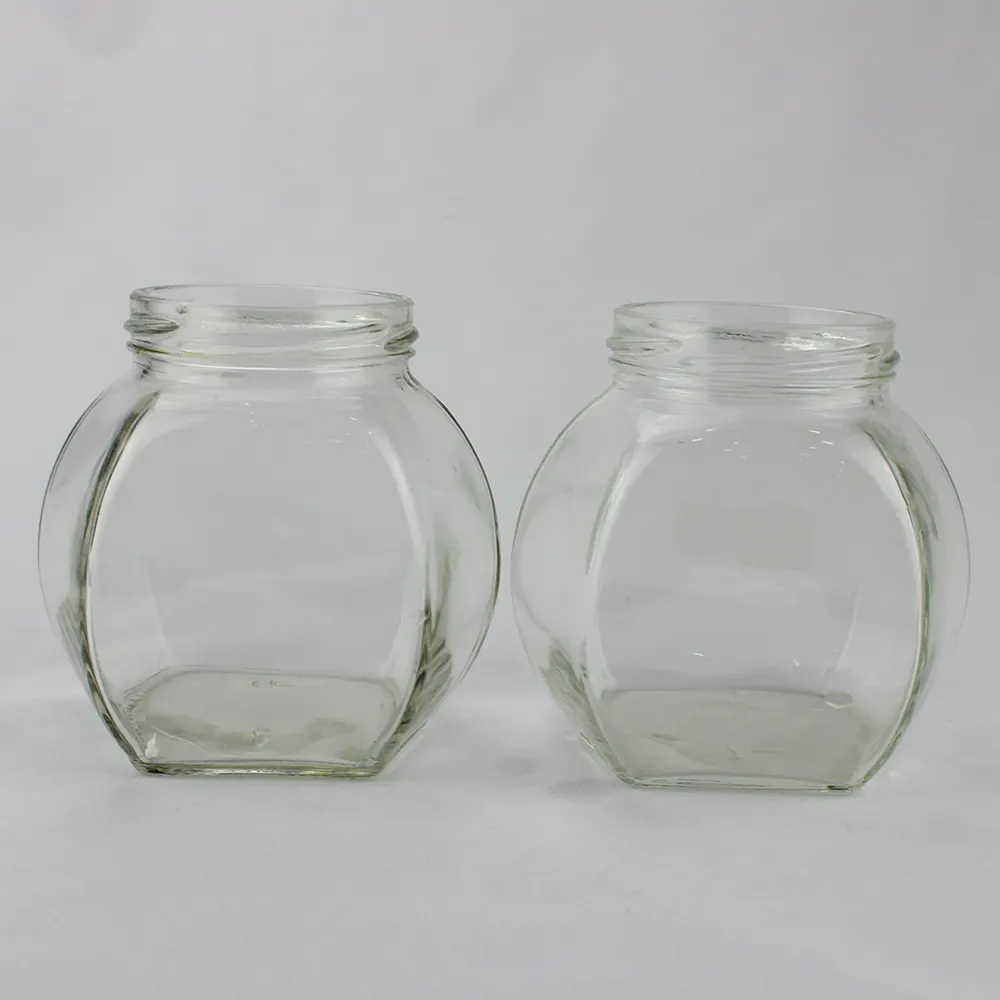
Marasca and dorica are the classic Mediterranean table shapes. Beyond the table, 5 L jars serve bulk and pickling operations. Flint glass suits apple cider and white vinegar, where clarity sells the product; antique green fits a wine-vinegar heritage look; amber is available on request.
Choosing the reducer
A reducer, also called a pourer or pour spout, is a food-grade PP or PE insert pressed into the neck so the bottle dispenses a controlled stream. Table vinegar is almost never poured from an open neck. The insert follows the finish: 18 mm for small gourmet bottles, 28 mm for marasca and dorica, 31.5 mm for ROPP-finish foodservice sizes. Sticky balsamic glazes need a drip-free lip, and foodservice jugs benefit from a splash guard.
Two interfaces decide whether the fitment works. Insertion and retention force have to suit the bore: too loose and the pourer falls into the bottle, too tight and it cracks the finish on the insertion line. The cap also has to close over the pourer head. A cap and pourer bought separately and never tried together is a familiar reason for a failed first order, which is why we have the bottle, insert and cap validated together before anything ships.
Choosing the closure
Commodity and foodservice vinegar usually runs on 28 mm or 31.5 mm aluminium ROPP caps with an acid-resistant liner, which seal hermetically and show tampering. Table and gourmet lines pair a screw cap (28-400 or 31.5 mm) with a reducer. Balsamic sold as a gift often takes a cork-finish bar-top.
Hot filling at 85–92 °C
Hot filling is the usual way to make vinegar shelf-stable without preservatives. The hot liquid sterilises the inside of the bottle and the cap liner, and as the headspace cools it pulls a vacuum that completes the hermetic seal. Glass neither panels under that vacuum nor distorts at fill temperature, the two faults that affect hot-filled PET.
What glass needs in return is temperature control. Keep the gap between glass and product under roughly 42 °C, which on cold days means pre-heating the bottles, and cool the capped bottles in stages. Ask for thermal-shock testing per ISO 7459 and annealing checked per ASTM C148; annealing quality is the upstream variable that makes hot-fill results repeatable from lot to lot.
Fill level is the last check. A vacuum-sealed bottle whose fill point wanders looks underfilled on the shelf, and retail buyers spot it at once. Capacity tolerance per ISO 8106 keeps the line even across a batch.
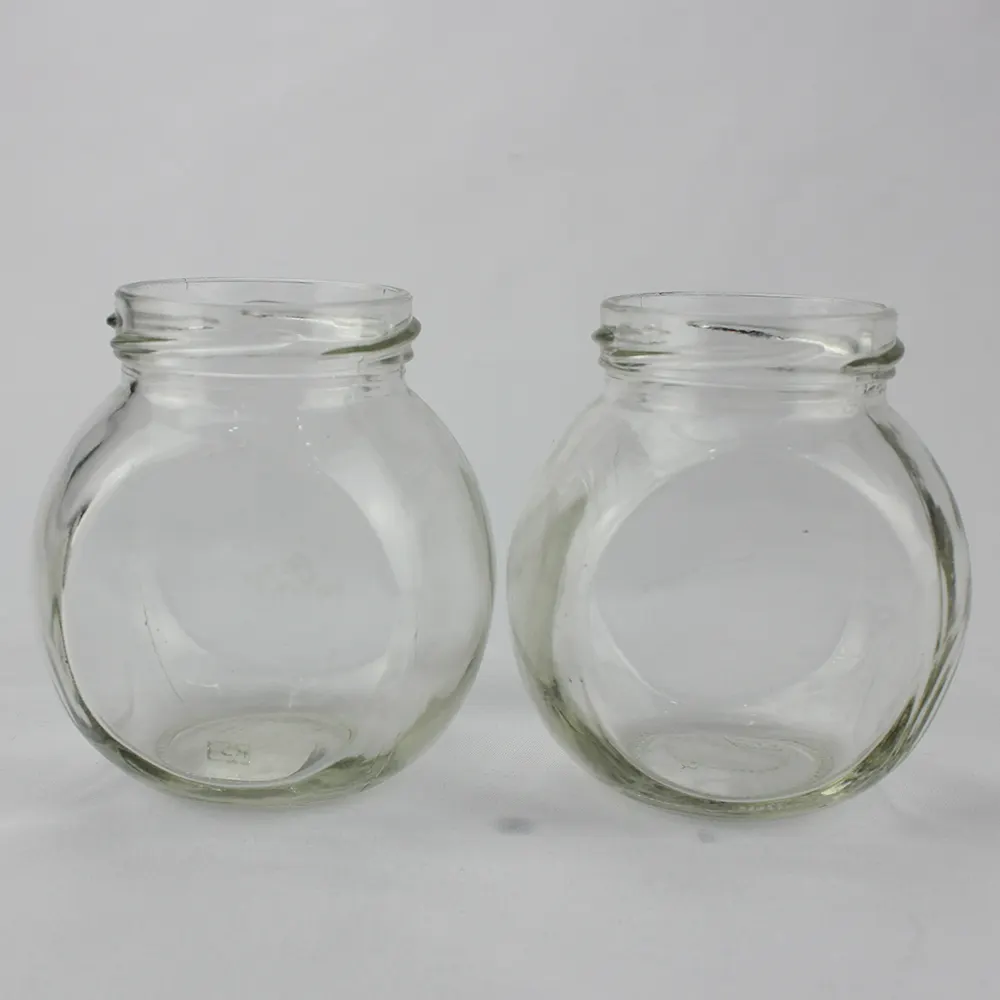
Lug-finish jars used for hot-filled products follow similar engineering, which our honey jar guide describes.
Writing the specification as acceptance criteria
A bottle can pass visual inspection and still fail in the market, because acid attack, torque loss and fitment mismatch only show up after filling. Each acid-related requirement should therefore become a measurable item with an evidence form, a sampling basis and an agreed remedy for a rejected lot. Mark which items are release-critical and which are reference measurements.
- Glass body: nominal capacity and fill point per ISO 8106, height and diameter with tolerances, weight range, colour and decoration position.
- Neck finish: size in millimetres (18 mm, 28 mm, 31.5 mm ROPP or 38 mm), bore diameter, thread or bead profile, and the surface on which the liner seats.
- Thermal: annealing per ASTM C148, plus thermal shock per ISO 7459 and the permitted glass-to-product differential on hot-fill SKUs.
- Closure: shell alloy and thickness, interior coating, liner compound rated for acetic acid, gasket thickness and the coating integrity method.
- Fitment: PP or PE grade, orifice diameter, head height above the finish, and the window for insertion and retention force.
- Documents: EU 1935/2004 declaration, closure and liner declarations, and a date or furnace code on each carton.
"28 mm" alone is not a finish specification. It says nothing about thread pitch, bead position or bore tolerance, and those determine whether the cap seals. For aluminium closures, read the coating and shell dimensions together with the ROPP cap specification. The thermal clause links the bottle to the filler, so settle the thermal-shock figure at the same time as the pasteurization and hot-fill line settings.
Golden sample and fit checks
A pre-production sample shows only that one good bottle can be made. Before the bulk run, agree a golden sample: bottle, closure and fitment assembled as they will ship, signed and kept by both sides, with the neck measured by plug and ring gauge. Later shipments are compared with it at three points, namely the first article, a mid-run pull and the last article. A photograph is evidence only if it includes a scale and is taken from a fixed camera position.
On assembled units, measure the pourer force against the agreed window, confirm the cap closes over the pourer head with the liner compressed, and inspect the seating surface. If the cap rides high the seal exists on paper only, and a chipped seat leaks even when torque is correct.
Torque and seal
Torque is the least costly indicator of seal quality. Fix an application torque for the closing head, then read removal torque on samples drawn to an AQL plan when the line starts, mid-run and when it finishes, logging raw values instead of pass or fail. Back this up with a vacuum or leak test after cooling and a headspace vacuum check once the pack is at ambient temperature. The torque test method and the capping machine setting belong in the same clause, since each is meaningless without the other.
Inspection plan
| Item | Sampling | Evidence |
|---|---|---|
| Capacity and fill point (ISO 8106) | 5-10 pieces per pallet, plus first, middle and last article | Gauge sheet and fill-point photo with scale |
| Neck finish dimensions | Plug and ring gauge, every cavity | Pass or fail log by cavity |
| Annealing (ASTM C148) | Each furnace campaign or shift | Polariscope reading or lab report |
| Thermal shock (ISO 7459) | Each batch of hot-fill SKUs | Report stating differential and result |
| Pourer insertion and retention force | 10-20 assemblies per batch | Force gauge log against the window |
| Application and removal torque | AQL plan at start, mid-run and end | Torque tester record, raw values |
| Seal integrity | AQL plan after cooling | Leak test log and defect photos |
| Carton count and trace code | Each pallet | Packing list checked against pallet label |
Every pallet code should lead back to the furnace campaign, production date and machine cavity, so a single bad carton can be traced instead of disputed. When a defect is confirmed the lot is held, the disposition (sort, rework or return) is put in writing, and the supplier is asked for a root cause, not just a promise of replacement. Write the acceptance quality level and the right to reject into the purchase order; a sampling standard agreed verbally cannot be enforced once the cargo has sailed.
Before releasing a bulk order, collect the signed specification with tolerances, the retained golden sample, neck gauge logs, raw torque records, the thermal-shock report for hot-fill SKUs, closure and liner certificates naming the acid-rated compound, the EU 1935/2004 declaration and the packing specification.
Stock, modified or custom mould
| Route | Suits |
|---|---|
| Stock mould (marasca, dorica, round) | Private label and new SKUs |
| Modified stock (spray, screen print, emboss) | Gourmet lines that need to stand apart |
| Full custom mould | A proprietary brand bottle |
Cost is quoted per project and depends on the mould route, the decoration, the quantity and the freight terms. Tell us the vinegar type and acidity, the fill temperature, capacity and style, the pourer and cap you want, annual volume and destination markets when you send a brief.
Packing and container loading
Vinegar bottles are dense, and transit damage is rarely the result of a single hard knock. It builds up from engine and hull vibration, the weight of the layers above, and the small sideways shifts each time a pallet is moved. Packing has to stop movement inside the carton, stop compression between layers, and keep the container within its legal weight.
Where breakage occurs
- Heel: the most frequent failure, since the bottom edge takes the point load when a carton is dropped or a pallet lands hard.
- Shoulder and neck: fail under top load or sideways impact when bottles touch.
- Finish: chips when a neck rubs a rigid divider or the next cap.
- Body: scuffs instead of breaking, and retail buyers reject the resulting haze.
The rule behind all four is no glass-to-glass contact and no load path through the shoulder.
Cartons, partitions and pallets
Full-height corrugated partitions that rise above the shoulder hold each bottle in its own cell and pass stacking load through the board. Moulded pulp trays give heavy 750 ml to 1 L formats better protection and absorb small impacts. Layer pads spread the weight and keep the flaps of a lower carton off the shoulders above. The packing specification should require every bottle to be separated from its neighbour, with partition height above the shoulder line where the diameter is greatest.
Fix the count and gross weight per case at a level one person can set down gently, and prove stacking strength with a box compression test instead of trusting the paper grade. Supply the pallet pattern as a drawing with zero overhang on any side, because overhang snags in the container door. Pallet footprint and height should follow ISO 3394 module dimensions. Keep the bottom layer off the container floor, as condensation softens corrugated board and takes the compression strength out of the stack.
Container weight and transport tests
Packed glass often brings a 20 GP container to its payload limit before the space is used, whereas a 40 HQ generally fills by cube first. Any loading figure therefore needs its reference packing stated: cartons per pallet, pallets per container, and palletised or floor-loaded. Check the legal payload for the route with the carrier and treat our loading figures as planning references until the final packing list is issued. The same arithmetic applies to other heavy bottles, as our beer bottle range shows.
Request transport tests on the packed configuration, never on a bare bottle: a free-fall drop on corner, edge and face from a defined height, vibration for a defined duration covering the road and sea legs, and compression at the planned stack height. ISTA 1A, 2A and 3A are published procedures for this. Read the configuration section of any report first, because a test on a different carton, partition or pallet pattern does not describe your shipment.
Risk and claims
The Incoterm decides who carries the risk. Under FOB or CIF it generally passes at the load port; a delivered term leaves it with the seller to destination. For a claim, gather evidence before the container is opened: photograph the intact seal and doors, count damaged cartons and pallets against the packing list, keep broken bottles in their carton and partition, and commission a survey report where the value warrants it. File within the contracted notice period and copy the supplier, because the dispute usually turns on the packing specification.
Frequently asked questions
Why is vinegar packed in glass when plastic is lighter?
Glass is inert to the acid: nothing leaches, no flavour is absorbed and nothing permeates, so the vinegar tastes at month 24 as it did on the filling day. PET is common for commodity table vinegar, but premium wine, balsamic and apple cider vinegars default to glass. Glass needs only the standard EU 1935/2004 declarations and no further migration testing regime.
Will vinegar corrode a glass bottle over time?
No. Vinegar has been kept in glass for centuries without the container degrading. The parts to watch are the cap coating and liner, and the glass will outlast the product.
Can the same bottle be hot-filled?
Yes, provided it was specified for it: tested per ISO 7459, properly annealed, and filled with the temperature differential under control. Glass also tolerates the hot acidic conditions that speed up panelling and distortion in PET.
What does a vinegar bottle cost?
Pricing is quoted per project. The main drivers are whether a stock or custom mould is used, the decoration, the order quantity, and the packing and freight terms.