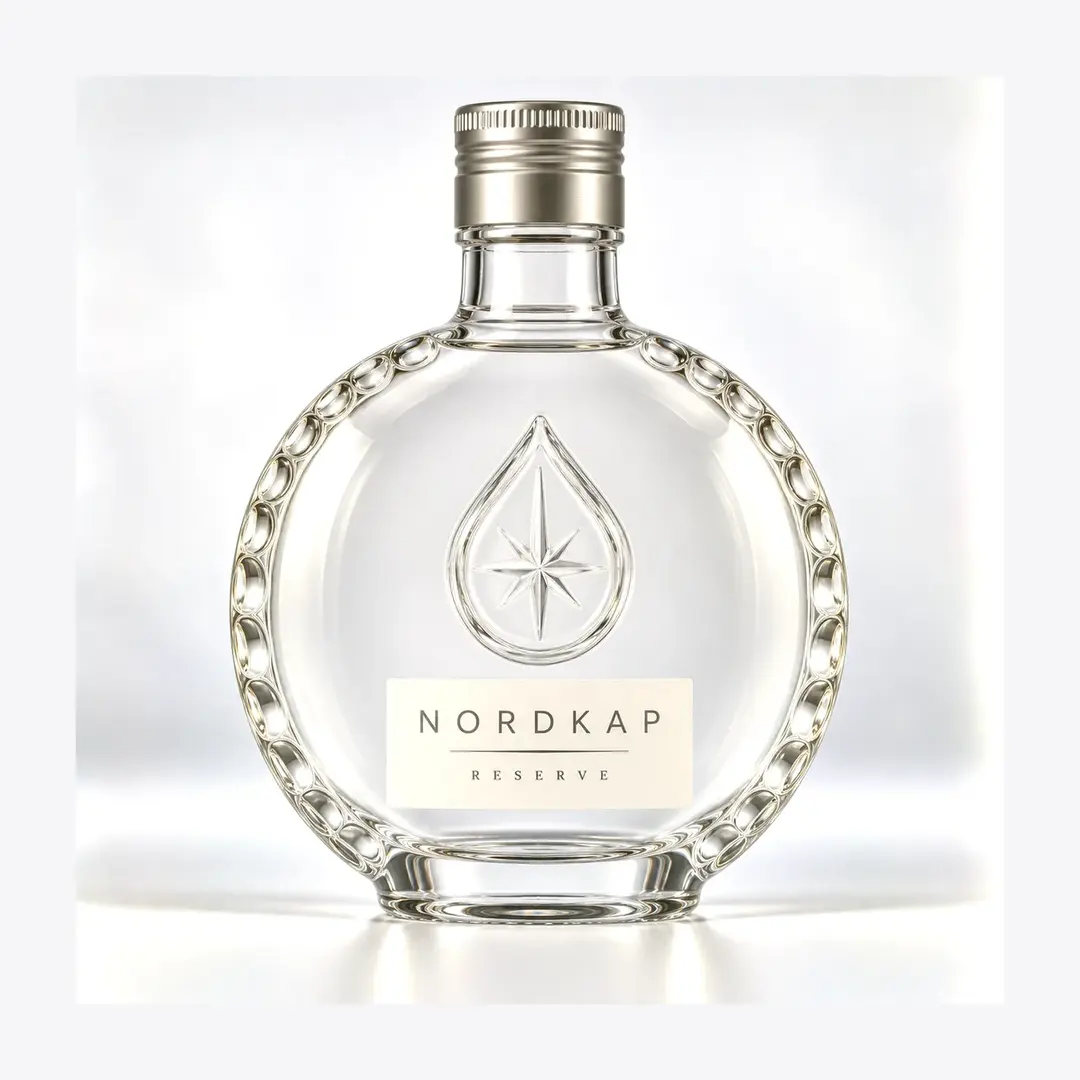
700ml Multi-Spirit Glass Bottle with Screw Top for Private-Label Ranges
The smartest private-label spirits ranges are not built bottle by bottle — they are built on a platform. The 700ml glass bottle shown here, supplied with a screw-top neck format, is that kind of platform: one proven mold that carries vodka, whisky and gin SKUs across an entire private-label range, letting buyers amortize tooling, simplify logistics and present a coherent brand family on shelf. This page is written for supermarket groups, importer brands and contract distillers planning exactly that kind of range.
The Platform Logic: One Mold, Many SKUs
Every custom bottle shape begins with a mold investment, and every additional shape multiplies it — along with sampling rounds, line change parts, carton specifications and spare inventory. The platform approach collapses that complexity. One mold produces the glass for the whole range; differentiation moves to where it is cheaper and faster: labels, screen printing, spray coating, capsules and cartons. A vodka, a whisky and a gin in the same glass read as siblings on shelf — which is exactly what a private-label brand wants — while the purchasing team manages one drawing, one specification and one supplier relationship instead of three.
The financial effect compounds over time. Range extensions stop requiring new tooling; seasonal editions become a decoration job rather than a mold project; and volume across SKUs aggregates into better price breaks on a single bottle.
Why Screw Top for Multi-Spirit Ranges
The screw-top closure format is the workhorse choice of high-volume spirits for reasons that go beyond unit cost:
- Line speed and simplicity. Screw capping runs fast and forgiving on standard capping heads, with none of the cork-variance management that natural closures demand.
- Resealability consumers trust. For everyday-pour spirits — the vodkas, blended whiskies and gins that anchor private-label ranges — shoppers expect a cap that reseals cleanly in the home bar.
- Supply-chain resilience. Standard caps are available from multiple sources with short lead times, keeping a range’s most reorder-sensitive component unexciting — which is a compliment.
- Consistent quality perception. A well-fitted screw cap on good glass reads as modern and dependable, the right register for value and mid-tier programs.
As always, closure compatibility is confirmed against the neck finish on the approved drawing — please confirm the finish specification with the factory before placing cap orders, and share your capping equipment details during technical review.
700ml: The Export-Friendly Capacity
At 700ml, this platform aligns with the standard spirits size of the European Union and the United Kingdom, and with the conventional fill across most international markets outside North America. For importer brands selling across regions, that means one capacity decision covers most of the map. Programs that also sell into the United States — where 750ml is the standard — typically run a 750ml sibling alongside; flag your market list in the RFQ and the factory can advise on family planning across capacities.
Differentiation Without New Tooling
Range coherence does not mean sameness. The factory’s in-house decoration routes give each SKU its own register on the shared glass: spray coating in category-coded colors — crisp white or silver for vodka, deep amber-effect tones for whisky, botanical greens for gin; screen printing for range-wide brand architecture with per-SKU variation; frosting for premium line extensions; and conventional labeling where retail buyers require it. Standard caps and cork closures can be matched across the range. Because the glass stays constant, all of these variants share cartons, pallets and container-loading plans.
Quality Standards Across Every SKU
A platform bottle must be boring in the best way: identical, run after run, so that every SKU in the range fills, caps and shelves the same. Production of this model is controlled under the factory’s documented container-glass QC regime — annealing verified with reference to ASTM C148, internal pressure resistance per ISO 7458, and thermal shock endurance per ISO 7459. Batch records can be reviewed during technical approval, and third-party pre-shipment inspection can be arranged, giving retail buyers the supplier documentation their quality teams increasingly request. We do not publish fixed millimeter dimensions or gram weights on the page; those are confirmed per production run on the technical drawing issued with your quotation.
Planning a Range Rollout
Most private-label platform programs follow a phased arc: launch with two or three core SKUs on the shared glass, prove velocity with retail buyers, then extend into flavors, premium tiers or seasonal editions through decoration alone. The glass supplier’s role in that arc is consistency and responsiveness — holding the specification steady while your decoration calendar moves fast. Samples from the existing mold can be arranged at the start so your bottler and your retail customer’s quality team can approve the platform before the first SKU launches.
What Retail Buyers Look for in a Platform Supplier
Private-label tenders increasingly score the supplier, not just the bottle. Retail quality teams want a factory that holds one specification across years of repeats, documents its process, and can scale when a range graduates from regional trial to national listing. They also want responsiveness on the decoration calendar, because private-label promotional windows are set by the retailer’s marketing plan, not the supplier’s convenience. When you evaluate quotes for a platform bottle, compare more than unit price: ask how specification changes are controlled, how batch records are kept, and how quickly decoration variants can be turned around mid-range. Our glass bottle supplier checklist structures exactly that comparison.
Ordering, MOQ and Next Steps
MOQ depends on mold use and decoration route — the mechanics are in our glass bottle MOQ guide. Buyers structuring a supplier evaluation will find our glass bottle supplier checklist useful, and first-time importers can review the workflow in our guide to importing glass bottles from China.
Send your range plan — categories, markets, annual volumes and closure preference — through the contact and RFQ page, and the factory will reply with the technical drawing, confirmed specifications and platform pricing for your private-label program.
Frequently Asked Questions
Can one bottle really serve vodka, whisky and gin SKUs?
Yes — that is the platform concept. One mold produces shared glass for the whole range, and each SKU is differentiated through labels, screen printing, spray coating, capsules and cartons. This amortizes tooling across the range and keeps cartons, pallets and line settings shared.
Is the screw top suitable for mid-tier spirits?
Yes. Screw caps run fast on standard capping heads, reseal reliably and are the expected closure for everyday-pour spirits in value and mid-tier programs. Cap compatibility is confirmed against the neck finish on the approved drawing — confirm the finish with the factory before ordering caps.
Is 700ml right for my markets?
700ml is the standard spirits size in the EU and UK and is conventional across most international markets outside North America. US programs typically need a 750ml sibling. Share your market list in the RFQ and the factory can advise on capacity family planning.
How do we keep SKUs distinct on the same glass?
Category-coded spray coating, per-SKU screen printing, frosting for premium tiers and distinct labels all differentiate without new tooling. Because the glass is constant, all variants share cartons, pallets and loading plans.
What is the MOQ for a platform bottle?
MOQ depends on use of the existing mold and decoration route, and platform volumes across SKUs usually aggregate into better price breaks. Share your range plan and annual volumes in the RFQ for an exact figure.
What quality documentation can we show retail buyers?
Production is controlled against ASTM C148 annealing, ISO 7458 internal pressure and ISO 7459 thermal shock references. Batch records can be reviewed during technical approval and third-party pre-shipment inspection arranged — useful for retail quality teams’ supplier files.


