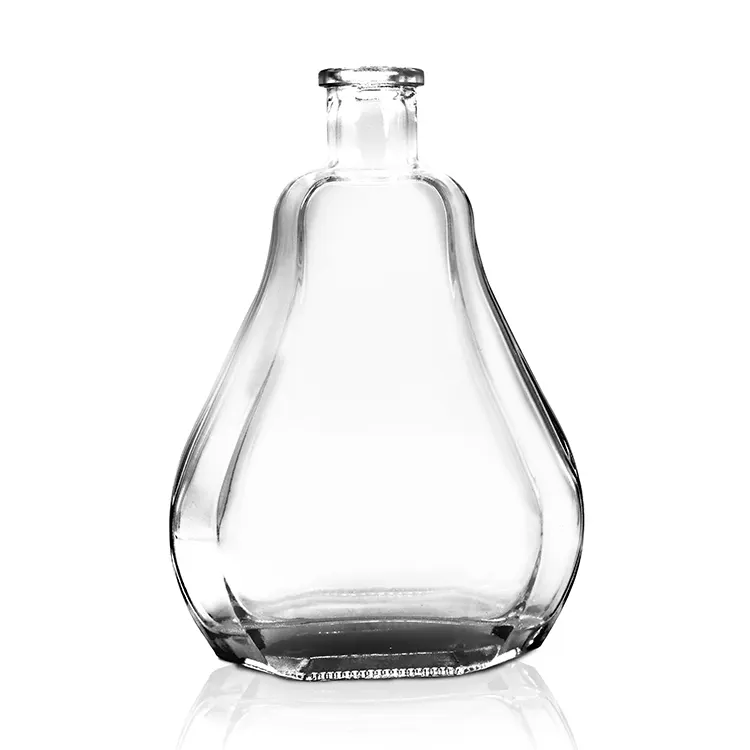
Filed under whiskey glass bottles; the moulds we quote for this are pictured at the foot of the page.
A whiskey bottle's cost comes from five things: how much glass is in it, the flint grade, how hard the shape is to form, the decoration, and whether a mould already exists. That is why two honest quotes for a "750ml whiskey bottle" can sit far apart. Figures are quoted per project, so the useful work for a buyer is to fix those five variables before comparing suppliers.
What sets the cost of the glass
Weight. Whiskey sells partly on heft. A standard 750ml bottle weighs 480–550g, while upmarket expressions run 650–850g, with the extra glass concentrated in a thick base the drinker can feel.
Flint grade. Regular flint carries a faint green cast that dulls an amber spirit. Extra flint is the grade to specify for a clear bottle meant to show the colour of the liquid.
Shape. Plain round and square bodies run on high-speed IS machines and are the cheapest to form. Facets, embossing and asymmetric profiles slow forming by 15–30%, and the bottle is costed to match.
Decoration and mould status. Each decoration pass, such as screen printing, frosting or metallizing, is a separate cost line. A stock mould carries no tooling; a custom mould has to be paid for and recovered over the run.
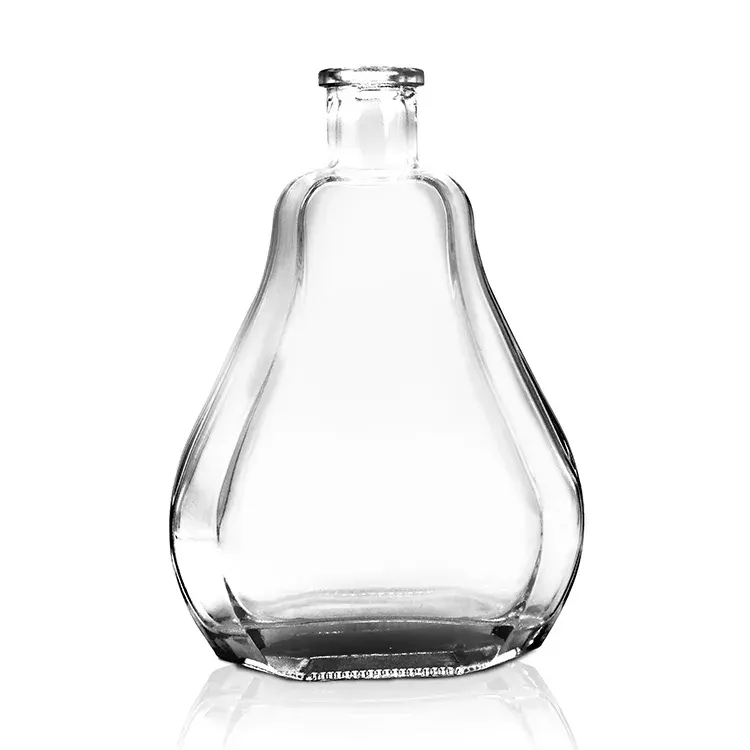
Stock and custom routes compared
| Route | Typical weight |
|---|---|
| Stock round bottle in regular flint | 500g |
| Stock square bottle in extra flint | 620g |
| Stock bottle with screen print and frosting | 600g |
| Custom mould with embossing, extra flint | 700g |
| Custom top-tier bottle, metallized, heavy base | 850g |
Many brands take both routes in sequence. They launch on a stock mould, prove the product sells, and then commission a custom mould that keeps the label geometry already in use, so the filling and labelling equipment still fits. The closure belongs in the same decision: bar-top corks, T-corks and GPI 28/400 or 33/400 finishes are covered in the closure notes of our guide to 750ml glass bottles.
Freight and other costs outside the bottle line
Heavy glass changes the shipping arithmetic. Bottles around 800g reach a container's weight limit before they fill its volume, so a 20'GP is often the correct box rather than a 40'HQ, and the freight carried by each bottle shifts with that choice. Ask for the loading plan alongside the bottle quote.
How we work with glass plants is set out on the about page, and our custom perfume bottle work shows the same decoration processes applied to fragrance.
How to read a whiskey bottle quote
A quote is only comparable when it states six items separately: glass weight with its tolerance, flint grade, mould status, number of decoration passes, packing format and Incoterm.
Weight tolerance is the usual trap. A "700g bottle" offered at ±5% can legitimately arrive at 665g, and the difference is noticeable in the hand. For upmarket expressions, write ±3% into the specification.
We also suggest requesting the annealing report with the quote. Internal stress above grade 4 on a polariscope check tends to surface later as breakage on the labelling line. Over a full year, the quote that comes with test documentation is usually the less costly one.
Buyer FAQ
What should a craft distillery budget for a first order?
Pricing is quoted per project and depends on the mould, the decoration, the quantity and the freight terms. Send the target weight, flint grade, decoration and annual volume through the quote form and we set the stock and custom routes side by side.
Why do quotes for the same bottle disagree?
Most gaps trace to weight tolerance (±5% is common), a different flint grade, or decoration and cartons being included in one quote and left out of the other.
When does a custom mould make sense?
That depends on the tooling cost and the quantity it is spread over, both quoted per project. The usual trigger is proven sales on stock glass.