For the full range, see wholesale glass bottles: liquor, wine, beer, oil and cosmetic bottles plus food jars, all quoted per project.
The right 750ml glass bottle depends on the category, because each one has its own neck finish: wine takes a cork finish with an 18.5mm bore or a Stelvin 30×60 screw cap, spirits take a bar-top or a GPI thread, and olive oil takes a 31.5×24 ROPP neck for a tamper-evident cap and pourer. Settle the finish first, then the glass weight, which runs from 400–550g for wine up to 450–950g for spirits, and only then the shape.
Wine, spirits and olive oil bottles compared
| Attribute | Wine (Bordeaux, Burgundy) | Spirits | Olive oil (marasca, dorica) |
|---|---|---|---|
| Typical weight | 400–550g | 450–950g | 480–560g |
| Glass colour | Antique green, dead-leaf, flint | Flint, extra-flint | Antique green, for UV protection |
| Neck finish | Cork, 18.5mm bore, or Stelvin 30×60 | Bar-top 18.5–21.5mm, GPI 28/400, 33/400 | 31.5×24 ROPP |
| Closure | Natural or technical cork, screw cap | Bar-top cork, screw cap, ROPP | Tamper-evident cap with pourer |
| Usual decoration | Label only, sometimes a screen print | Spray, decal, hot stamp, embossing | Label and capsule |
The finishes do not cross over. A cork-finish wine bottle and a 31.5×24 oil bottle have nothing in common above the shoulder, so a shape seen in one category cannot simply be borrowed for another.
Wine bottles
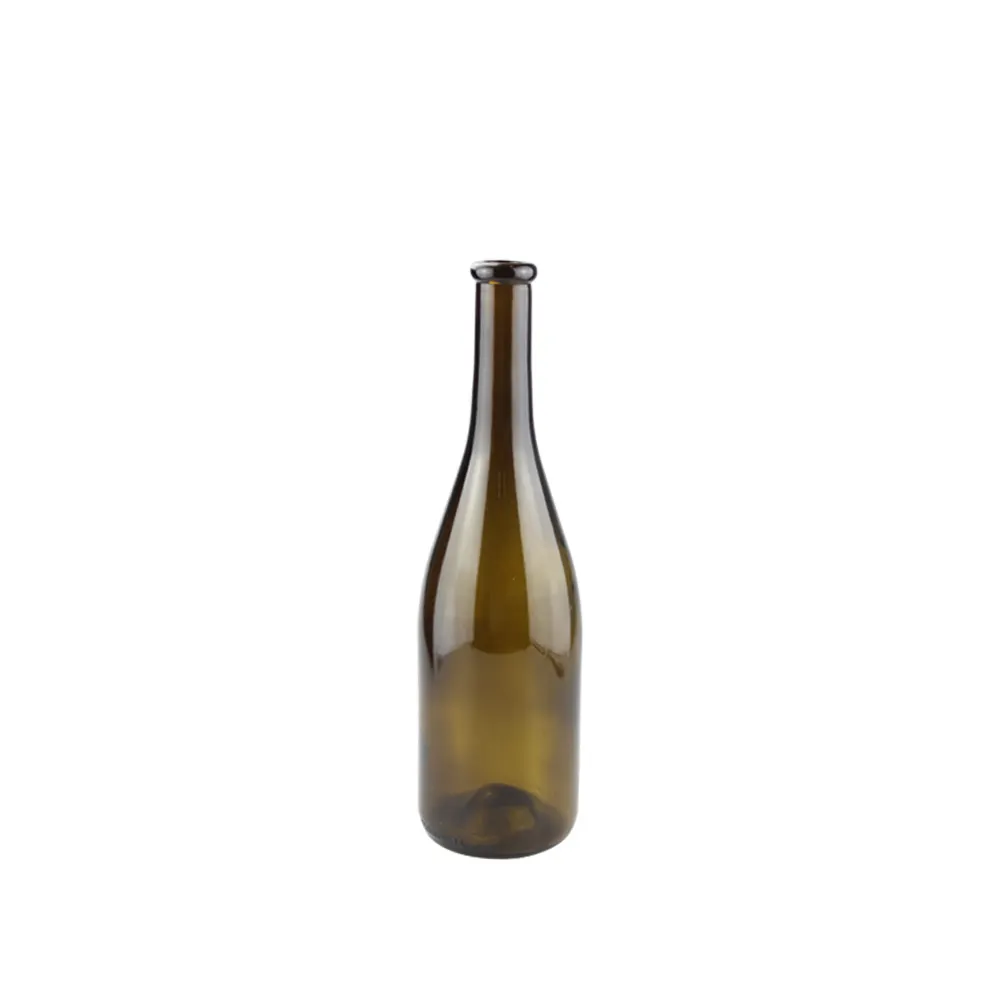
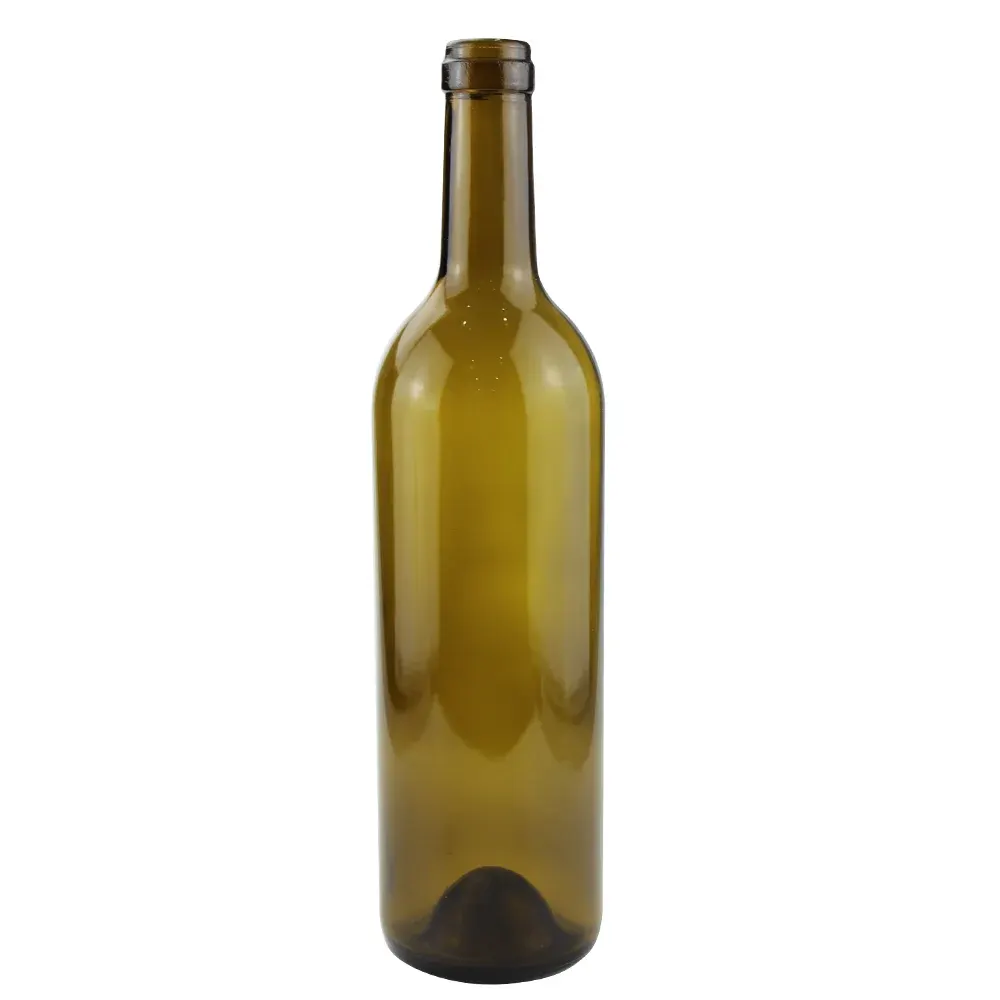
An antique-green Bordeaux at 450–500g covers most commercial red wine. Its high, straight shoulders and straight sides hold sediment back at the shoulder, and it is the usual choice for Cabernet, Merlot and most still reds. The Burgundy bottle has sloping shoulders and a wider body and is the traditional form for Pinot Noir and Chardonnay. In standard specification both fall in the 400–550g range.
Spirits bottles
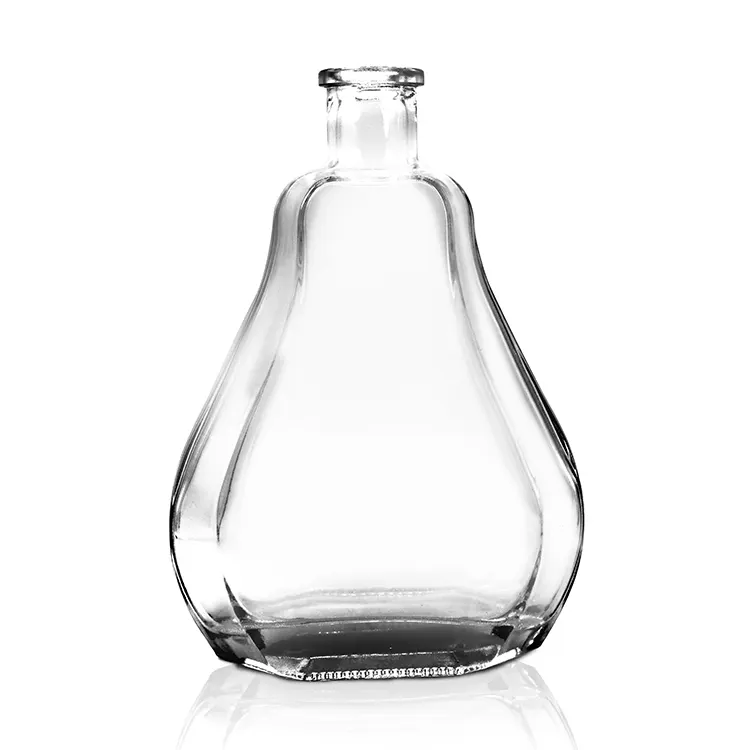
Weight is how a spirits bottle signals its tier. The same mould reads as a value product at 500g and as a prestige one at 750g. Specify the weight with a ±10g tolerance, because it affects both the glass and the freight.
| Tier | Weight | Typical features |
|---|---|---|
| Value | 450–550g | Standard base |
| Mainstream | 550–700g | Defined base push-up |
| Top tier (XO cognac, single malt, craft gin) | 700–950g | Heavy base, often extra-flint glass |
Spirits is also the category that uses full decoration and custom glass most. Bar-tops, GPI threads and ROPP are compared in the guide to closure systems, and the wider choice of profile is set out in the alcohol bottle types guide.
Olive oil bottles
Olive oil at this size comes in two forms. One is the marasca: square, antique green, with a 31.5×24 ROPP neck. The other is a Bordeaux-style round bottle fitted with an oil neck, which borrows the look of a wine bottle for table oil while keeping the tamper-evident cap and pourer. That hybrid is the accepted way to put oil in a wine shape; a true wine finish would work against what consumers expect and complicate closure supply.
For either form, stay with antique green. Photo-oxidation is the main cause of quality loss in oil on a retail shelf, so specify light transmission of ≤20% at 350–450nm. Add a non-drip pourer, since it is the part the consumer uses every day.
Pallet and container loads
| Unit | Loose, bulk stacked | In cases |
|---|---|---|
| Standard pallet | 1,200–1,600 bottles | About 1,000–1,300 bottles |
| 40HQ container | Roughly 21,000–24,000 bottles | 18,000–20,000 bottles in 12-bottle cases |
A loaded 40HQ weighs 9–13 tonnes depending on glass weight. Bottles of this size nearly always fill the container's volume before they reach its weight limit.
What to send for a quotation
Use the quote form and include the category (wine, spirits or oil), target weight and colour, closure type, annual volume and first-order quantity, decoration plans, destination port and launch date.
FAQ
Why is 750ml the standard bottle size?
It dates from metrication in the US and EU in the 1970s, when it replaced the 1/5 US gallon at 757ml and the 73cl French bottle. It stayed because it packs efficiently, at 12 bottles per case and roughly 56 cases per pallet, and because duty and tax systems were built around it.
What minimum quantity applies to 750ml bottles?
Minimums are quoted per project. They depend on the mould and the line it runs on, the decoration and the quantity.