Filed under glass liquor bottles — start there for the stock moulds, then use the detail below to narrow the spec.
“Alcohol bottle” sounds like a single product until you try to buy ten thousand of them. Then the category explodes into decisions: spirits versus wine versus beer versus liqueur shapes, flint versus high-white versus amber versus green glass, 50ml miniatures through 3-liter jeroboams, corks versus screw caps versus crown caps versus swing tops. Each choice carries cost, regulatory, and brand consequences — and the wrong combination can make a good liquid unsellable in its target market. This guide maps the complete taxonomy of glass alcohol bottles for importers, brand founders, and co-packers: the major bottle families by drink category, how glass composition and color affect both product protection and shelf positioning, the capacity system across world markets, and a practical framework for matching closures to beverages.
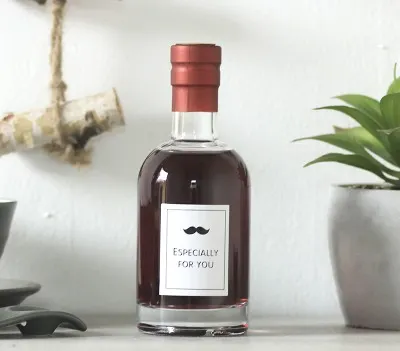
Spirits Bottles: Form Follows Brand
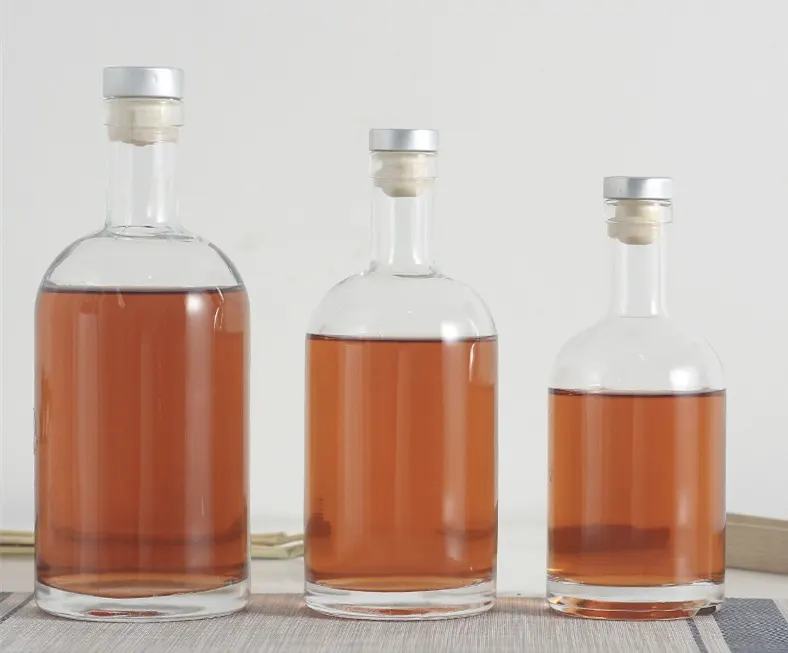
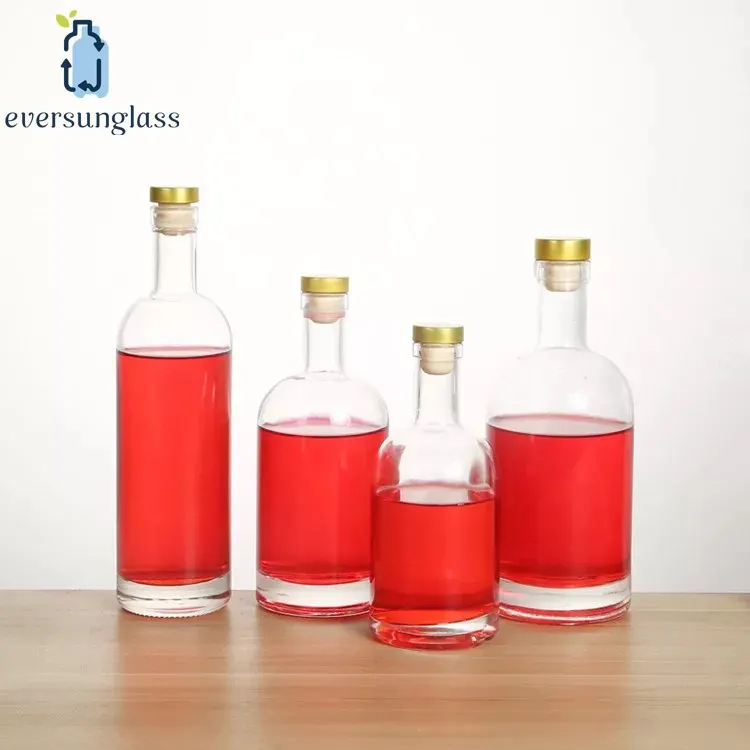
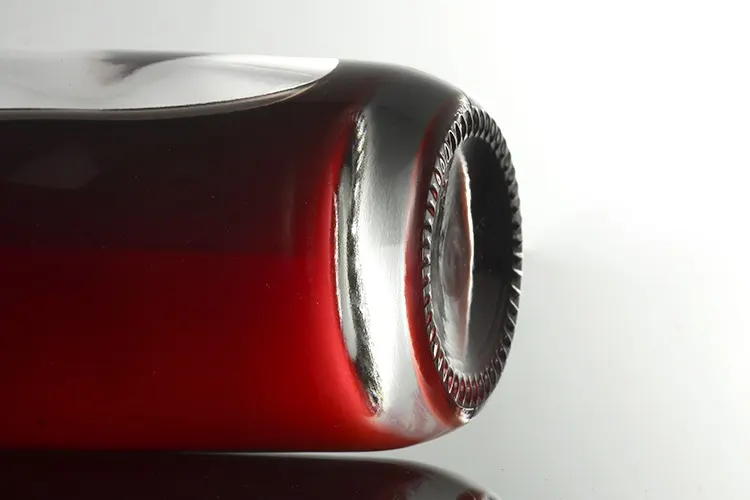
Spirits packaging is the freest design territory in glass. Because spirits are shelf-stable at high ABV and most are consumed within months of opening, the bottle’s job is brand communication first and product protection second. The standard shapes each carry category cues: the Nordic or Oslo round with heavy base for premium vodka; the flat flask for pocket-friendly whiskey; the square or rectangular spirit bottle for gin and tequila modernism; the calabash and pot-still silhouettes for rum heritage; and tall, slender profiles for fruit brandies. Heavy-base construction — 15 to 30 percent of total bottle weight concentrated in the punt — is the single strongest tactile premium signal in spirits.
Capacity concentrates on the 700ml (EU and most of the world) and 750ml (US) standards, with 50ml miniatures, 200ml and 375ml half-bottles, 1-liter travel-retail and bar sizes, and 1.75L handles rounding out the system. Closure choice splits between bar-top T-corks for premium positioning and aluminum screw caps for value and high-velocity tiers. Buyers building a spirits line should study the category map on our spirits glass bottle packaging hub and cross-reference live programs such as liquor bottles and the size logic on liquor bottle sizes before locking a mold decision.
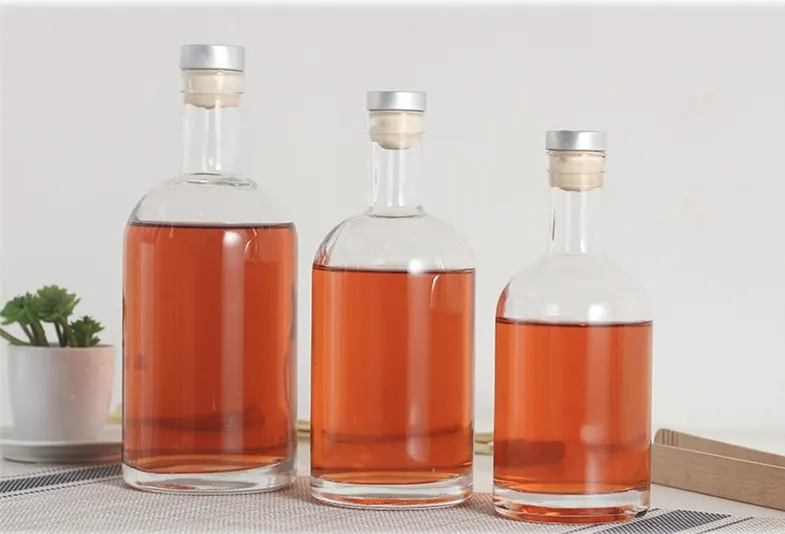
Wine Bottles: Tradition with Technical Teeth
Wine bottle shapes are codified by region, and the conventions carry real information. The high-shouldered Bordeaux bottle (claret style) was designed to catch sediment; the sloping Burgundy bottle suits pinot noir and chardonnay traditions; the tall, slender Alsace or Hock flute serves aromatic whites; and the thick-walled Champagne bottle withstands internal pressures of 5–6 bar. Choosing an off-code shape — say, a Bordeaux bottle for a Mosel riesling — is legal in most markets but reads as a mistake to trade buyers, so shape selection belongs in the brand strategy conversation, not just the procurement spreadsheet.
Glass color does protective work in wine. Amber-green “antique green” filters roughly 90 percent of damaging UV; flint (clear) glass is reserved for wines meant for early consumption where color display is the selling point — rosés, aromatic whites, and premium vodkas of the wine world. Capacity runs from 187ml splits through the 750ml standard to 1.5L magnums, which age wine more gently thanks to a lower oxygen-to-wine ratio. Our wholesale wine bottle programs, the wine bottle sizes reference, and the color-focused green glass wine bottle pages cover the range in procurement detail.
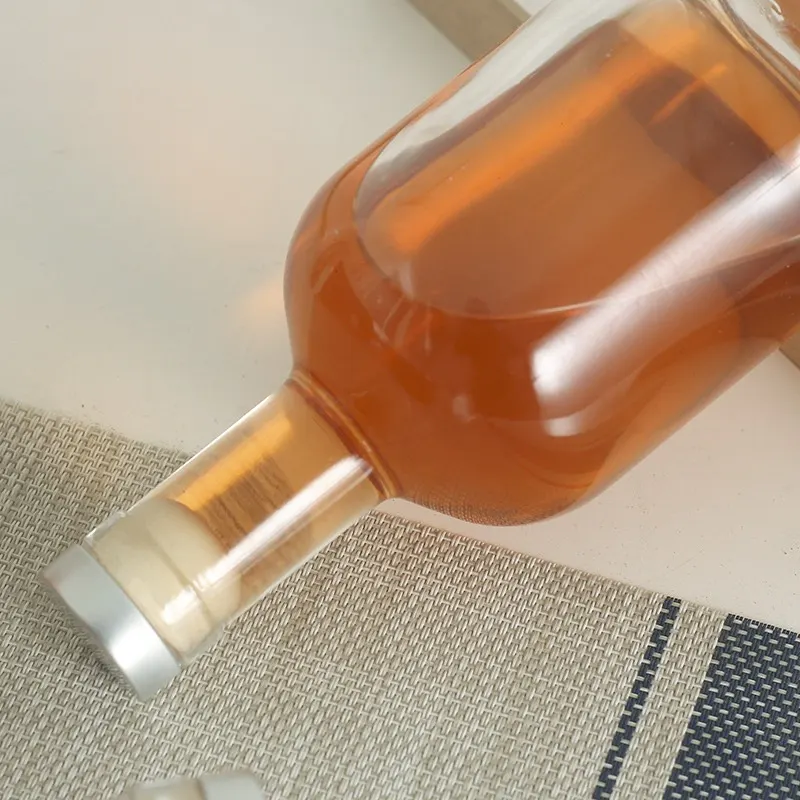
Beer and Cider Bottles: Pressure and Light
Beer bottles are engineering products first. Crown-cap bottles in 330ml and 500ml (Europe), 12oz and 22oz (US), and 650ml bomber formats must hold carbonation pressures up to 4–5 bar during pasteurization spikes, so wall thickness, finish strength, and annealing are specified tighter than in still-beverage glass. Amber glass dominates because it blocks the UV wavelengths that trigger lightstruck “skunking” in hopped beer; green offers partial protection; flint is viable only for hopless styles or UV-shielded packaging. Swing-top (bail) closures serve craft, homebrew, and specialty cider niches where resealability is part of the product story.
For procurement, beer bottle economics reward standardization: the industry clusters around a few finish standards (26mm crown, 29mm crown for some markets) and a handful of mold families, so stock molds from beer glass bottle wholesale programs usually beat custom tooling unless volume exceeds several million units. Color sourcing matters too — amber glass bottle manufacturers with dedicated amber furnaces deliver more consistent color density than plants running amber as a campaign color.
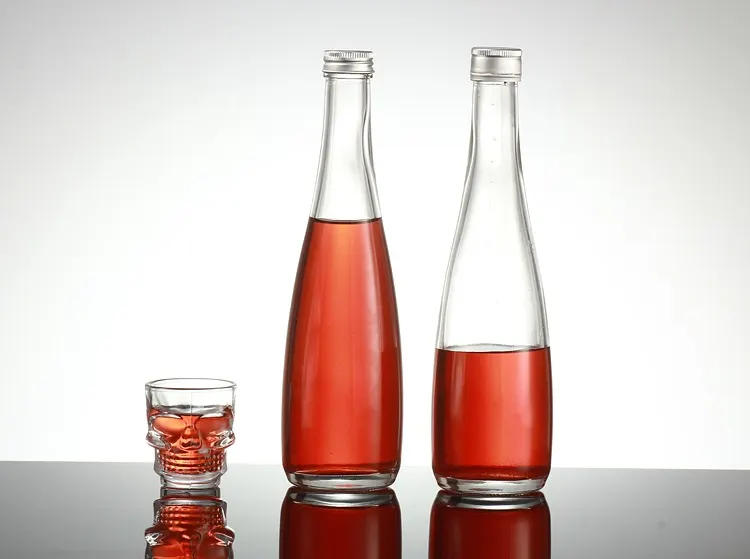
Liqueur, Aperitif, and Specialty Bottles
The liqueur and aperitif segment is where bottle design earns its keep hardest. Low-ABV, high-sugar products are shelf-stable, so packaging is nearly pure brand theater: frosted and sprayed color bodies, heavy decorative embossing, ceramic-look coatings, sculptural custom molds, and miniature 50ml sampler formats for airline and gift channels. Cream liqueurs add a technical wrinkle — dairy content demands light-blocking glass or full-coverage decoration, which is why the category standard is opaque sprayed or amber glass. Herbal liqueurs and bitters traditionally use amber or deep green for the same reason, a convention buyers should respect unless the brand story explicitly overrides it.
Glass Composition and Color: What Buyers Must Specify
All beverage alcohol bottles are soda-lime glass, but composition details and color chemistry create four procurement classes. Flint (clear) glass uses low-iron batch for maximum transparency; “high-white” or extra-flint pushes iron content below roughly 0.02 percent for water-clear brilliance at a cost premium of 10–20 percent — the default for premium vodka, gin, and white spirits where liquid clarity sells. Amber glass gets its color from iron-sulfur chemistry and provides the strongest UV protection; emerald and antique greens come from chromium and iron blends; dead-leaf and olive greens sit between. Color is specified by name and verified by spectrophotometer against agreed coordinates — “green” is not a specification.
Recycled content (cullet) is both a sustainability claim and a quality variable: post-consumer cullet at 30–60 percent is standard in European green and amber glass, while premium flint typically runs lower cullet ratios to protect clarity. If your brand carries a recycled-content claim, get the cullet percentage in writing per lot. The material science is covered further on our flint glass bottles page.
| Glass Class | UV Protection | Typical Premium | Best-Fit Products |
|---|---|---|---|
| Flint (standard clear) | Low | Baseline | Vodka, white rum, rosé, early-drink whites |
| High-white / extra-flint | Low | +10–20% | Super-premium clear spirits, luxury water-crossover |
| Amber | Highest (~90%+ UV block) | +0–10% | Beer, bitters, cream liqueurs, light-sensitive wines |
| Green (antique/emerald) | Medium-high | +0–10% | Red and white wines, heritage spirits, cider |
The Capacity System Across Markets
Alcohol bottle capacity is regulated, not merely customary. US standards of fill for spirits include 50ml, 100ml, 200ml, 375ml, 700ml, 750ml, 1L and 1.75L among others (700ml since Treasury Decision TTB-165 in 2020); the EU permits 100ml, 200ml, 350ml, 500ml, 700ml, 1L, 1.5L, 1.75L and 2L for spirits, with 700ml as the standard retail size; wine converges on 750ml nearly worldwide with 187ml, 375ml, and 1.5L as the main satellites. A brand selling into both the US and EU can therefore run a single 700ml SKU, or keep 750ml for the US and 700ml for the EU — 750ml is not a permitted EU size for spirits. Miniature 50ml formats serve sampling, airline, and hotel channels across all markets, while 375ml half-bottles bridge premium trial and dessert-wine niches. The workhorse sizes — 700ml and 750ml wholesale — deserve their own negotiated programs with annual volume commitments for best pricing.
Closure Selection Framework
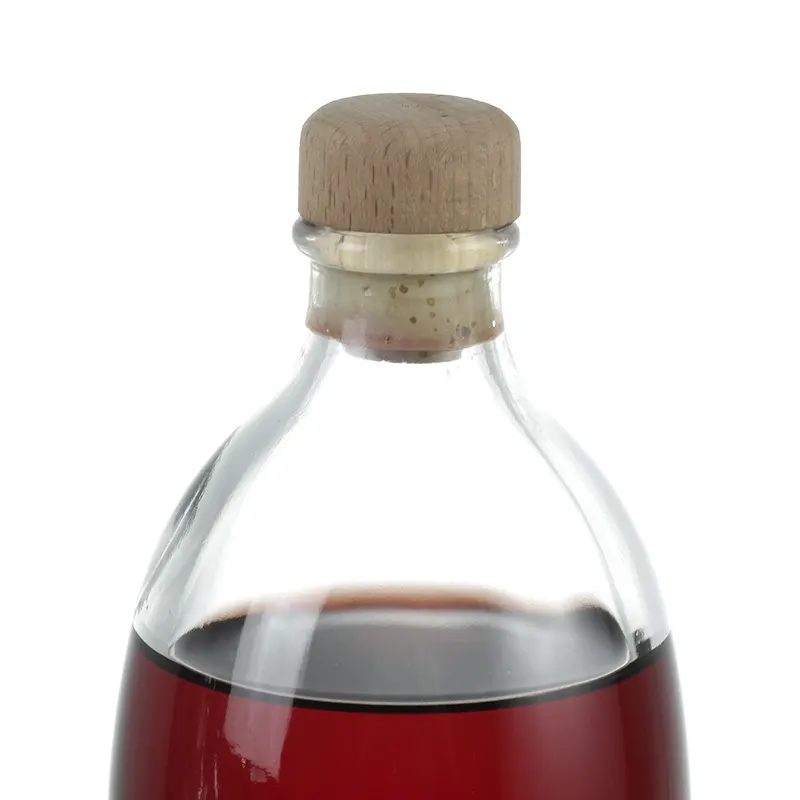
Match the closure to the beverage’s chemistry and consumption pattern. Natural cork suits wines intended for bottle aging, where micro-oxygenation is part of maturation; technical corks (agglomerated, 1+1) deliver consistency for mid-tier wines. Aluminum screw caps (ROPP and Stelvin) dominate aromatic whites, value wines, and high-velocity spirits — they are TCA-free, consistent, and resealable. Bar-top T-corks serve spirits where the ritual of pulling a cork is part of the brand; synthetic shanks avoid cork taint entirely. Crown caps are mandatory for carbonated beer and cider. Swing tops handle carbonation with resealability for craft niches. And tamper evidence is non-negotiable: nearly every market requires visible tamper indication on spirits, satisfied by ROPP breakaway bands, capsules, or shrink sleeves. The decision matrix below condenses the framework.
| Beverage | Recommended Closure | Why |
|---|---|---|
| Aging red wine | Natural cork | Micro-oxygenation supports maturation |
| Aromatic white / rosé | Screw cap | Preserves aromatics, no TCA risk |
| Premium spirits | Bar-top T-cork | Ritual and shelf presence |
| Value / well spirits | ROPP screw cap | Speed, reseal, tamper band |
| Beer / cider | Crown cap | Pressure retention |
| Champagne / sparkling | Mushroom cork + wire hood | 5–6 bar containment |
For deeper closure engineering, cross-reference our glass bottles with cork at wholesale resource.
Procurement Notes: MOQs, Molds, and Multi-Market Programs
Alcohol bottle sourcing follows a clear ladder. Custom decoration (spray, decal, screen print) layers onto stock molds at modest MOQs. Multi-market brands should negotiate 700ml and 750ml as one program — most factories run both shapes in the same mold family, so combined volume earns better pricing. Finally, build compliance into the RFQ: destination-market size rules, tamper-evidence requirements, and heavy-metal limits on decoration (California Proposition 65, EU packaging directive) should be line items in the specification, not afterthoughts at the port.
Frequently Asked Questions
What is the difference between 700ml and 750ml bottles?
The 700ml size is the EU and international standard for spirits, while 750ml is the US standard. Most bottle shapes exist in both versions within the same mold family, so brands selling into both markets typically run two SKUs with shared decoration and negotiate them as one combined-volume program.
Which glass color best protects the product?
Amber provides the strongest UV protection, blocking over 90 percent of damaging wavelengths, which is why it dominates beer and light-sensitive liqueurs. Green glass offers medium-high protection for wines. Clear flint and high-white glass provide minimal protection and suit products consumed young or stored away from light.
What is high-white glass and when is it worth the premium?
High-white (extra-flint) glass uses low-iron batch chemistry for water-clear transparency with no green tint, costing roughly 10–20 percent more than standard flint. It is worth the premium for super-premium clear spirits — vodka, gin, white rum — where liquid brilliance is a primary shelf signal.
Screw cap or cork for a wine brand?
Match the closure to the wine’s intent. Wines made for aging benefit from natural cork’s micro-oxygenation. Aromatic whites, rosés, and early-drinking wines keep their freshness better under screw caps, which also eliminate cork taint. Many brands now split the line: screw cap for the fresh tier, cork for the reserve tier.
What MOQ applies to a custom alcohol bottle mold?
Minimum quantities are quoted per project, because they depend on the mould and the line it runs on.
Can one bottle shape be used across spirits, wine, and beer?
Technically yes, commercially rarely. Each category carries shape conventions that trade buyers read instantly — a Bordeaux bottle signals wine, a heavy-base Nordic round signals vodka. Using off-code shapes confuses positioning. The exception is craft crossovers (barrel-aged stouts in Belgian beer bottles, wine-cask-finished spirits) where the rule-break is the story.
Mapping a bottle strategy for a new drinks brand or a multi-market launch? Share your beverage type, target markets, and annual volumes, and we will propose stock or custom options with a full quotation. Contact our beverage packaging team to get started.