For comparison, most wine, spirits and oil programmes start from 750ml bottles.
A 375 ml glass bottle should be specified as its own design, with a brimful capacity of 385–400 ml, a glass weight between 240 g and 480 g, and a shape and neck finish chosen by category: cork or BVS screw for wine, bar top or GPI 28-400 for spirits, 38 mm lug for juice, a 31.5 mm pourer finish for oil. Treating it as a 750 ml bottle made smaller is the usual mistake. The half-bottle has its own behaviour on the filling line, its own closure torque window and its own label panel.
Shape, finish and colour for each category
Five product groups account for most 375 ml demand, and each has settled on a different bottle. Pick your row first; the rest of the specification follows from it.
| Category | Usual shape | Neck finish | Glass colour | What constrains the choice |
|---|---|---|---|---|
| Still wine halves | Bordeaux or Burgundy half | Cork 17.5 mm or BVS screw | Green or flint | Must suit standard corker jaws |
| Dessert and ice wine | Tall flute half | Cork 17.5 mm | Flint or light green | Slender outline and a slow pour |
| Spirits gift sets and flights | Flat flask, square or round | Bar top 18.5 mm or GPI 28-400 | Flint or frosted | Has to fit the presentation box |
| Juice and cold brew | Wide-mouth round | 38 mm twist-off lug | Flint | Tolerance of hot-fill or HPP |
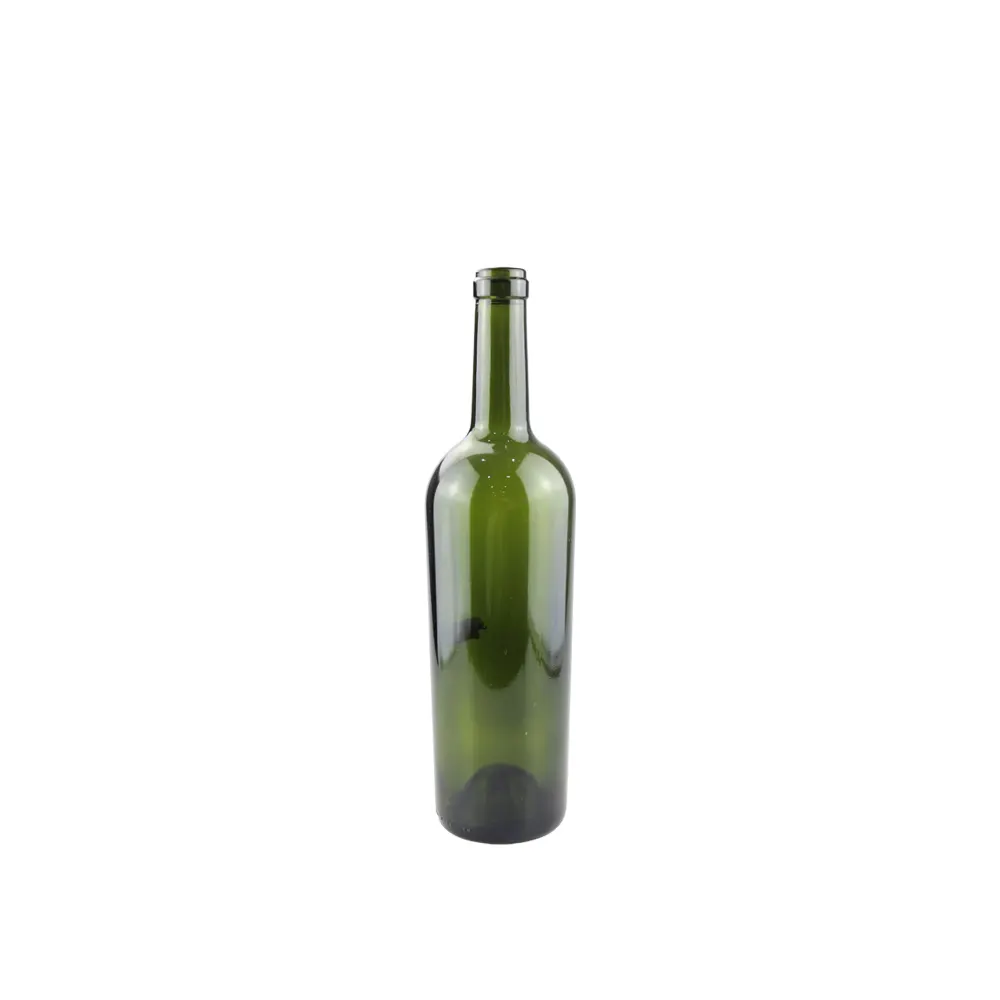
| Olive oil and vinegar | Marasca half, Dorica | 31.5 mm pourer finish | Dark green | UV protection and pourer fit |
The reasons behind those rows are commercial. Restaurants want wine halves for diners who will not finish a 750 ml bottle, and airline and railway service favours them for storage and portioning. Dessert wine sells heavily in this size because it is drunk in small amounts. Distillers use it for gift sets, tasting flights and travel packs, where a cautious buyer can try an expensive whiskey without paying for a full bottle. Cold-pressed juice, cold brew and artisanal soda brands use it as a single serve that supports a higher shelf price, and oil and vinegar producers use it as the entry size ahead of 500 ml and 750 ml.
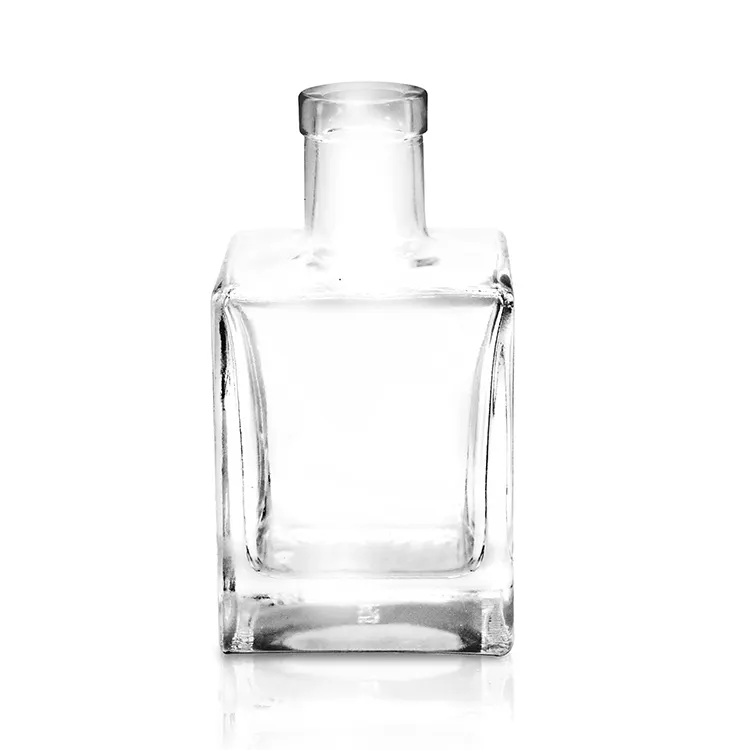
Boxed spirits need one extra step. Fix the internal dimensions of the box before you approve the bottle outline, because a square bottle whose shoulders run 4 mm wider than the cavity will be turned down by the packaging engineer however good it looks. Send the box drawing with the enquiry; we check the fit and, where it fails, propose the closest shape from the 375 ml half-bottle range.
Dimensions and performance ranges
Across categories, 375 ml bottles fall inside the ranges below. Use them to sanity-check a drawing or a supplier's data sheet.
| Parameter | Typical range | What it affects |
|---|---|---|
| Brimful capacity | 385–400 ml | Headspace for the legal fill and for thermal expansion |
| Glass weight | 240 g for light beverage glass, up to 480 g for heavy spirits bottles | How substantial the bottle feels against what each unit costs |
| Height | 175–265 mm | Shelf clearance and gift-box fit |
| Body diameter | 55–78 mm | Bottles per case and handling on the labeller |
| Thermal shock | ≥42°C differential per ASTM C149 | Whether it survives hot-fill and pasteurisation |
| Internal pressure | Up to 10 bar, rated designs only | Sparkling and carbonated products |
A small bottle is not stronger simply because it is small. Durability comes from wall thickness, so the process the bottle must survive has to be written into the specification. The test references we work to are ASTM C149 for thermal shock, ISO 7459 for thermal endurance, ISO 7458 for internal pressure resistance and EU Regulation 10/2011 for food-contact compliance.
Carbonation changes the bottle. Standard still-beverage halves carry no pressure rating, while designs for sparkling wine and carbonated cocktails are engineered for up to about 10 bar, verified by ISO 7458 methods and quoted as a separate item. Declare carbonation at the enquiry stage.
Running half-bottles on a filling line
Half-bottles are harder to run than full-size ones, for three reasons.
- Stability. The bottle is lighter and less steady on the conveyor, so guide rails and timing have to be reset.
- Torque window. The shorter height leaves corkers and cappers less margin, and setup must be more exact.
- Change parts. High-speed rotary fillers need parts made for the smaller diameter, and these can cost more than a whole container of the glass.
Anyone adding a half-bottle to an existing line should plan the change parts and a line trial in the same budget as the first glass order. Check the label as well: the panel is smaller, and front artwork has to sit within the flat zone of the chosen shape instead of creeping onto the shoulder curve.
375 ml against 187/200 ml and 500 ml
The half-bottle usually sits in a range between a miniature and a larger bottle. This comparison shows what each rung does.
| Factor | 187/200 ml | 375 ml | 500 ml |
|---|---|---|---|
| Main occasion | Single serve, airline wine | Sharing, gifting, trial of a higher-end product | Craft flagship, larger household pack |
| Difficulty on the line | Highest, because of instability | Moderate | Moderate to low |
| Bottles per 20GP, approximate | 60,000+ | 34,000–38,000 | 28,000–32,000 |
| Role in a gift set | Sampler | Core flight size | Anchor bottle |
The container figure for 375 ml assumes a typical shape; diameter and case configuration move it, and heavy-base bottles load slightly fewer because the container reaches its weight limit before it is full.
Ranges that work well put 200 ml at the bottom for sampling, 375 ml in the middle for gifting and trial, and 500 ml and 750 ml at the top for buyers who already know the product. Keeping one neck finish across all of them means a single closure stock covers the lot.
What to put in the enquiry
We can match shapes to a project in one pass when the brief contains the following.
- Category and process: still, sparkling, hot-fill, HPP or pasteurised.
- Shapes you like, or reference photos, and the gift-box dimensions for boxed products.
- The closure decision (cork, BVS screw, bar top or lug cap), with the closure supplier's drawing where one exists.
- Filler and labeller models, so change-part needs surface early.
- Quantity per SKU, an estimate of annual volume and the delivery windows you are aiming for.
- Destination port, preferred Incoterm and any certification the market requires.
Frequently asked questions
Is a 375 ml bottle a 750 ml design at half scale?
No. Most half-bottles are engineered on their own moulds, with different wall-thickness distribution, neck proportions and stability requirements. Scaled-down designs tend to miss the closure torque window and run poorly on the line.
Which closure suits a 375 ml wine half-bottle?
The 17.5 mm cork finish runs on the corker used for full-size bottles after a minor jaw adjustment. A BVS screw cap removes the risk of cork taint and makes by-the-glass service in restaurants much faster. Cork is still the traditional choice for dessert wine.
What is 375 ml glass mostly used for?
Products sold on portion control, gifting or a low-cost first try of something expensive. That covers the five categories in the first table.