Filed under spirits bottles wholesale; the moulds we quote for this are pictured at the foot of the page.
Spirits sold in the European Union must be bottled at 700 ml: it is the regulated nominal quantity in the retail range between 100 ml and 2 L, and 750 ml is not a permitted EU size for spirits. The United States has accepted 700 ml as a standard of fill since Treasury Decision TTB-165 took effect on 29 December 2020, so a 700 ml bottle can be sold in both markets. For an export distiller that makes 700 ml the one format that crosses the Atlantic in either direction.
What the EU rules require of the bottle and label
EU packers fill under the average-quantity system, marked on pack with the e-mark. The bottle's certified capacity tolerance forms part of the filler's legal file, so the lot documentation has to state it. Ask for the e-mark requirement to be written into the order from the start.
The label must declare 700 ml, or 70 cl. A 750 ml declaration on spirits is non-compliant in the EU wherever the glass was made.
Duty-free is the one area to treat with caution. The exemptions have changed over the years, and 1 L or 750 ml sales may not be open in every EU channel. Check the current position with your distributor before planning stock around it.
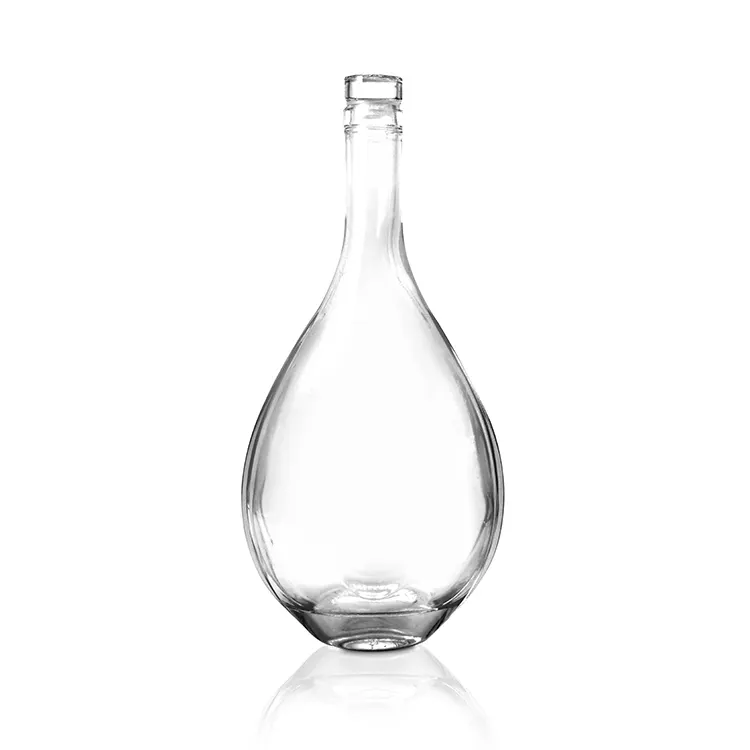
700 ml and 750 ml specifications compared
| Attribute | 700 ml (EU) | 750 ml (US and global) |
|---|---|---|
| Regulatory basis | EU nominal-quantity rules for spirits; mandatory within the 100 ml–2 L range | US TTB standards of fill; also the norm across most of Asia-Pacific |
| Typical weight, standard spirits bottle | 480–580 g | 500–600 g |
| Brimful capacity target | 715–725 ml (e-mark tolerance) | 765–775 ml |
| Neck finishes | Bar-top T-cork, GPI 28-400/33-400, 28 mm ROPP | The same finishes; closures interchange |
| Pieces per 40HQ on bulk pallets | ~24,000–26,000 | ~22,000–24,000 |
| Existing moulds | Running moulds in round, flat and square profiles | The deepest mould library of any capacity |
A 700 ml bottle is not a 750 ml bottle filled short. Fill height, headspace and the legal capacity tolerance are set for each nominal size, and a 700 ml mould has its fill-height datum placed for that volume. An underfilled 750 ml bottle fails metrology checks and looks wrong on the shelf.
Selling in both markets
Choosing the smaller format does not make the glass cheaper. Bottle weight, not fill volume, drives what the glass costs, and the two weights overlap. The real burden of a two-format programme is holding two inventories and two sets of labels.
Closures can be shared. Bar-top stems are dimensioned to a bore tolerance of ±0.3 mm on both 700 and 750 moulds, so one closure stock covers both bottles. Cartons usually cannot: the bottles differ in height by 8–15 mm, which changes case fit and divider geometry, so a dual-market programme carries two case SKUs.
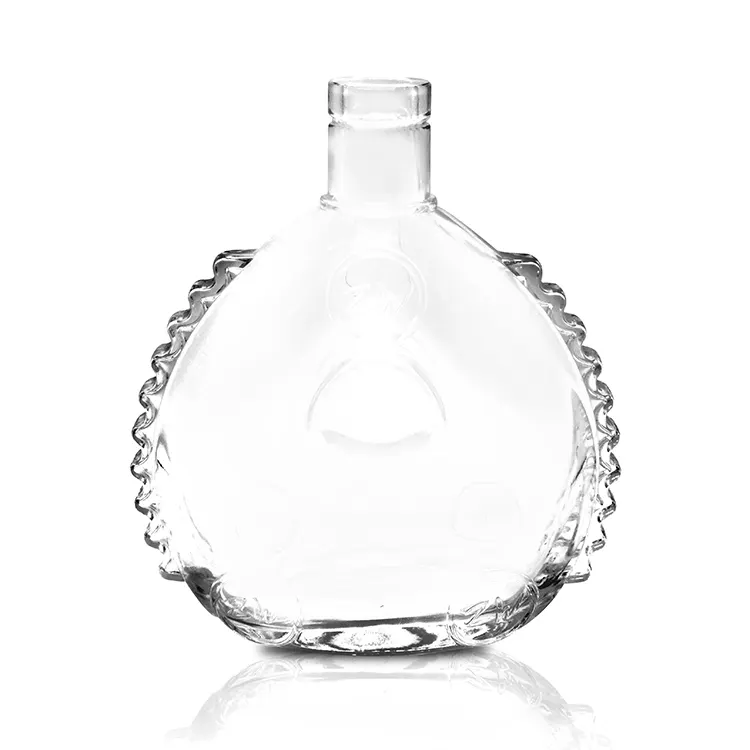
If the US side of the programme stays at the larger size, the 750 ml bottle guide covers that format. Decisions beyond capacity, such as profile and weight, are set out in the guide to alcohol bottle types and across the liquor bottle collection, and the choice between bar-top, thread and ROPP is covered in the closure systems guide.
Documents and brief
An EU filler needs three things with the glass: certified capacity records for each mould, giving brimful and tolerance; AQL inspection reports; and food-contact declarations. Together these support the filler's average-content compliance. Name all three in the order so that they arrive with the lot paperwork.
To start a project, send the SKU, volume, closure and destination port through the quote form.
700 ml bottle FAQ
Can a 750 ml spirits bottle be sold in the EU?
No. Stock bound for the EU has to be bottled at 700 ml, or at another listed EU size, with a label declaration to match. The 750 ml size is compliant in the US and most of Asia-Pacific.
What are the minimum quantity and lead time for a stock 700 ml bottle?
Both are quoted per project. They depend on the mould and the line it runs on, the decoration, the quantity and the freight terms.