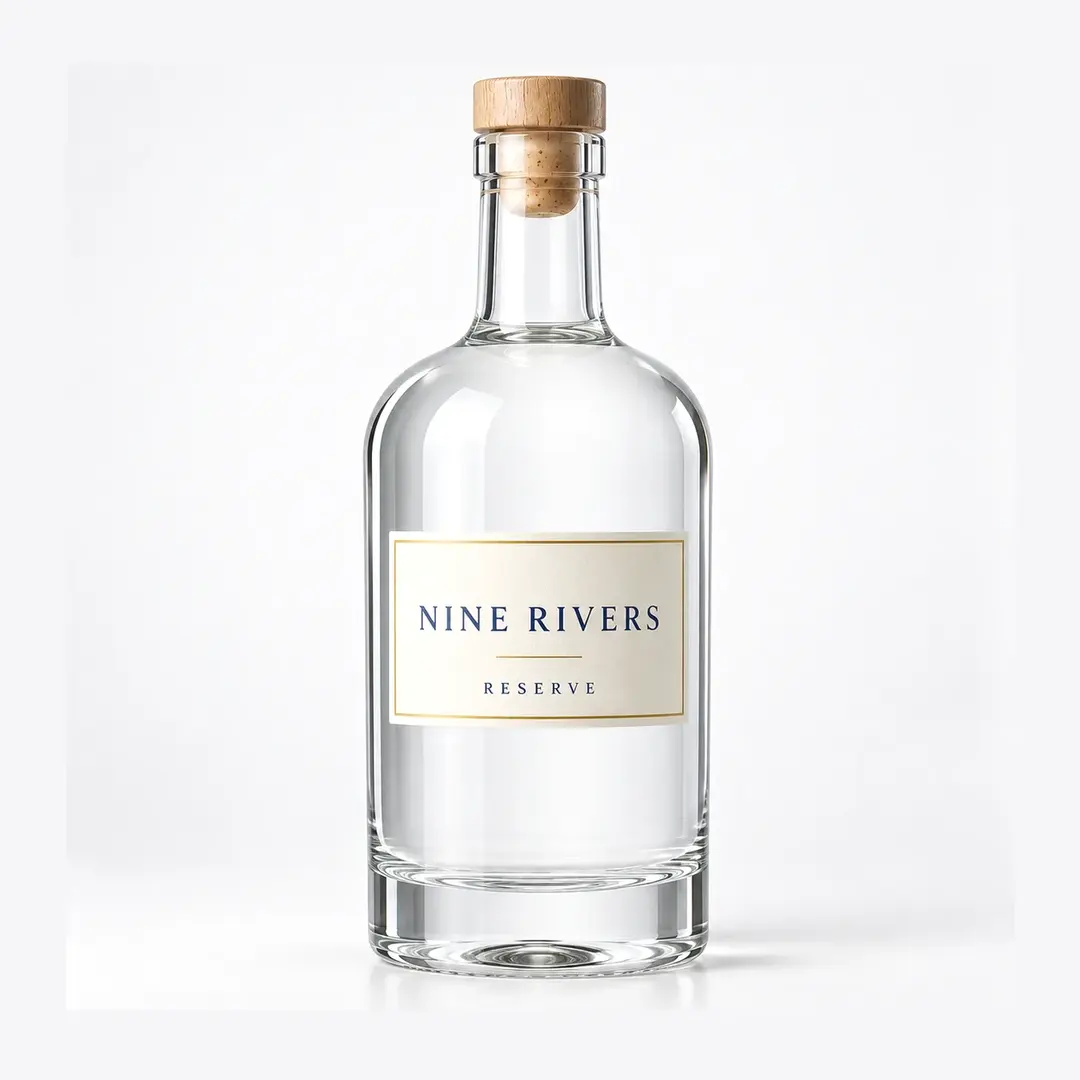
Ask a spirits distributor in Asia what they want from a bottle supplier and the answer is rarely a showpiece. It is reliability across a portfolio: one bottle that can carry a whisky this quarter, a brandy next quarter, and a vodka line extension after that — without re-tooling, without re-negotiating, and without the supply surprises that break retail relationships. The MYYANGJIU mold was built for that brief. The name references the regional term for imported Western-style spirits, and the design intent matches: a versatile, category-neutral liquor bottle for distributors and brand owners running multi-category import-spirits programs across Asian markets. This page explains the model and who it serves.
The Distributor Private-Label Model, Bottled
Asian spirits distribution runs on a structure unfamiliar to many Western brand owners: powerful regional distributors who control retail relationships and increasingly build their own brands. A distributor’s private-label program might span an entry whisky, a mid-tier brandy, and a vodka for the on-premise channel — three categories, three liquid suppliers, one packaging decision. The economics demand a shared mold: no tooling investment, production-proven quality, reorder reliability, and a per-unit cost that survives the distributor’s margin stack (producer, importer, distributor, retailer each take their cut before the consumer pays).
This mold answers those requirements directly. It is a catalog bottle with continuous production history — the opposite of a bespoke project — which means your reorder in month eighteen matches your first order in month one. For distributors whose retail customers judge them on never missing a delivery, that boring consistency is the product. Exact capacity and dimensions are confirmed with the factory through the technical drawing pack at inquiry.
One Bottle, Many Categories
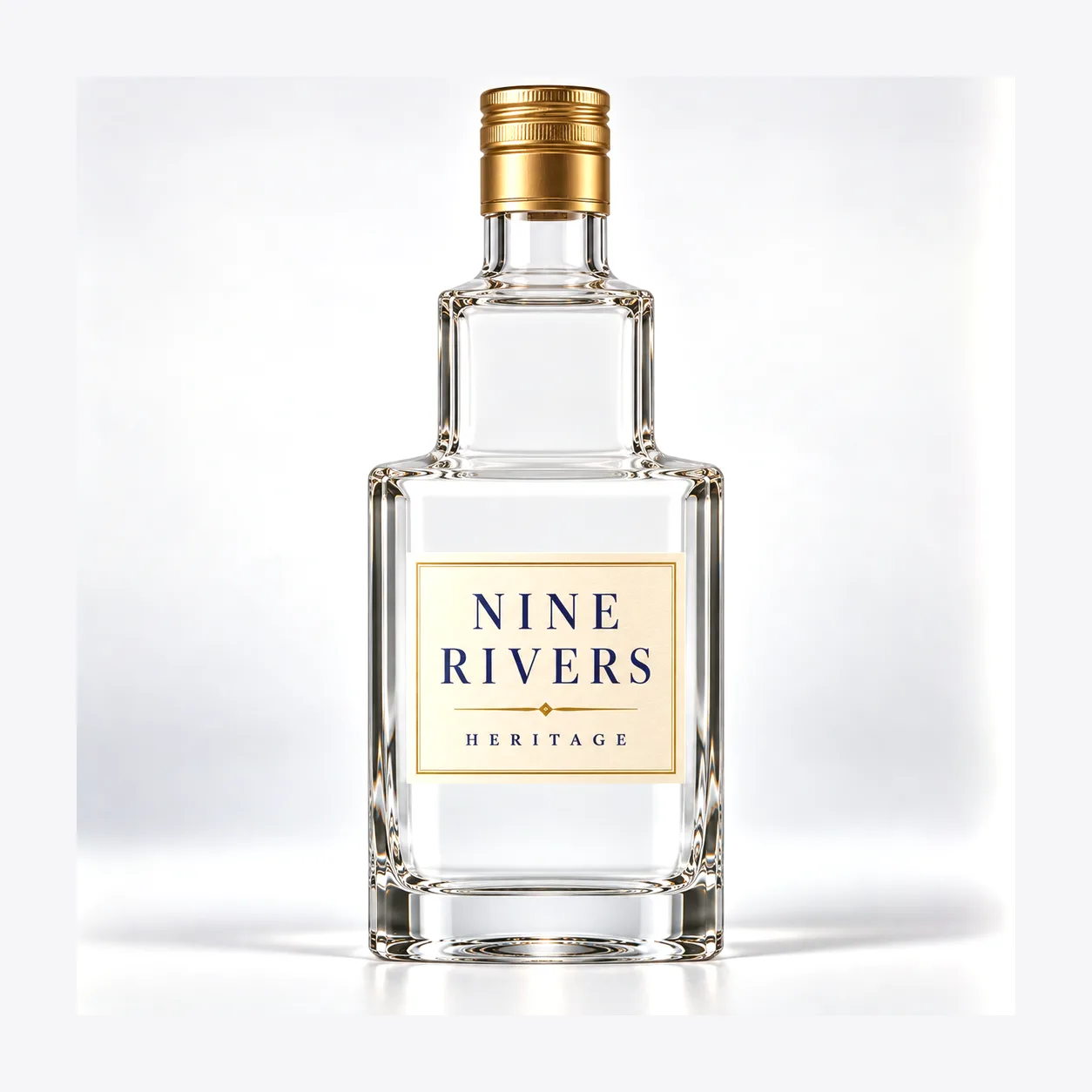
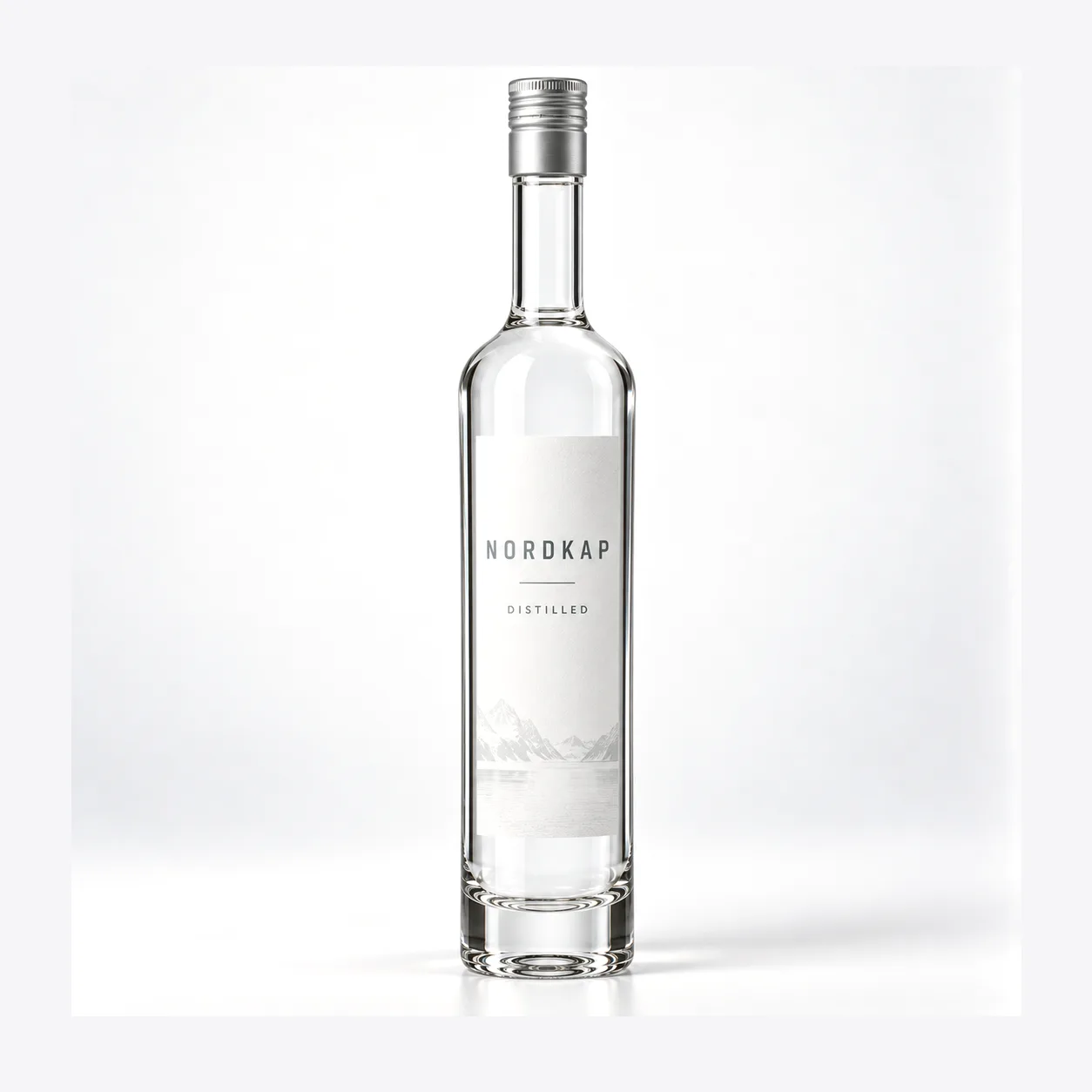
Category neutrality is a design discipline. The silhouette avoids the strong codes that lock a bottle to one spirit — no cognac-carafe shoulders, no flask flatness, no vodka-column austerity — so the same glass reads correctly behind a whisky label, a brandy label, or a gin label. That neutrality also protects your inventory: if one category program slows, the same bottle stock can be redirected to another category with nothing more than a decoration change, which is a flexibility bespoke category-coded molds cannot offer. The decoration carries the category signal instead:
- Whisky programs — dark-toned labels or amber-tinted spray coating, traditional typography, bar-top closure.
- Brandy programs — warm metallic label accents or gold-toned screen printing for the category’s familiar cues.
- Vodka and white-spirit programs — frosting for a cool, matte surface with minimal typography.
- Gin and botanical programs — fresh label palettes on the clean, neutral glass canvas.
Standard decoration capabilities on this mold — frosting, screen printing, spray coating, and conventional labeling — cover all four routes. Closures follow standard cap and cork configurations; the exact neck finish and closure compatibility are confirmed with the factory during sampling.
Built for Asian Distribution Realities
Distributing spirits across Asian markets adds constraints a single-market program never meets. Label requirements differ by jurisdiction — multilingual back labels, importer stickers, market-specific warnings — and the bottle’s label panels must accommodate that variation without redesign; this mold’s proportions give workable panels for multi-market label systems. Fill-size rules also vary by market, so confirm capacity compliance for every destination with the factory and your importer of record before committing to artwork.
Logistics discipline matters as much as regulatory discipline. Multi-market programs consolidate and deconsolidate through regional hubs, which means bottles endure more handling events than a direct-ship program. Export cartons and pallet configurations for this mold are confirmed with the factory at quotation — share your hub-and-spoke routing at RFQ so packing recommendations match your actual distribution chain. Buyers shipping into humid tropical markets should also discuss carton board grade and pallet wrapping at that stage; packaging that survives a temperate route can fail quietly over months in a coastal warehouse.
How Distributors Should Structure the Bottle Relationship
A portfolio mold changes how you should buy. Instead of ordering bottle-by-bottle as each brand launches, mature distributors negotiate an annual framework: projected volumes across all programs on the mold, a sampling and approval cycle done once, and scheduled production slots aligned to their retail customers’ promotional calendars. The benefits compound. Unit pricing improves with aggregated volume. Line scheduling becomes predictable instead of reactive. And when a retail chain asks for a rush replenishment, a distributor with a standing framework order gets priority that a spot buyer never sees.
Keep the governance simple on your side too: one approved sample archived per decoration variant, one technical drawing pack on file, one reorder specification that any team member can execute. Distribution businesses run on operational discipline, and the bottle supply chain should be the least dramatic part of the operation.
Quality That Survives the Long Route
A bottle moving from factory to hub warehouse to market distributor to retail back room sees temperature swings, humidity, and repeated handling. Our liquor bottle production verifies annealing per ASTM C148, internal pressure resistance per ISO 7458, and thermal shock resistance per ISO 7459 — the documented framework that keeps breakage claims out of your distributor relationships. Test documentation is available with your quotation; file it alongside our glass bottle supplier checklist, which is exactly what regional retail chains ask for during vendor approval.
Requesting a Quote for a Portfolio Program
The most productive RFQ for this mold describes the portfolio, not just the SKU: your category roadmap for the next twelve months, destination markets, estimated volumes per program, and decoration direction per category. Send it through our contact page. We will confirm current MOQ per decoration route — background in our glass bottle MOQ explainer — plus samples, drawings, and packing data. New to importing? Our guide on importing glass bottles from China covers the fundamentals. Portfolio programs reward boring excellence: one mold, many brands, zero surprises.
Frequently Asked Questions
What does it mean that this bottle is category-neutral?
The silhouette avoids the strong visual codes that lock a bottle to one spirit — no cognac shoulders, no flask flatness, no vodka-column austerity. The same glass reads correctly behind a whisky, brandy, vodka, or gin label, with decoration carrying the category signal. That is what makes it suitable for distributor portfolios spanning multiple spirits categories.
Who typically buys this mold?
Regional distributors building private-label programs across categories, importers running house brands, and brand owners who prioritize supply reliability over bespoke glass. The shared-mold model means no tooling investment, production-proven quality, and reorders that match the first order — which is what retail relationships depend on.
What capacity is this bottle?
Capacity and full dimensions are confirmed with the factory at inquiry — request the technical drawing pack for exact specifications. Fill-size rules vary across Asian markets, so confirm capacity compliance for every destination with the factory and your importer of record before finalizing label artwork.
Can the same mold serve whisky, brandy, and vodka programs?
Yes — that is its core purpose. Whisky programs typically use dark-toned labels and bar-top closures, brandy programs use warm metallic accents or gold-toned screen printing, and vodka programs use frosting with minimal typography. All decoration routes (frosting, screen printing, spray coating, labeling) are standard capabilities on this mold.
What is the MOQ for a multi-category program?
MOQ depends on the decoration route for each category and current line scheduling, so confirm figures with the factory at RFQ stage. Describing your full portfolio roadmap — categories, markets, volumes per program — produces the most useful quotation. Our glass bottle MOQ explainer covers how decoration choices affect minimums.
How does the bottle handle multi-market distribution through regional hubs?
Export cartons and pallet configurations are confirmed with the factory at quotation; share your hub-and-spoke routing at RFQ so packing recommendations match your chain. The glass itself is produced to documented standards — annealing per ASTM C148, pressure resistance per ISO 7458, thermal shock per ISO 7459 — built for repeated handling and long routes.


