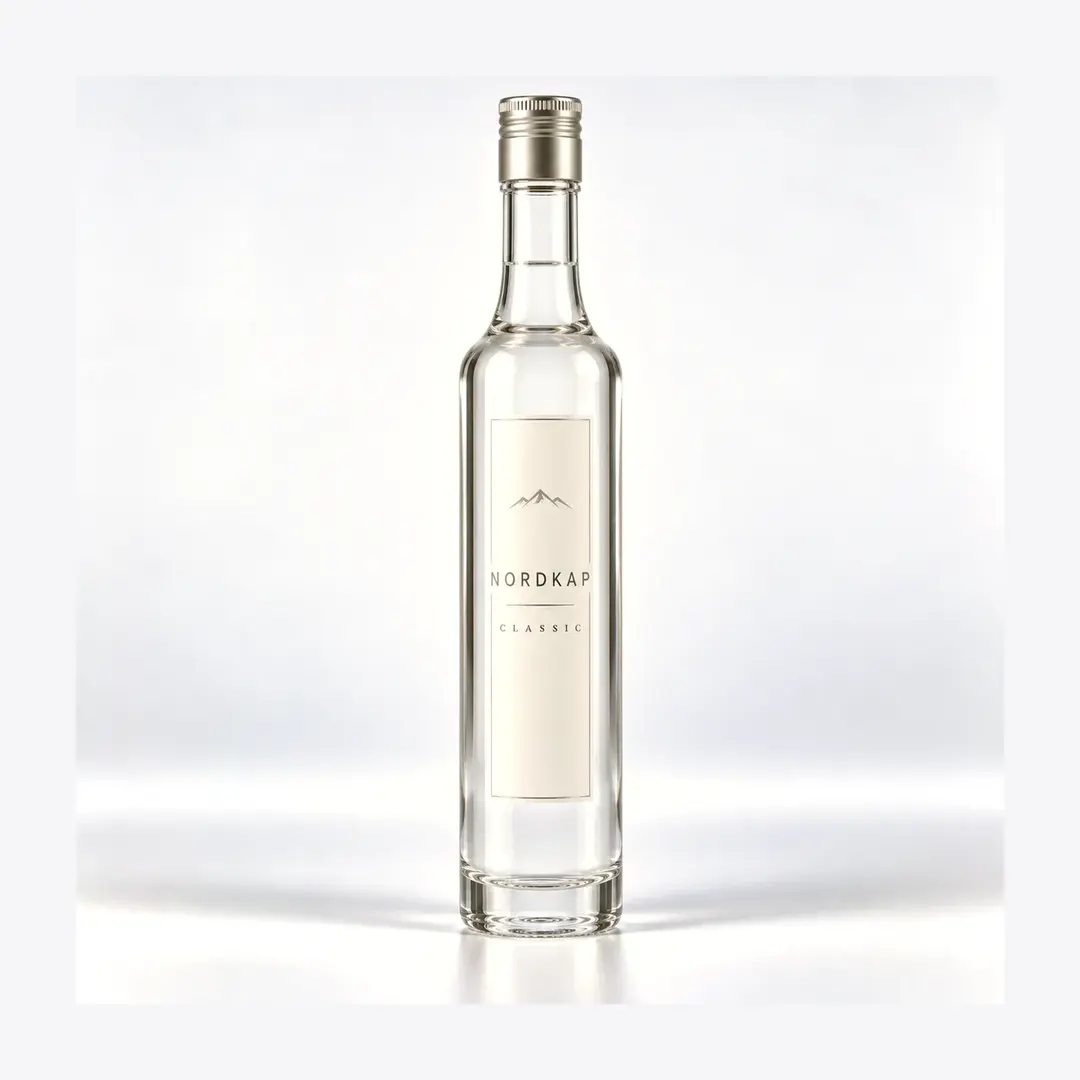
50ml to 1000ml Standard Glass Bottle Series for Range Building
Some bottles are products; this one is a system. The standard glass bottle series shown here spans 50ml, 500ml, 700ml, 750ml and 1000ml in a single design language — one silhouette family that lets a spirits brand cover the entire shelf, from airline miniature to back-bar magnum, without ever changing its visual identity. This page is written for brand owners, private-label buyers and distributors planning multi-capacity ranges where coherence is the strategy.
The Family Effect: Why One Design Language Wins
Retailers think in planograms, and shoppers think in patterns. A brand whose miniature, standard bottle and litre pour all share one silhouette gets recognized faster, gets merchandised together more often, and builds the visual blocking that makes a three-SKU range look like a ten-SKU presence. Category managers call it family shelf blocking; brand owners experience it as cheaper attention. Every facing of every size advertises every other size.
The operational case is just as strong. A single design language means one set of decoration assets scaled across sizes, one closure philosophy, shared carton engineering logic, and a supplier relationship built around a platform rather than a pile of unrelated molds. When the range extends — a new capacity, a seasonal edition — the family absorbs it without an identity crisis.
What Each Capacity Does in the Range
A coherent family works because each size has a distinct commercial job:
- 50ml — the recruiter. Airline service, tasting flights, promotional sampling and gift-with-purchase programs. Its job is to create the next full-bottle buyer.
- 500ml — the trial and value size. Emerging-market mainstream fills, entry price points and portable formats for casual occasions.
- 700ml — the international standard. EU and UK compliance size and the conventional fill across most export markets.
- 750ml — the American standard. The US standard of fill, required for stateside distribution of the same brand.
- 1000ml — the value and travel-retail flagship. Back-bar pour formats, duty-free litre offers and club-store value packs.
A range that covers these five points can enter almost any channel in almost any market without a packaging gap — which is exactly why distributors prefer families over one-off bottles.
Planning the Family Rollout
Most brands do not launch all five sizes at once, and they should not. The proven sequence starts with the standard retail size for the lead market — 700ml or 750ml — proves velocity, then adds the 50ml miniature as the recruitment engine and the 500ml or 1000ml as channel opportunities open. Because the design language is fixed from day one, every addition snaps into place visually. Tell the factory your two-year capacity roadmap at RFQ stage, even if year one is a single size: family planning early is free, retrofitting coherence later is not.
Engineering Consistency Across Five Sizes
Scaling one silhouette across a twenty-fold volume range is a genuine engineering discipline. Proportions that look right at 700ml must be re-resolved at 50ml and 1000ml; glass distribution, base stability and neck formats must suit each size’s filling reality. We do not publish fixed millimeter dimensions or gram weights for the series on this page — each capacity is confirmed per production run on its own technical drawing, issued with your quotation. Share the relevant drawings with your bottler as each size launches, so line settings are agreed on confirmed glass.
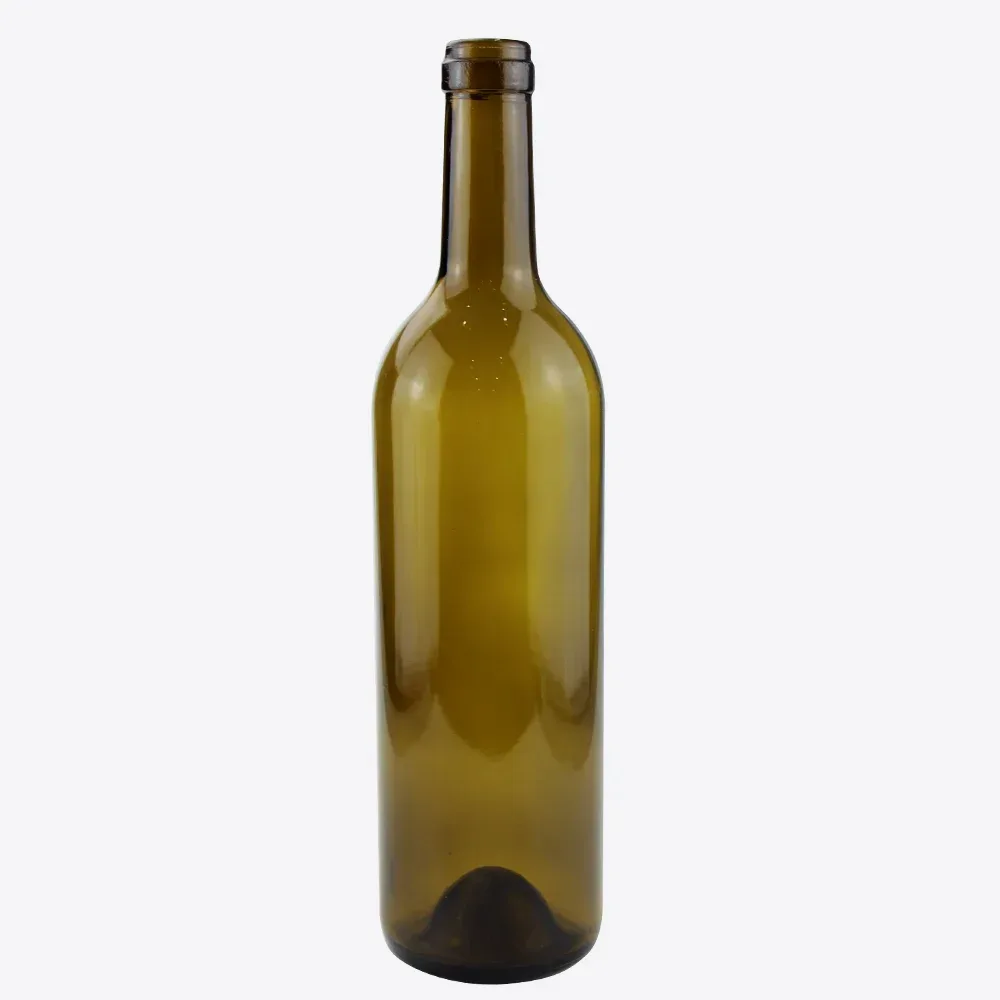
Decoration: One Brand, Five Canvases
The series supports the factory’s full finishing range — frosting, screen printing, spray coating and labeling — with decoration assets designed once and adapted per size. Most families keep the design constant and let capacity do the talking: same coating color, same printed mark, same label architecture at every size. Standard caps and cork closures can be matched across the range, with neck finishes confirmed per capacity on the approved drawings — please confirm each finish specification with the factory before sourcing closures.
Quality Standards Across the Series
Every capacity in the series is produced under the same documented container-glass QC regime: annealing verified with reference to ASTM C148, internal pressure resistance per ISO 7458, and thermal shock endurance per ISO 7459. Batch records can be reviewed during technical approval, and third-party pre-shipment inspection can be arranged for any size in the family — particularly useful when a retail buyer audits the whole range at once.
Packing and Freight Across a Mixed-Size Family
Multi-capacity ranges ship as mixed families, and mixed families reward coordinated packing. Each size has its own carton and pallet configuration, but container-loading plans can be optimized across the family so that a single shipment carries a balanced range rather than five separate partial loads. For distributors, that means one landed cost conversation instead of five; for the factory, it means carton engineering is done as a system. The order process includes container-loading plans for exactly this reason — share your intended size mix per shipment and the packing plan will be built around it, carton by carton. For first-time range builders, this consolidated approach also simplifies landed-cost comparison across sizes, making it far easier to see which capacity earns its shelf space fastest in each of your markets.
Ordering, MOQ and Next Steps
MOQ varies by capacity and decoration route — the mechanics are explained in our glass bottle MOQ guide. Samples from existing molds can be arranged for whichever sizes your roadmap starts with. Buyers structuring the sourcing workflow can review our guide to importing glass bottles from China, and our supplier checklist helps formalize the evaluation.
Send your capacity roadmap, target markets and decoration direction through the contact and RFQ page, and the factory will reply with technical drawings, confirmed specifications and family pricing for your range.
Frequently Asked Questions
Which capacities are available in this series?
The standard series spans 50ml, 500ml, 700ml, 750ml and 1000ml in one design language. Each capacity has its own confirmed technical drawing — request the drawings for the sizes in your roadmap from the factory with your RFQ.
Why build a range on one design language?
Shared silhouettes create family shelf blocking — every size advertises every other size — and simplify operations: one decoration asset set scaled across sizes, shared closure philosophy and one supplier platform. Range extensions join the family without an identity redesign.
Which sizes do I need for the US versus Europe?
The US standard of fill is 750ml; the EU and UK standardize on 700ml. Export brands typically run both from the same family, adding 50ml miniatures for recruitment and 1000ml for travel retail and value channels as channels open.
Can decoration stay identical across all five sizes?
Yes. Screen printing, spray coating, frosting and labeling artwork is designed once and adapted per size. Most families keep design constant and let capacity differentiate. Closures are matched per capacity’s confirmed neck finish — confirm each finish with the factory.
What is the MOQ per capacity?
MOQ varies by capacity and decoration route; standard sizes from existing molds are generally the most flexible. Samples from existing molds can be arranged for the sizes you start with. Share your roadmap and volumes in the RFQ for exact figures.
How is quality controlled across the series?
All capacities are produced under the same documented QC regime: annealing per ASTM C148, internal pressure per ISO 7458 and thermal shock per ISO 7459. Batch records can be reviewed per size, and third-party pre-shipment inspection can be arranged for any capacity.


