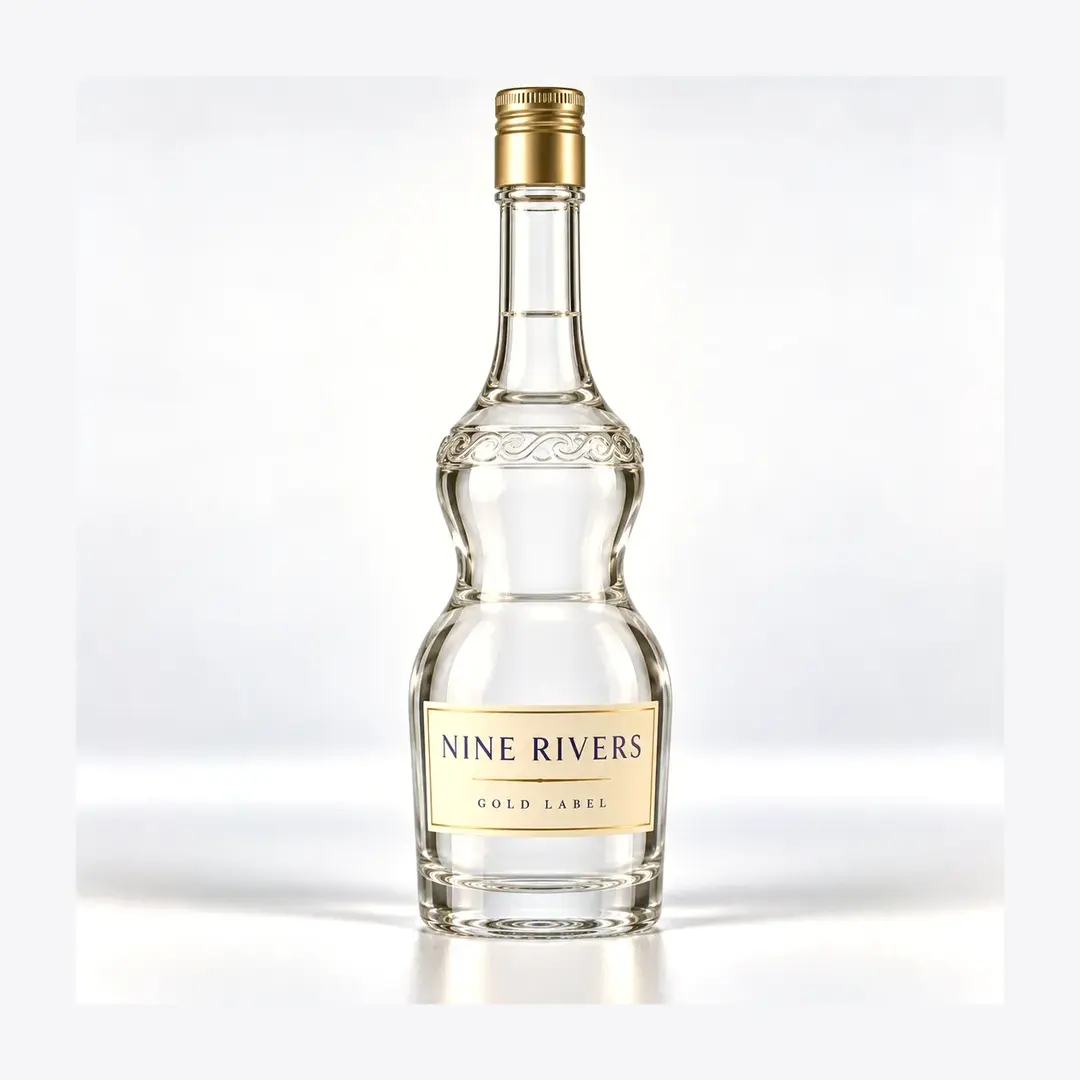
The TYPE-4K is a tall, slender round liquor bottle in brilliant flint glass, and its photo tells a specific story: a long straight neck rising from gently sloped shoulders, a slim cylindrical body, and — most importantly — raised embossed lettering and a crest-style emblem molded directly into the glass on the lower front panel. That embossing is not a label; it is part of the container, which means this bottle was designed for brands that want their name permanent in the glass. The silhouette is the classic language of ice wine, dessert wine, premium liqueur, and ultra-premium vodka: height signals elegance, and a narrow body signals a measured pour. Exact capacity, neck finish, and weight are not published for this model and should be confirmed with the factory before specification.
Anatomy of a Tall Slender Silhouette
Height changes how a bottle behaves commercially. On a retail shelf, a tall bottle overtops its neighbors and reads first in a scanning glance; in a back-bar lineup, the long neck puts the closure — and your stopper design — at eye level. The TYPE-4K’s proportions follow the ice-wine convention: a narrow body that keeps the liquid column slim, sloped shoulders that guide a controlled pour, and a neck long enough to grip comfortably for table service. For sommelier-led channels, hotel minibars with height-clearance shelving, and gift-with-purchase programs, this geometry photographs and merchandises beautifully.
The slim body also has a production logic. Narrow cylinders form evenly in the mold, anneal predictably, and travel well through labeling and sleeving equipment because the sidewall is a simple single-curvature surface. If your co-packer runs standard round-bottle change parts, a bottle in this family usually integrates with minimal tooling spend — but always verify change-part compatibility against the confirmed body diameter from the factory drawing.
Embossing as a Branding Strategy
The visible lettering and crest on the sample are the headline feature. Molded embossing survives everything a paper label cannot: ice buckets, wet hands, refrigerated condensation, and years of shelf handling. For limited editions and heritage brands, embossing communicates permanence — the bottle itself is the certificate. There are two routes to get your own mark into this glass. The simpler route is to keep the mold’s existing plain panel areas and add post-forming decoration: screen printing, acid-etch frosting, or metallic spray. The deeper route is a mold insert engraved with your own lettering, which converts this silhouette into a semi-custom bottle at a fraction of full custom-mold cost. Lead time and minimums differ sharply between the two, so raise the question at quotation stage.
One design note from the photo: the emboss sits low on the body, leaving the shoulder and neck clean. That layout pairs well with a small front neck label or a capsule-only brand presentation — a proven format for ice wine and grappa-style products where restraint reads as luxury.
Closures and Filling Considerations
The neck in the photo terminates in a narrow mouth suited to cork-type closures — natural cork, colmated cork, or bar-top stoppers depending on the confirmed finish. The exact finish designation is not visible at photo resolution, so confirm with the factory whether the mold carries a cork finish or a continuous thread before sourcing closures. For ice wine and dessert wine, a long natural cork with a branded capsule is the conventional choice; for vodka and liqueur in this silhouette, a synthetic T-cork with a custom head keeps the tall profile uninterrupted.
On the filling line, tall slim bottles need attention to stability: check that your conveyor guides, star wheels, and rinser grippers accommodate the height-to-base ratio, and confirm the bottle’s base diameter against your change parts. The slim body is an advantage in case packing — high units per case — but verify case height if you plan lay-down gift cartons.
Where This Silhouette Wins Commercially
Three channel scenarios recur with tall slender bottles. In travel retail, the height reads across a crowded duty-free gondola and the slim footprint lets the fixture carry more facings per meter. In gifting, a tall bottle anchors a presentation box visually — the closure rises above the insert line and the embossed crest catches light the moment the lid lifts. And in on-premise accounts, the long neck gives bartenders a confident grip for speed pouring while the narrow body occupies minimal well space. If your launch plan spans more than one of these channels, a single bottle in this family can carry the whole program with only label and capsule changes between SKUs, which keeps mold amortization simple and inventory flexible.
Production Quality and Testing
TYPE-4K bottles are formed on IS machines and fully annealed, with residual stress verifiable by polarimetric test per ASTM C148. Sampled bottles from each production shift are checked for internal pressure resistance to ISO 7458 and thermal-shock performance to ISO 7459, and clear flint ware undergoes cosmetic AQL inspection for stones, blisters, and cord — critical on a bottle whose selling point is pristine, light-transmitting glass.
Ordering Path for This Model
Start with a physical sample: fill it, cork it, and photograph it under your retail lighting before committing to a production run. Minimums for stock-mold flint bottles follow standard factory economics — our explainer on glass bottle MOQ shows how furnace and mold scheduling set those numbers — and a custom embossed insert will raise both minimum and lead time. For freight planning on tall bottles, carton tier heights matter; see our notes on importing glass bottles from China for pallet and container loading. When you are ready, send your target volume, closure plan, and decoration preference through the contact page, and we will confirm the technical drawing, embossing options, and a landed-cost quotation for the TYPE-4K.
Frequently Asked Questions
Which products fit the TYPE-4K tall slender bottle?
The tall long-neck silhouette is the classic format for ice wine, dessert wine, premium liqueur, grappa, and ultra-premium vodka. Its height gives strong shelf presence in back-bar and sommelier-led channels.
Is the lettering on the bottle a label or embossed glass?
The photo shows raised lettering and a crest emblem molded directly into the glass — permanent embossing, not a label. You can order the stock design, add post-forming decoration, or commission a custom engraved mold insert with your own lettering.
What closure does this bottle take?
The narrow mouth suits cork-type closures — natural cork, colmated cork, or bar-top stoppers. The exact neck finish designation is not legible in the photo, so confirm cork finish versus continuous thread with the factory before sourcing closures.
What are the capacity and dimensions of TYPE-4K?
No dimension sheet is published for this model. Capacity, height, body diameter, and weight should be confirmed with the factory; a technical drawing and physical sample are available on request.
Will this tall bottle run on my existing filling line?
Slim round bodies usually integrate with standard round-bottle change parts, but the height-to-base ratio needs checking on conveyor guides, star wheels, and rinsers. Share your line specifications with the factory and verify against the confirmed drawing.
What quality standards apply to production?
Bottles are IS-machine formed and fully annealed, with residual stress verified per ASTM C148, internal pressure resistance tested to ISO 7458, thermal-shock performance to ISO 7459, plus cosmetic AQL inspection for flint-glass defects.


