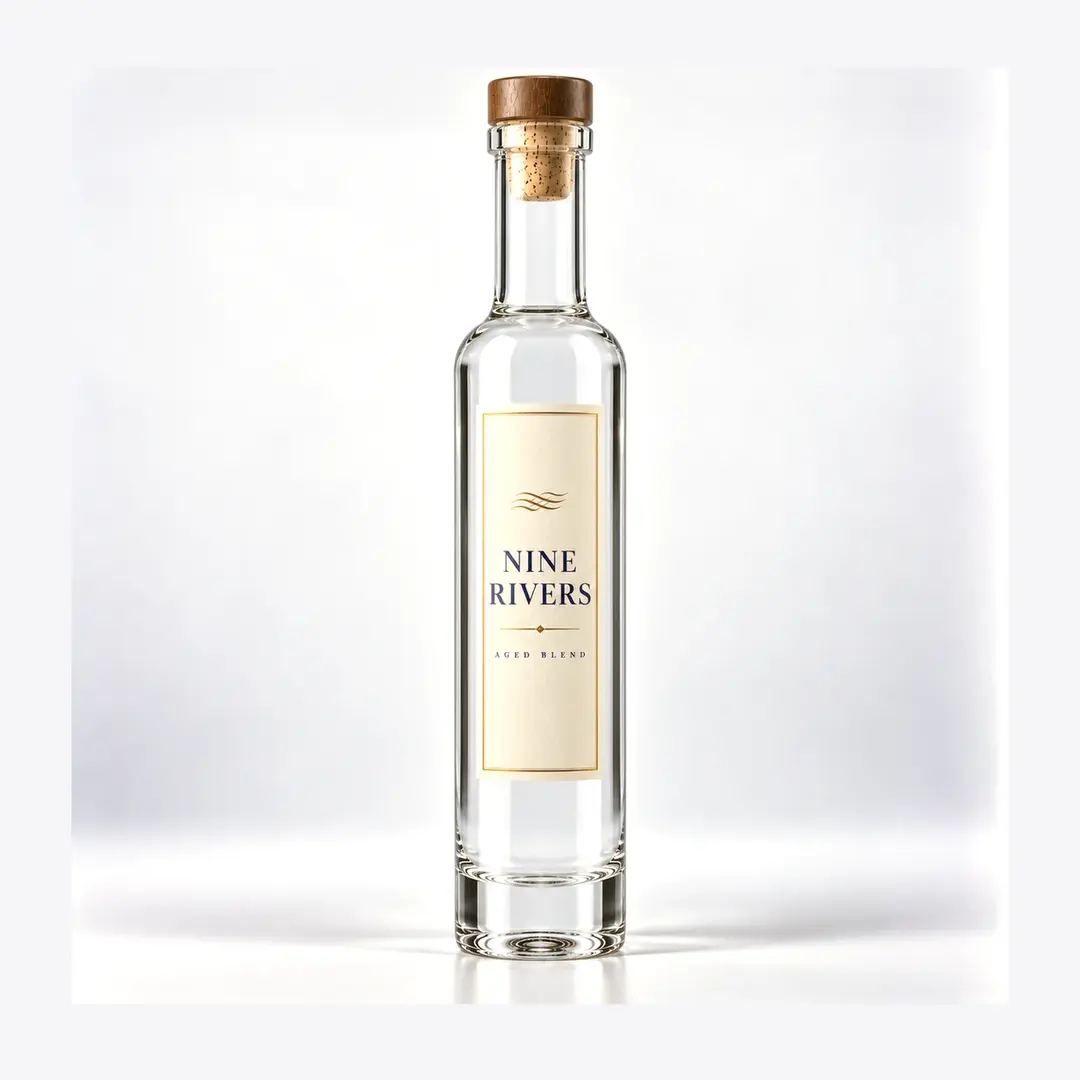
650ml Glass Bottle for Rice Whisky and Asian Premium Spirits
Standard bottle sizes are a comfort zone, and comfort zones are crowded. The YUEJI mold exists for brands that have deliberately stepped outside them: a 650ml liquor bottle aimed at rice whisky, Japanese-style whisky, and the broader wave of Asian premium spirits that compete on distinctiveness rather than on fitting the planogram. This page is for brand owners and importers who are considering a non-standard fill on purpose — and who want an honest assessment of when that strategy works, what the bottle needs to communicate, and which regulatory boxes to tick before committing.
The Strategic Logic of a Non-Standard 650ml Fill
Why would a serious brand choose 650ml when 700ml and 750ml dominate global spirits retail? Three reasons recur across the programs we see.
Price-point engineering. A 650ml fill lets a brand hold a psychologically critical shelf price — the equivalent of twenty or twenty-five dollars, for example — while protecting margin against rising liquid and logistics costs. Consumers compare shelf prices far more than they compare milliliters, and in many Asian markets the 650ml format has an established presence that shoppers accept without friction.
Channel differentiation. A non-standard size is a natural fit for channel-exclusive SKUs: e-commerce exclusives, club-store bundles, and gift sets where the unit size is part of the offer architecture rather than a commodity. When your bottle cannot be price-compared shelf-to-shelf against a competitor’s standard 700ml, you regain control of the value conversation.
Cultural fit. Several Asian markets have long traditions of non-700ml spirit fills. A size that looks odd in a French cognac aisle can look entirely native in Tokyo, Taipei, Seoul, or Bangkok. For Asian premium spirits brands, format familiarity is a form of authenticity.
One caution belongs at the top of any 650ml business case: fill-size regulation is market-specific. Some jurisdictions prescribe permitted spirits sizes; others are liberal. Confirm capacity compliance for every destination market with the factory and your importer of record before committing to artwork — this single check has saved more than one launch from a repackaging disaster.
A Visual Language for Asian Premium Spirits
The commercial rise of Japanese whisky rewired global expectations of what an Asian premium spirit should look like: restraint over ornament, proportion over decoration, a bottle that reads as considered rather than loud. Consumers paying premium prices for rice whisky, Japanese-style whisky, or craft shochu are buying an aesthetic as much as a liquid, and the bottle is where that aesthetic is judged first.
This mold serves that brief. The design intent is a composed, modern-Asian premium read — a bottle that sits comfortably beside Japanese and Taiwanese premium spirits on a back bar without imitating any specific competitor. Exact dimensions and proportions are provided in the technical drawing pack from the factory; what matters at briefing stage is that the silhouette supports minimalist label design, generous negative space, and the kind of typography-led branding that defines the category.
For importers, there is a second advantage: a distinctive, non-commodity bottle makes a brand visibly ownable. Distributors pitching a new Asian spirits brand to retail buyers need the product to look like something — not like a refill of a familiar mold. A 650ml format in a considered silhouette gives the sales story a physical anchor.
Fillers That Belong in This Bottle
- Rice whisky and rice-based aged spirits — the core use case, where the format and aesthetic align with category codes.
- Japanese-style and Asian craft whisky — including world-whisky brands in Europe and North America building an Asian heritage narrative.
- Premium shochu and awamori — categories trading up from traditional packaging into export-ready premium formats.
- Premium soju and craft baijiu-adjacent exports — for brands repositioning Asian grain spirits for international premium shelves.
- Asian-inspired gin, vodka, and liqueurs — yuzu, matcha, shiso, and similar botanical programs that borrow the regional visual language.
Decoration for a Restrained, Premium Finish
The decoration philosophy for this bottle follows the aesthetic: less, executed perfectly. Frosting is the signature route for the category — a matte, tactile surface that photographs beautifully and reads premium without color. Screen printing suits the typography-led branding of Japanese-style labels, applying crisp text directly to glass with no label stock to wrinkle or peel in humid markets. Spray coating opens soft-touch and muted-color routes for brands that want a contemporary matte color block. And conventional labeling on textured or uncoated stocks remains entirely appropriate — many of the most respected Asian premium spirits use simple paper labels on good glass, and this mold’s panels accommodate that approach cleanly.
Closures should match the restraint: standard caps and bar-top corks in clean configurations. The exact neck finish and closure compatibility are confirmed with the factory during sampling. If your program includes a wooden or specialty stopper for the top of the range, raise it at RFQ so neck-finish compatibility is validated before you commit to closure inventory.
Quality Standards Behind the Aesthetic
Premium positioning collapses the moment a bottle fails in the field, so the unglamorous standards matter as much here as anywhere. Our liquor bottle production verifies annealing per ASTM C148, internal pressure resistance per ISO 7458, and thermal shock resistance per ISO 7459 — the framework that keeps bottles intact through filling, container shipping, and the temperature swings of export logistics. Request test documentation with your quotation; it belongs in the same supplier file as our glass bottle supplier checklist.
Inquiry and Next Steps
Because 650ml is a considered strategic choice rather than a default, we encourage buyers to start the conversation early. Send your destination markets, fill type, annual volume estimate, and decoration direction through our contact page, and flag the capacity question explicitly — we will confirm the current MOQ for your decoration route (background in our glass bottle MOQ explainer), sampling timelines, and technical drawings. Buyers new to importing should also review our guide on importing glass bottles from China. A distinctive format rewards brands that plan it properly; the first step is a structured RFQ.
Frequently Asked Questions
Is 650ml a legal fill size for spirits in my target market?
It depends on the market. Many Asian markets accept 650ml and it has an established retail presence there, while some jurisdictions prescribe specific permitted spirits sizes. Confirm capacity compliance for every destination with the factory and your importer of record before finalizing labels or ordering cartons — this check should happen before any artwork commitment.
Why choose 650ml instead of the standard 700ml?
Brands typically choose 650ml for price-point engineering (holding a key shelf price while protecting margin), for channel-exclusive SKUs that avoid direct shelf price comparison, or for cultural fit in Asian markets where non-700ml fills are familiar to shoppers. It is a deliberate strategy rather than a default, and this mold is built for brands making that choice on purpose.
Is this bottle suitable for Japanese-style whisky specifically?
Yes. The design intent is a restrained, modern-Asian premium read that sits naturally beside Japanese and Taiwanese premium spirits — minimalist label panels, typography-friendly surfaces, and a composed silhouette. Exact proportions are provided in the technical drawing pack from the factory so your designer can mock up the label system before sampling.
What decoration routes suit the Asian premium aesthetic?
Frosting is the signature route for the category, followed by crisp screen printing for typography-led branding. Spray coating enables muted matte color blocks, and simple paper labels on uncoated stock also work well on these panels. Confirm your final decoration combination with the factory before ordering cartons or gift packaging.
What is the MOQ for the 650ml mold?
MOQ varies with decoration route and current line scheduling, so confirm the current figure with the factory at RFQ stage. As a shared catalog mold it runs at standard production minimums rather than bespoke-mold volumes. Our glass bottle MOQ explainer page covers how decoration choices move the minimum up or down.
Can this bottle also hold shochu, soju, or non-whisky spirits?
Yes. Beyond rice whisky and Japanese-style whisky, the mold suits premium shochu and awamori, craft soju, and Asian-inspired gin, vodka, or liqueur programs that use the regional visual language. Discuss your fill’s ABV and closure liner requirements with the factory during sampling to confirm compatibility.


