
Some bottles win awards for novelty. This one wins purchase orders for reliability. The 750ml round glass liquor bottle, our model ER, is the classic cylindrical spirits format — the shape that fills the world’s back bars, supermarket shelves and private-label programs because it runs fast, labels cleanly and never surprises a filling line. If you are building a private-label vodka or gin range and you want a proven, low-risk primary container, this is the workhorse format to start from.
The Case for the Workhorse Format
Private-label buyers — supermarket groups, importer brands, contract distillers — usually optimize for three things: line efficiency, decoration flexibility and unit cost. A round 750ml bottle scores well on all three. The cylindrical body is the most forgiving shape a glass plant can produce at volume, which keeps pricing competitive and quality consistent across large repeats. It also accepts virtually every decoration technology on the market, from a simple paper label to full spray coating, so a brand can launch modestly and premiumize later without changing the glass.
There is also a consumer-side argument. Vodka and gin shoppers read clarity as purity, and a clean round flint bottle puts the liquid — not the container — at the center of the brand story. Many of the best-selling white spirits in the world ride in exactly this kind of unpretentious round glass.
Why Round Bottles Run Fast on Filling Lines
Ask any bottling plant manager which shape causes the fewest stoppages and the answer is almost always the same: round. The reasons are mechanical:
- Rotary filler compatibility. Round bottles self-center in star wheels and handling pockets, so high-speed rotary fillers and cappers handle them without change-part improvisation.
- No orientation problem. Unlike flat or square bottles, a cylinder has no “front”, so labelers do not need orientation devices to register a label against a panel seam.
- Conveyor stability. A round bottle with a well-designed base rolls predictably through accumulation tables and transfers, reducing tip-overs at speed.
- Inspection friendliness. Empty-bottle inspectors and fill-level cameras calibrate fastest on symmetrical containers.
None of this means you can skip the technical conversation: neck finish, brimful capacity, glass weight and line changeover dimensions must be confirmed against your specific filler. We do not publish fixed millimeter dimensions or gram weights for this model because they are confirmed per production run — ask the factory for the current drawing and tolerance sheet with your quotation.
Positioning Ideas for Vodka and Gin Brands
The ER model’s neutrality is a design asset. A few directions private-label teams typically take with it:
- Value vodka: plain flint glass, paper label, standard screw cap — the lowest-cost credible shelf presence.
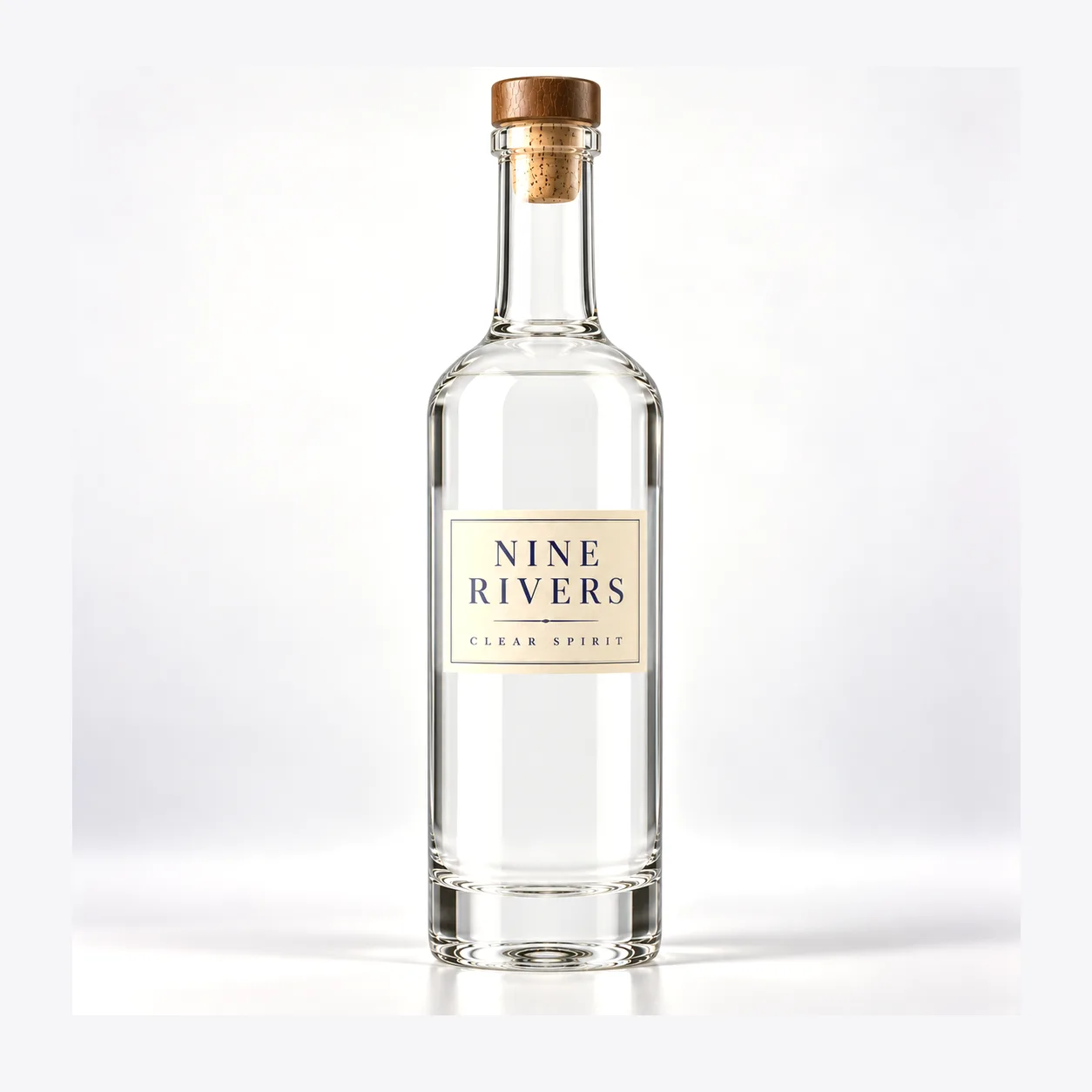
- Mid-tier gin: frosted body with a one-color screen print and a natural cork or bar-top closure to signal craft.
- Premium white spirits: spray-coated matte black or soft pastel body with metallic print accents for a contemporary gin look.
- Flavored extensions: the same glass with color-coded labels or capsules keeps a range visually unified across SKUs.
Because the underlying glass stays constant, line extensions share cartons, pallets and line settings — a quiet but real cost saving over a growing range.
Decoration and Closures
Our factory’s finishing routes for this model include frosting, screen printing, spray coating and conventional labeling, matched with standard caps, corks and bar-top closures. Screen printing on a round body requires the artwork to be prepared for cylindrical rotation printing; our team will confirm printable height and color count when reviewing your design. Closure selection is always finalized against the confirmed neck finish — please confirm the neck specification with the factory before ordering capsules or corks from a third party.
Quality Control You Can Audit
Production runs are controlled against documented container-glass standards: annealing verified per ASTM C148, internal pressure resistance per ISO 7458, and thermal shock resistance per ISO 7459. These references describe the factory’s QC framework; batch-level test records and third-party pre-shipment inspection can be arranged on request. Buyers comparing suppliers will find a structured evaluation approach in our glass bottle supplier checklist.
Round Versus Shaped: A Total-Cost View
Brand teams sometimes assume a custom-shaped bottle is what separates them from competitors. Often the smarter separation is decorative, not structural. Here is how the total-cost comparison usually plays out for a private-label program:
| Cost driver | Round workhorse bottle | Custom-shaped bottle |
|---|---|---|
| Mold investment | None — existing mold | New mold cost and sampling rounds |
| Line changeover time | Fast — standard handling parts | Slower — orientation and guides |
| Decoration flexibility | All routes available | Some routes limited by geometry |
| Time to first delivery | Short | Longer — mold trials first |
| Differentiation lever | Print, coating, closure, label | Shape itself plus decoration |
For a first private-label launch, the round bottle plus strong decoration usually delivers a better margin story than a new shape. Shapes earn their keep later, once a brand has the volume to amortize mold costs.
What to Include in Your RFQ
The fastest quotations come from complete briefs. When you write to us, include your target capacity (750ml here), estimated annual volume, destination markets, decoration direction with any reference images, closure preference, and whether your bottler has neck-finish requirements on file. With those six points, the factory can return a drawing, confirmed specifications and pricing in one round instead of three.
Ordering, MOQ and Next Steps
Because round 750ml is a high-volume format, MOQs from an existing mold are generally friendlier than for exotic shapes, and repeat orders move quickly once a specification is locked. The variables that move MOQ and price are decoration complexity and closure choice — our MOQ guide explains the mechanics. For buyers planning their first import program, the practical steps are covered in our article on importing glass bottles from China.
Tell us your annual volume, target markets and decoration direction through the contact and RFQ page, and we will return the technical drawing, confirmed specifications and a quotation for your private-label program.
Frequently Asked Questions
Is 750ml the right size for private-label vodka and gin?
Yes. 750ml is the standard spirits size in North America and is widely accepted in many other markets for vodka and gin. If you sell into the EU or UK, note that 700ml is the standard there, so confirm target-market sizing with the factory before locking your specification.
Will this round bottle run on my existing filling line?
Round bottles are the most line-friendly shape and suit rotary fillers, standard cappers and wrap-around labelers. That said, neck finish, brimful capacity and handling dimensions must be matched to your equipment — confirm the technical drawing with the factory and share it with your bottler.
Can the bottle be frosted, printed or color coated?
Yes. The factory offers frosting, screen printing, spray coating and labeling on this model. Artwork for round bottles is prepared for cylindrical rotation printing. Confirm printable area, color count and decoration lead time with the factory during quotation.
What is the minimum order quantity?
MOQ depends on mold availability and decoration. High-volume round formats from an existing mold usually carry lower MOQs than unusual shapes. Send your estimated annual volume in the RFQ and the factory will confirm the exact MOQ and price breaks.
Which closures fit this bottle?
Standard caps, natural or synthetic corks and bar-top closures can be supplied or matched. The final closure choice is confirmed against the neck finish on the approved drawing, so please confirm the neck specification with the factory before sourcing closures elsewhere.
How is glass quality verified before shipment?
Production is controlled against container-glass standards including annealing per ASTM C148, internal pressure per ISO 7458 and thermal shock per ISO 7459. Batch records can be reviewed during technical approval, and third-party pre-shipment inspection can be arranged on request.


